Open shelving has become one of the most popular design trends in recent years. From kitchens and living rooms to bedrooms and bathrooms, open shelves combine functionality with aesthetics, allowing you to showcase your favorite items while keeping everything accessible.
When styled thoughtfully, open shelves can turn any ordinary wall into a stunning visual display. However, without proper balance and organization, they can quickly become cluttered and overwhelming.
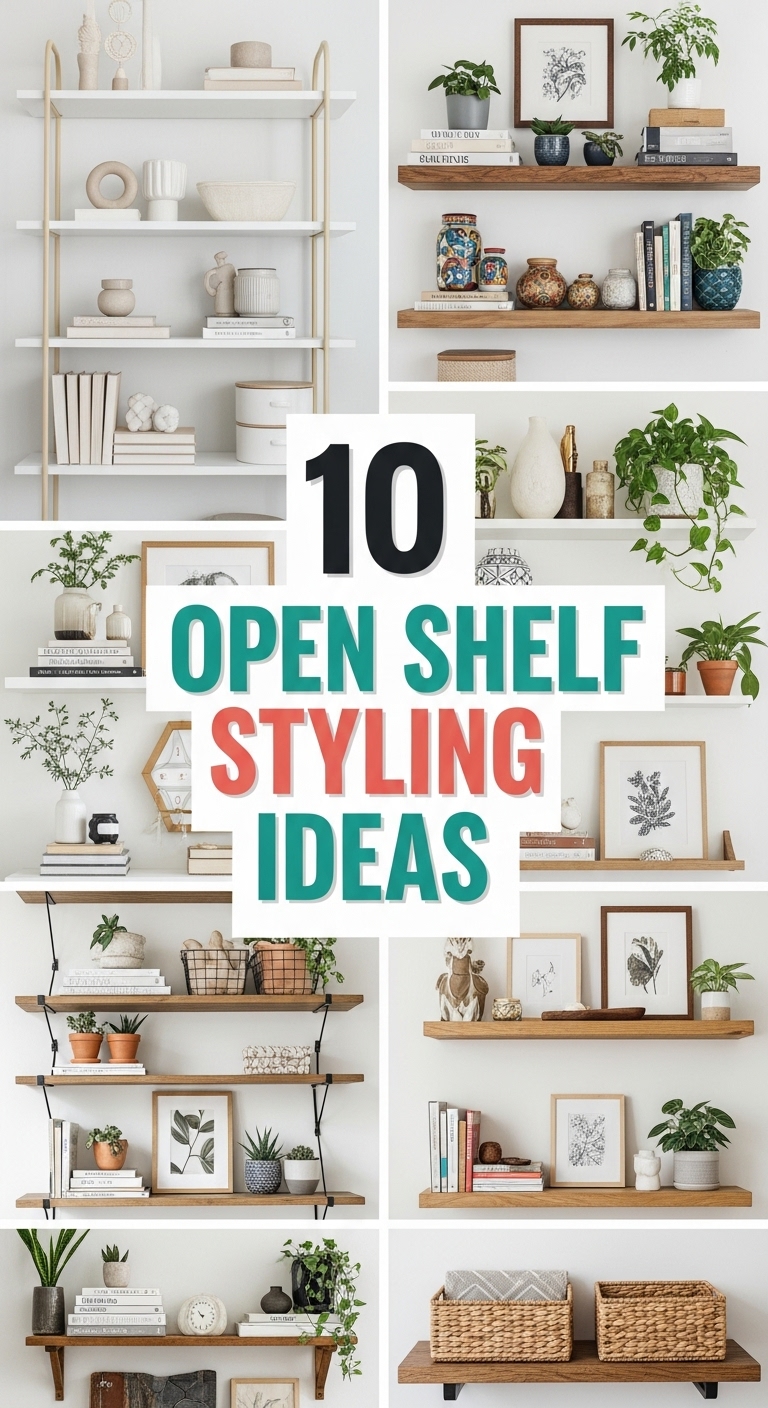
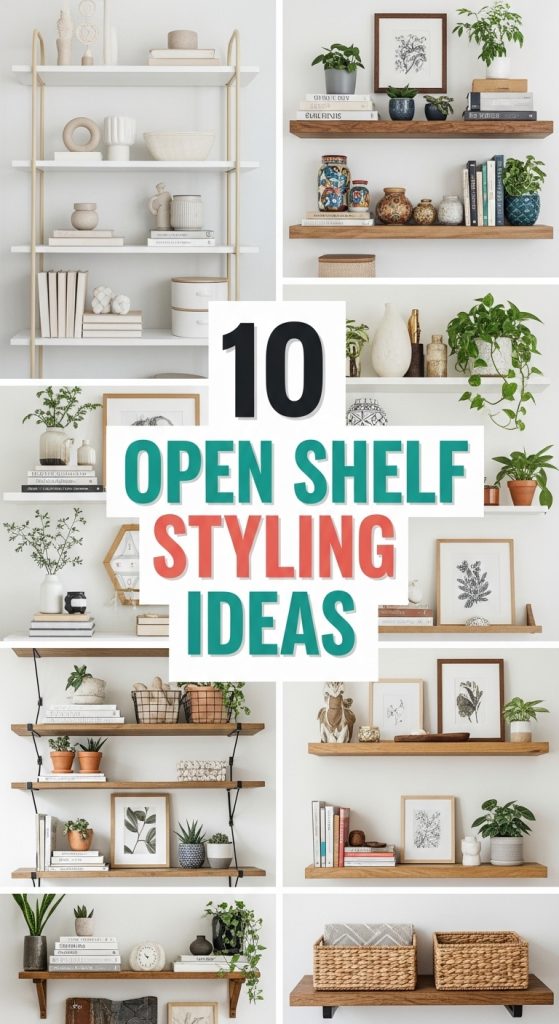
In this guide, we will explore 10 open shelf styling ideas that blend practicality with beauty. Whether your home leans toward modern minimalism, farmhouse charm, or bohemian warmth, these ideas will help you style your shelves like a designer and make every space look intentional and cohesive.
1. Mix Function with Style
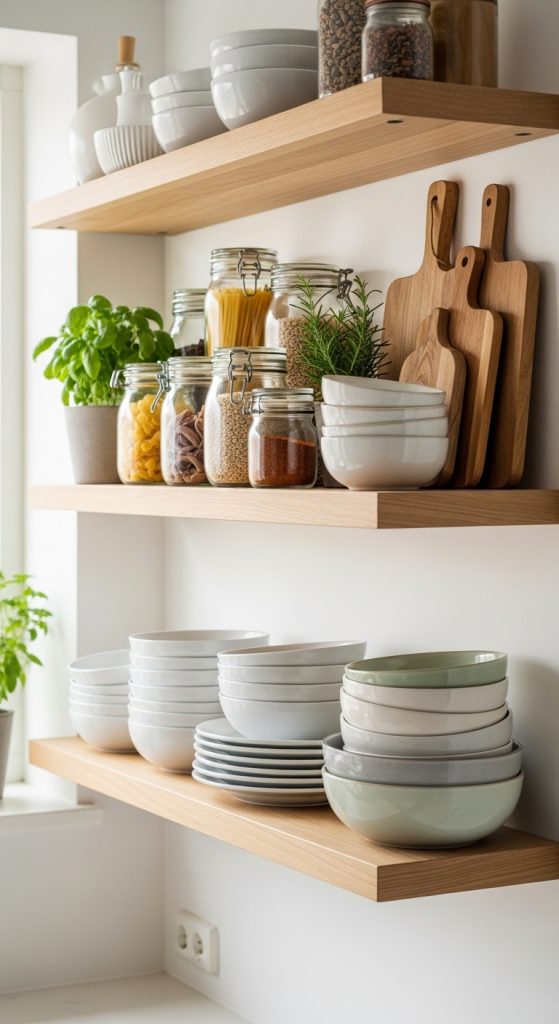
Open shelving is not just about decoration; it’s also about convenience. The best shelf styling combines both beauty and practicality. Start by deciding which items you need to access regularly and which can serve as decorative accents.

For example, in the kitchen, keep everyday dishes, mugs, or glassware on lower shelves, while displaying decorative bowls or cookbooks on higher ones. In the living room, mix framed photos and vases with storage baskets or small boxes.
To achieve balance, arrange functional items in neat stacks and surround them with a few aesthetic touches like plants, candles, or sculptural objects.
The key is to make your shelves look intentional rather than random. Every item should serve a purpose, whether it’s practical or purely decorative.
2. Use a Consistent Color Palette
A cohesive color palette is one of the most effective ways to make open shelving look polished and organized. Choose two to three dominant colors that complement the overall tones of your room, and repeat them across the shelves.
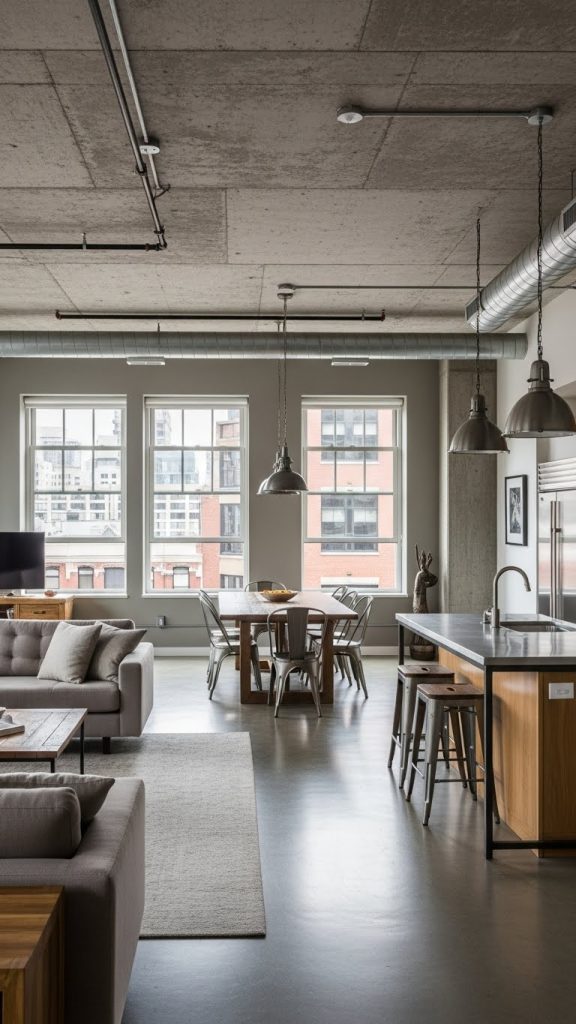
For a clean and airy look, stick to neutrals such as white, beige, gray, and light wood tones. For a bolder, more dramatic appearance, add accents of black, navy, or emerald green.
Even if your items vary in texture and size, keeping the colors consistent ties everything together.
For example, displaying white ceramic dishes, light wood trays, and glass jars creates a calm and coordinated kitchen shelf display.
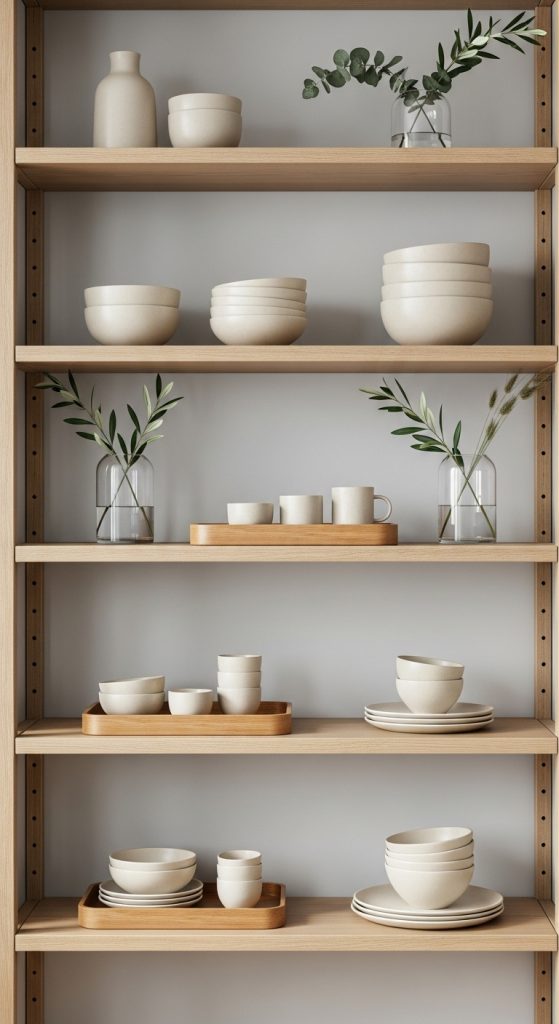
3. Layer Heights and Depths
Flat, one-dimensional shelving can look dull and static. To bring visual interest, vary the heights and depths of your objects.
Start by placing taller pieces like vases, framed art, or jars toward the back. Then layer smaller items in front. This creates a sense of depth and movement, making the arrangement feel more natural and dynamic.
Books can be used to add height or serve as a base for smaller decorative items like candles or figurines.
The goal is to create layers that draw the eye in, rather than lining everything up in a straight row.
4. Incorporate Natural Elements
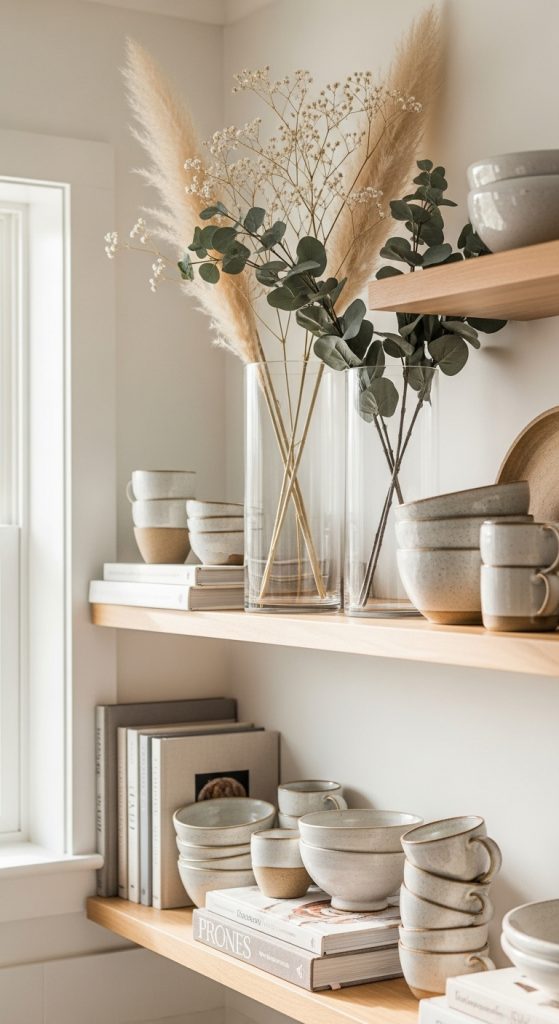
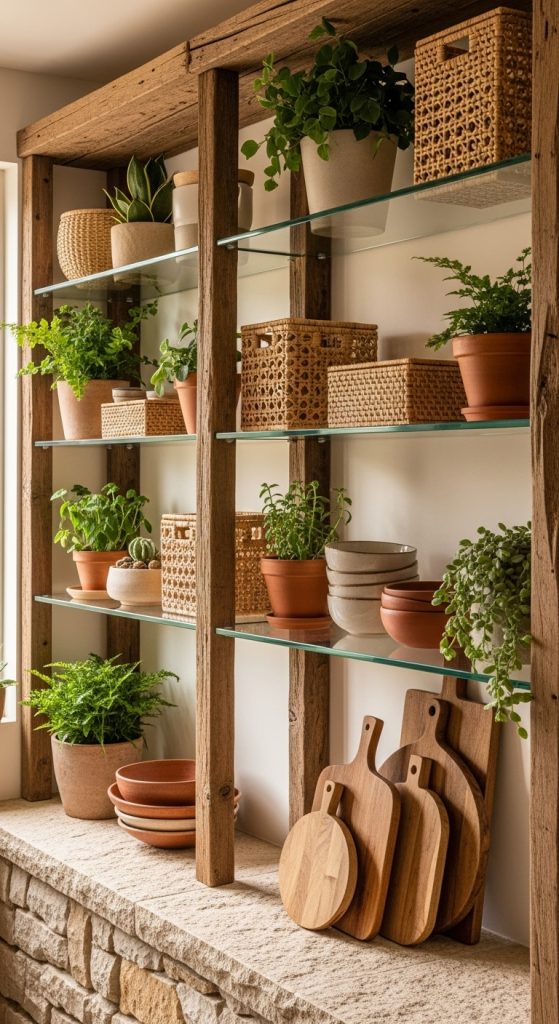
Natural materials bring warmth and texture to open shelves. Incorporating elements such as wood, stone, glass, ceramics, and greenery makes the space feel more inviting.

Try placing a small potted plant on one shelf and balancing it with a woven basket or wooden cutting board on another. The mix of organic materials helps soften the look of the shelves and creates visual balance.
Even a single vase of fresh or dried flowers can add life and a touch of nature to an otherwise static display.
In minimalist interiors, natural materials also prevent the space from feeling too sterile or cold.
5. Add Artwork or Framed Prints
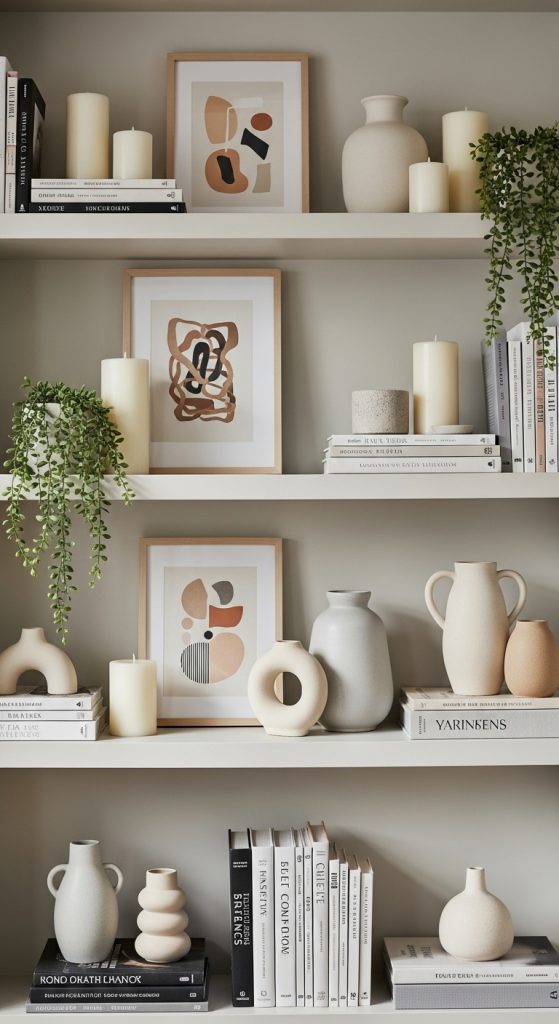
Framed art adds personality and a touch of sophistication to open shelves. You can lean small prints against the wall, layer them behind other objects, or hang one just above the top shelf for a gallery-inspired look.

Mixing framed artwork with books and decorative accents creates depth and adds visual interest.
For a cohesive design, choose frames that match your overall color scheme, whether it’s sleek black metal, warm wood, or clean white.
This approach transforms your shelves from simple storage solutions into curated art displays.
6. Group Items in Threes or Odd Numbers
Designers often use the “rule of three” because odd-numbered groupings tend to look more natural and visually appealing than even ones.
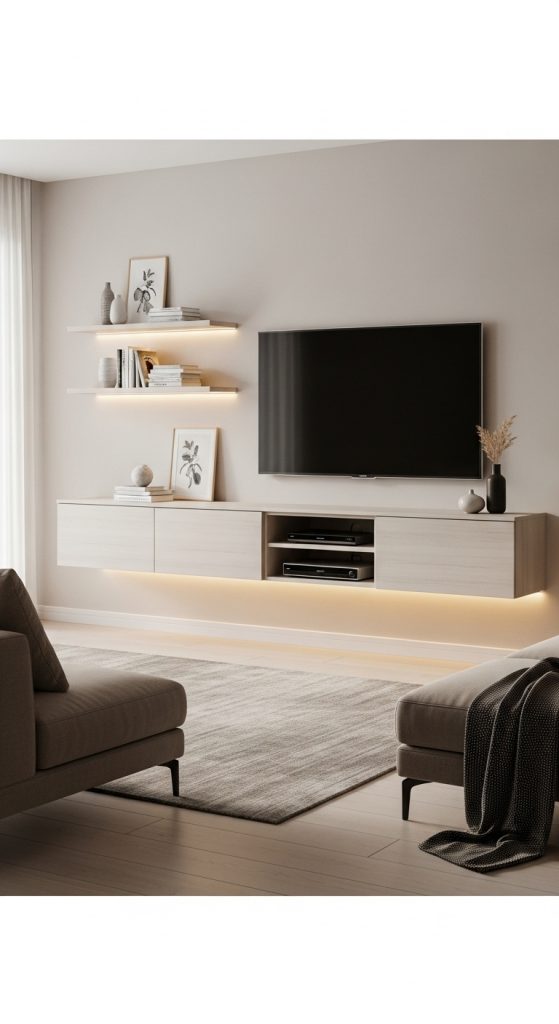
When styling your shelves, group similar objects in sets of three or five. For example, you can combine a candle, a small plant, and a decorative bowl for one section, while another section might feature a vase, a stack of books, and a photo frame.
Varying the heights, textures, and shapes within each group prevents the arrangement from looking too uniform or stiff.
This technique keeps the eye moving across the shelves and creates a balanced composition that feels harmonious yet relaxed.
7. Use Books as Decorative Foundations
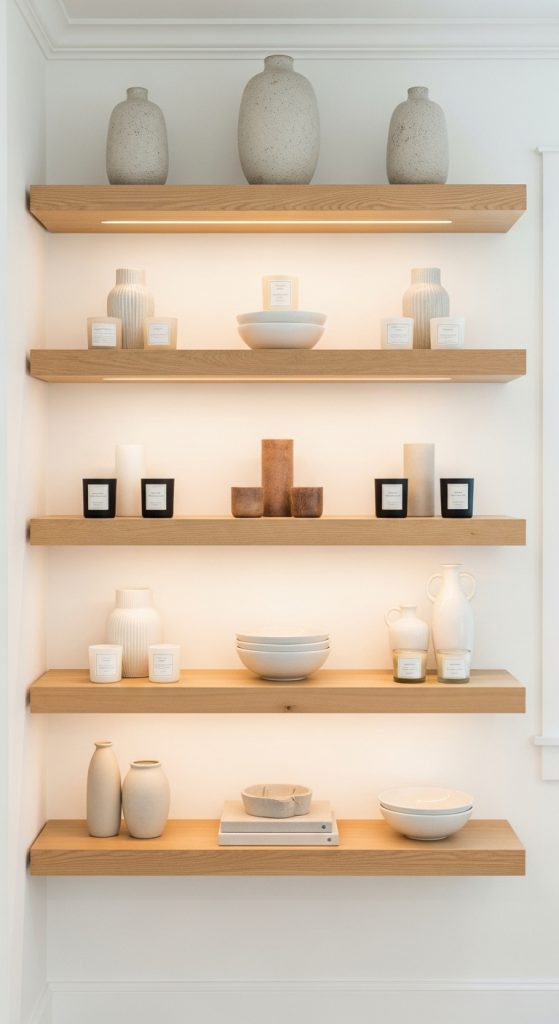
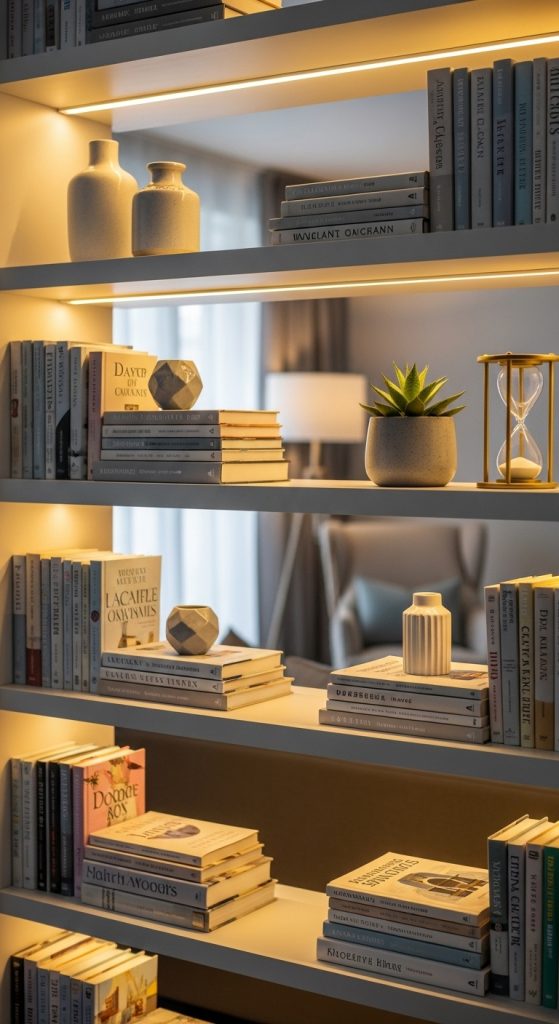
Books are one of the easiest and most versatile items to style on open shelves. They add height, structure, and personality to any arrangement.
You can display them vertically in stacks or horizontally with small objects placed on top. To keep the look clean, remove book jackets and organize them by color or spine tone.
Cookbooks work beautifully in kitchens, while design or travel books can enhance living rooms and offices.
Using books as anchors helps ground decorative objects and fills empty spaces with visual weight.
8. Add Texture and Contrast
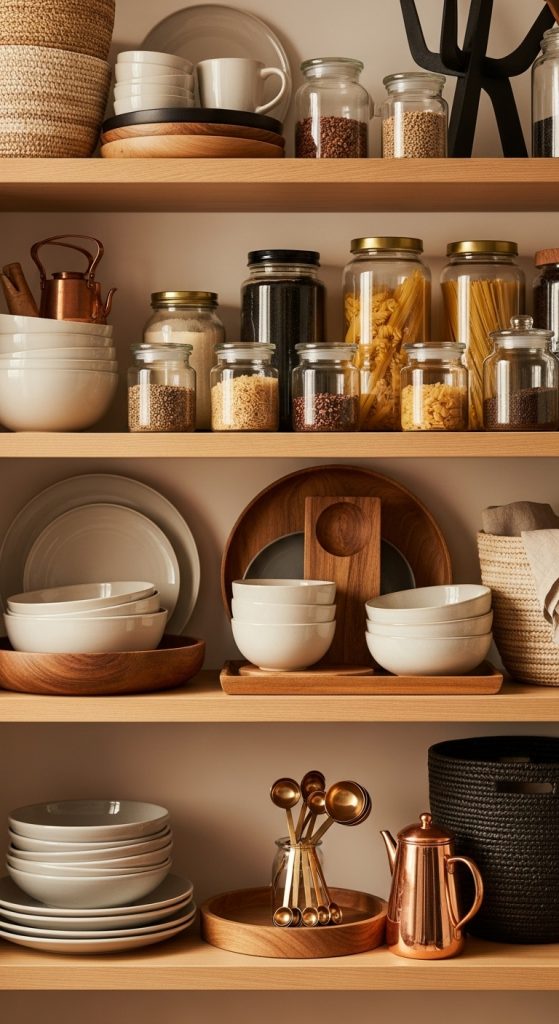
Texture adds dimension and makes open shelving more interesting. Too many smooth surfaces can look flat, while a mix of textures creates depth and warmth.
Combine glass with wood, ceramics with woven materials, and metal with soft fabrics. In the kitchen, mix glossy plates with matte jars or textured linen napkins. In living rooms, blend sleek photo frames with rustic pottery or woven baskets.
Contrast is also key. Pair dark items with light ones and shiny finishes with matte surfaces. The right mix of texture and contrast ensures your shelves feel layered and visually rich.
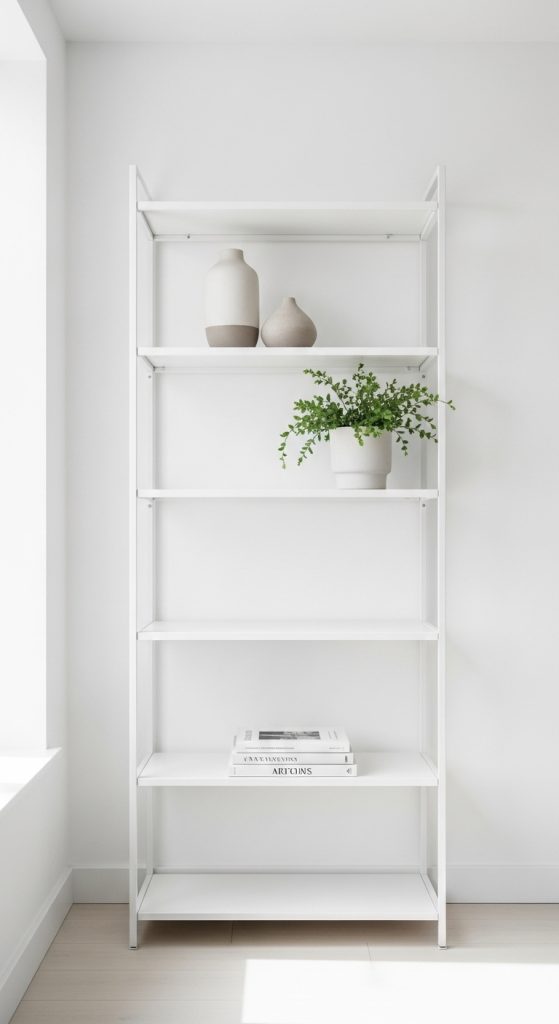
9. Keep Negative Space for Balance
It can be tempting to fill every inch of your shelves, but negative space is just as important as the items themselves. Empty areas allow your eyes to rest and make each object stand out more.
Think of styling your shelves like creating a visual rhythm. Each shelf should have a balance of full and open spaces.
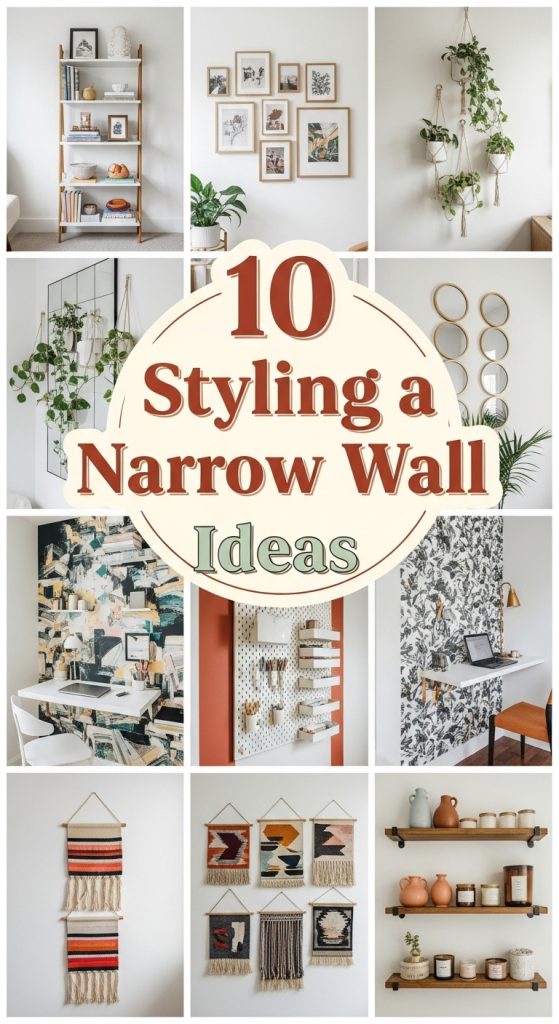
If a shelf feels overcrowded, remove one or two items and see how much calmer it looks. This minimalist approach creates a sense of breathing room, which helps highlight your favorite pieces.
Less is often more when it comes to open shelf styling.
10. Refresh Seasonally or Periodically
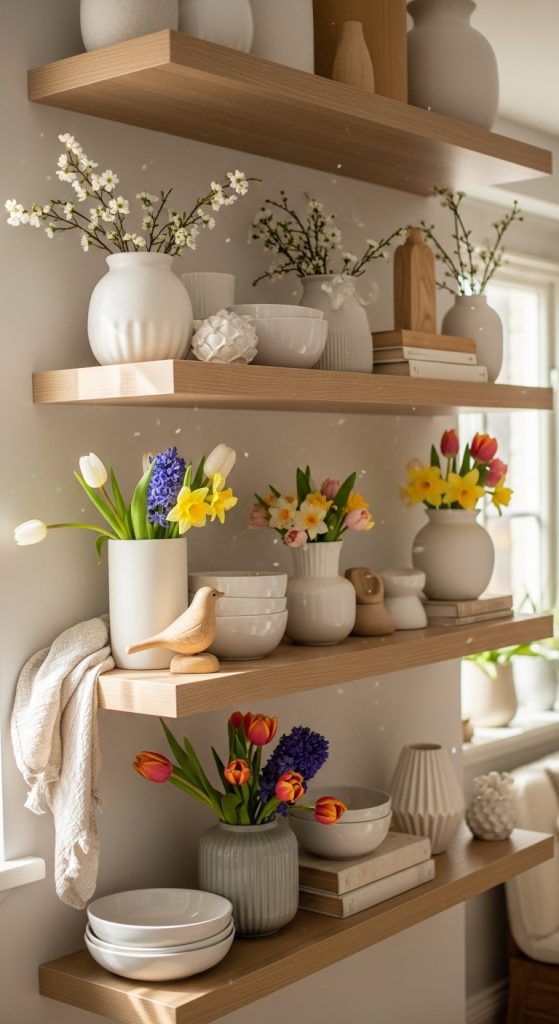
Open shelves give you the flexibility to refresh your decor with the changing seasons or your evolving style.
In spring, you might add fresh flowers, light ceramics, and pastel tones. In autumn, switch to warm tones, dried botanicals, and wooden accents.
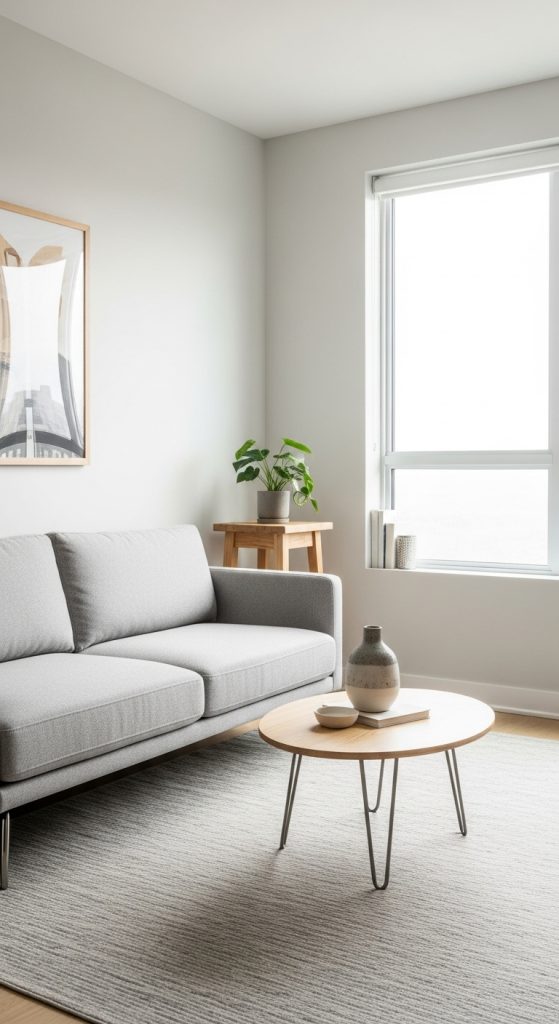
Regularly rotating decor keeps your shelves looking fresh and prevents clutter from building up. It also allows you to express creativity and bring new energy into your space without making major changes.
Refreshing your shelves every few months ensures your home feels updated and intentional year-round.