
Learning to sew is a rewarding skill that allows you to create, repair, and customize clothing and household items. Whether you are completely new to sewing or just getting back into it, starting with small, simple projects is the best way to build confidence. These beginner sewing projects are practical, easy to complete, and will help you practice essential techniques like stitching straight lines, hemming, and attaching fabric pieces together.
Each of the following projects can be done using basic supplies such as fabric, scissors, thread, a needle, pins, and a sewing machine if you have one. With patience and practice, you can create beautiful handmade items for yourself, your home, or as thoughtful gifts.

1. Fabric Tote Bag
A simple fabric tote bag is one of the most rewarding first sewing projects. It teaches you how to cut fabric, sew straight seams, and attach handles. You can use cotton fabric, canvas, or any medium-weight material you like.
To make one, cut two identical rectangles for the front and back panels, plus two smaller strips for handles. Sew the sides and bottom of the rectangles together, turn the bag right-side out, and hem the top edge. Attach the handles securely by sewing an X pattern where they meet the bag.
This project can be completed in less than an hour and is useful for groceries, books, or beach trips. You can decorate it with fabric paint, patches, or embroidery to give it a personal touch.

2. Pillowcase
A pillowcase is an excellent project for beginners because it involves only straight stitching. You can practice cutting, hemming, and sewing seams neatly.
Start with a soft cotton or flannel fabric. Cut the fabric to the size of your pillow, leaving extra space for seam allowance. Fold the fabric in half, sew along the two long edges, and hem the open end by folding and stitching twice.
This project helps you learn precision and gives you a useful product for your home. You can experiment with colorful prints or matching fabric sets to refresh your bedroom decor.


3. Drawstring Bag
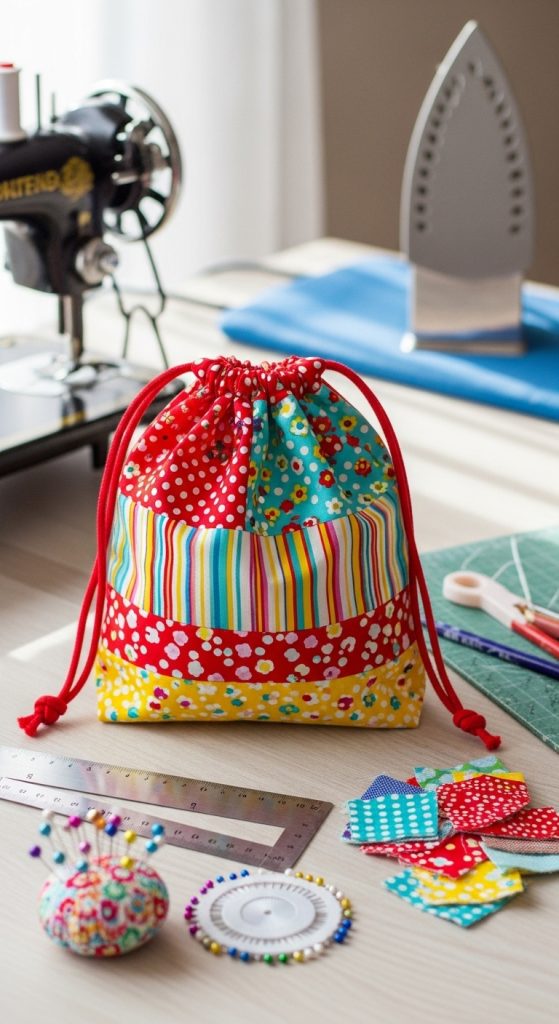
A drawstring bag is a fun and practical project that teaches you how to create casings for cords and stitch curved corners. It can be used for storing small items, makeup, or toys.
To make one, cut two pieces of fabric in your desired size. Sew three sides together, leaving the top open. Fold the top edge over twice to make a casing for the string, and sew around, leaving a small gap to thread the cord through. Use a safety pin to pull the string inside and knot both ends.
This project is quick and satisfying, making it ideal for practicing control while sewing around corners. You can make several in different sizes for various purposes.
4. Fabric Coasters
Fabric coasters are a small but stylish project for beginners. They teach you how to sew squares, turn fabric, and finish edges neatly.
Cut two square pieces of fabric and one piece of batting or felt for padding. Stack them together with the right sides facing inward. Sew around the edges, leaving a small opening to turn it right-side out. After turning, press with an iron and topstitch around the edges to close the gap.
Coasters are great for using fabric scraps and make perfect handmade gifts. You can create sets of matching or mix-and-match designs for different seasons.

5. Scrunchies
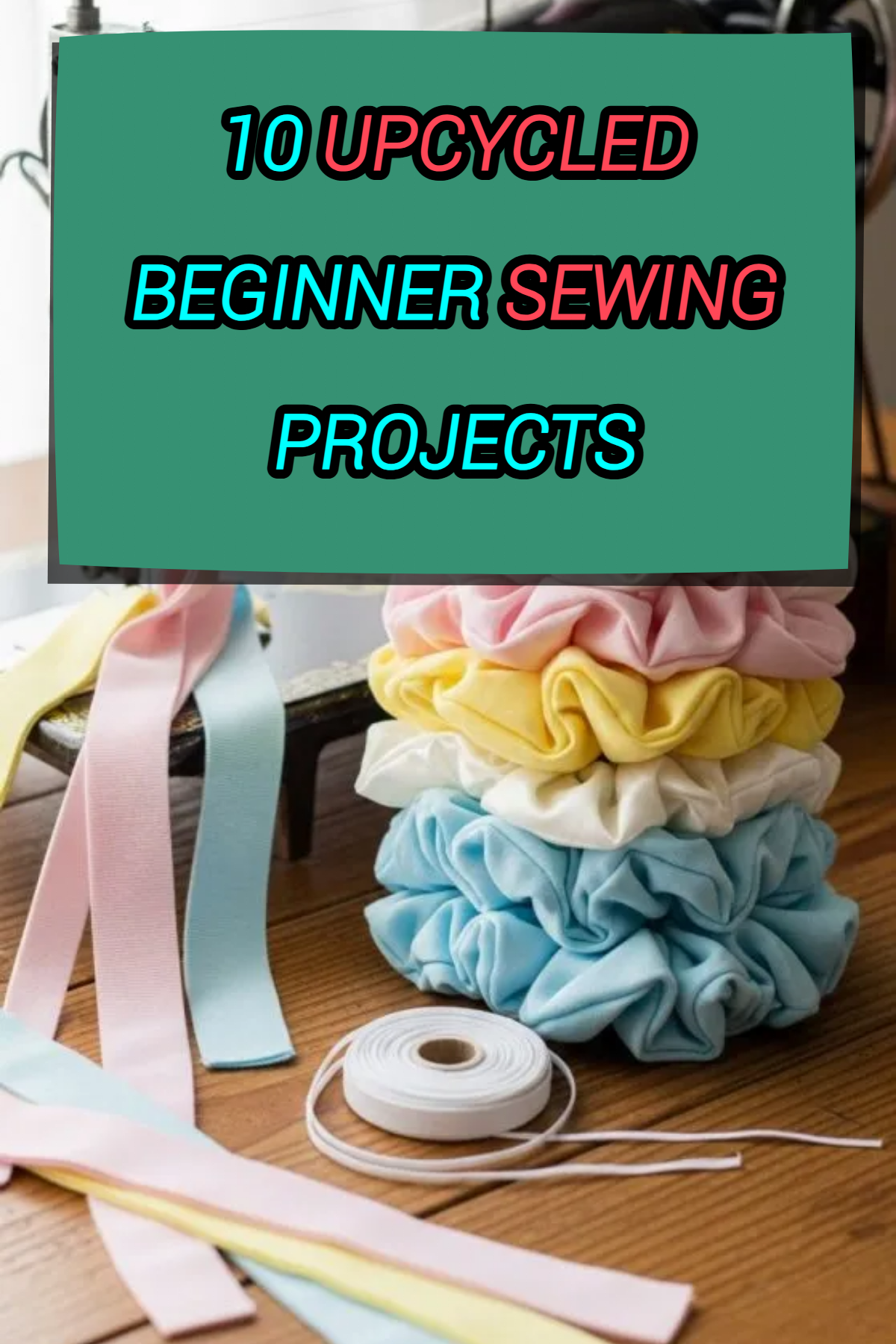
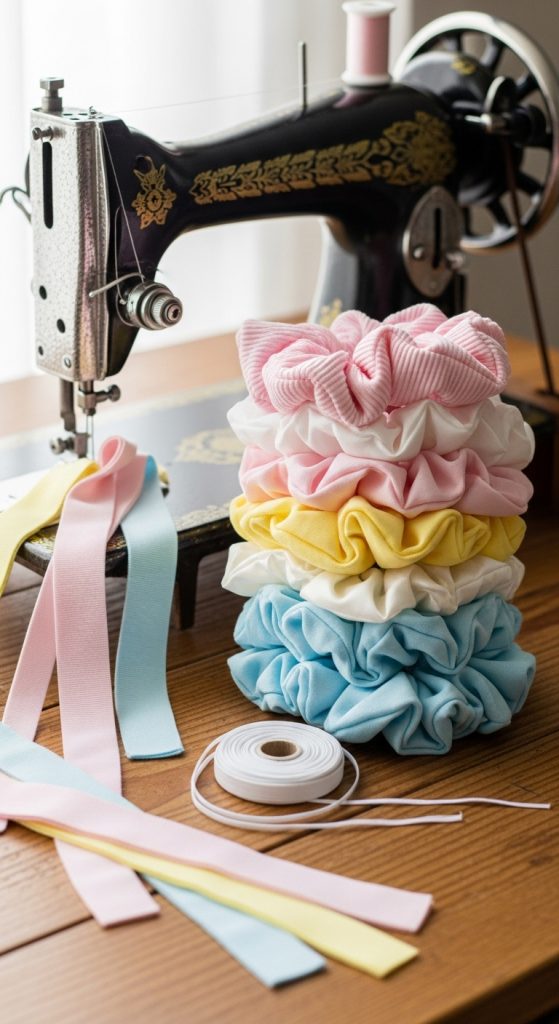
Scrunchies are one of the easiest and trendiest sewing projects. They are a perfect way to use leftover fabric and learn about sewing tubes and inserting elastic.
Cut a strip of fabric about three inches wide and twenty inches long. Fold it lengthwise with the right sides together and sew along the long edge. Turn the fabric right-side out using a safety pin. Thread a piece of elastic through the tube, then sew the ends of the elastic together. Tuck in the edges of the fabric and sew them closed.
Scrunchies can be made from cotton, satin, or velvet. They are quick to make and can be sold, gifted, or matched with outfits.
6. Fabric Napkins
Sewing fabric napkins is a great way to practice hemming and measuring accurately. They are reusable, eco-friendly, and elegant for dining.
Cut your fabric into equal squares, usually 16 by 16 inches. Fold the edges twice to form a narrow hem, and sew around all four sides. You can use a decorative stitch or contrasting thread for a stylish finish.
Napkins are simple yet satisfying to make and help build confidence with sewing straight lines and maintaining even seams.

7. Simple Apron
A simple apron project helps you practice sewing curves, hemming, and attaching straps or pockets.
To create one, cut a large rectangle for the body and two smaller rectangles for pockets. Hem all edges neatly. Attach the pockets by sewing them onto the main body piece. Cut two long fabric strips for the waist ties and one shorter strip for the neck strap. Sew them securely to the corners of the apron.
This project combines several sewing techniques while producing something genuinely useful for cooking or crafting. You can personalize it with fun prints or embroidery.

8. Zipper Pouch
Learning to sew a zipper is an excellent skill, and a small zipper pouch is a good beginner project for that.
Cut two fabric rectangles for the front and back, and one zipper that matches the width. Place the zipper between the right sides of the fabric and sew along the edges. When you unzip it, the zipper should sit neatly on top. Sew the remaining sides of the pouch, turn it right-side out, and press.
Zipper pouches are great for holding makeup, stationery, or small accessories. Once you master this, you can experiment with lining and decorative stitching.

9. Fabric Bookmark
A fabric bookmark is a small and quick project that teaches basic cutting and edge finishing.
Cut a strip of fabric approximately two inches wide and seven inches long. If you want it sturdy, add interfacing or felt inside. Sew around the edges and use a decorative stitch or topstitching to make it look polished.

Fabric bookmarks can be embellished with lace, ribbons, or small embroidered designs. They make wonderful handmade gifts for book lovers.

10. Simple Skirt
A simple skirt is an excellent beginner clothing project. It allows you to practice measuring, hemming, and adding elastic waistbands.
To make one, measure your waist and desired skirt length. Cut a rectangular piece of fabric based on those measurements, leaving extra for seam allowances. Sew the side seam to form a tube, hem the bottom edge, and fold the top edge to create a casing for the elastic. Thread the elastic through and sew the ends together.
This project teaches garment construction basics in a simple way. You can use cotton fabric for casual skirts or lightweight materials for flowy designs.