
Art plays a very important role in early childhood development. For preschoolers, art is not only about making something beautiful. It is about exploring colors, shapes, textures, and ideas. Through art activities, young children improve their fine motor skills, hand and eye coordination, creativity, and confidence. Simple art projects also help children learn patience, focus, and problem solving in a fun way. When children use paint, glue, paper, and other basic materials, they are learning how to control their hands and express their thoughts.
Preschool art activities do not need to be complicated. In fact, the best ideas are often the simplest ones. Easy art projects allow children to work independently while still enjoying the guidance of a teacher or parent. Most of the materials can be found at home or in a classroom. Safety is also important, so always choose non toxic supplies and supervise young children during activities.
In this blog post, you will find 10 easy art ideas for preschoolers. Each idea includes preparation steps, materials needed, and helpful tips. These activities are designed to be simple, affordable, and enjoyable for young children.
- Finger Painting Fun
Finger painting is one of the most loved art activities for preschoolers. It allows children to explore colors and textures using their hands. This activity encourages sensory learning and creativity.

Materials needed include non toxic finger paints, thick paper or chart paper, plastic table covers, aprons or old clothes, and wet wipes or a bowl of water for cleaning hands. You can also use paper plates to hold different paint colors.
To prepare, cover the table with plastic and dress children in aprons. Pour small amounts of paint onto paper plates. Place the paper in front of each child. Show them how to dip their fingers into the paint and gently spread it on the paper. Let them mix colors and create patterns, shapes, or simple pictures.
This activity helps strengthen small muscles in the hands and fingers. It also improves color recognition. Encourage children to talk about what they are creating. Ask simple questions like what colors they are using or what their painting looks like. Always supervise and ensure that children do not put paint in their mouths.

- Handprint Art Creations
Handprint art is simple and meaningful. It allows children to use their own hands as stamps to create fun designs. This activity can also be used to make keepsakes for parents.

You will need washable paint, brushes or sponges, thick paper, wet wipes, and aprons. Optional materials include markers, stickers, and colored paper for decoration.
To begin, apply paint evenly on the child’s hand using a brush or sponge. Help them press their hand firmly onto the paper. Carefully lift the hand to reveal the print. Once the paint dries, children can add details. For example, they can turn a handprint into a fish, tree, flower, or animal by drawing eyes, leaves, or other features.
Preparation is simple. Cover the workspace and keep cleaning materials nearby. Always guide children when applying paint to avoid too much mess.
This activity improves sensory awareness and creativity. It also gives children a sense of pride because they can see their own hand as part of the artwork. Teachers and parents can write the child’s name and date on the paper to create a memory keepsake.


- Paper Plate Animals
Paper plate animals are fun and easy to make. Preschoolers enjoy creating different animals using simple shapes and colors.
Materials required include paper plates, colored paper, glue sticks, child safe scissors, crayons or markers, and optional items like googly eyes or yarn.
To prepare, cut out basic shapes from colored paper such as ears, noses, tails, or wings. You can either pre cut these shapes for younger children or allow older preschoolers to practice cutting with supervision. Give each child a paper plate and ask them to choose an animal to create, such as a lion, rabbit, or fish.
Children can color the plate or paint it first. Then they glue on the extra pieces to form the animal. Encourage them to add details with markers, such as whiskers or patterns.

This activity helps develop fine motor skills and hand coordination. It also teaches children about different animals and their features. You can combine this activity with a short story or lesson about animals to make learning more meaningful.

- Collage with Magazine Cutouts
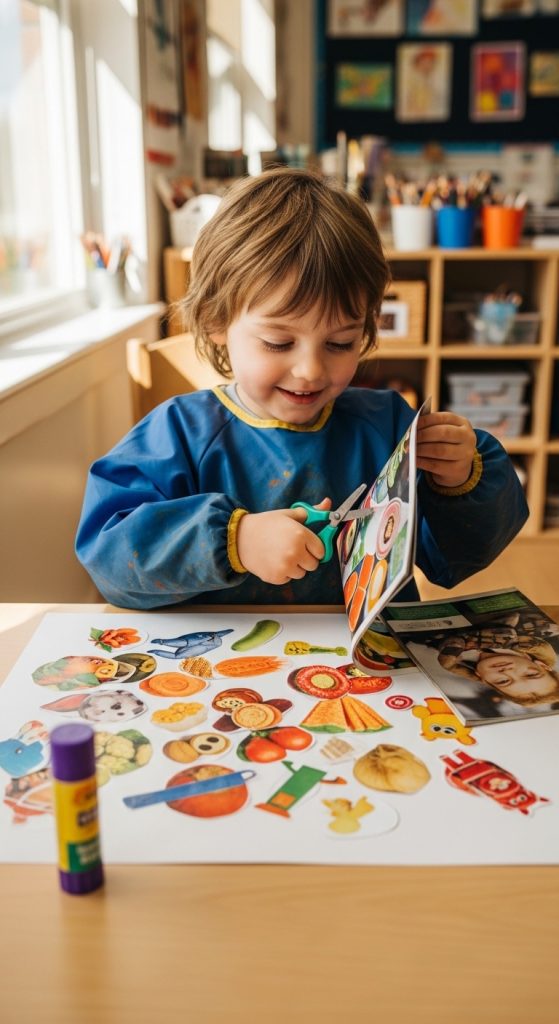
Collage making is a creative way for preschoolers to explore shapes, colors, and textures. It also helps improve cutting and pasting skills.
Materials needed include old magazines, safety scissors, glue sticks, large sheets of paper, and optional items like colored paper or stickers.
Preparation involves collecting age appropriate magazines with bright pictures. Show children how to carefully cut out images they like. Younger children can tear pictures instead of cutting if scissors are difficult for them.

Once they have a collection of pictures, they can arrange and glue them onto a large sheet of paper. They may create a theme such as animals, food, or things they love. Allow them to decide where to place each picture.
This activity improves decision making and creativity. It also encourages children to recognize objects and talk about them. Ask children to describe their collage when finished. This helps build language skills along with artistic expression.
- Sponge Painting
Sponge painting adds a new texture to painting activities. It is easy and exciting for preschoolers.
Materials required include clean sponges cut into small pieces, washable paint, paper plates, thick paper, and table covers.

To prepare, cut sponges into different shapes such as squares, circles, or simple shapes. Pour paint onto paper plates. Show children how to dip the sponge lightly into paint and press it onto the paper.
Children can create patterns, backgrounds, or simple pictures using the sponge. They may also experiment by layering colors.
Sponge painting helps develop hand strength and coordination. It also introduces children to different textures and techniques. Encourage them to explore gently pressing or lightly tapping the sponge to see different effects.
Always remind children to use small amounts of paint to avoid too much dripping. Keep cleaning materials nearby to maintain a tidy workspace.

- Crayon Resist Art
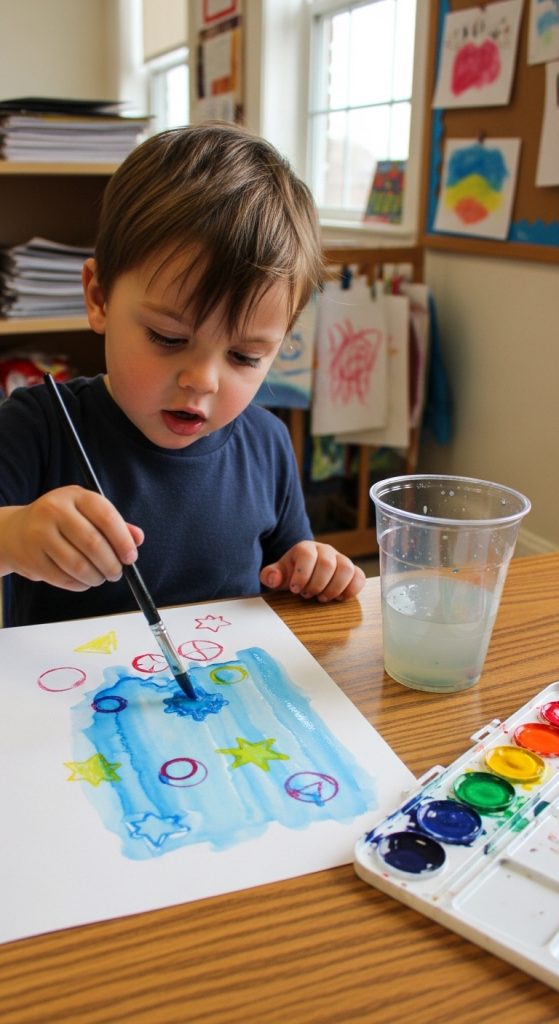
Crayon resist art is a magical and simple activity. Children draw with crayons and then paint over their drawing to reveal hidden designs.
Materials needed include white crayons, white paper, watercolor paints, brushes, and water cups.
To prepare, give each child a white crayon and white paper. Ask them to draw simple shapes, patterns, or pictures. They may not clearly see their drawing at first. After they finish drawing, provide watercolor paints.
Show them how to gently paint over the entire paper. As the paint covers the page, the crayon drawing appears because wax resists water.
This activity teaches children about basic science concepts like resistance and layering. It also encourages patience and excitement as they wait to see their hidden picture.
Ensure children use enough paint to cover the paper but not too much water. Supervise to avoid spills. This simple activity creates beautiful results with very little preparation.
- Nature Leaf Printing
Nature leaf printing connects children with the outdoors. It helps them observe shapes and patterns found in nature.
Materials required include fresh leaves, washable paint, brushes, thick paper, and table covers.
Preparation starts with collecting leaves of different shapes and sizes. Wash and dry them before use. At the table, apply a thin layer of paint to one side of the leaf using a brush.
Help children place the painted side down onto paper and gently press. Carefully lift the leaf to reveal the print. They can use different colors and leaves to create a nature themed picture.
This activity teaches children about plants and textures. It also builds fine motor skills through pressing and lifting actions. Encourage children to compare leaf shapes and talk about their differences.
Nature printing can be combined with a short outdoor walk, making the learning experience more exciting and meaningful.

- Cotton Ball Cloud Art
Cotton ball cloud art is soft, simple, and enjoyable. It helps preschoolers explore texture and simple scene building.
Materials needed include blue construction paper, cotton balls, glue, and crayons or markers.
To prepare, give each child a blue sheet of paper to represent the sky. Show them how to apply glue in cloud shapes. They can stretch and glue cotton balls onto the glue areas to form fluffy clouds.
Children can also draw a sun, birds, or grass using crayons. This adds more detail to the artwork.

This activity improves hand coordination and strengthens small muscles when children pull apart cotton balls. It also encourages imagination as they create their own sky scene.
Keep glue use controlled by showing children how to apply small amounts. Supervise closely to prevent cotton balls from going into mouths.

- Simple Shape Stamping
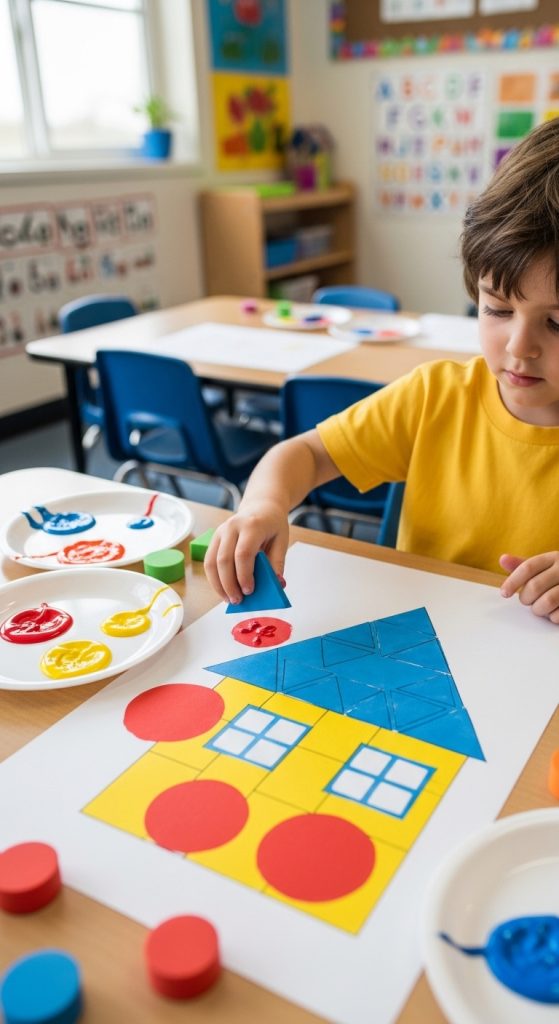
Shape stamping is a fun way to learn about shapes while creating art. Preschoolers enjoy pressing stamps and seeing repeated patterns.
Materials required include sponge or foam shapes, washable paint, paper plates, thick paper, and table covers.

You can either buy ready made foam shapes or cut simple shapes like circles, squares, and triangles from sponges. Pour small amounts of paint onto plates.
Show children how to dip the shape into paint and press it onto paper. They can create patterns or combine shapes to make pictures like houses or flowers.
This activity teaches shape recognition and pattern making. It also strengthens hand control through pressing movements.
Encourage children to name each shape as they use it. Ask them to create a pattern such as circle, square, circle. This adds a simple math learning element to the art activity.
- Rainbow Q Tip Painting
Q tip painting is a detailed and focused activity. It helps preschoolers improve fine motor control.
Materials needed include cotton swabs, washable paint, paper, and a simple outline drawing such as a rainbow.
To prepare, draw a simple rainbow outline on paper. Pour small amounts of different paint colors onto paper plates. Show children how to dip the tip of the cotton swab into paint and gently dot along the lines.
Children can fill the rainbow with colorful dots. They may also create their own dotted pictures.

This activity improves concentration and hand control. It is especially helpful for preparing children for writing skills.
Encourage children to use different colors and stay within lines, but allow freedom for creativity. Keep extra cotton swabs ready for color changes.
