Bird feeders are a simple and rewarding way to invite nature into your backyard, balcony, or garden. Making your own bird feeder is not only cost effective but also a creative activity that can be enjoyed by adults and children alike. DIY bird feeders allow you to reuse household items, reduce waste, and design feeders that suit the specific birds in your area. When birds visit your feeder regularly, you get the chance to observe their behavior, learn about different species, and contribute positively to the local ecosystem, especially during seasons when food is scarce.
Creating bird feeders at home does not require advanced tools or expensive materials. Most projects use items such as plastic bottles, wood scraps, tin cans, or kitchen leftovers. Each feeder type attracts different kinds of birds depending on the food you provide and how the feeder is designed. Seed feeders, suet feeders, and fruit feeders all serve unique purposes. Placement and maintenance are also important. A well placed feeder that is cleaned regularly will keep birds safe and healthy.
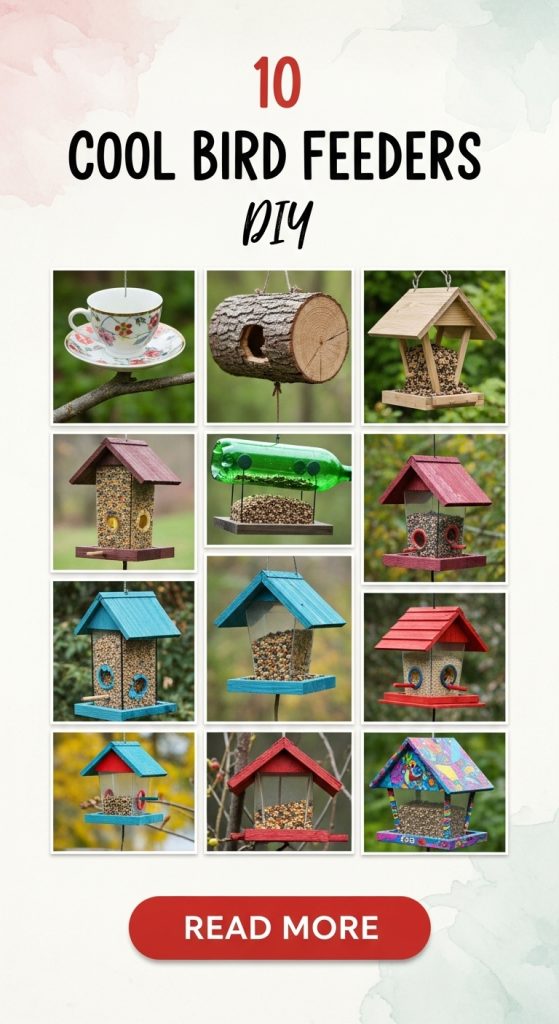
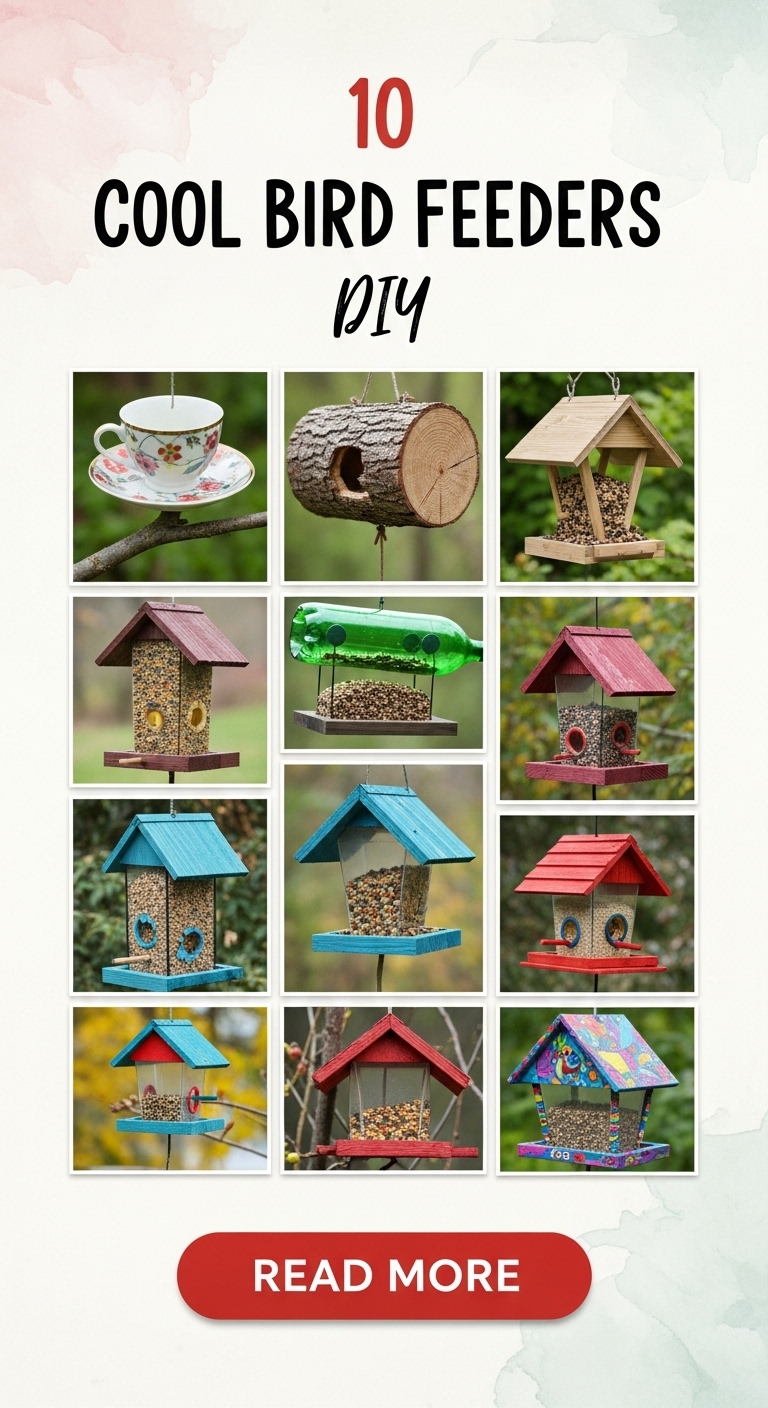
In this detailed guide, you will find ten cool DIY bird feeder ideas. Each idea explains the preparation process, materials needed, how to use the feeder, and helpful tips to make it last longer. The language is kept simple so anyone can follow along and enjoy the process of making something useful and meaningful for birds.
1. Plastic Bottle Seed Feeder
A plastic bottle seed feeder is one of the easiest and most popular DIY bird feeders. It is perfect for beginners and helps reuse waste plastic. This feeder works well for small birds like sparrows, finches, and tits.

To prepare this feeder, you need an empty plastic bottle with a cap, two wooden spoons or sticks, a cutter, string, and bird seed. Wash the bottle thoroughly and let it dry. Make two small holes opposite each other near the lower part of the bottle. Insert a wooden spoon through the holes so that the spoon bowl sticks out. Repeat this slightly higher up with the second spoon, placing it in the opposite direction. Make small holes just above each spoon bowl so seeds can flow out.
Fill the bottle with bird seed and close the cap tightly. Tie a strong string around the neck of the bottle and hang it from a tree branch or hook. Birds will sit on the spoon handles and eat the seeds easily.
This feeder is simple to maintain. Refill it when seeds are low and clean it every one to two weeks to prevent mold. Avoid placing it too close to walls where cats can reach. This feeder is a great way to start feeding birds with minimal effort and cost.
2. Wooden Tray Bird Feeder
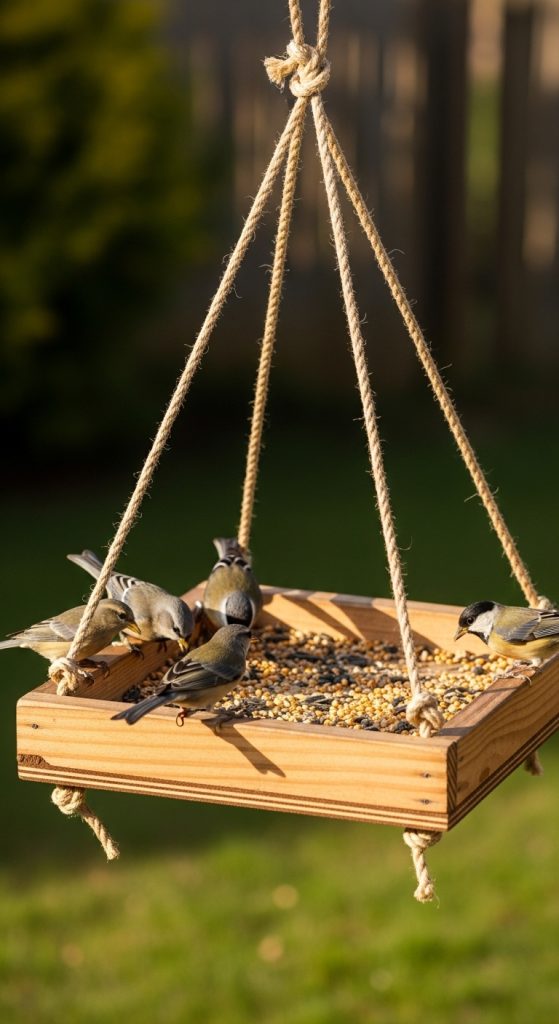
A wooden tray bird feeder offers an open feeding space and attracts a wide variety of birds. It is especially good for birds that prefer ground style feeding but need some elevation for safety.
Materials required include wooden planks, nails or screws, a hammer or screwdriver, and string or wire. Cut the wood into a flat base and four low side edges. Attach the side pieces to the base to form a shallow tray. Make sure there are small gaps at the corners or drill tiny holes for water drainage.
Once assembled, attach four strings or wires to each corner and tie them together at the top for hanging. You can also mount the tray on a pole if preferred. Place bird seed, grains, or crushed corn directly into the tray.
This feeder is easy for birds to access and allows you to observe them clearly. However, it needs regular cleaning because droppings can collect in the tray. Clean it weekly and remove wet or spoiled food. Wooden tray feeders are durable and can be customized with paint or natural finishes, as long as the materials used are safe and non toxic.
3. Tin Can Bird Feeder
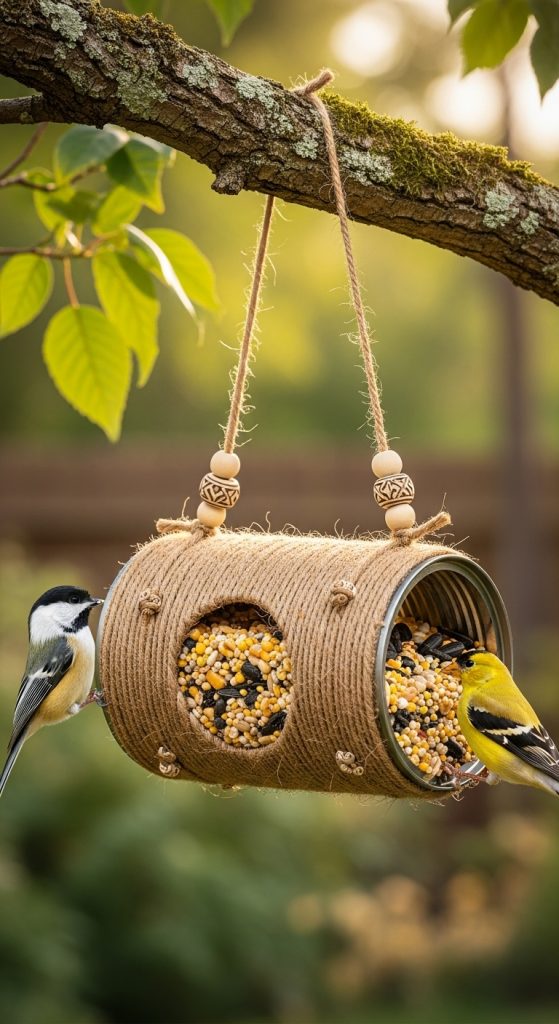
A tin can bird feeder is a creative way to reuse food cans and add a decorative touch to your garden. This feeder works well for seed or peanut feeding and attracts birds like chickadees and nuthatches.

Start by cleaning an empty tin can and removing any sharp edges. You can cover the outside with natural twine, fabric, or paint for decoration. For seed feeding, attach a small wooden perch near the opening using glue or wire. If you plan to use peanut butter or suet, you can skip the perch.
Tie a strong string or wire around the can and hang it horizontally or vertically from a tree branch. Fill the can with bird seed or spread peanut butter mixed with seeds inside the can.
This feeder is best placed in a quiet area where birds feel safe. Check it often to make sure food is fresh. During hot or rainy weather, avoid sticky foods that can spoil quickly. Tin can feeders are simple, affordable, and allow for many creative designs.
4. Pine Cone Bird Feeder
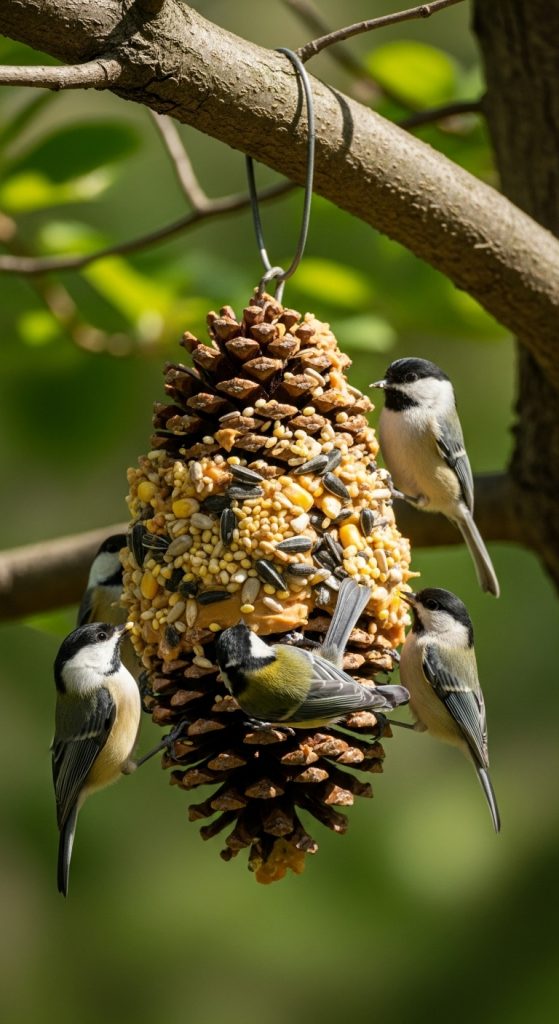
A pine cone bird feeder is a natural and child friendly project. It is easy to make and perfect for small birds during colder months when extra energy is needed.

To make this feeder, collect large, open pine cones. You will also need string, peanut butter or vegetable fat, and bird seed. Tie a piece of string securely around the top of the pine cone. In a bowl, mix peanut butter with bird seed until it forms a thick mixture.
Use a spoon or knife to spread the mixture all over the pine cone, pushing it into the gaps. Once covered, hang the pine cone from a tree branch.
This feeder does not require refilling and can be replaced once empty. It is important to use unsalted peanut butter and avoid ingredients harmful to birds. Pine cone feeders are best for short term use and are a great way to introduce children to bird feeding and nature care.
5. Milk Carton Bird Feeder
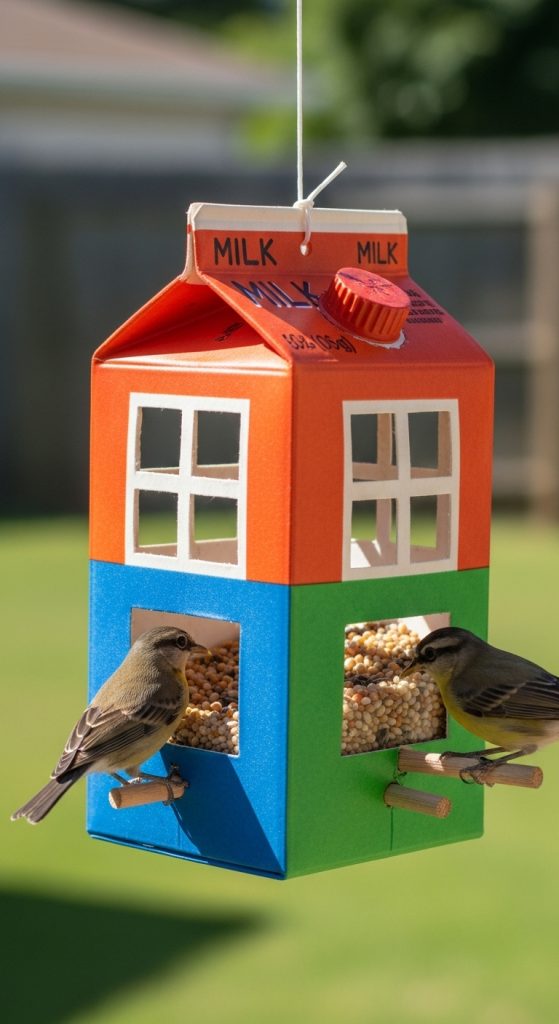
A milk carton bird feeder is lightweight and easy to customize. It provides shelter from rain and sun, making it comfortable for birds to feed.

You will need an empty milk carton, scissors, string, and bird seed. Rinse the carton well and let it dry. Cut large openings on two or more sides, leaving enough space at the bottom to hold seeds. Make small holes near the top for threading string.
You can decorate the carton with paint or markers, but make sure everything is dry before adding food. Fill the bottom with bird seed and hang the feeder from a tree or hook.
This feeder is ideal for backyard use and attracts many common birds. Clean it regularly and replace it if it becomes weak or damaged. Milk carton feeders are especially good for school projects and simple home crafts.
6. Glass Jar Bird Feeder
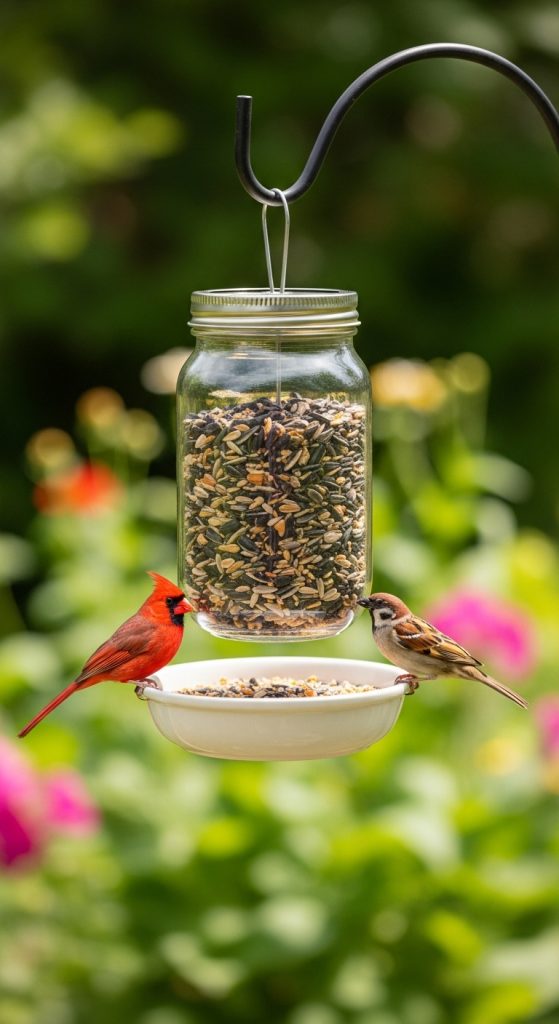
A glass jar bird feeder is sturdy and suitable for seed feeding. It looks neat and can last longer than plastic if handled carefully.

To prepare this feeder, you need a glass jar with a lid, a shallow dish, strong glue, and wire or string. Glue the jar lid to the center of the dish and allow it to dry completely. Fill the jar with bird seed and screw it onto the lid so it stands upside down over the dish.
Wrap wire securely around the neck of the jar to create a hanger. Hang the feeder from a stable hook or branch. Seeds will flow into the dish as birds eat.
This feeder is easy to refill and clean. Use caution when handling glass and place it where it will not fall easily. Glass jar feeders are best for balconies or covered areas where wind is not too strong.
7. Coconut Shell Bird Feeder
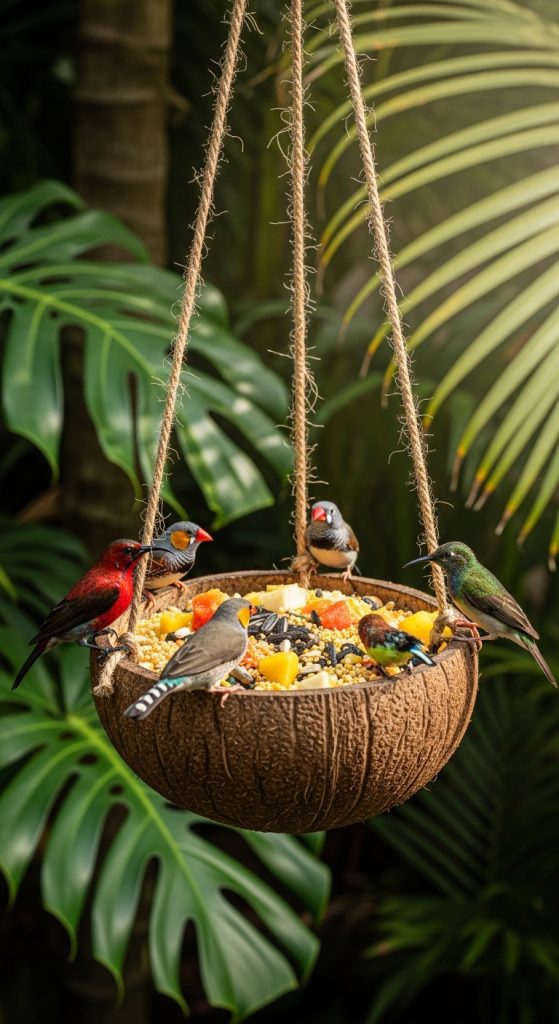
A coconut shell bird feeder is both natural and durable. It blends well into outdoor spaces and attracts birds that enjoy fruit and seeds.
You will need a halved coconut shell, a drill or nail, string, and bird food. Clean the inside of the coconut thoroughly and let it dry. Make three small holes around the edge and thread string through them to form a hanger.
Fill the shell with bird seed, fruit pieces, or a mixture of fat and seeds. Hang it from a tree branch at a safe height.
This feeder is long lasting and does not require much maintenance. Replace food regularly and clean the shell when empty. Coconut shell feeders are ideal for eco friendly bird lovers who prefer natural materials.
8. Spoon and Bottle Hanging Feeder
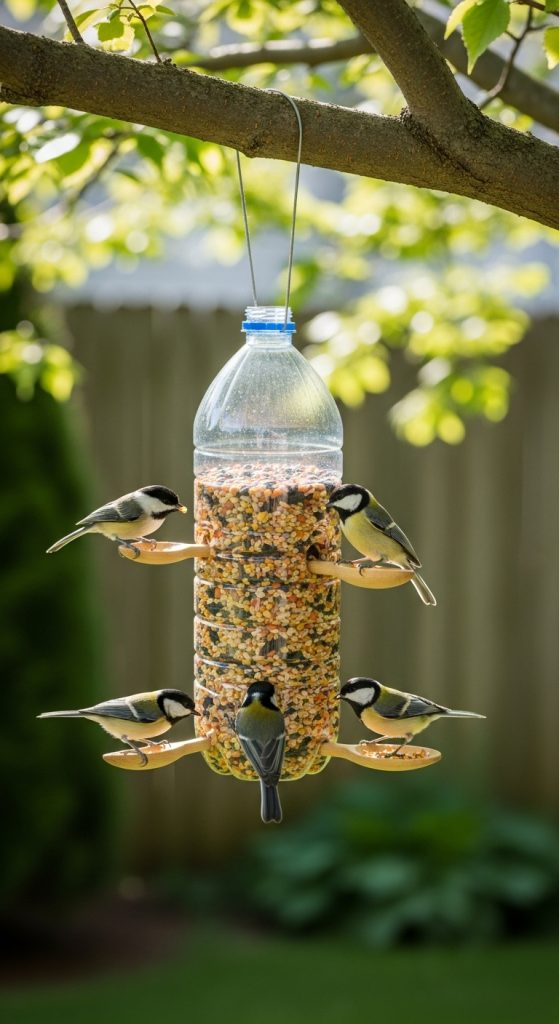
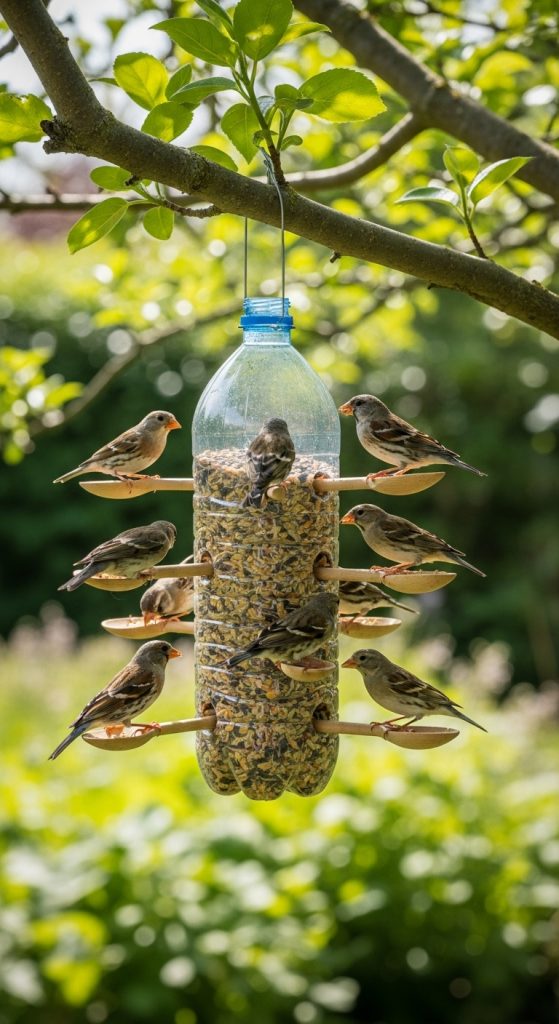
This feeder is a variation of the plastic bottle feeder but uses multiple spoons for better access. It is practical and visually interesting.
Materials include a plastic bottle, several wooden spoons, a cutter, string, and bird seed. Make holes on opposite sides of the bottle and insert spoons so that the bowls stick out. Make seed holes just above each bowl.
Fill the bottle with seed, close the cap, and hang it using string. Birds can perch on the spoons and eat comfortably.
This feeder reduces seed waste and keeps food dry. Clean it regularly and check for sharp edges. It is a great option for attracting small birds in limited spaces.
9. Suet Cake Cage Feeder
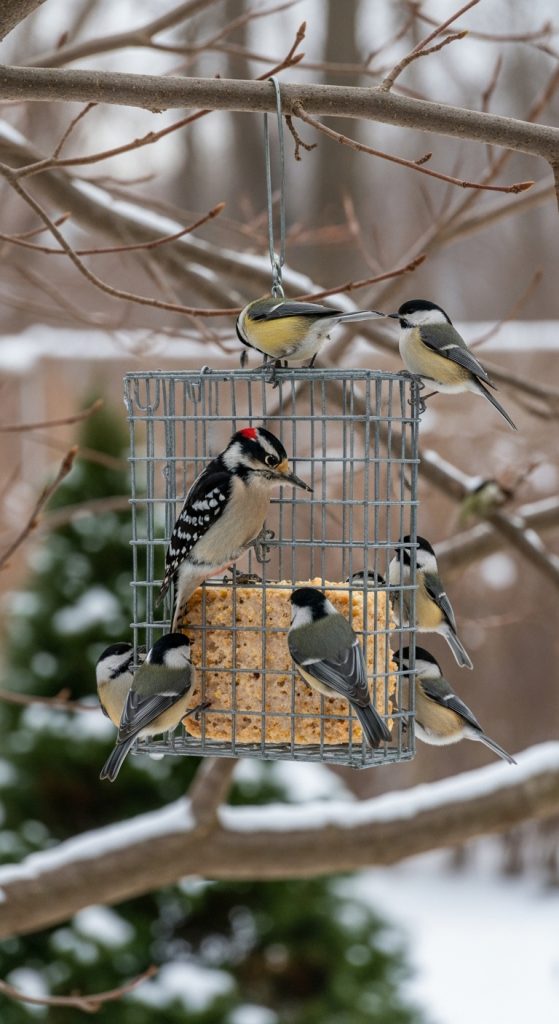
A suet feeder is ideal for high energy feeding, especially in winter. It attracts woodpeckers, starlings, and other strong birds.

You can make a simple suet feeder using a wire mesh or recycled metal basket. Shape the mesh into a small box that can hold a suet cake. Secure the edges tightly and attach a wire for hanging.
Place a homemade or store bought suet cake inside the cage and hang it from a sturdy branch. Make sure it is out of reach of predators.
Suet feeders should be cleaned regularly, and old suet should be removed in warm weather to prevent spoilage. This feeder provides essential nutrition and is very effective during cold seasons.
10. Terracotta Pot Bird Feeder
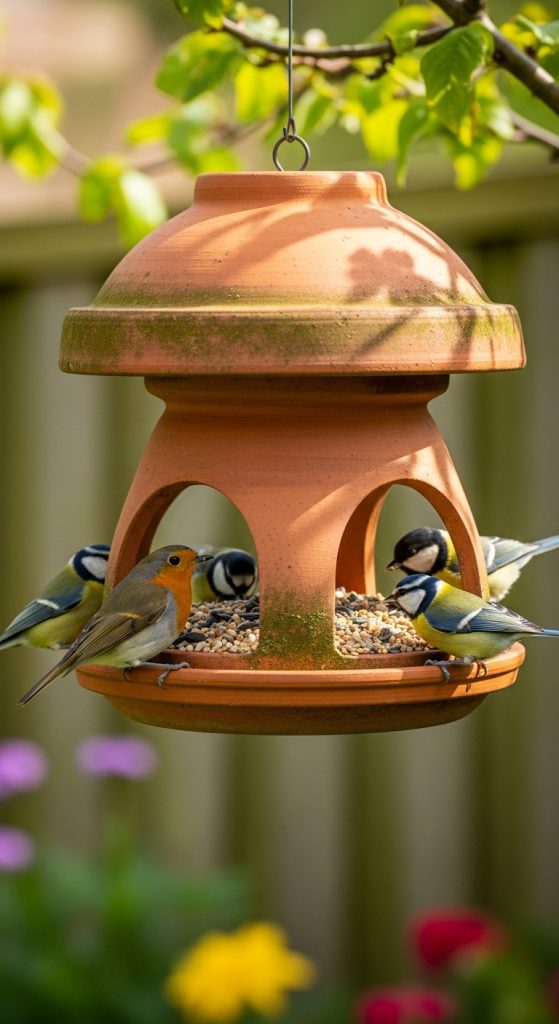
A terracotta pot bird feeder is stylish and functional. It is heavier than plastic feeders and stays stable in wind.

You need a small terracotta pot, a saucer, strong glue, and chain or wire. Glue the saucer to the top of the pot, forming a roof. Once dry, thread wire through the drainage hole at the bottom to create a hanger.
Fill the pot with bird seed or hang seed balls inside. The saucer protects food from rain while birds feed from the open sides.
This feeder is durable and easy to clean. It works well in gardens and patios. Terracotta feeders add a decorative element while serving a practical purpose for birds.