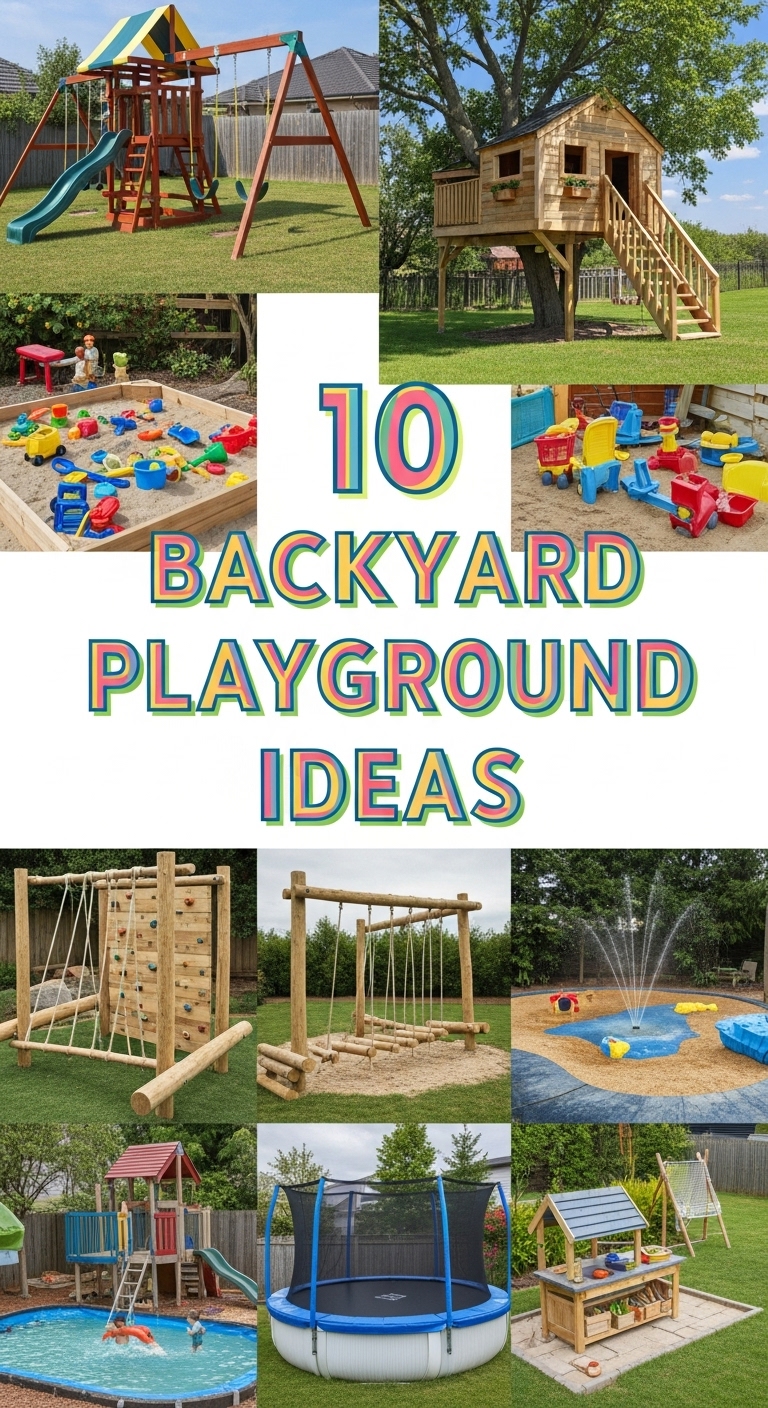
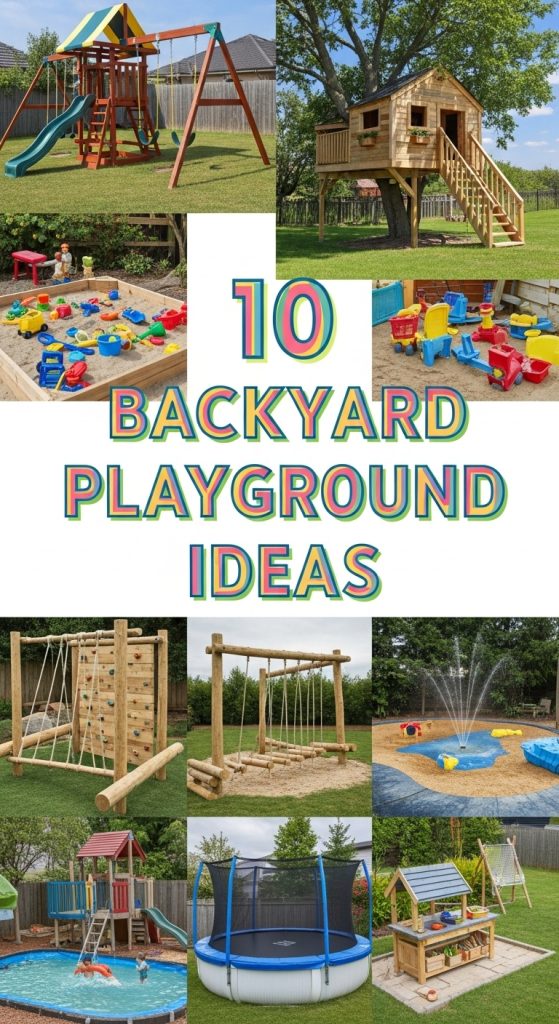
Creating a backyard playground is a wonderful way to combine fun, physical activity, and outdoor learning for children. A well-designed playground encourages creativity, social interaction, and exercise while keeping children safe. Below, we explore ten engaging backyard playground ideas, including preparation steps, required materials, and how to maximize their use.
1. Traditional Wooden Swing Set
A classic wooden swing set is a staple for backyard play areas. Swing sets often include swings, a slide, and sometimes a small climbing wall or playhouse. The appeal lies in its versatility, providing multiple play options in one structure.
Preparation: Start by selecting a level area in your backyard that is free from obstacles such as trees, rocks, and power lines. Ensure the ground is soft or covered with safety mulch or rubber mats to reduce injury risk.
Materials: Commonly used materials include treated wood, metal brackets, swing chains, swing seats, and non-toxic paint or sealant for weatherproofing. You may also need screws, bolts, and concrete for anchoring.
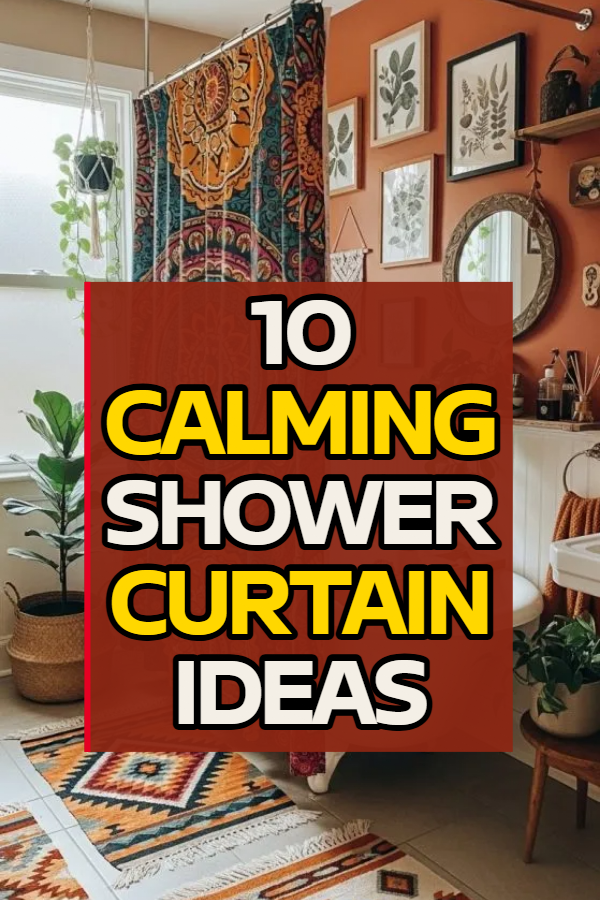
Use: Swing sets promote physical development, including balance, coordination, and strength. Children can enjoy swinging, sliding, and climbing, making it suitable for a range of ages. Parents can supervise from nearby benches, making it both safe and convenient.
Maintenance: Regularly inspect chains, bolts, and wooden surfaces for wear and tear. Sand rough spots and apply sealant annually to prolong the set’s life.
2. Treehouse Adventure
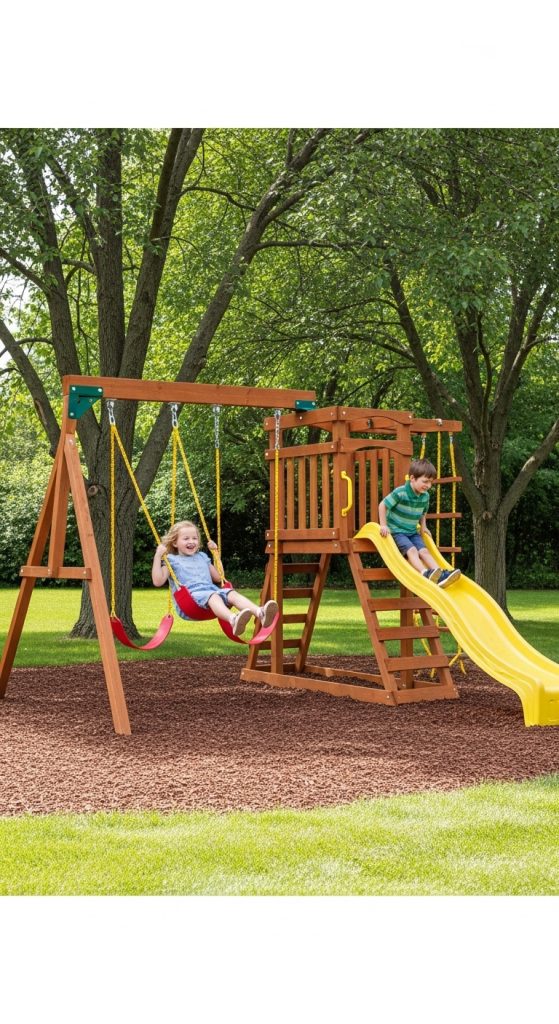
Treehouses offer imaginative play in a natural setting. A well-built treehouse combines climbing, observation, and social interaction. This type of playground fosters creativity, as children can invent games and scenarios while playing.
Preparation: Select a sturdy, mature tree with strong branches. Ensure there is enough clearance from fences and other structures. Obtain any necessary local permits for treehouse construction.

Materials: Plywood, pressure-treated lumber, screws, brackets, rope ladders, and safety railings are essential. Optional items include swings, slides, or climbing ropes attached to the treehouse.
Use: Treehouses encourage imaginative and cooperative play. Children can host pretend adventures, storytelling sessions, or even quiet reading time. They also build strength and coordination while climbing ladders or ropes.
Safety Considerations: Install guardrails and non-slip surfaces. Avoid high platforms for younger children and provide soft ground cover below. Regular inspections ensure structural integrity and safe play.
3. Sandbox Fun Zone
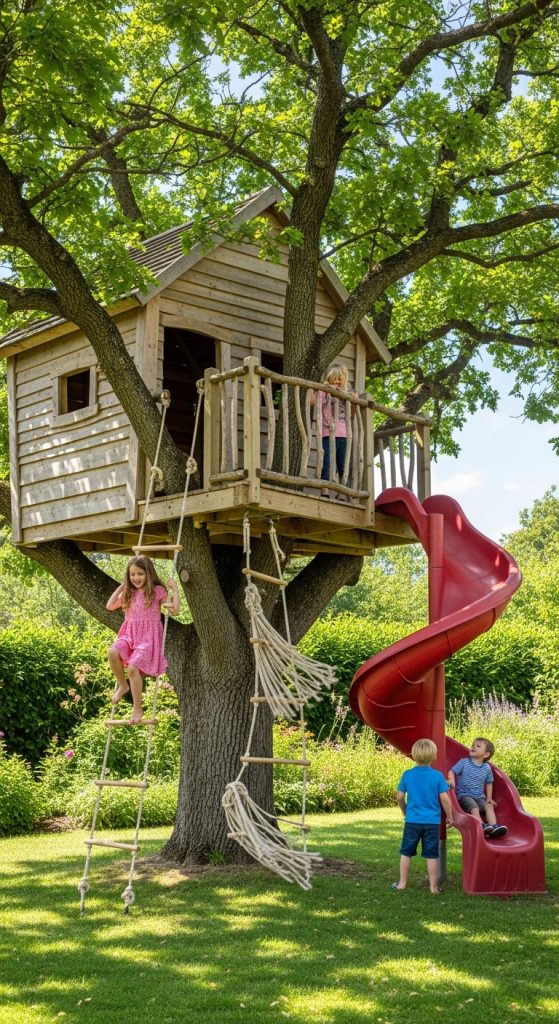
A sandbox is a versatile and cost-effective backyard playground option. It encourages sensory play, creativity, and cooperative learning as children dig, build, and explore textures.

Preparation: Choose a shaded area or add a canopy to protect children from direct sunlight. Ensure the area is level and free from debris. Lay a weed barrier beneath the sand to prevent contamination.
Materials: Use clean, fine sand suitable for play, wooden or plastic borders to contain the sand, shovels, buckets, molds, and optional toys like rakes or sifters. Cover the sandbox when not in use to keep it clean.
Use: Sandboxes stimulate imaginative play and social interaction. Children can create castles, dig tunnels, or play sensory games. It also helps develop fine motor skills and problem-solving abilities.
Maintenance: Regularly sift sand to remove debris. Replace sand annually and disinfect occasionally to prevent bacterial growth.

4. Climbing Wall Structure
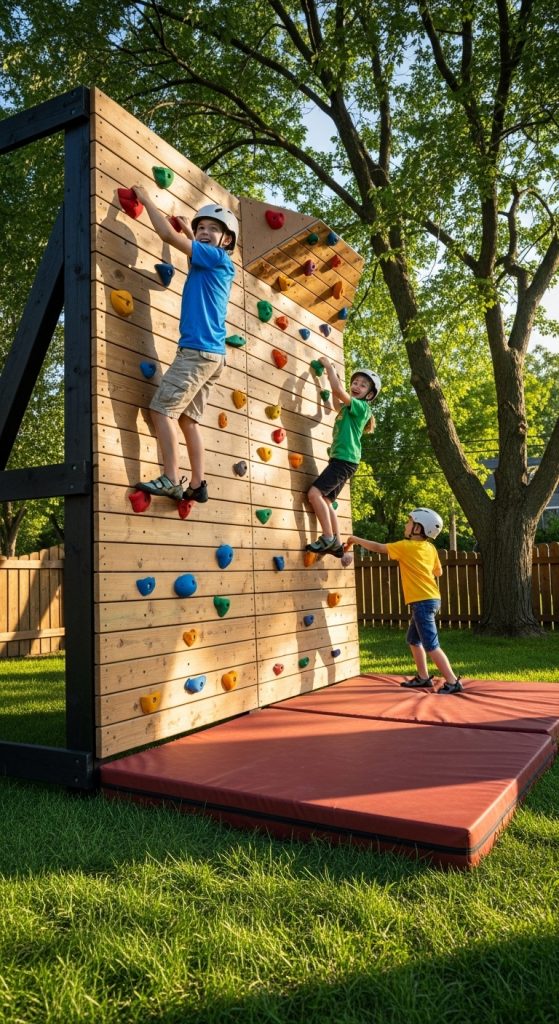
A climbing wall enhances strength, balance, and confidence. Backyard climbing structures can range from small rock walls to more elaborate vertical and overhanging designs.
Preparation: Select a sturdy area with sufficient clearance. Ensure there is adequate soft ground covering below the wall, such as mulch or rubber mats, to reduce injury risk.
Materials: Use pressure-treated plywood or weather-resistant panels, climbing holds, bolts, anchors, and a secure frame. Optional additions include ropes or ladders for multiple climbing challenges.
Use: Climbing walls promote physical fitness and problem-solving skills as children navigate different routes. It also fosters self-confidence and perseverance when they successfully reach the top. Supervision is recommended, especially for younger climbers.

Maintenance: Inspect holds regularly and tighten bolts. Replace worn or damaged grips. Clean panels to prevent mold and slippery surfaces, ensuring safety and longevity.
5. Trampoline Zone
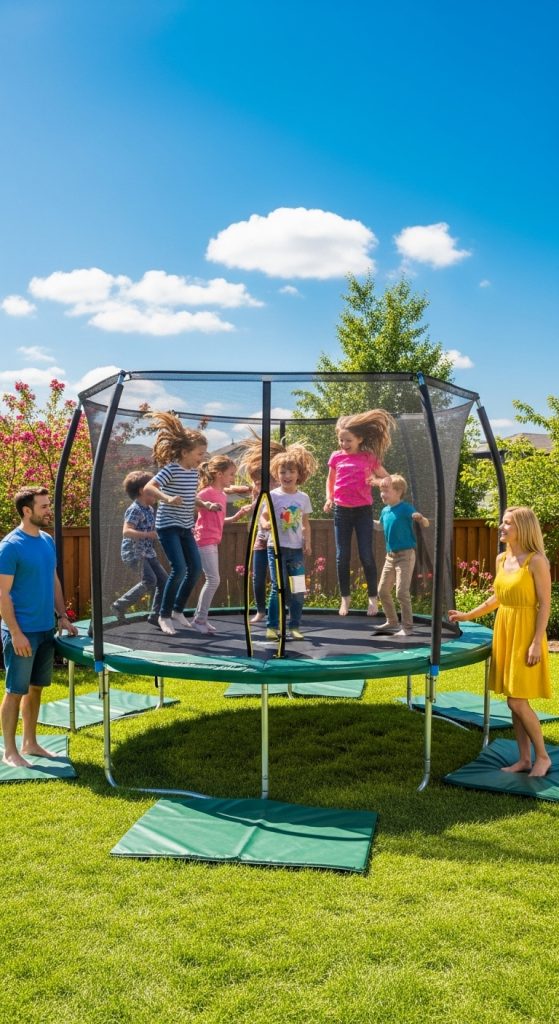
A trampoline provides high-energy fun while developing coordination and strength. Mini trampolines or full-sized backyard trampolines can suit different spaces and age groups.
Preparation: Choose a flat, open area away from fences, trees, and other obstacles. Install safety nets or padding to prevent falls. Ensure the trampoline is placed on soft ground or protective mats.
Materials: Standard materials include a durable trampoline mat, steel frame, springs, and a safety enclosure net. Padding for springs and frame edges is essential to prevent injuries.

Use: Trampolines improve cardiovascular fitness, balance, and leg strength. Children can jump individually or in supervised groups. Establish rules for safe jumping and limit use by age or number of participants to avoid accidents.
Maintenance: Regularly check springs, mat, and netting for wear. Replace torn padding or frayed edges promptly to ensure continued safety.
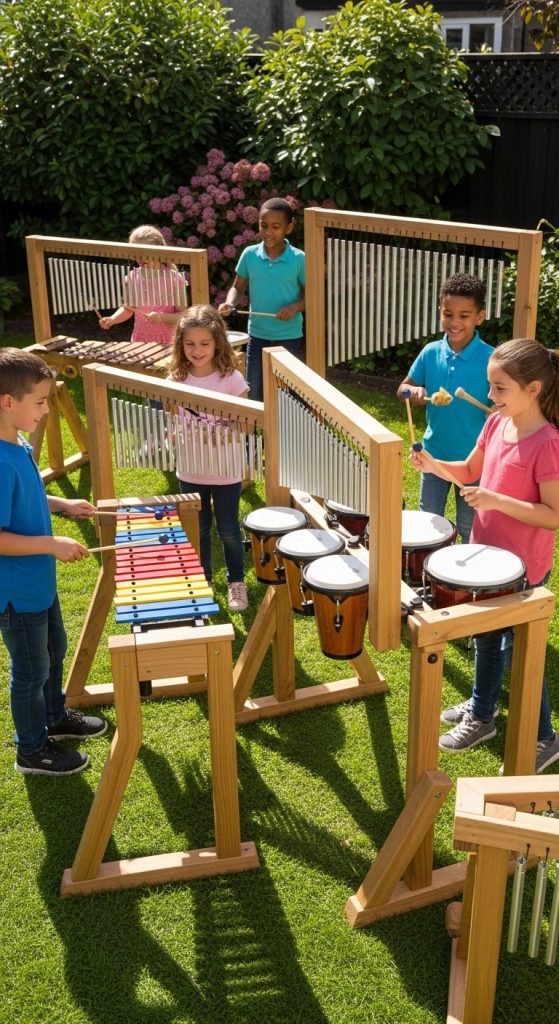
6. Outdoor Musical Playground
Outdoor musical playgrounds combine creativity with sensory stimulation. They can include drums, chimes, xylophones, or other instruments designed for outdoor use.
Preparation: Choose a quiet area that allows easy supervision. Ensure instruments are weatherproof and securely anchored to prevent tipping or damage. Consider an area with shade or a canopy for comfort.

Materials: Weather-resistant instruments made of wood, metal, or durable plastics. Support frames, screws, and anchors are necessary. Optional items include seating or benches for resting and group interaction.
Use: Musical playgrounds encourage creativity, rhythm development, and cooperative play. Children can explore sound patterns, create their own compositions, or play along with friends. It also enhances sensory development and auditory skills.
Maintenance: Regularly inspect instruments for damage or rust. Clean surfaces to maintain hygiene. Replace broken components to maintain sound quality and safety.
7. Rope Bridge Adventure
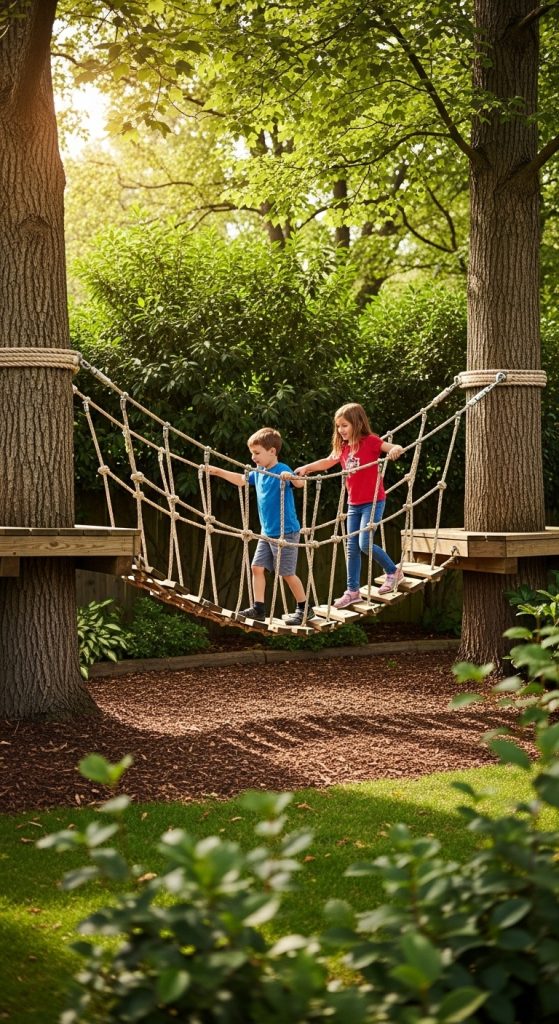
A rope bridge adds an exciting challenge to a backyard playground, combining climbing, balance, and problem-solving. Rope structures can connect platforms or treehouses for extended play.

Preparation: Ensure there is enough space and stable anchor points. The ground below should be covered with soft material such as mulch or rubber mats. Plan the height according to the age group to reduce risk.
Materials: Durable ropes, wooden planks, steel anchors, and protective mats are essential. Optional additions include side nets for extra safety. Rope bridges must be tensioned securely to prevent sagging.
Use: Rope bridges develop balance, coordination, and confidence as children traverse from one platform to another. They encourage cooperative play if multiple children use it simultaneously. Supervision is necessary to ensure safety and correct use.
Maintenance: Inspect ropes for fraying and replace damaged planks. Retighten anchors periodically. Weatherproof ropes and wood to extend their lifespan.

8. Nature-Themed Obstacle Course
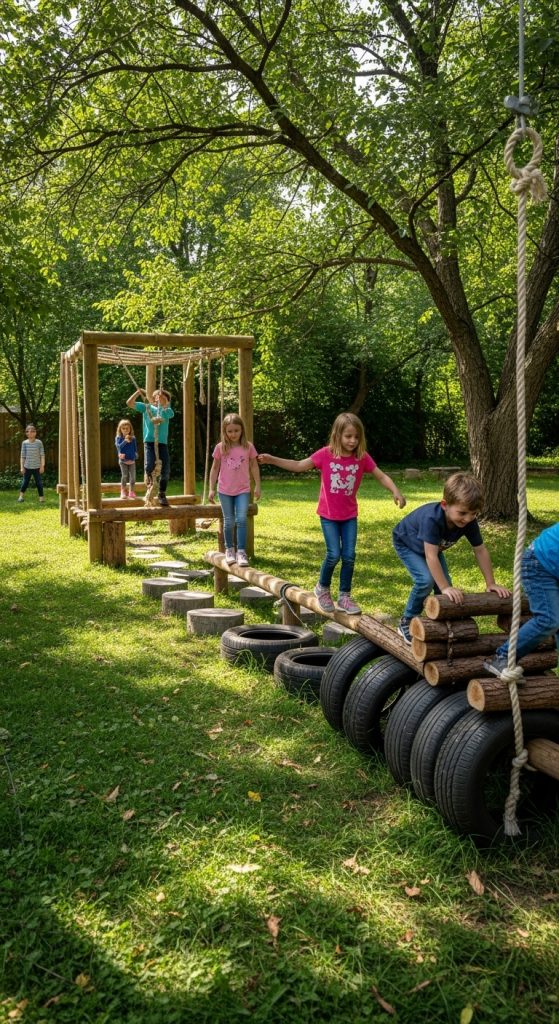
Obstacle courses promote physical fitness and creative play. Incorporating natural elements such as logs, stones, and ropes adds a nature-based adventure.
Preparation: Map out the course in a safe area with a combination of flat and elevated surfaces. Ensure all obstacles are securely anchored and spaced to prevent accidents.
Materials: Logs, stepping stones, ropes, balance beams, tires, and soft landing materials like mulch or sand. Optional items include climbing nets or small slides for added challenge.
Use: Obstacle courses improve agility, coordination, and problem-solving skills. Children navigate various challenges, which enhances confidence and encourages teamwork. The flexibility of a modular design allows adjustments for different ages and abilities.

Maintenance: Inspect obstacles regularly for damage. Replace worn logs or frayed ropes. Level stones and secure beams to prevent tipping or wobbling.
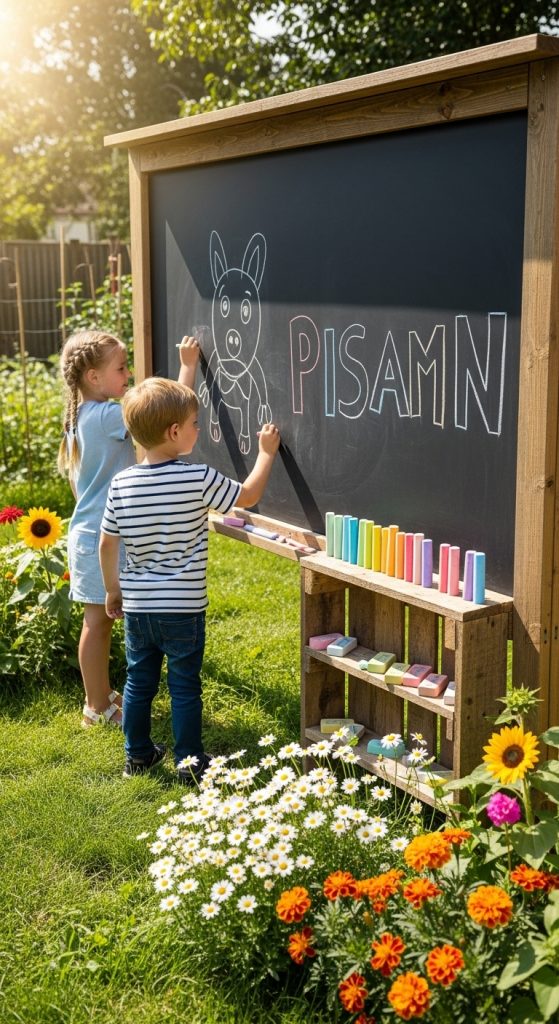
9. Outdoor Chalkboard and Activity Wall
An activity wall provides an area for artistic expression, learning, and group interaction. Chalkboards or whiteboards encourage creativity while promoting educational play.
Preparation: Install the wall in a shaded area to prevent glare and heat exposure. Ensure the surface is smooth and securely anchored to a fence or frame. Consider a weather-resistant material to withstand outdoor conditions.
Materials: Plywood or metal panels, outdoor-safe paint or chalkboard paint, screws, and optional accessories like shelves for chalk or markers. Protective coatings extend the wall’s life.

Use: Children can draw, write, or engage in learning activities. This promotes creativity, literacy, and problem-solving skills. Activity walls also serve as a social hub for collaborative projects. Regular cleaning encourages reuse and maintains hygiene.
Maintenance: Wipe the surface regularly. Repaint or refresh chalkboard paint as needed. Inspect mounting points for stability.
10. Water Play Station
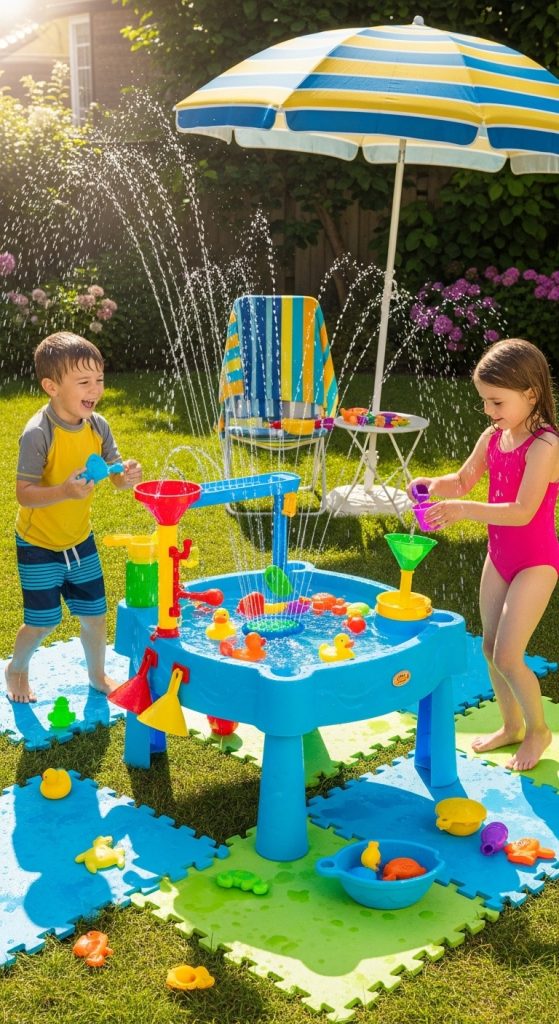
Water play stations are ideal for hot weather and provide sensory and motor skill development. They can include splash pads, small fountains, or DIY water tables.
Preparation: Choose a level area with drainage to prevent puddling. Ensure electrical connections, if needed, are safely installed and water-resistant. Consider adding a shaded area to protect children from sun exposure.

Materials: Water tables, hoses, sprinklers, pumps, non-slip mats, and buckets. Optional accessories include floating toys, small water wheels, or funnels to enhance play variety.
Use: Water stations encourage creative play, social interaction, and fine motor development. Children can experiment with pouring, floating, and water movement. Supervision is essential to prevent slipping and accidents.
Maintenance: Empty and clean containers daily. Inspect hoses and pumps for leaks. Treat water as needed to prevent stagnation and bacteria growth.