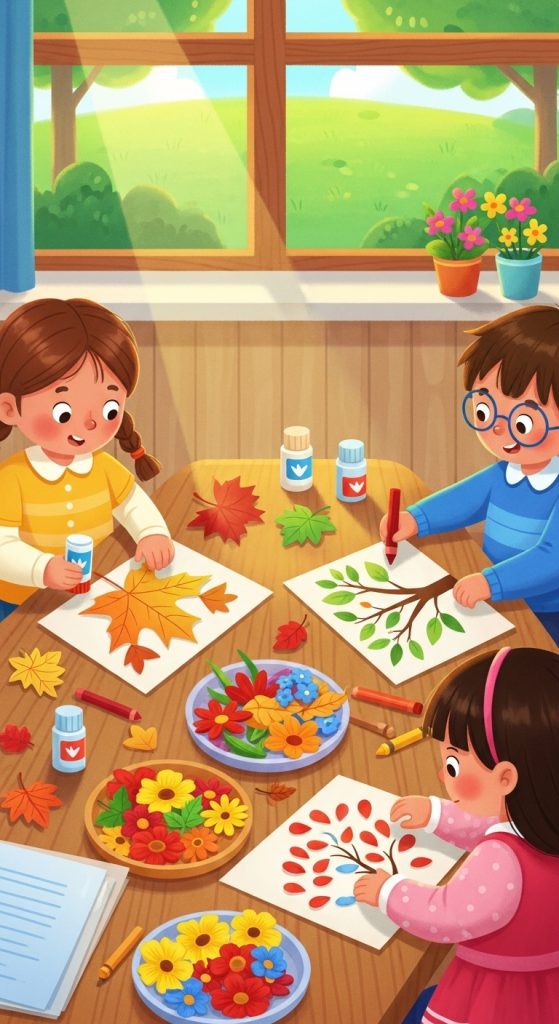
Craft activities play a very important role in kindergarten learning. At this early age, children learn best through hands-on experiences. Craft work helps young children develop fine motor skills, hand-eye coordination, creativity, and confidence. When children cut, paste, paint, and shape materials, they strengthen the small muscles in their hands, which later helps them with writing and daily tasks. Craft activities also improve focus, patience, and problem-solving skills in a fun and relaxed way.
Kindergarten crafts should always be simple, safe, and age-appropriate. The goal is not perfection but exploration and enjoyment. Children should feel free to express their ideas without fear of mistakes. Teachers and parents can guide children, but the craft should allow freedom so every child’s work looks unique. Using everyday materials like paper, glue, crayons, cardboard, and recycled items makes crafts affordable and easy to prepare.
In this blog post, you will find ten easy and engaging craft ideas perfect for kindergarten children. Each idea includes preparation steps, materials needed, how to do the craft, and learning benefits. These crafts can be used in classrooms, homeschooling, daycare centers, or at home. They are designed to keep children interested while supporting early learning skills in a playful way.
1. Paper Plate Animal Craft
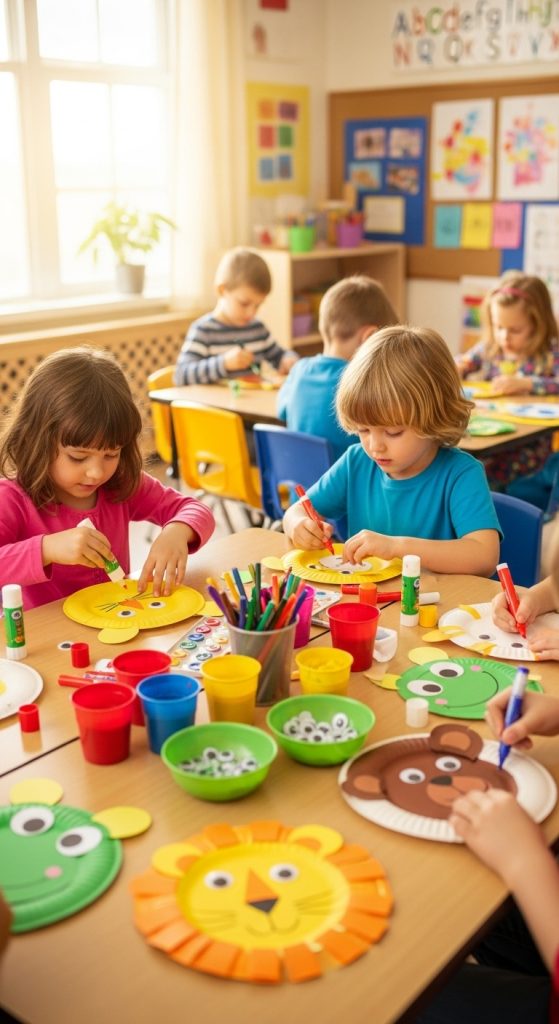
Paper plate animal crafts are a favorite among kindergarten children because they are simple and fun. Children enjoy turning a plain paper plate into a cute animal using basic materials. This activity encourages imagination and helps children recognize different animals.
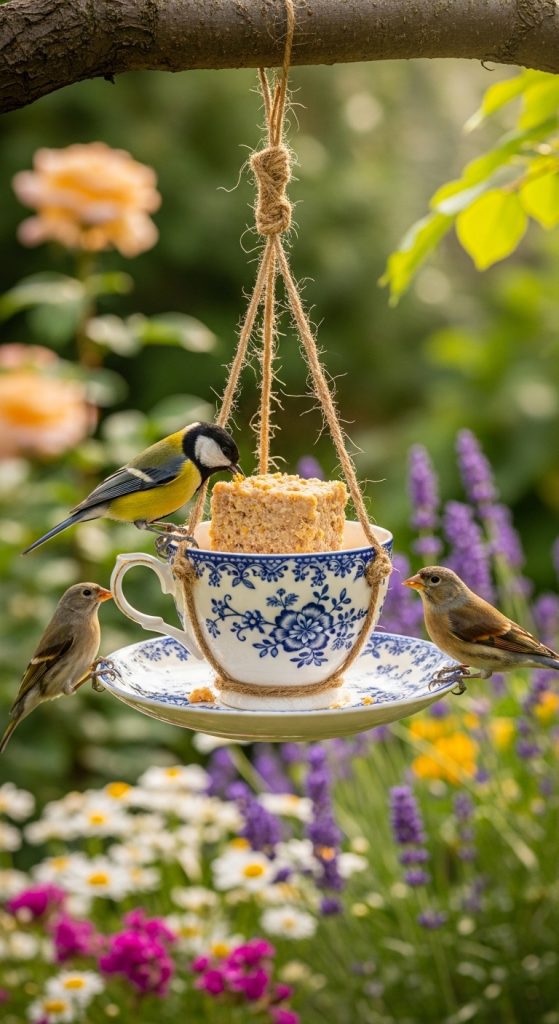
To prepare, gather paper plates, colored paper, crayons or markers, glue, scissors, and googly eyes if available. Teachers or parents should pre-cut shapes for younger children to ensure safety. Begin by choosing an animal such as a lion, frog, or bear. Children color or paint the paper plate to match the animal’s face. Next, they glue on ears, eyes, and other features made from colored paper.
This craft helps improve fine motor skills as children hold crayons, apply glue, and place pieces carefully. It also supports language development when children talk about the animal they made. Teachers can ask questions about animal sounds, homes, and colors to extend learning. Paper plate animals are easy to display in classrooms and make children feel proud of their work.
2. Handprint Art Craft
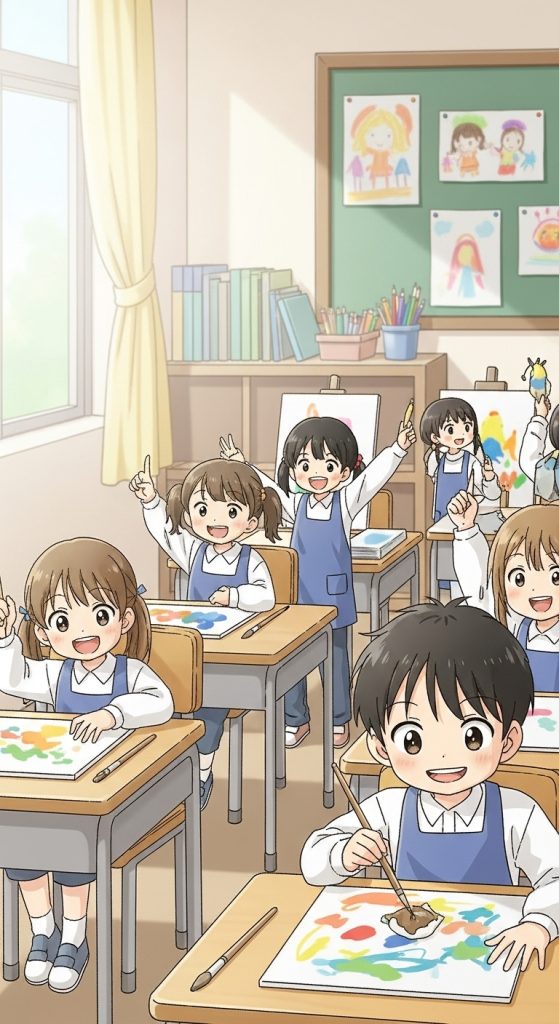
Handprint art is a meaningful and creative craft for kindergarten children. It allows children to use their own hands to create colorful artwork, making each piece personal and special. This craft is also a wonderful way to record growth and memories.
Materials needed include washable paint, thick paper, paintbrushes or sponges, wet wipes, and aprons or old shirts. Preparation involves covering tables with newspaper and setting up paint trays. Children dip their hands in paint and press them onto paper to create handprints. These handprints can be turned into animals, flowers, trees, or simple patterns.
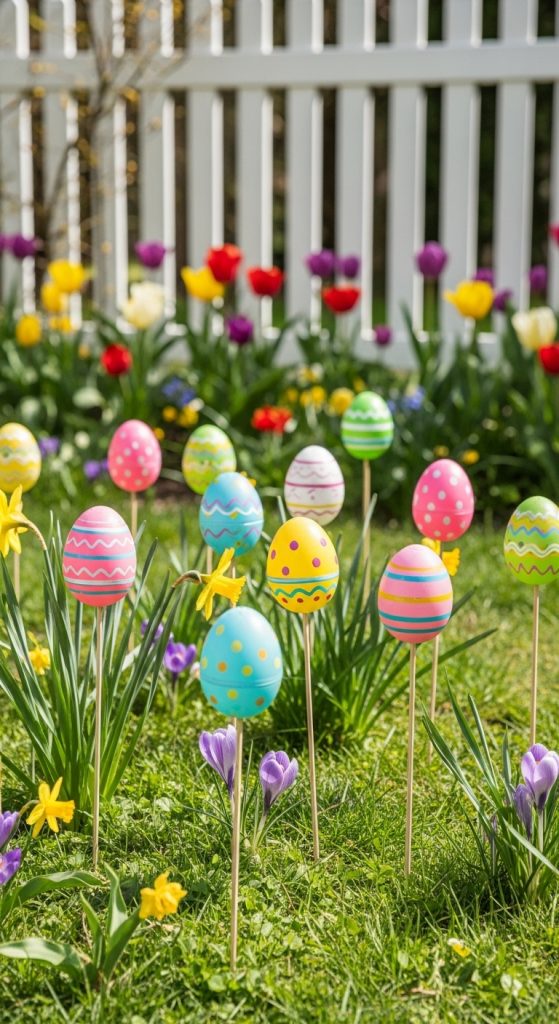
Handprint art helps children explore textures and colors while strengthening sensory skills. It also builds confidence because children enjoy seeing their own hands become part of the artwork. Teachers can use this activity to teach color names, counting fingers, or body awareness. Always allow time for cleaning hands and drying artwork. This craft is perfect for special occasions, classroom displays, or take-home keepsakes.
3. Paper Roll Crafts
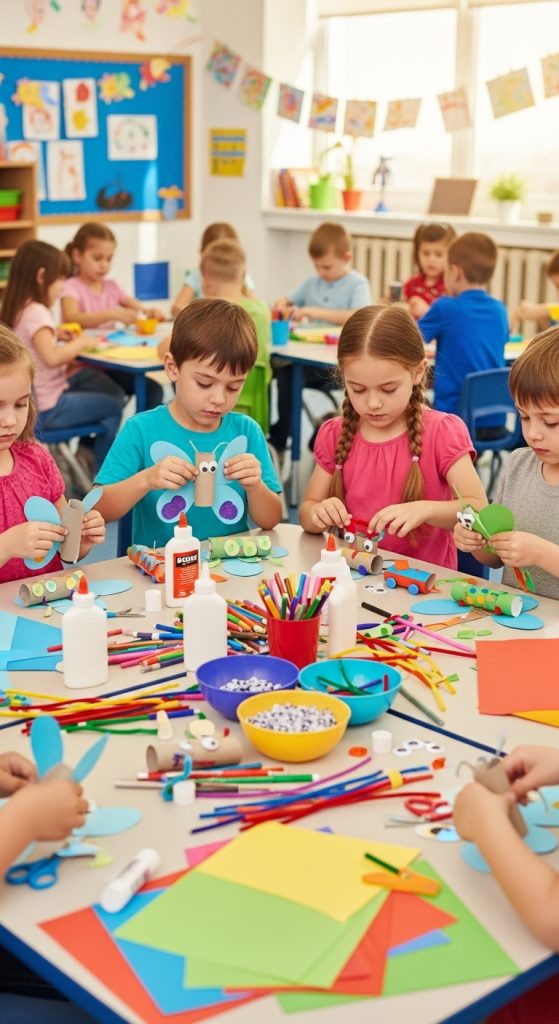
Paper roll crafts are excellent for teaching creativity and recycling at the same time. Using empty toilet paper or paper towel rolls, children can create animals, vehicles, or characters with ease.
Before starting, collect clean paper rolls, colored paper, glue, markers, scissors, and stickers. Preparation includes pre-cutting small shapes for eyes, wings, or wheels. Children wrap the paper roll with colored paper and decorate it to create their chosen object. For example, a paper roll can become a butterfly by adding wings or a train by attaching wheels.
This craft improves hand control and planning skills as children decide where to place each piece. It also introduces the concept of reusing materials, helping children understand basic environmental awareness. Teachers can encourage storytelling by asking children to talk about what they created. Paper roll crafts are simple, affordable, and highly engaging for young learners.

4. Collage Art Craft
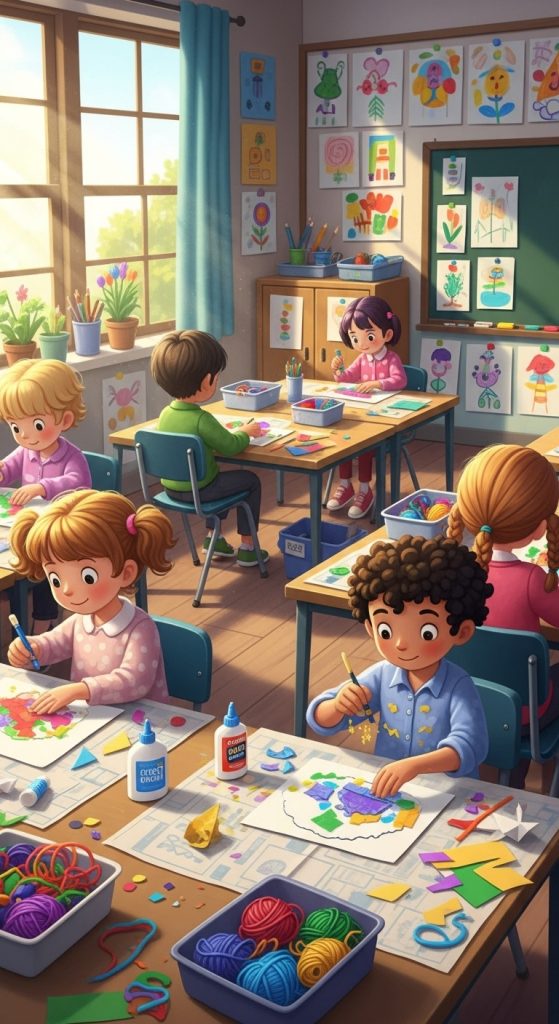
Collage art allows kindergarten children to explore creativity without strict rules. It involves arranging and gluing different materials onto a surface to create a picture or design.
Materials for collage art include construction paper, magazine cutouts, fabric scraps, leaves, buttons, glue sticks, and child-safe scissors. Preparation involves sorting materials into trays so children can easily choose what they like. Children glue items onto paper in any pattern or theme they prefer, such as colors, shapes, or seasons.
This activity strengthens fine motor skills and decision-making abilities. Children learn how different textures feel and how materials stick to paper. Collage art also supports emotional expression because children can freely choose materials that interest them. Teachers can guide discussions about shapes, colors, or nature items used in the collage. This craft is calming and suitable for children with different skill levels.
5. Shape Monster Craft
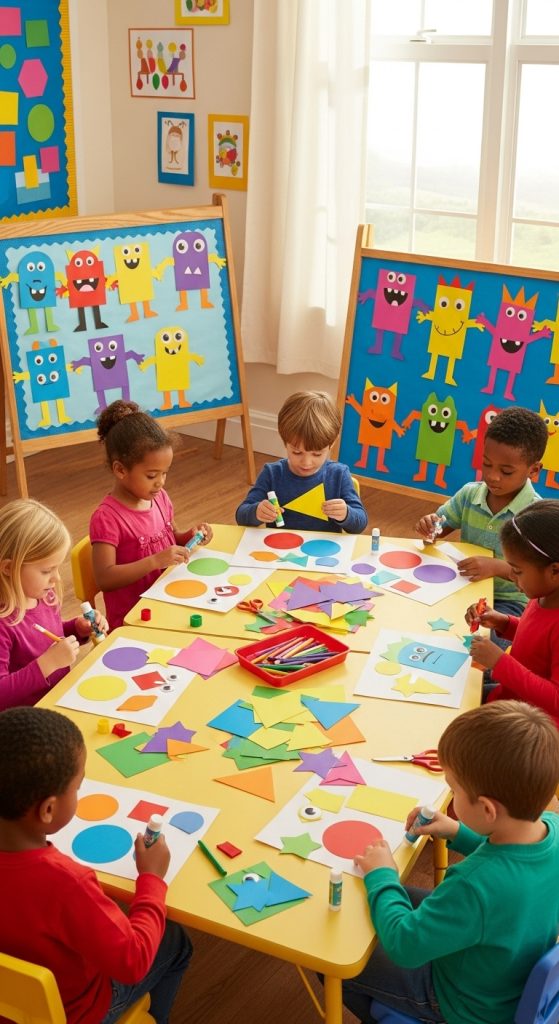
Shape monster crafts are fun and educational for kindergarten children. This activity helps children learn basic shapes while creating playful characters.

To prepare, gather colored paper, glue, markers, scissors, and shape templates such as circles, squares, and triangles. Teachers can pre-cut shapes for younger children. Children choose different shapes and glue them together to form a monster. They can add eyes, mouths, and arms using markers or paper pieces.
This craft reinforces shape recognition and early math skills. Children learn that shapes can combine to form pictures and objects. It also encourages creativity as no two monsters look the same. Teachers can ask children to name the shapes they used and count how many shapes are in their monster. Shape monster crafts make learning fun and visually engaging.
6. Popsicle Stick Crafts
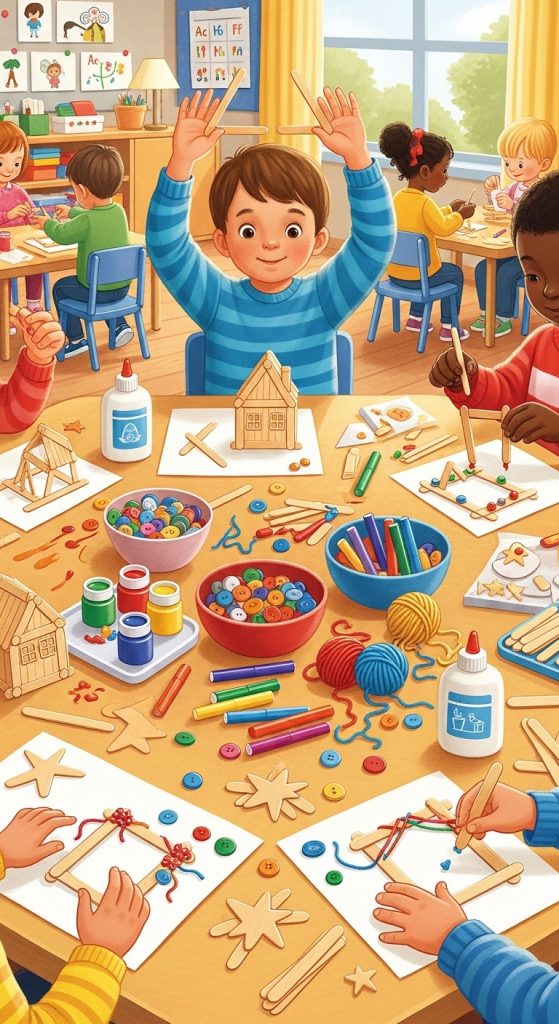
Popsicle stick crafts are sturdy, simple, and perfect for kindergarten hands. They can be used to create houses, stars, frames, or simple animals.
Materials include popsicle sticks, glue, paint, markers, and decorations like buttons or yarn. Preparation involves organizing sticks and setting up a safe glue area. Children arrange sticks into a shape and glue them together. Once dry, they decorate their creation with paint or markers.

This craft helps children practice patience as they wait for glue to dry. It also improves coordination and problem-solving skills as children figure out how to build shapes. Popsicle stick crafts can be connected to lessons about shapes, homes, or holidays. Always supervise glue use to ensure safety. These crafts are durable and make great classroom decorations.
7. Paper Flower Craft
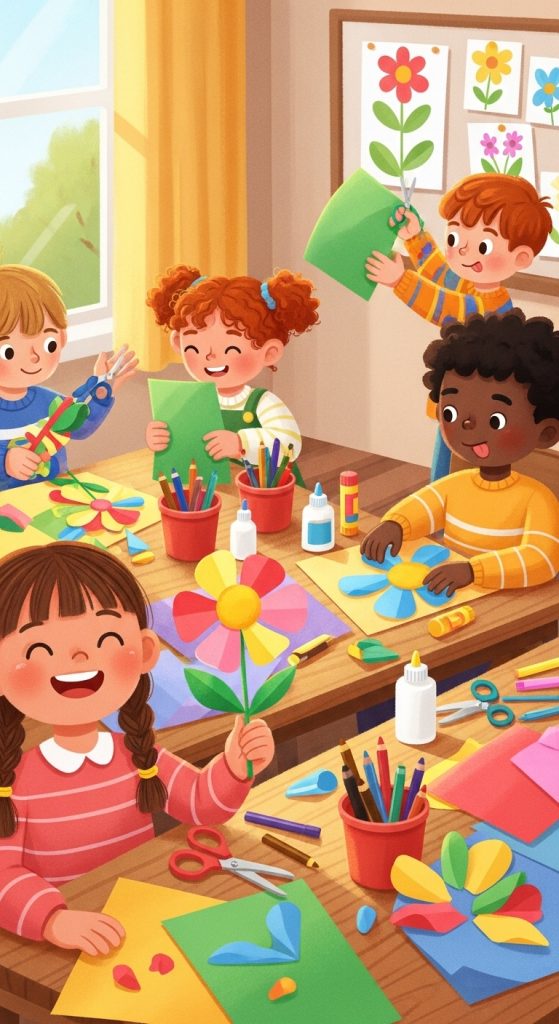
Paper flower crafts are bright, cheerful, and easy for kindergarten children. They are great for teaching about nature, seasons, and colors.
Materials needed include colored paper, glue, scissors, straws or sticks, and markers. Preparation includes cutting petal shapes and circles for flower centers. Children glue petals around the center and attach a stem. They can decorate flowers with drawings or patterns.
This craft supports fine motor development and creativity. Children learn about flower parts and color combinations. Teachers can connect this activity to lessons about plants and growth. Paper flowers can be used for classroom displays or gifts. The simple steps make this craft enjoyable and stress-free for young children.

8. Finger Painting Craft
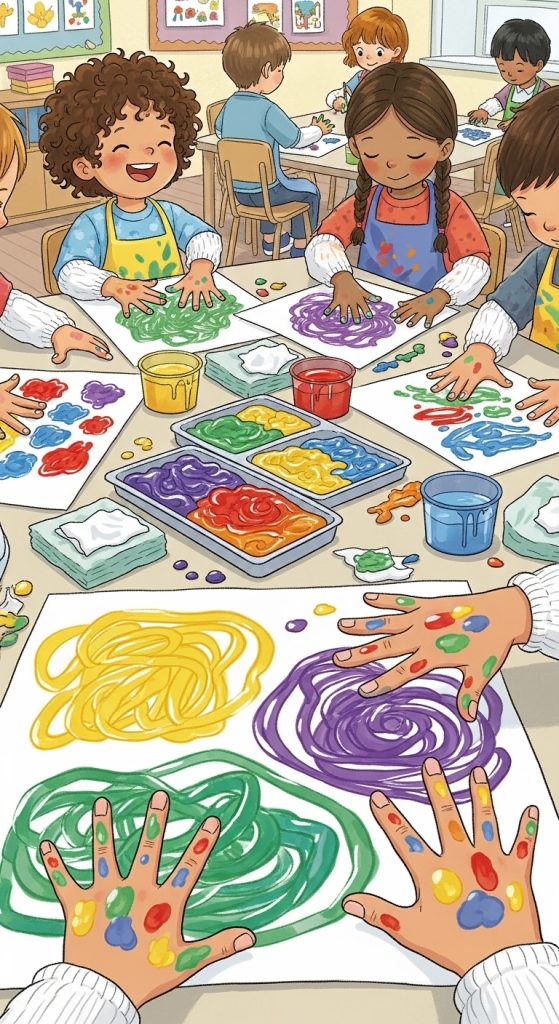
Finger painting is a sensory-rich craft that kindergarten children love. It allows children to explore colors and textures using their hands.
Materials include non-toxic finger paint, thick paper, aprons, and wipes. Preparation involves covering surfaces and setting clear rules about paint use. Children dip their fingers into paint and create pictures, patterns, or free designs.
Finger painting strengthens sensory awareness and hand control. It also supports emotional expression, as children often feel relaxed while painting freely. Teachers can encourage children to mix colors and observe changes. This activity is ideal for creative expression and should always include proper cleanup time. Finger painting builds confidence and joy in art-making.
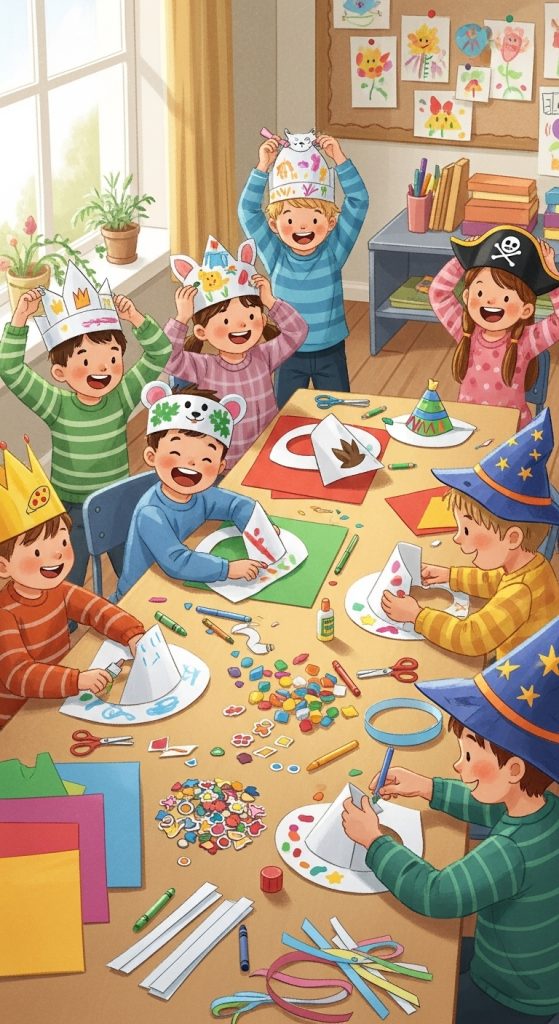
9. Paper Hat Craft
Paper hat crafts are playful and engaging for kindergarten children. They combine creativity with pretend play.
Materials needed include construction paper, glue, crayons, stickers, and tape. Preparation includes cutting long paper strips for headbands. Children decorate their hats with drawings or shapes and attach the band to fit their head.
This craft improves measuring and fitting skills as children learn about size. It also encourages imagination when children wear their hats and role-play. Teachers can connect this craft to themes like community helpers or celebrations. Paper hats are easy to make and exciting for children to wear and show others.
10. Nature Craft with Leaves
Nature crafts help kindergarten children connect with the outdoor environment. Using leaves, flowers, and small sticks makes learning natural and meaningful.
Materials include collected leaves, paper, glue, and crayons. Preparation involves going on a short nature walk to gather items. Children arrange leaves on paper to create animals, trees, or patterns and glue them in place.

This craft teaches children about nature, seasons, and textures. It encourages observation and appreciation of the environment. Teachers can talk about leaf shapes, colors, and where they come from. Nature crafts are calming and educational, helping children develop respect for the natural world while enjoying creative expression.