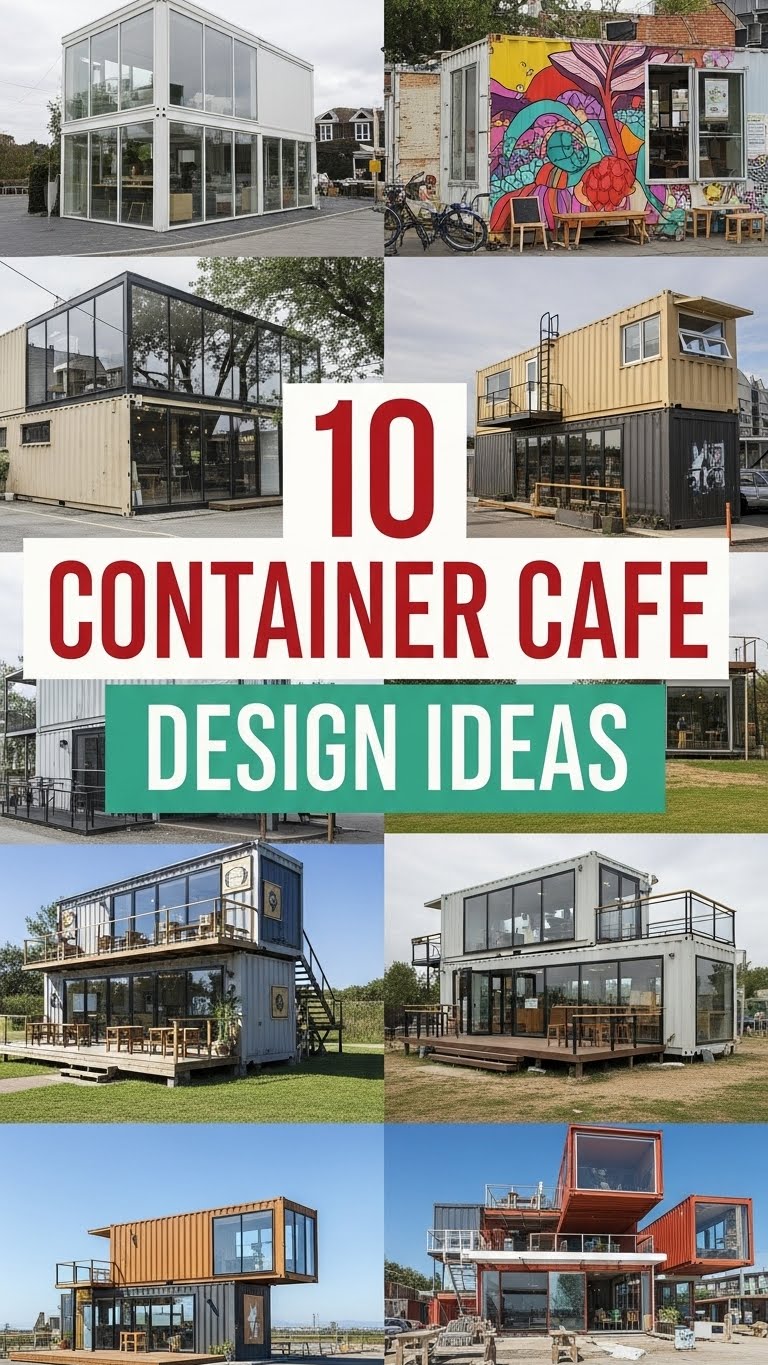
Container cafés have become a popular trend in modern food and beverage businesses. They offer a smart, affordable, and creative way to start a café using shipping containers as the main structure. These containers are strong, flexible, and easy to modify, making them ideal for small and medium café setups. Many entrepreneurs choose container cafés because they cost less than traditional buildings, take less time to construct, and allow eye-catching designs that attract customers.
A container café can be placed in urban areas, roadside locations, parks, beaches, or even private properties. With proper planning, insulation, and interior design, these cafés can be comfortable, stylish, and fully functional throughout the year. Container cafés also support sustainable construction because they reuse existing materials and reduce construction waste.
In this blog post, we will explore ten container café design ideas in detail. Each idea focuses on design concept, preparation steps, material use, layout planning, and practical considerations. Whether you want a small takeaway café or a full seating experience, these ideas will help you understand how to design a successful container café. The goal is to provide clear, useful information that helps you plan, build, and operate a container café effectively.
1. Minimalist Single Container Café Design
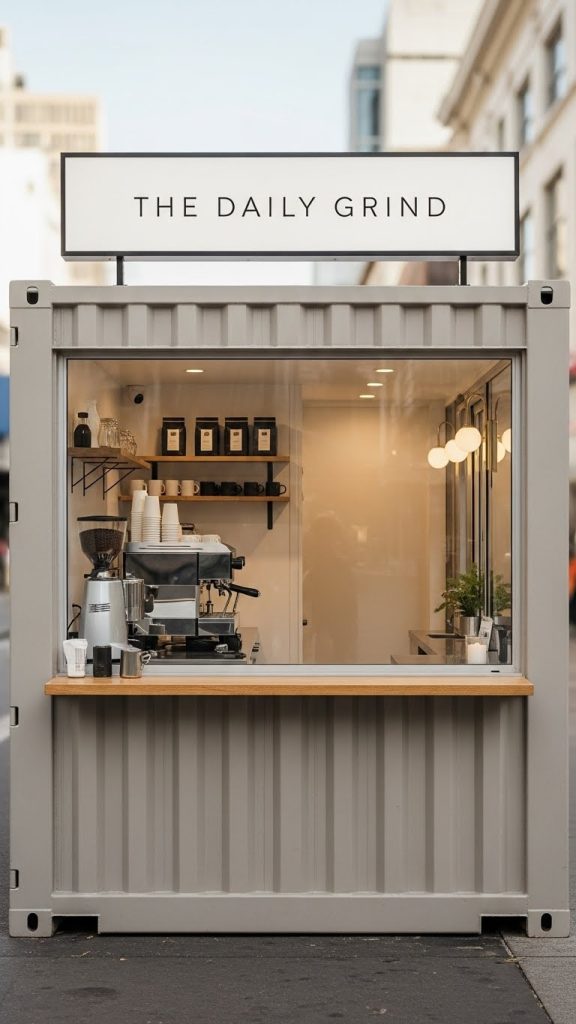
A minimalist single container café is one of the most common and affordable options. This design uses one standard shipping container, usually 20 or 40 feet long. The focus is on simplicity, clean lines, and efficient use of space. This type of café is ideal for coffee, tea, juices, and small snack menus.
Preparation starts with selecting a high-quality used container that is rust-free and structurally sound. The container is cleaned, treated for corrosion, and cut to create service windows and entry doors. Insulation is added to the walls, ceiling, and floor to control temperature and reduce noise. Electrical wiring, plumbing, and ventilation systems are installed before interior finishing.
Materials used in minimalist designs include plywood or MDF for wall panels, vinyl or ceramic tiles for flooring, and stainless steel for counters and kitchen surfaces. Large glass windows are added to improve visibility and natural light. Exterior paint is usually neutral, such as white, gray, or black, to maintain a modern look.
This design is easy to maintain, quick to build, and perfect for first-time café owners. It works well in busy locations where customers prefer quick service and takeaway options.
2. Double Container Café with Seating Area
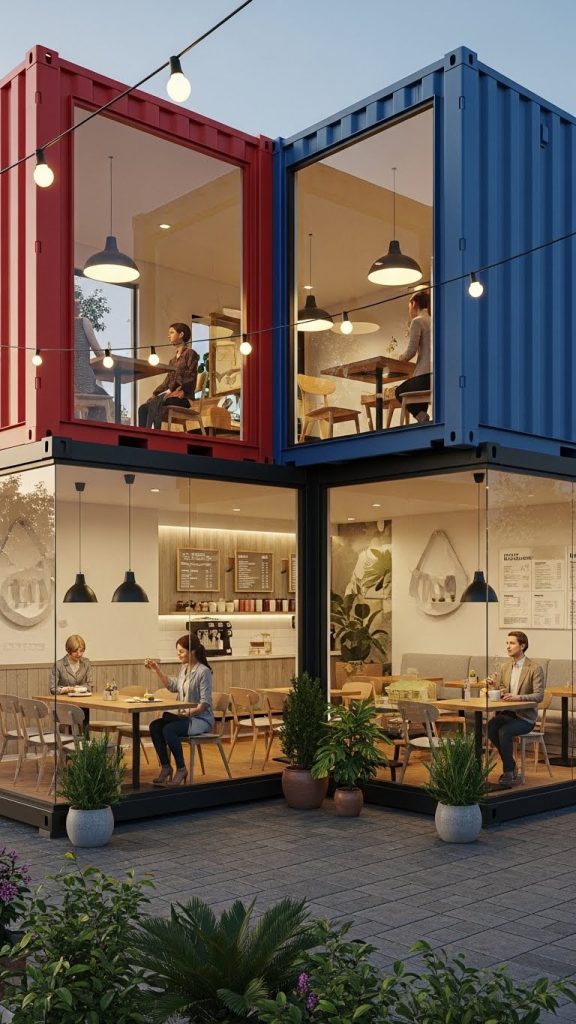
A double container café uses two containers joined together to create more space for seating and kitchen operations. This design is suitable for cafés that want to offer customers a comfortable place to sit and relax. The containers can be placed side by side or in an L-shape depending on the available space.
Preparation involves cutting and reinforcing the container walls where they connect. Steel beams are added to maintain structural strength. Insulation and waterproofing are critical, especially in areas with extreme weather conditions. Proper floor leveling is also important for customer comfort.
Materials commonly used include wooden flooring or polished concrete, glass partitions, metal frames, and durable furniture. The seating area may include wooden benches, café chairs, and small tables. Lighting plays an important role, so warm LED lights are often installed to create a welcoming atmosphere.
This design allows for better customer flow, separate service and seating zones, and higher revenue potential. It is ideal for urban areas, college campuses, and commercial zones where people enjoy sitting and socializing.
3. Outdoor Container Café with Open Deck
An outdoor container café with an open deck focuses on blending indoor service with outdoor seating. The container serves as the kitchen and service counter, while a wooden or metal deck extends outward for customer seating. This design works well in parks, coastal areas, and scenic locations.
Preparation includes site leveling and creating a strong foundation for both the container and the deck. Weather-resistant materials are essential because most of the seating is outdoors. Drainage systems should be planned to avoid water accumulation.
Materials used include pressure-treated wood or composite decking, steel railings, outdoor furniture, and weatherproof paint. The container itself may have foldable service windows that open fully during business hours. Shade structures such as pergolas, umbrellas, or fabric canopies are often added.
This design creates a relaxed and open atmosphere. It encourages customers to spend more time at the café and enjoy the surroundings. Maintenance involves regular cleaning and protection of outdoor materials from sun and rain.
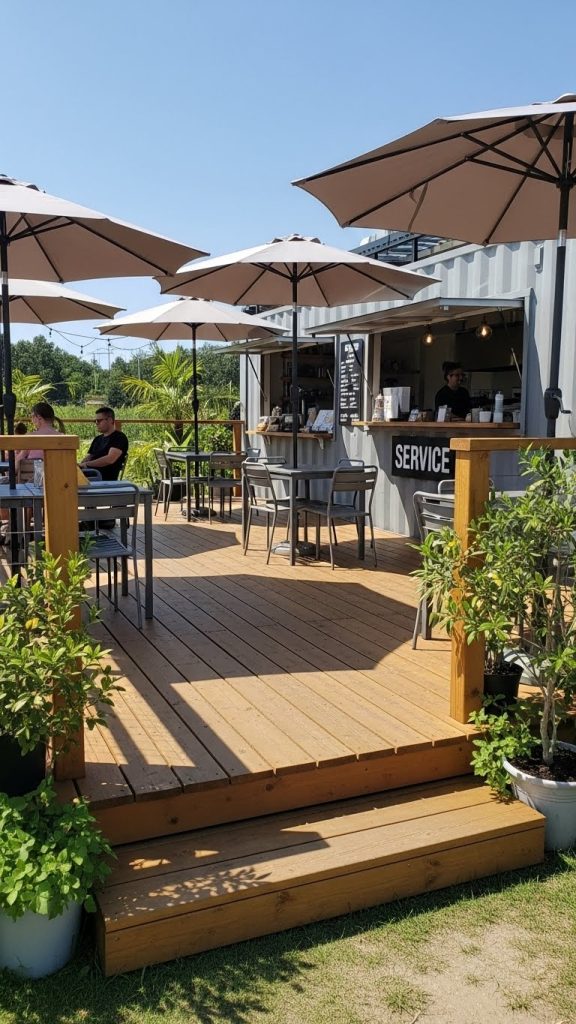
4. Industrial Style Container Café Design
Industrial-style container cafés embrace raw textures and unfinished looks. This design highlights the original container structure, exposed metal, visible welds, and bold materials. It appeals to customers who enjoy modern, urban aesthetics.
Preparation starts with minimal exterior modification. The container surface may be cleaned and sealed rather than fully covered. Insulation is installed internally to maintain comfort while preserving the industrial look.
Materials include exposed steel, concrete floors, reclaimed wood, black metal furniture, and open ceiling wiring with protective conduits. Lighting often features hanging bulbs, track lights, or metal fixtures. Large glass doors or windows soften the industrial feel and bring in natural light.
This design is durable and low-maintenance. It works well for specialty coffee shops, espresso bars, and late-evening cafés. Industrial container cafés often attract younger customers and creative professionals.
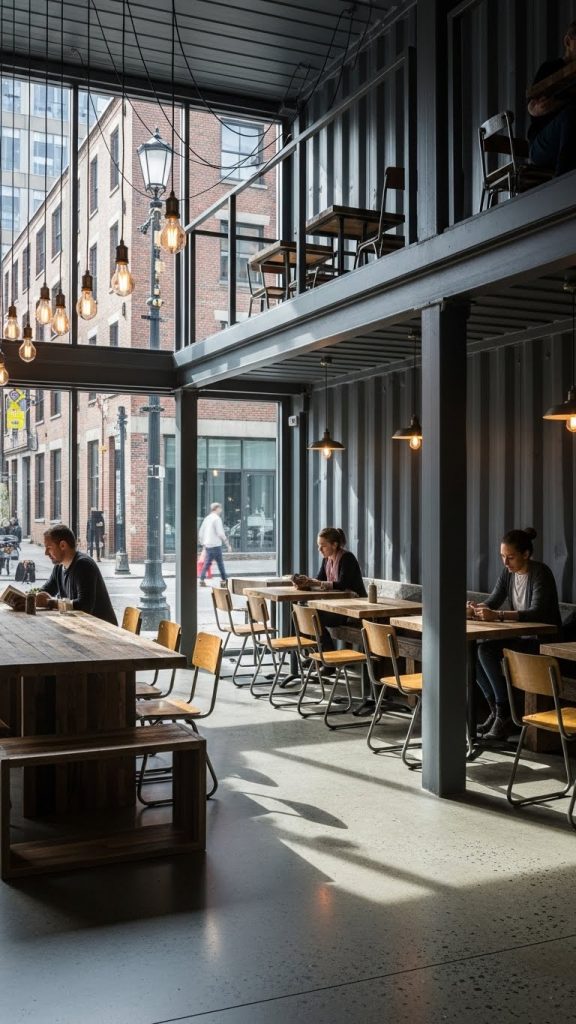
5. Eco-Friendly and Sustainable Container Café
An eco-friendly container café focuses on sustainability, energy efficiency, and environmentally responsible materials. This design appeals to customers who value green living and ethical businesses.
Preparation includes choosing containers with minimal damage to reduce repair work. Proper insulation using eco-friendly materials such as cork, sheep wool, or recycled panels is essential. Solar panels may be installed on the roof to reduce electricity costs.
Materials used include bamboo or reclaimed wood furniture, recycled metal fixtures, low-VOC paints, and energy-efficient appliances. Rainwater harvesting systems and water-saving plumbing fixtures can also be added.
The interior design often uses natural colors and plants to create a calm and fresh environment. This type of café not only reduces operational costs but also builds a positive brand image. It requires careful planning but offers long-term benefits for both business and the environment.
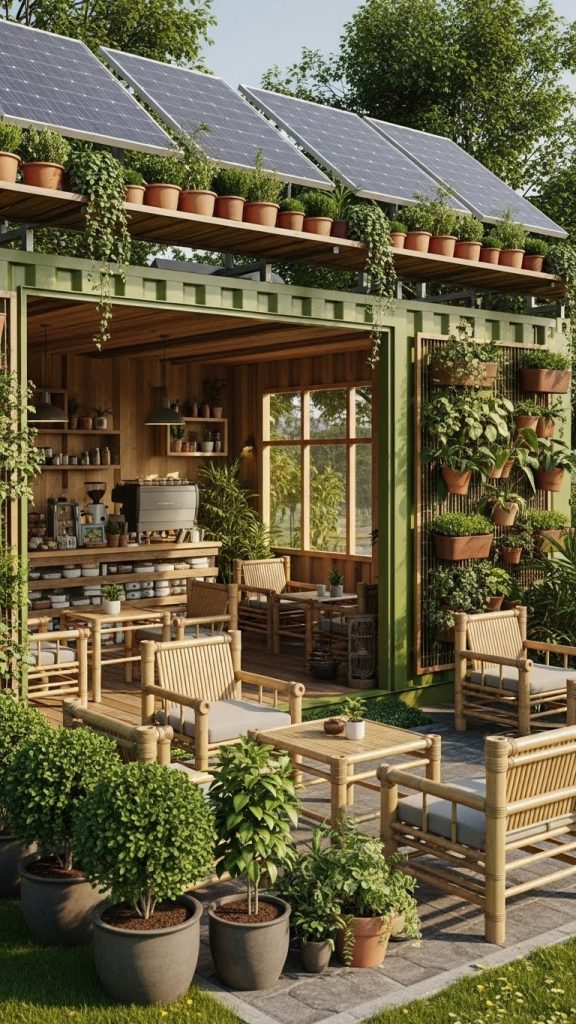
6. Mobile Container Café Design
A mobile container café is designed to be transported from one location to another. This design is ideal for events, festivals, exhibitions, and temporary business setups. The container is mounted on a trailer or designed for easy lifting.
Preparation focuses on weight management and structural stability. All interior elements must be securely fixed to prevent movement during transport. Electrical and water systems are designed for quick connection and disconnection.
Materials include lightweight panels, compact equipment, foldable furniture, and durable flooring. Exterior branding is important because the café relies on visibility to attract customers in different locations.
This design offers flexibility and lower location risk. Business owners can test different markets and move based on demand. However, careful planning is needed to comply with transport and safety regulations.
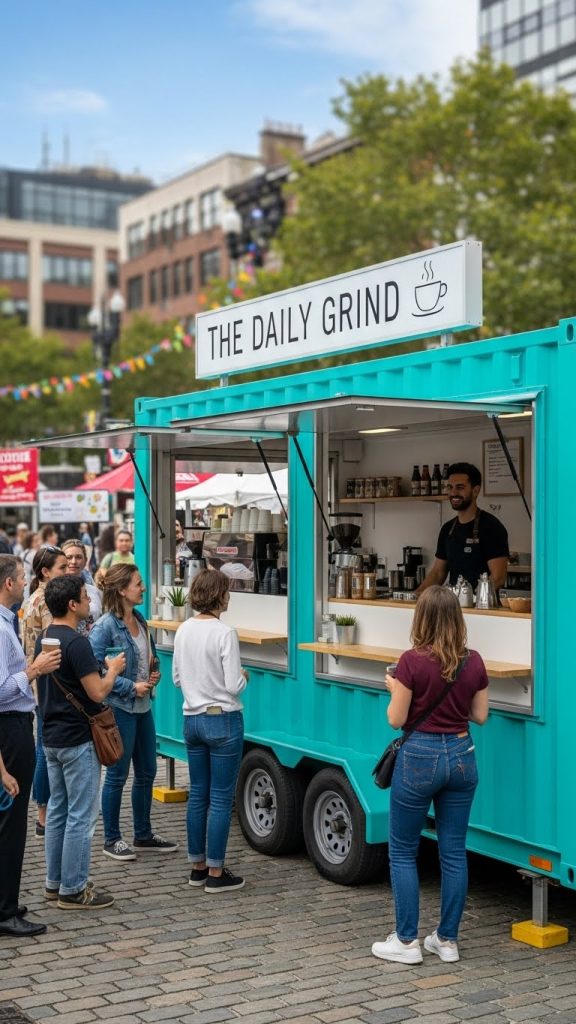
7. Luxury Container Café Design
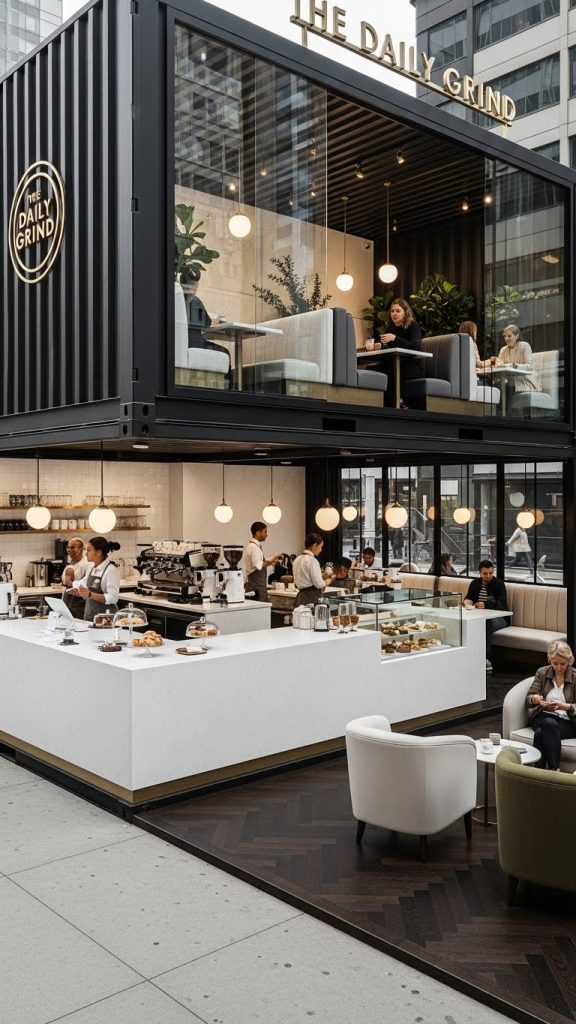
A luxury container café aims to deliver a high-end experience using premium materials and sophisticated design. This concept proves that container structures can be elegant and stylish.
Preparation includes extensive interior modifications, high-quality insulation, and advanced climate control systems. Professional architects and designers are often involved to ensure flawless execution.
Materials used include marble or quartz countertops, hardwood flooring, designer lighting, upholstered seating, and custom-built cabinetry. Large glass walls and sliding doors create a bright and open feel.
This design targets customers willing to pay more for ambiance and comfort. It works well in upscale neighborhoods, resorts, and business districts. Although the initial investment is higher, the profit margin can also be greater.
8. Small Takeaway Container Café Design
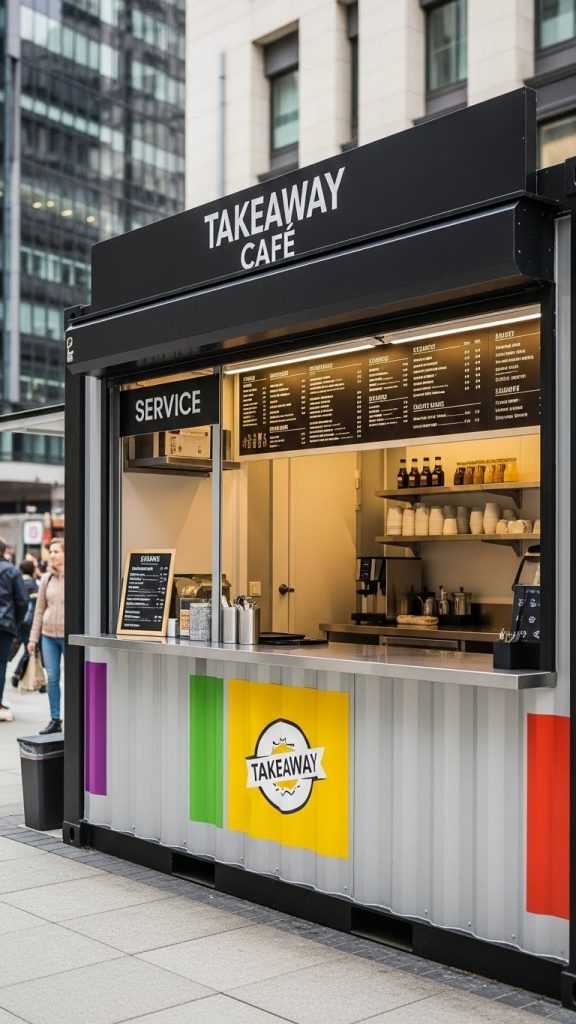
A small takeaway container café focuses on fast service and limited space. It is designed for high foot traffic areas such as streets, office zones, and transport hubs.
Preparation includes efficient layout planning to fit all essential equipment into a compact space. Service windows are placed strategically to reduce customer waiting time.
Materials used are practical and easy to clean, such as stainless steel counters, ceramic tiles, and compact storage units. Branding and signage are critical because the café depends on quick visual impact.
This design has low operating costs and minimal staff requirements. It is ideal for coffee, tea, smoothies, and snacks. Success depends on location and consistent product quality.
9. Two-Story Container Café Design
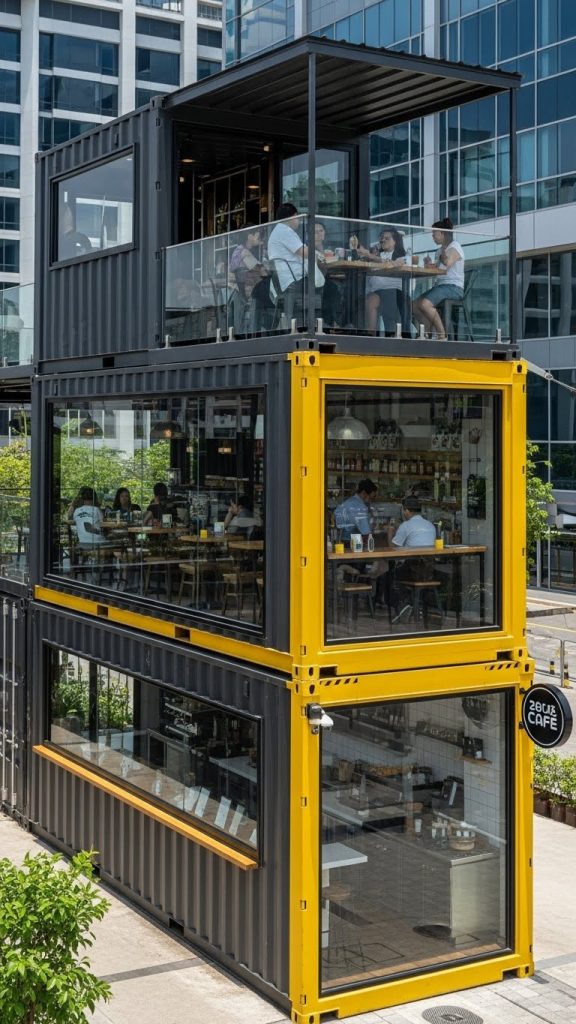
A two-story container café creates a strong visual impact and offers more space without increasing the ground footprint. Containers are stacked vertically with reinforced structural supports.
Preparation involves engineering approval, strong foundations, and safety measures such as staircases, railings, and fire exits. Weatherproofing and insulation are especially important for upper levels.
Materials include steel staircases, safety glass, anti-slip flooring, and lightweight furniture. The upper level is often used for seating, while the ground floor serves as the kitchen and counter.
This design attracts attention and works well in busy commercial areas. It provides panoramic views and a unique customer experience. Construction costs are higher, but the design can become a landmark café.
10. Themed Container Café Design
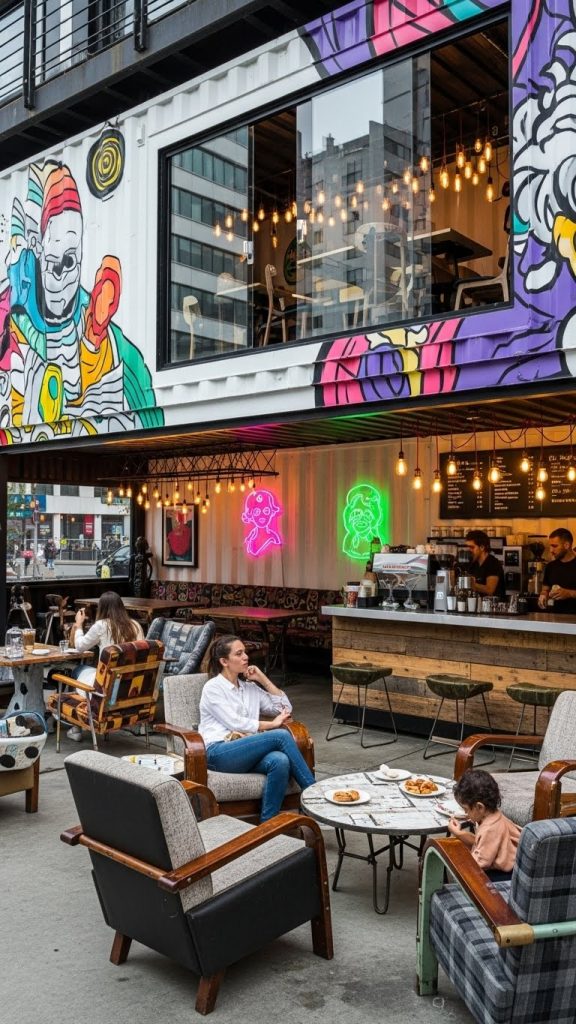
A themed container café is built around a specific concept such as vintage, cultural, artistic, or brand-focused themes. The container structure acts as a canvas for storytelling and visual identity.
Preparation includes detailed concept planning, color selection, and décor design. Custom modifications may be needed to support the theme.
Materials vary depending on the theme and may include murals, custom furniture, decorative lighting, and branded elements. Interior and exterior designs must be consistent to create a memorable experience.
Themed cafés attract customers through uniqueness and social media appeal. They require creativity and regular updates to stay fresh. When done well, this design builds strong customer loyalty and brand recognition.



Leave a Reply