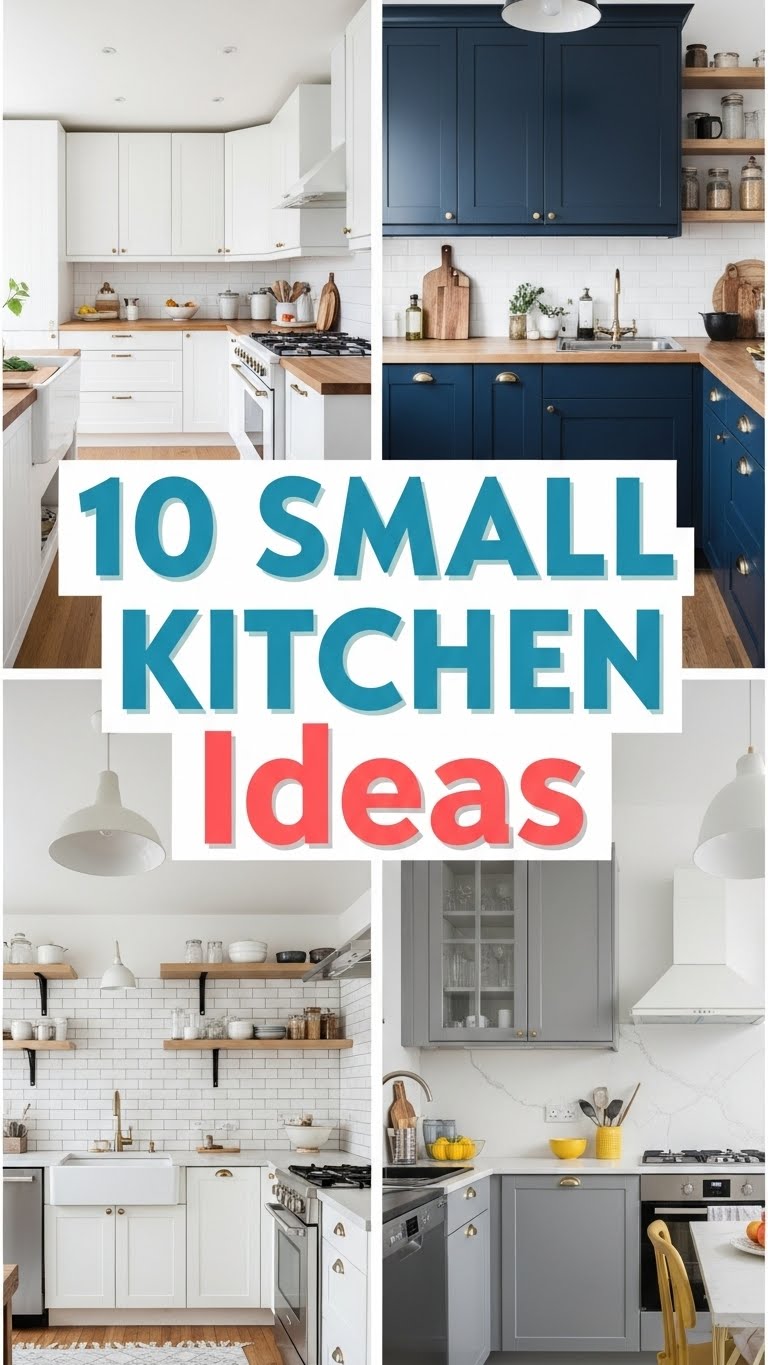
Designing a small kitchen can be challenging, but with the right ideas and careful planning, even the tiniest space can become stylish, functional, and inviting. A small kitchen does not mean compromising on aesthetics or usability. From clever storage solutions to efficient layouts and smart materials, the possibilities are endless. In this guide, we explore 10 small kitchen ideas, offering practical tips, material suggestions, and preparation insights to make your kitchen efficient and elegant.

1. Utilize Vertical Space
In small kitchens, floor space is often limited, making vertical space invaluable. By installing tall cabinets that extend to the ceiling, you can maximize storage without crowding the room. Open shelves can also be used to display dishes, cookbooks, or decorative items, creating an airy and open feel. When planning vertical storage, measure your wall height accurately to ensure cabinets fit seamlessly. Choose materials such as laminated plywood or solid wood for durability and easy maintenance. Adding under-cabinet lighting not only enhances visibility but also adds warmth to the space. Consider pull-down racks or hooks for hanging pots and pans, which keeps them accessible while saving countertop space. Vertical organization requires careful planning; group items logically, with frequently used items at eye level. By thinking upward, you can keep your kitchen organized, decluttered, and visually appealing, making it feel larger than its actual size.
Preparation: Measure wall height and kitchen layout.
Materials: Tall cabinets, open shelves, hooks, pull-down racks.

2. Install Pull-Out Storage
Pull-out storage solutions are perfect for maximizing narrow or hard-to-reach areas in a small kitchen. Pull-out pantry shelves, spice racks, and drawer organizers provide easy access to items without wasting any space. These systems can be integrated into existing cabinets or custom-built for specific dimensions. Materials such as laminated wood or metal sliders are ideal for smooth operation and durability. Pull-out units reduce clutter and improve kitchen workflow by allowing items to be stored efficiently while remaining visible. Planning involves identifying unused cabinet spaces, such as the gap between the fridge and the wall or below countertops. When installing pull-out storage, ensure sufficient clearance for drawers and easy movement. Adding pull-out bins for trash and recycling can also free up floor space. The convenience and accessibility of pull-out storage make it an indispensable solution for small kitchens.

Preparation: Identify narrow cabinet spaces, measure dimensions.
Materials: Pull-out pantry shelves, metal sliders, bins, drawer organizers.

3. Choose Light Color Schemes
Color has a significant impact on the perception of space. Light color schemes, such as white, cream, soft grey, or pastel shades, make small kitchens appear larger and brighter. Lighter colors reflect natural and artificial light, creating an open and airy feel. Walls, cabinets, and countertops should ideally follow a cohesive palette. Consider using glossy finishes for cabinets and tiles, as they enhance the reflective quality, making the space feel expansive. Light-colored flooring, such as pale wood or tiles, can also add to the sense of openness. When planning a light color scheme, balance it with subtle contrasts, like darker hardware or a colored backsplash, to prevent the kitchen from feeling sterile. Accessories, such as dish towels and small appliances, can introduce pops of color without overwhelming the space. A carefully chosen light palette transforms a cramped kitchen into a cheerful, spacious area.
Preparation: Select color palette and finishes.
Materials: Light paint, glossy tiles, pale flooring materials, neutral cabinetry.

4. Incorporate Open Shelving
Open shelving is an excellent choice for small kitchens as it reduces visual clutter and makes the room feel more open. Unlike traditional cabinets with doors, open shelves provide easy access to dishes, utensils, and pantry items. Materials such as floating wood shelves, metal brackets, or glass shelving can be used depending on your kitchen style. Open shelving also encourages organization since items are visible and need to be neatly arranged. When installing shelves, ensure they are securely anchored to the wall and placed at reachable heights. Mixing open shelving with closed cabinets allows you to store less visually appealing items out of sight while maintaining an airy atmosphere. Adding decorative elements, such as glass jars or plants, can enhance the aesthetic appeal. Open shelving not only optimizes space but also contributes to a modern, functional, and visually appealing small kitchen.

Preparation: Measure wall space and plan shelf placement.
Materials: Wood or glass shelves, metal brackets, wall anchors.

5. Opt for Compact Appliances
In small kitchens, standard appliances can occupy too much space. Choosing compact appliances, such as slim refrigerators, narrow dishwashers, or small ovens, helps save floor space without sacrificing functionality. Countertop appliances, like a microwave oven or toaster, should also be sized appropriately. Many modern compact appliances are energy-efficient and come with multifunctional features, making them ideal for limited kitchens. Measure the available space carefully before purchasing appliances to ensure a perfect fit. Built-in appliances can also be integrated into cabinets to create a seamless look. Additionally, consider appliances with multiple functions, such as a convection microwave or combination washer-dryer, which reduce the need for extra units. Selecting compact and multifunctional appliances helps maintain an uncluttered, functional kitchen without compromising on cooking efficiency.
Preparation: Measure appliance spaces accurately.
Materials: Compact refrigerator, slim dishwasher, built-in oven, multifunction appliances.

6. Use Foldable or Extendable Furniture
Foldable or extendable furniture is a practical solution for small kitchens with limited dining space. Extendable tables, fold-down countertops, or collapsible chairs provide flexibility, allowing the kitchen to accommodate meals and gatherings without permanent bulk. Materials like wood, metal, or high-quality plastic are ideal for durability and easy maintenance. When selecting furniture, ensure it can be folded or extended smoothly without causing obstruction. Wall-mounted foldable tables save significant space and can be used as prep areas or dining surfaces. Chairs that can be stacked or stored under counters maintain an uncluttered look. This approach allows the kitchen to remain functional and organized, providing temporary workspace or seating as needed. Foldable furniture enhances the versatility of a small kitchen and ensures that every square inch is effectively utilized.
Preparation: Measure available floor space and clearance.
Materials: Foldable table, collapsible chairs, wall-mounted fold-down countertop.

7. Install Multi-Functional Countertops
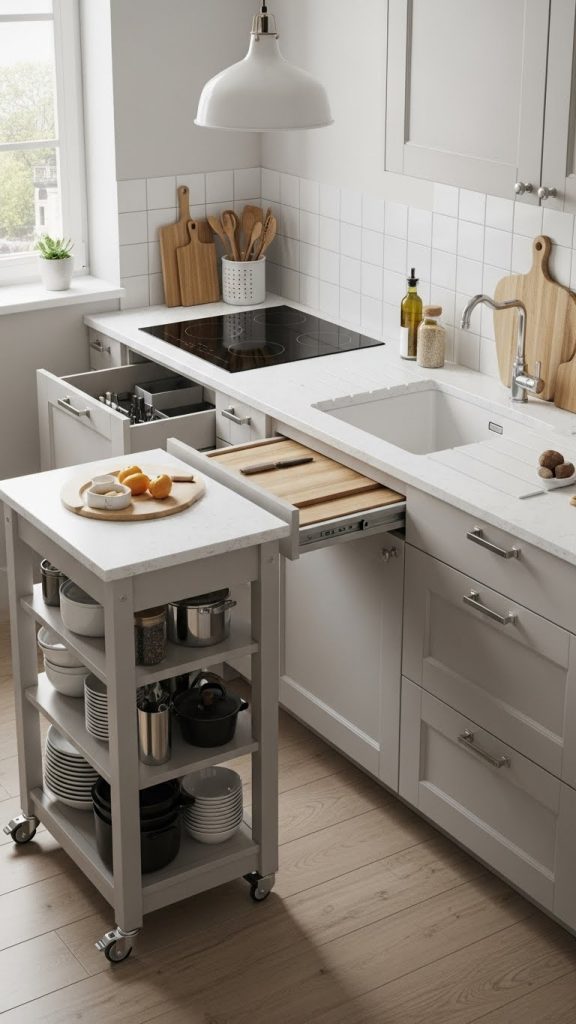
Multi-functional countertops provide both workspace and storage, maximizing utility in small kitchens. Countertops with built-in cutting boards, pull-out drawers, or integrated sink covers allow efficient use of limited space. Materials like quartz, granite, or laminated wood are suitable for durability and easy cleaning. Custom countertops can be designed to fit snugly into corners or along narrow walls, optimizing every inch. Consider adding a countertop extension or a rolling island for additional prep space that can be moved or stored when not in use. Efficient layout planning is essential to ensure that appliances and cabinets do not obstruct countertop use. Multi-functional countertops enhance workflow by combining food preparation, storage, and occasionally dining surfaces in one area. This approach keeps the kitchen organized and improves overall efficiency in a small space.
Preparation: Measure counter space and design functional features.
Materials: Quartz or granite countertops, built-in cutting boards, pull-out drawers.
8. Maximize Lighting
Adequate lighting is critical in small kitchens as it enhances visibility, safety, and the perception of space. Combining natural and artificial light sources creates a bright and welcoming environment. Install under-cabinet lighting to illuminate work areas, and consider pendant lights above dining or prep zones for focused lighting. Materials such as LED strips or small ceiling-mounted fixtures are ideal for compact kitchens. Reflective surfaces, such as glossy tiles or mirrored backsplashes, amplify light and contribute to a sense of spaciousness. When planning lighting, avoid dark corners and shadows that make the kitchen feel cramped. Smart lighting solutions, including dimmable or color-adjustable lights, provide flexibility for different moods and tasks. Proper lighting not only enhances functionality but also improves the overall aesthetic of the kitchen, making it appear larger and more inviting.

Preparation: Identify work zones and natural light sources.
Materials: LED strips, pendant lights, reflective tiles, dimmable fixtures.

9. Opt for Minimalist Design
A minimalist design approach is highly effective in small kitchens. By reducing clutter and focusing on essential elements, the kitchen feels more open and organized. Select sleek, handleless cabinets, clean countertops, and simple hardware for a streamlined appearance. Materials such as lacquered cabinets, quartz countertops, and smooth tiles maintain a modern minimalist aesthetic. Storage solutions like pull-out drawers, hidden compartments, and multi-functional furniture support minimalism by keeping items out of sight. When decorating, limit accessories and choose functional, aesthetically pleasing pieces. Neutral color schemes and consistent materials enhance the sense of continuity and space. Minimalism in design ensures that small kitchens remain practical, visually appealing, and easy to maintain while maximizing every square inch effectively.
Preparation: Declutter and evaluate essential kitchen elements.
Materials: Sleek cabinets, quartz or laminate countertops, minimal hardware.

10. Add Mirrors and Reflective Surfaces
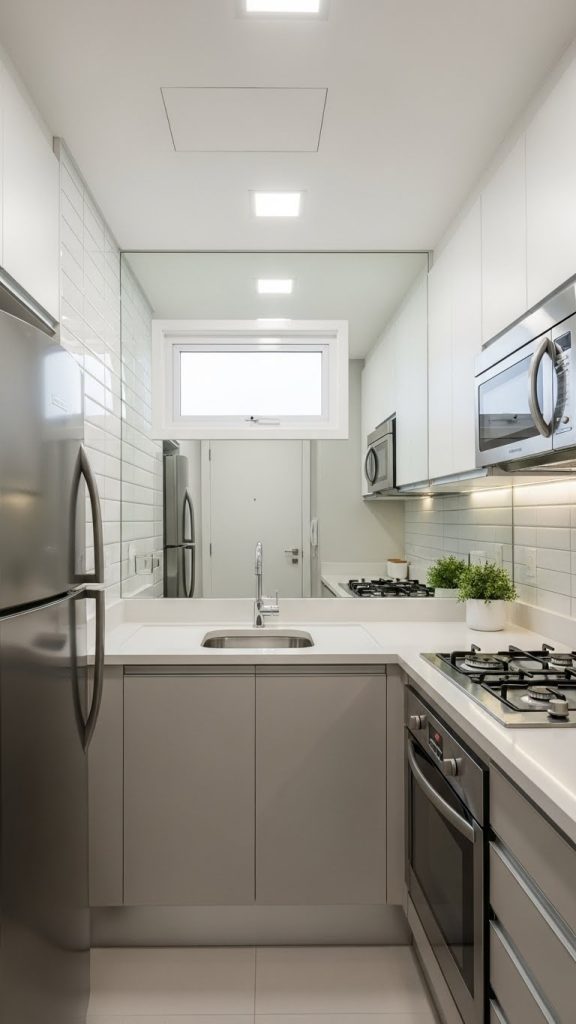
Mirrors and reflective surfaces are powerful tools for visually expanding a small kitchen. A mirrored backsplash, glossy tiles, or stainless steel appliances reflect light and create the illusion of depth, making the space appear larger. Materials like tempered glass, polished tiles, or stainless steel are ideal for durability and easy cleaning. When installing mirrors, ensure they are positioned to reflect light sources or open areas, enhancing brightness and openness. Combining reflective surfaces with a light color palette amplifies the effect, giving the kitchen a modern and airy feel. Even small reflective accents, like mirrored cabinet handles or metallic finishes, contribute to the perception of spaciousness. This technique is particularly effective in narrow kitchens where visual expansion is essential for comfort and aesthetics.

Preparation: Identify wall or backsplash areas suitable for reflective surfaces.
Materials: Tempered glass, mirrored tiles, stainless steel, glossy finishes.