Designing a small shared bedroom can be challenging, especially when you need to balance comfort, privacy, and functionality. Whether it’s for siblings, roommates, or children, smart design choices can transform even a tiny space into a functional and stylish retreat. This guide explores ten practical and creative ideas to optimize small shared bedrooms while maintaining aesthetics.
1. Bunk Bed Layouts
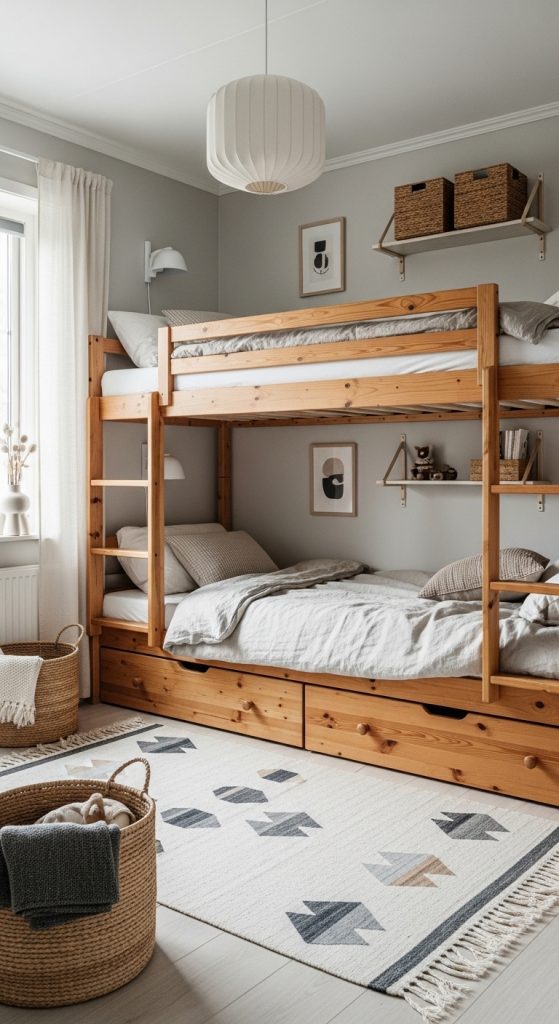
Bunk beds are the ultimate space-saving solution for shared bedrooms. By stacking one bed above the other, vertical space is utilized efficiently, leaving more floor area for movement or other furniture. Modern bunk beds come in various designs, including those with built-in storage drawers, desks, or shelving units.
Preparation: Measure the room height to ensure adequate clearance between the top bunk and ceiling. Ensure structural integrity by choosing a sturdy frame and securing it properly.
Materials: Common materials include solid wood, metal, or a combination of both. Wood offers warmth and durability, while metal provides a lightweight and sleek option.
Tips: Incorporate safety features such as guardrails and secure ladders. Use multifunctional designs, such as lofted beds with desks below, to maximize usability. Selecting beds with built-in storage reduces the need for additional furniture, keeping the room uncluttered.
2. Loft Beds with Desk Space
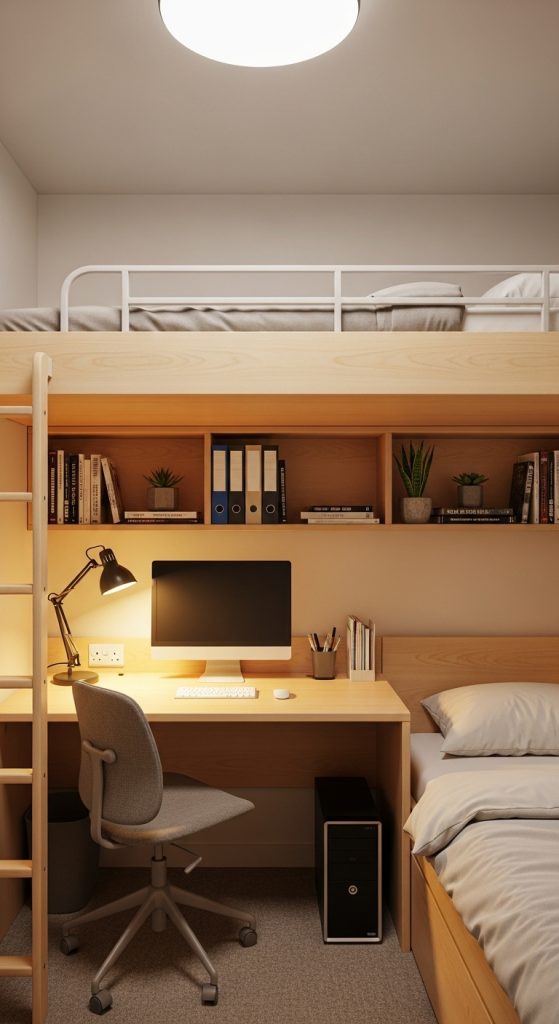
Loft beds elevate the sleeping area, leaving the floor beneath free for a desk or play space. This design is ideal for students or teenagers who require a dedicated study zone within a shared bedroom.
Preparation: Assess the height of the ceiling to prevent the upper bed from feeling cramped. Ensure proper lighting beneath the loft area for tasks such as studying or crafting.
Materials: Solid wood and engineered wood are common for loft beds, providing strength and aesthetic appeal. Metal frames are lightweight and modern, often easier to assemble.
Tips: Incorporate storage solutions under the loft such as drawers, shelves, or a small wardrobe. Position the desk near a window to take advantage of natural light. Ensure proper ventilation and safety with guardrails and secure ladder access.
3. Twin Bed Corners with Divider Shelves
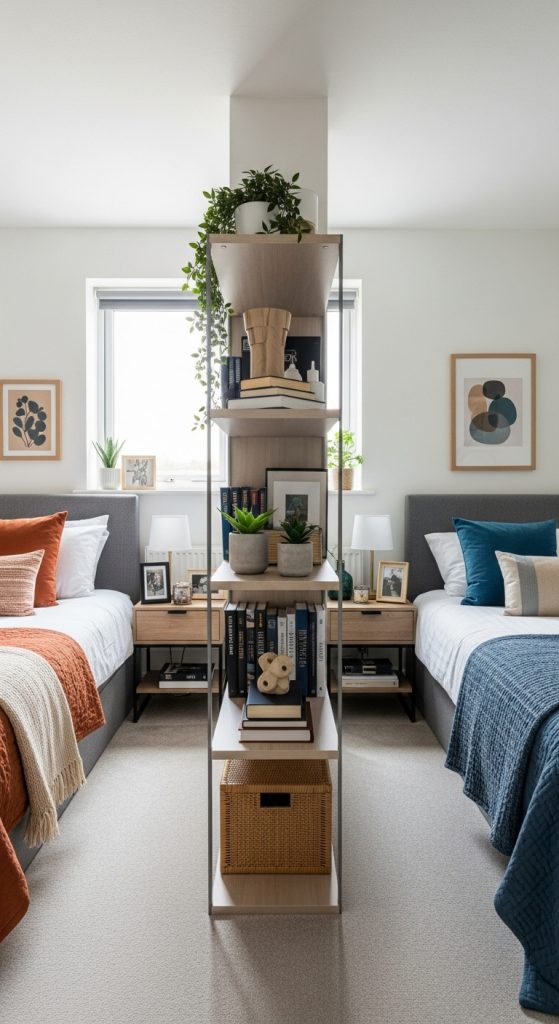
Placing twin beds in opposite corners of the room with a shared divider can create personal zones while maintaining an open layout. Divider shelves offer both privacy and storage for books, toys, or decor.
Preparation: Measure the available floor space to ensure enough walking area between beds. Plan the height and width of the divider to provide sufficient separation without overcrowding.
Materials: Use lightweight wooden shelves or modular units. Floating shelves or open partitions maintain visual space while providing utility.
Tips: Personalize each side with color accents, bedding, or wall decor. Use dividers with cubby storage to double as a functional piece. This layout promotes a sense of ownership and privacy while keeping the room organized.
4. Under-Bed Storage Solutions
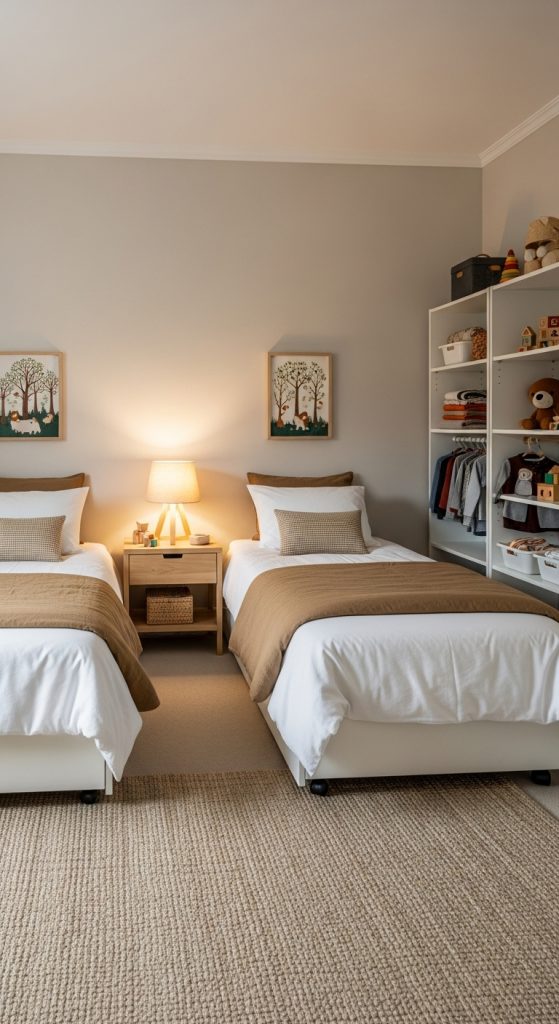
In small shared bedrooms, utilizing under-bed storage is crucial. Rolling drawers, storage bins, or built-in compartments can house clothing, toys, or extra bedding, freeing up visible floor space.
Preparation: Ensure the beds are high enough to accommodate storage containers underneath. Measure dimensions to select appropriately sized drawers or bins.
Materials: Wooden drawers or plastic storage containers are common. Opt for smooth-rolling casters to ease access.
Tips: Assign specific drawers or bins to each occupant to prevent clutter. Use uniform containers to maintain a tidy appearance. Incorporate labels to improve organization. Efficient under-bed storage reduces the need for bulky furniture and keeps shared bedrooms functional.
5. Foldable or Murphy Beds
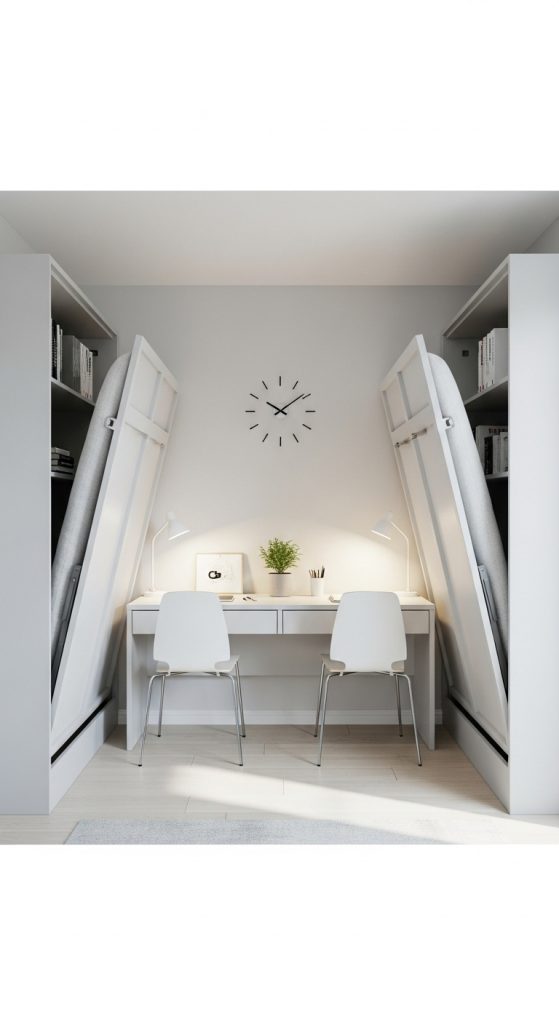
Foldable or Murphy beds offer a versatile solution for rooms that require multifunctional use. Beds can be tucked away during the day, creating space for study, play, or exercise.
Preparation: Measure wall space carefully to accommodate the folding mechanism. Consider clearance for opening and closing the bed safely.
Materials: Solid wood, metal, and engineered boards are standard. Ensure the bed frame is sturdy and the folding mechanism reliable.
Tips: Pair the bed with fold-out desks or shelving to maximize utility. Install soft-close hinges or hydraulic systems for safe operation. This design maximizes both space and flexibility, making it ideal for rooms with multiple functions.
6. Lofted Storage Beds
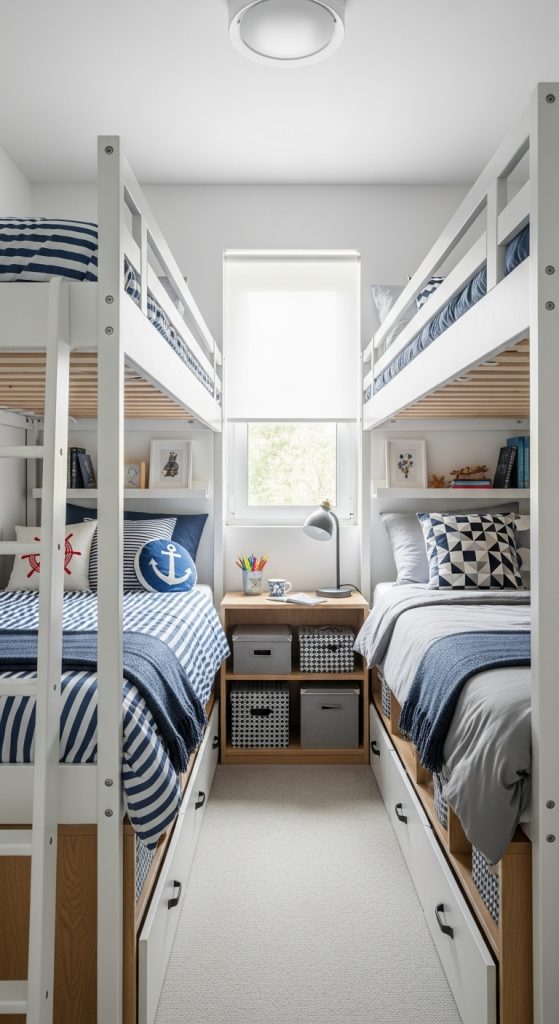
Lofted storage beds combine elevated sleeping with built-in drawers, shelves, or cubbies underneath. This design eliminates the need for additional storage furniture, ideal for compact shared bedrooms.
Preparation: Determine ceiling height and the user’s comfort when climbing into bed. Plan storage compartments to maximize efficiency.
Materials: Solid wood or engineered wood for durability, metal accents for modern aesthetics. Built-in drawers should have smooth glides for ease of use.
Tips: Use under-bed lighting to make storage accessible. Design storage with divided sections for each occupant to reduce clutter disputes. Consider modular units that can be rearranged as needs change.
7. Modular Furniture Arrangements
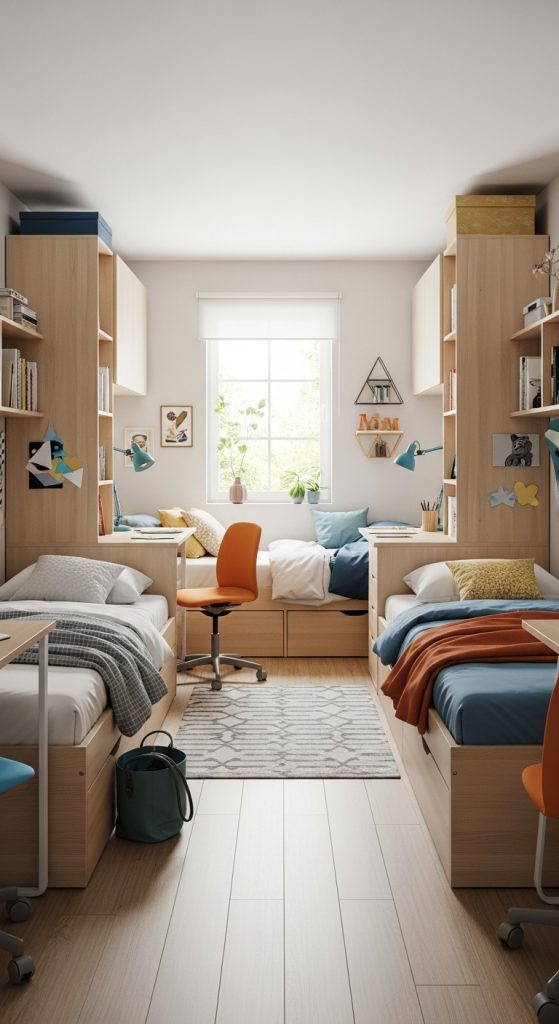
Modular furniture allows a room layout to adapt as children grow or as roommates’ needs change. Pieces can be rearranged, stacked, or combined to suit sleeping, studying, or storage requirements.
Preparation: Choose lightweight, durable units that are easy to move. Measure floor space to plan flexibility without overcrowding.
Materials: Engineered wood, plastic composites, and metal frames are common for modular designs. They provide durability while keeping pieces lightweight.
Tips: Prioritize multifunctional modules, such as desks that convert into storage or beds with removable trundles. Modular furniture supports personalized design and accommodates changing needs, perfect for shared bedrooms.
8. Minimalist Shared Bedroom Design
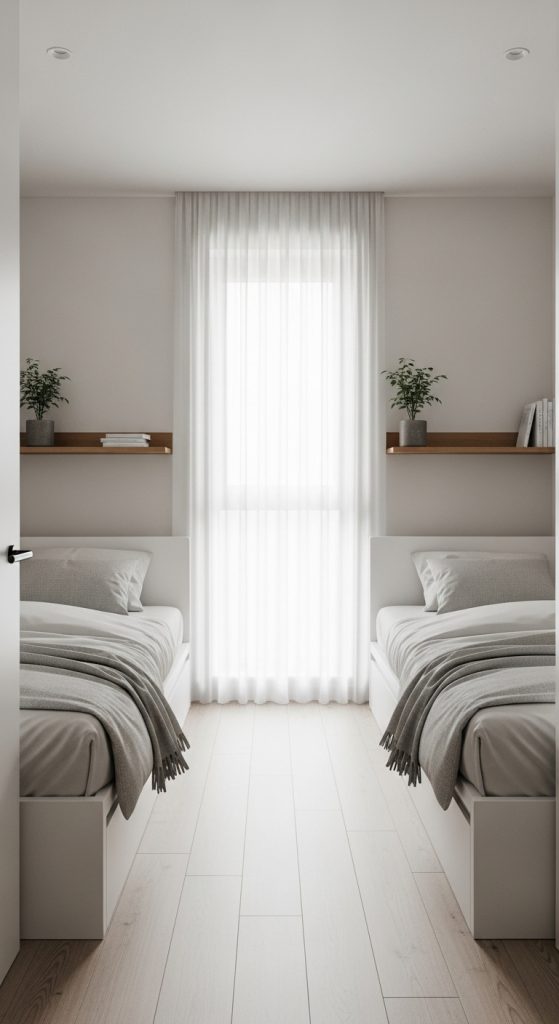
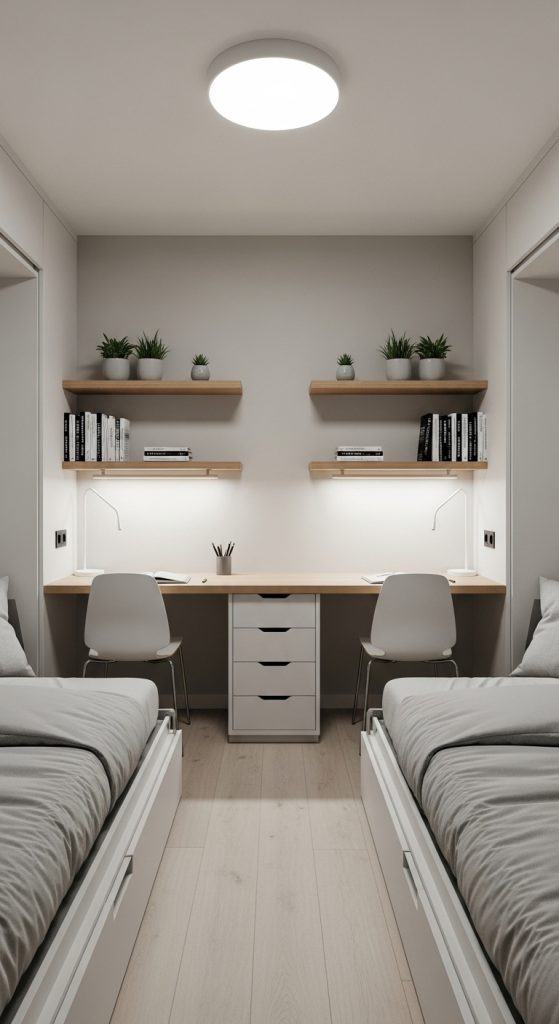
Minimalist design focuses on simplicity, neutral colors, and clutter-free spaces. This approach creates an illusion of spaciousness and reduces visual stress in shared rooms.
Preparation: Remove unnecessary furniture and decor. Prioritize multifunctional pieces that serve multiple purposes.
Materials: Light-colored woods, metal frames, and neutral fabrics contribute to a minimalist aesthetic. Incorporate hidden storage to maintain clean lines.
Tips: Limit wall decorations to a few meaningful pieces. Use uniform bedding and color schemes to unify the space. Minimalist design emphasizes functionality and can make small shared bedrooms feel larger and more serene.
9. Personalized Zones with Color Coding
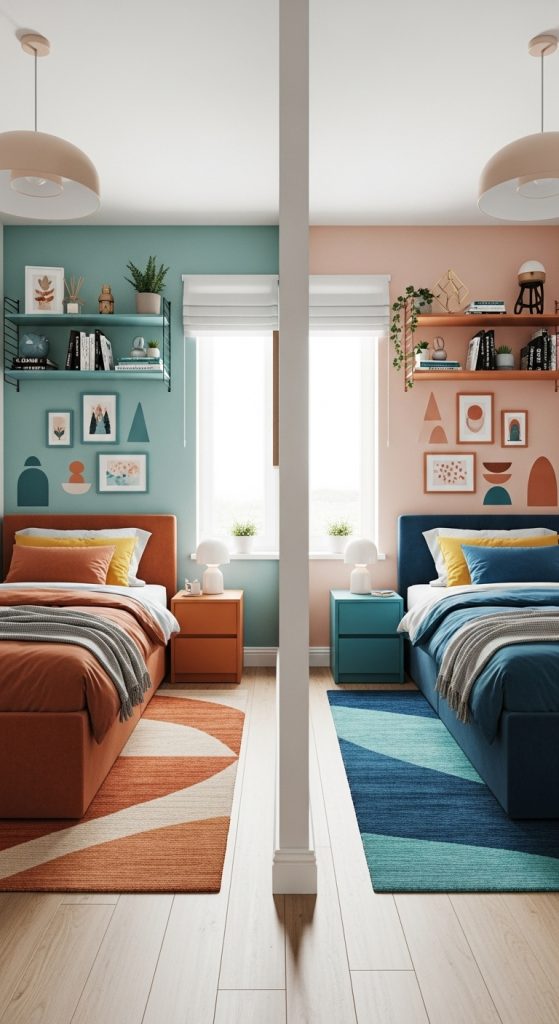
Assigning colors or themes to each occupant’s area fosters individuality in a shared bedroom. Color-coded bedding, rugs, or wall decals make each zone distinct while keeping the space cohesive.
Preparation: Select a base color scheme and accent colors for personalization. Ensure that choices complement the room’s natural lighting and size.
Materials: Paint, removable wallpaper, rugs, bedding, and storage containers are common tools for creating zones.
Tips: Encourage occupants to maintain their personal zone for organization. Use room dividers, shelving, or rugs to reinforce boundaries. Color coding simplifies cleaning and decorating, making shared bedrooms more harmonious.
10. Wall-Mounted and Floating Furniture
Wall-mounted desks, shelves, and foldable beds free up floor space, providing more room for movement in compact shared bedrooms. Floating furniture gives a sense of openness and reduces clutter.
Preparation: Ensure walls are structurally sound to support mounted furniture. Measure and plan heights for accessibility and comfort.
Materials: Engineered wood, metal brackets, and sturdy fasteners are essential. Select moisture-resistant materials for durability.
Tips: Integrate floating furniture with under-bed storage or wall hooks for additional utility. Use modular floating pieces to allow reconfiguration as needed. Wall-mounted furniture maximizes efficiency and maintains a clean, organized look in small shared bedrooms.




Leave a Reply