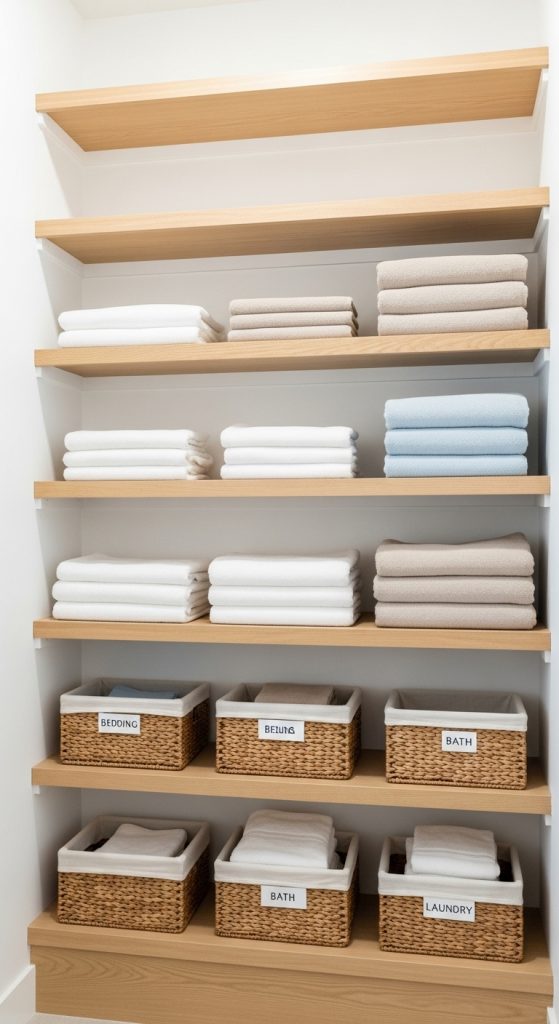
A linen closet is more than just a storage space for towels and sheets. With the right shelving solutions, it can be transformed into a highly functional and aesthetically pleasing area. The key is to select shelves that maximize space, accommodate various types of linens, and keep items easily accessible. Here are ten innovative shelving ideas to elevate your linen closet. Each suggestion includes preparation tips, recommended materials, and practical use cases.
1. Adjustable Wire Shelving
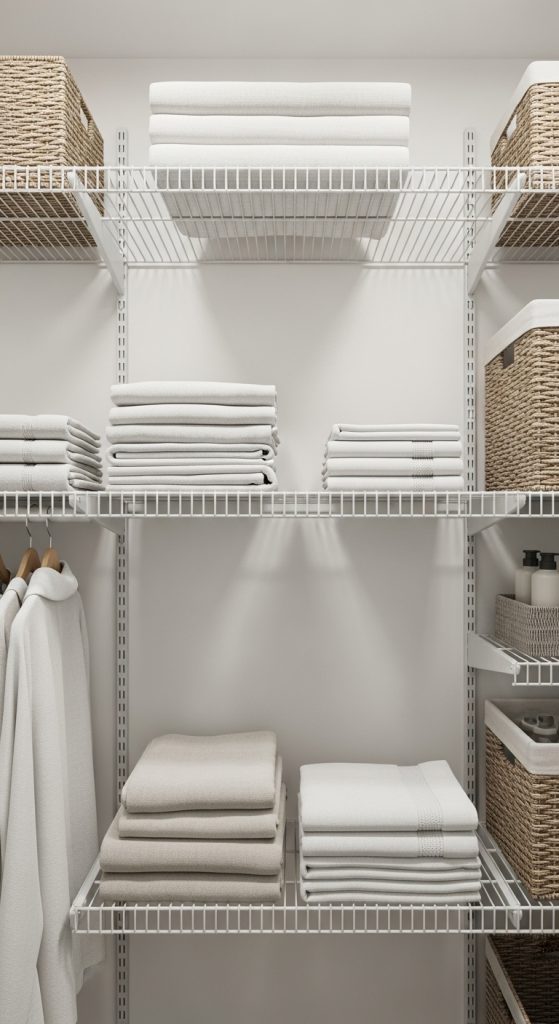
Adjustable wire shelving is one of the most versatile options for a linen closet. These shelves allow for easy customization based on your storage needs. You can modify the height to fit large comforters, folded towels, or smaller items such as washcloths. Wire shelving also promotes air circulation, keeping linens fresh and preventing mildew.
Preparation and Materials:
To install wire shelving, you need brackets, wall-mounted tracks, and the wire shelves themselves. Begin by measuring your closet space carefully. Mark the wall where tracks will be installed, ensuring they are level. Screw the tracks into wall studs for stability, then attach the brackets to hold the wire shelves.
Practical Use:
Wire shelving is perfect for households that require flexibility. For instance, seasonal linens like heavy blankets can occupy higher shelves, while everyday towels are within easy reach. The open design also helps you see all items at a glance, reducing the chance of forgetting or misplacing linens.

2. Floating Wooden Shelves
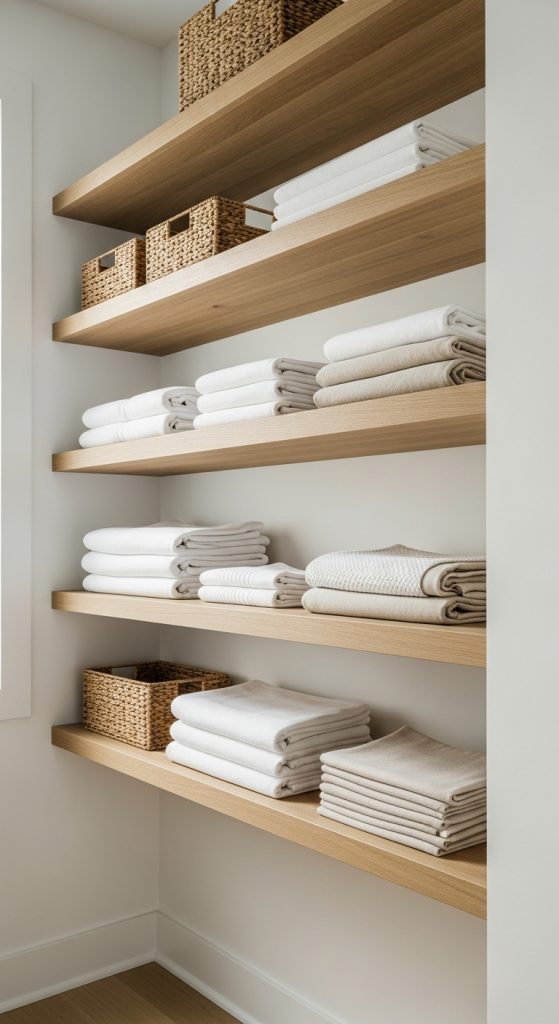
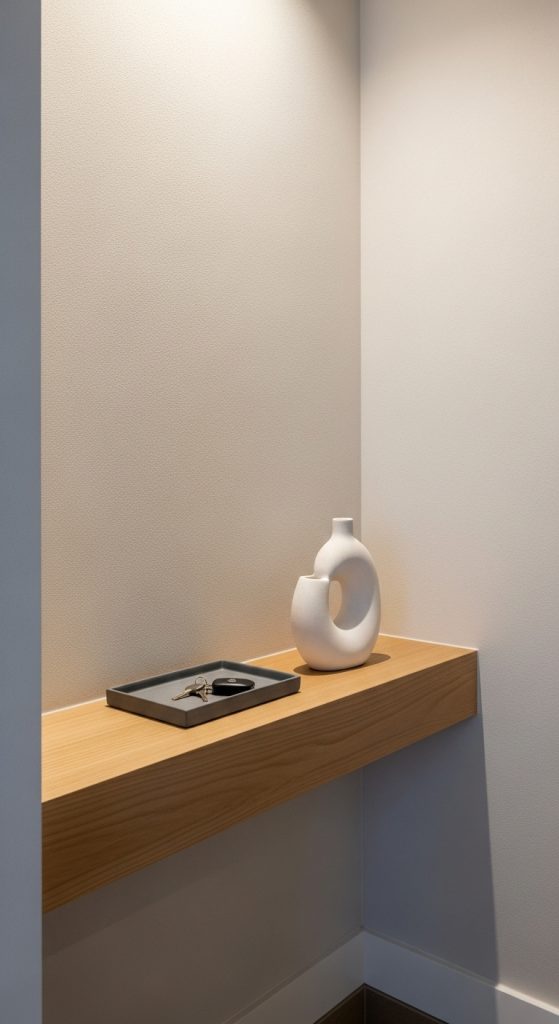
Floating shelves offer a minimalist and elegant look for a linen closet. They are mounted directly on the wall without visible brackets, creating a clean, modern aesthetic. Wooden shelves bring warmth to the space and can be customized with different finishes to match your home decor.
Preparation and Materials:
You will need solid wood boards, wall anchors, a stud finder, screws, a level, and a drill. Begin by locating the wall studs for secure attachment. Cut the wood boards to fit the width of your closet. Attach the hidden brackets or floating shelf hardware to the studs, then slide the shelves into place. Sand and finish the wood for a polished appearance.
Practical Use:
Floating shelves are ideal for neatly stacking towels, sheets, and pillowcases. Since they do not take up floor space, they create a sense of openness. You can also use decorative baskets on the shelves to hold smaller items, keeping the closet organized while maintaining a stylish appearance.
3. Pull-Out Shelves
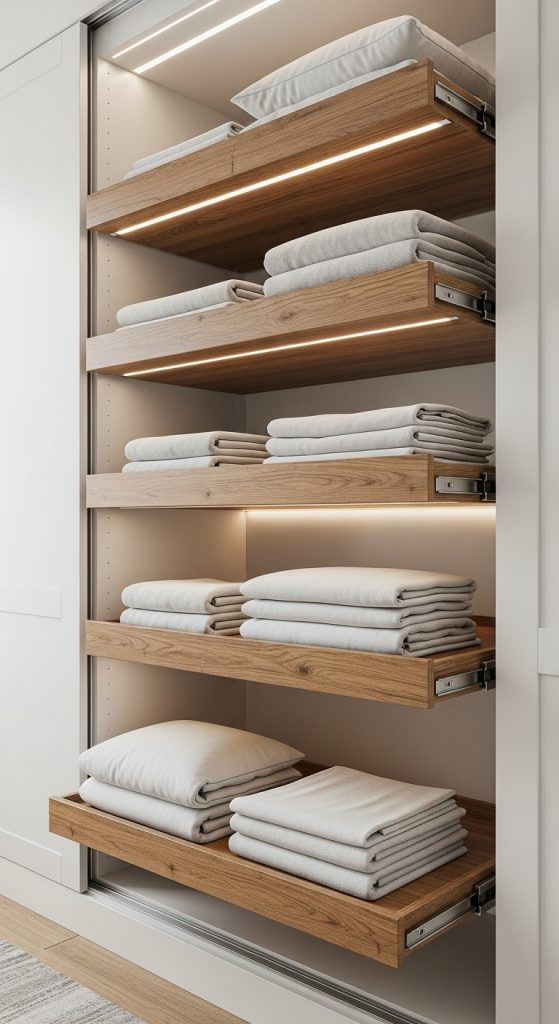
Pull-out shelves are designed to maximize accessibility. Instead of stacking linens deep on a fixed shelf, pull-out shelves allow you to slide items forward for easy reach. This is especially helpful in deep linen closets where items at the back can become forgotten.

Preparation and Materials:
You will need drawer slides, wooden boards or pre-made pull-out drawers, screws, and a drill. Measure the width and depth of your closet to select appropriately sized slides. Attach the slides to the side walls, ensuring they are level. Mount the pull-out shelves onto the slides and test for smooth operation.
Practical Use:
Pull-out shelves are excellent for organizing multiple linen categories. You can designate one shelf for towels, another for sheets, and a third for miscellaneous items such as table linens. They provide full visibility of all stored items, reducing clutter and enhancing organization.
4. Cube Storage Shelving
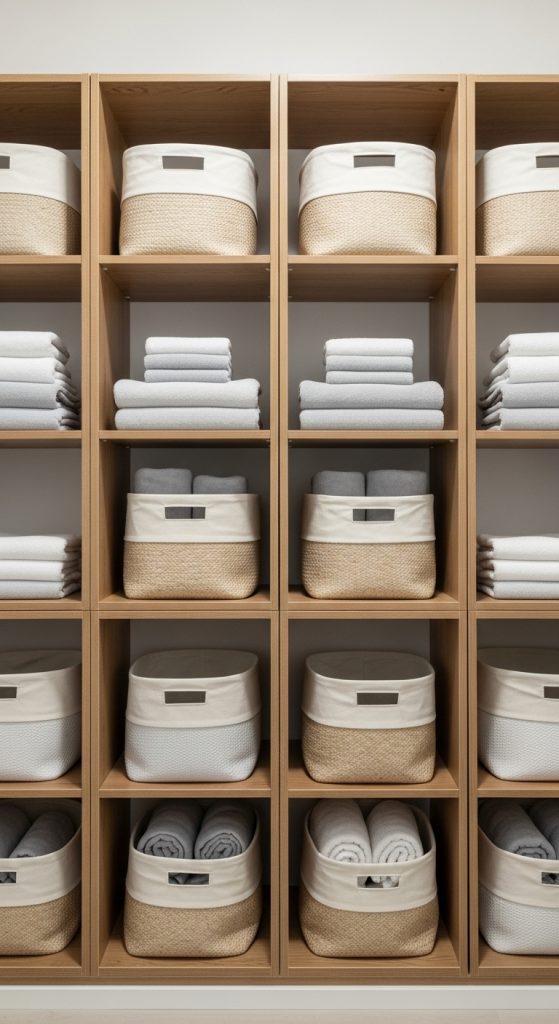
Cube storage shelving divides the closet into uniform square or rectangular compartments. This shelving type provides dedicated spaces for different linen types and allows for easy categorization. It is versatile and can accommodate both folded linens and storage baskets.
Preparation and Materials:
Materials include plywood or MDF boards, screws, brackets, and a drill. Begin by measuring your closet to determine the number and size of cubes needed. Assemble the cube compartments individually or as one modular unit. Secure the assembled shelving to the wall for stability.

Practical Use:
Cube storage makes it easy to separate bath towels, hand towels, and washcloths. You can also use fabric bins within the cubes to store extra items such as pillow shams or seasonal blankets. The uniform compartments create a tidy, visually appealing organization system.
5. Corner Shelves
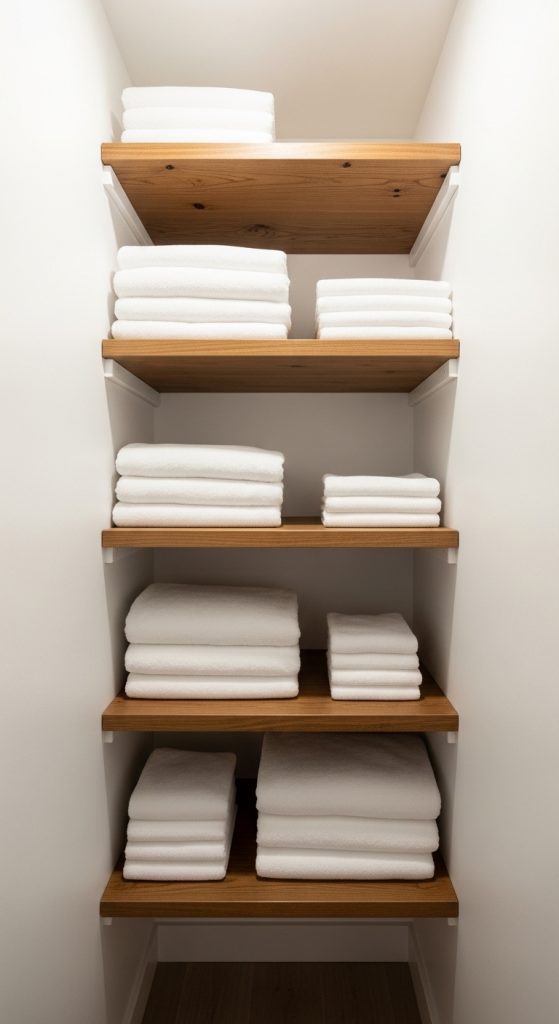
Corner shelving is a clever way to utilize unused space in your linen closet. By installing shelves in the corners, you increase storage capacity without taking up central space. Corner shelves work well for small closets where floor space is limited.
Preparation and Materials:
You will need L-shaped brackets, wooden boards cut to fit the corner dimensions, screws, and a level. Measure the corner angles carefully to ensure a snug fit. Attach the brackets to the wall studs and place the shelves on top. Consider sanding and painting the shelves to match your closet decor.
Practical Use:
Corner shelves are perfect for storing small items like hand towels, washcloths, or decorative baskets. They make it easy to access items without interfering with the main shelving. Additionally, corner shelving can be stacked vertically to maximize height in the closet.

6. Ladder Shelving
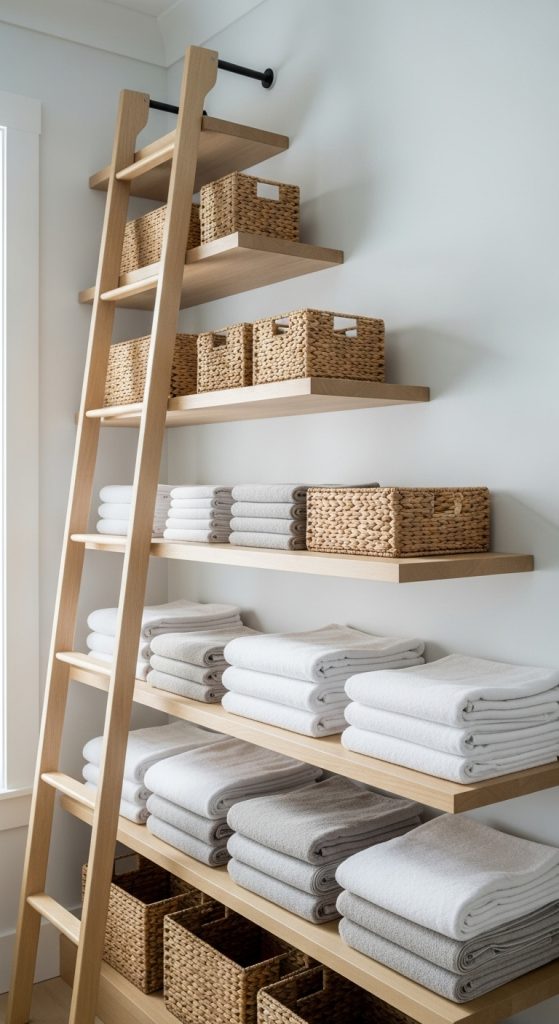
Ladder shelving leans against the wall and often does not require permanent installation, making it ideal for renters. These shelves are tiered, with wider boards at the bottom and narrower boards at the top, creating a visually appealing design.
Preparation and Materials:
Materials include wooden planks, a ladder frame, screws, and a drill. You can either purchase a ready-made ladder shelf or build one yourself. Ensure that the bottom shelf is wide and stable to support heavier linens. Ladder shelves may be free-standing, but securing them to the wall adds extra safety.
Practical Use:
Ladder shelves are ideal for storing frequently used towels and blankets. They can also serve as display shelves for decorative linens or baskets. Their open design allows for airflow and easy visual access, keeping the closet organized and stylish.
7. Built-In Shelving Units
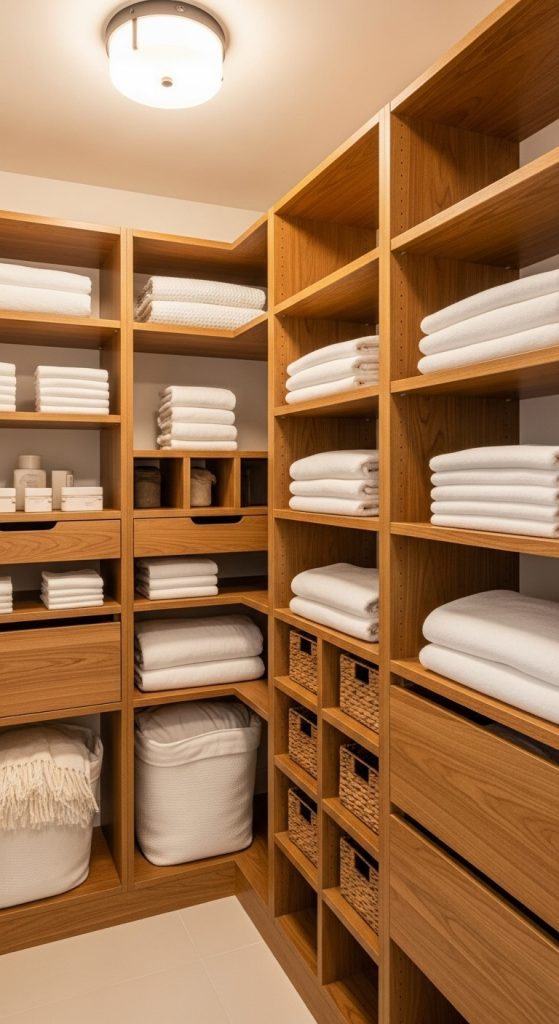
Built-in shelving transforms a linen closet into a fully customized storage solution. These shelves are integrated into the closet structure and can be designed to fit every inch of available space. Built-ins are ideal for homeowners seeking a long-term, permanent solution.
Preparation and Materials:
You will need plywood or MDF boards, screws, wood glue, and finishing materials such as paint or varnish. Measure the closet dimensions precisely and design the shelving layout to include adjustable or fixed shelves. Cut and assemble the units, then secure them to the walls. Finish with paint or stain to match your interior design.
Practical Use:
Built-in shelving allows you to optimize space for all linen types, from towels to bedding sets. You can integrate drawers, pull-out shelves, or cubbies within the built-in structure for added functionality. These shelves provide a polished, high-end appearance while keeping everything organized and accessible.
8. Sliding Door Shelves
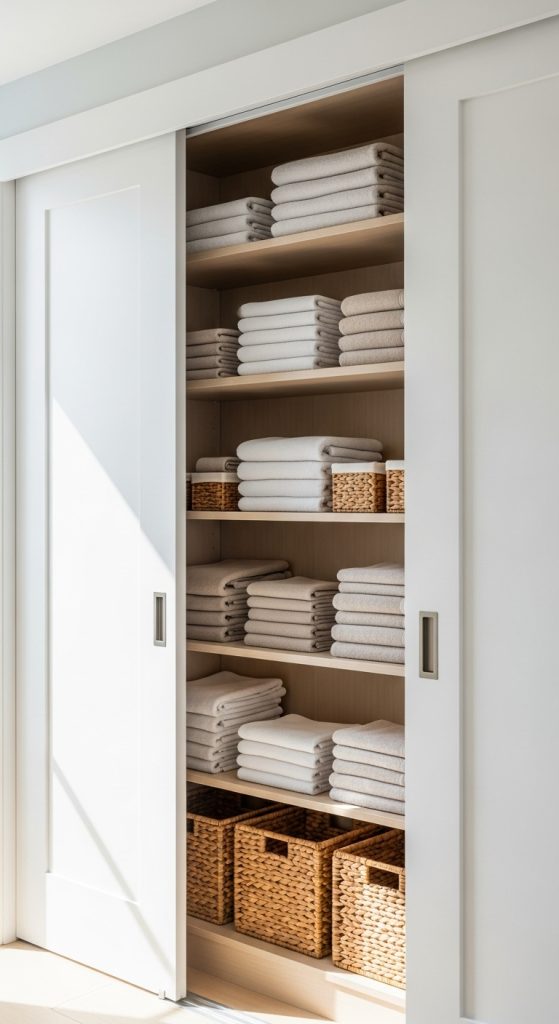
Sliding door shelves are designed for closets with limited opening space. Instead of swinging doors, these closets feature sliding panels that move horizontally, allowing access to all shelves. This design is space-efficient and keeps linens neatly concealed.
Preparation and Materials:
Materials include sliding door tracks, wooden shelves, screws, and a level. Measure the closet opening to select the appropriate door size. Install the top and bottom tracks, then attach the sliding doors. Place shelves inside the closet, ensuring proper spacing and accessibility.

Practical Use:
Sliding door shelves are perfect for narrow hallways or closets where swing doors are impractical. You can organize towels, sheets, and seasonal linens behind the sliding panels, creating a clean and uncluttered appearance. This setup allows easy access without compromising floor space.
9. Overhead Shelving
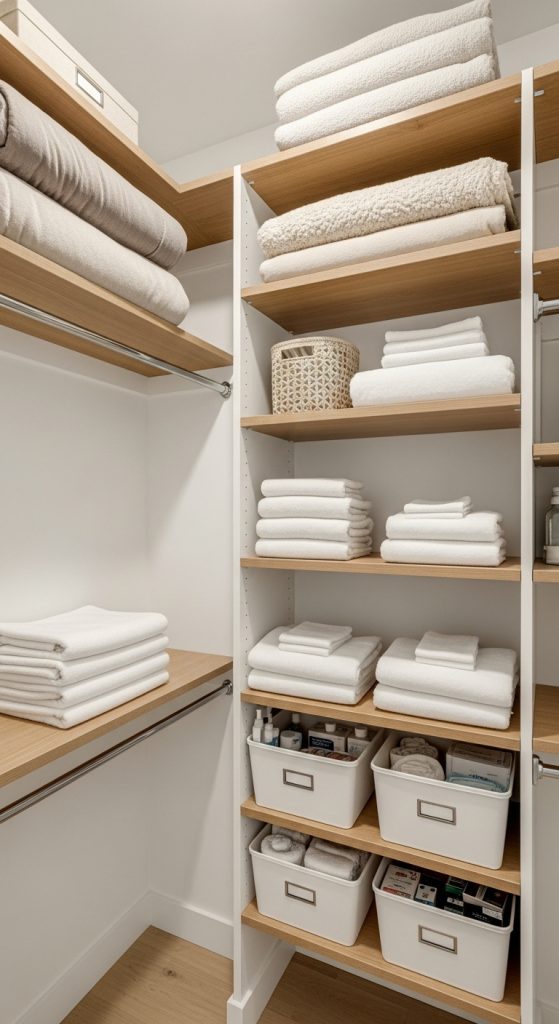
Overhead shelves make use of vertical space near the ceiling, which is often underutilized. These shelves are ideal for storing rarely used linens, seasonal items, or spare bedding. By installing shelves above eye level, you can free up lower shelves for items you use daily.
Preparation and Materials:
Materials include wooden boards, brackets, screws, and a drill. Locate wall studs to support the shelves and mark the desired height. Install sturdy brackets and secure the boards in place. Consider using bins or baskets to store linens safely and prevent them from falling.
Practical Use:
Overhead shelving is excellent for storing bulky items like winter blankets, tablecloths, or extra bedding. Using labeled bins can make it easy to retrieve items when needed. This approach maximizes vertical space, keeping your linen closet uncluttered and organized.

10. Tiered Open Shelving
Tiered open shelving is a layered shelving design that allows easy visibility and access to all linens. Each shelf can be slightly deeper than the one above it, creating a cascading effect. This design works well for smaller closets where maximizing storage and accessibility is crucial.
Preparation and Materials:
Materials include wooden boards, brackets, screws, and a drill. Measure the closet width and determine the height spacing for each tier. Install the brackets securely into wall studs, then place the shelves at the desired angles. Sand and finish the wood for durability and aesthetics.
Practical Use:
Tiered shelving is ideal for displaying towels and linens in a visually organized manner. The cascading arrangement allows you to quickly identify items, preventing the need to shuffle through piles. You can also combine this with labeled baskets to maintain order and enhance accessibility.