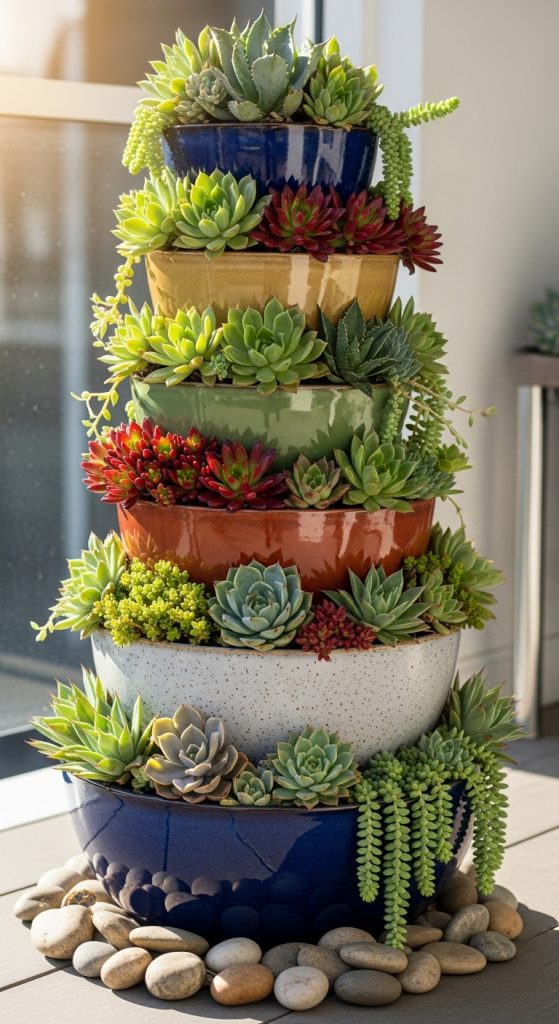

Succulent gardens are a timeless trend in home decor and gardening, loved for their low maintenance, charming aesthetic, and endless design possibilities. Whether you have a large outdoor space or a small apartment balcony, mini succulent gardens are a perfect way to bring nature indoors. Succulents thrive in various containers and arrangements, making them ideal for creative displays. Below are ten detailed ideas for creating beautiful mini succulent gardens, along with information about preparation, materials, and maintenance tips.
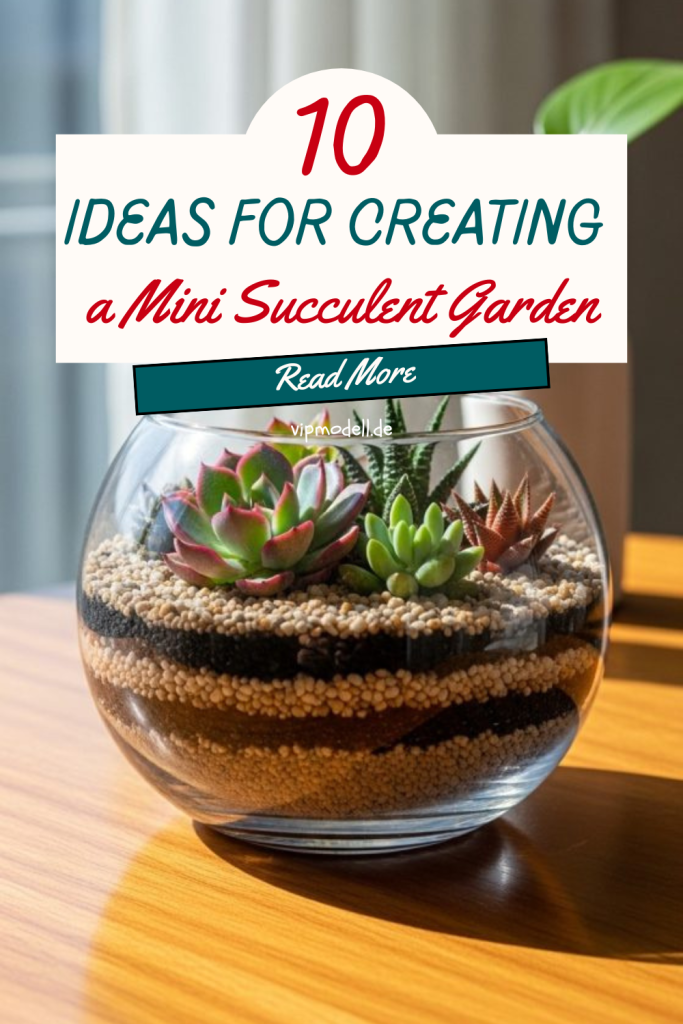
1. Tabletop Terrarium Garden
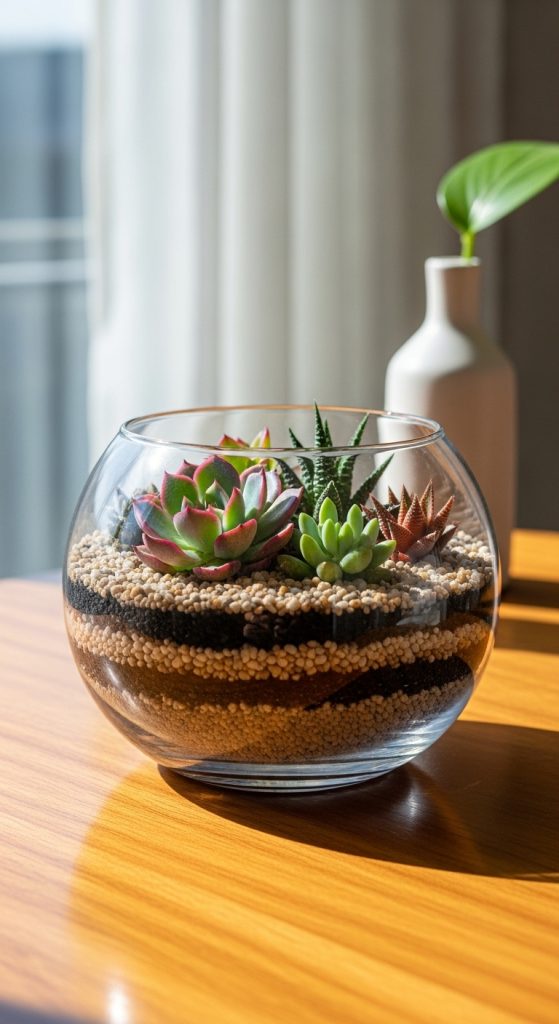
A tabletop terrarium is one of the most elegant ways to create a mini succulent garden. Start with a clear glass bowl, vase, or jar to provide visibility of the layered soil and decorative stones. You will need small succulents, cactus soil mix, activated charcoal, pebbles, and decorative sand.
Begin by placing a thin layer of pebbles at the bottom for drainage. Add a small amount of activated charcoal to prevent mold or odor, followed by the cactus soil mix. Carefully plant your chosen succulents, ensuring they are spaced apart for airflow and growth. Once planted, you can decorate the surface with colored sand or small stones for visual appeal.
This garden type thrives indoors near a sunny window. Avoid overwatering; once every two weeks is sufficient. The terrarium adds greenery to dining tables, office desks, or coffee tables, serving as both a natural decor piece and a low-maintenance hobby. Choose contrasting succulent types for added visual diversity, such as Echeveria paired with Haworthia.
2. Teacup or Mug Succulent Garden
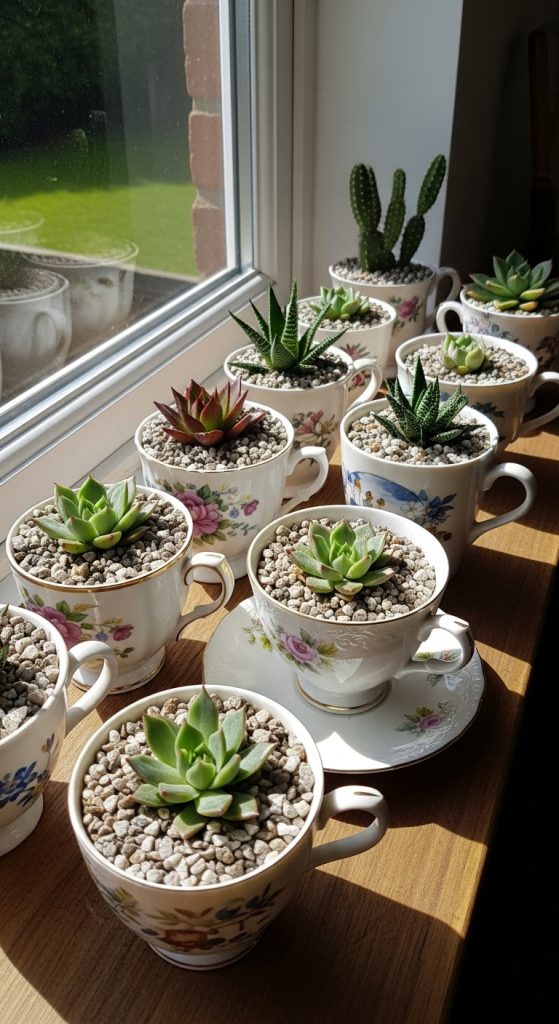
Repurposing old teacups or mugs into succulent planters is an excellent way to create a personalized mini garden. These small containers work perfectly for single succulents or small clusters. Materials required include a teacup, succulent soil, pebbles, and a small succulent plant.
Since most cups lack drainage holes, start by adding a layer of small stones at the bottom to help prevent root rot. Fill with a well-draining cactus soil mix and gently plant your succulent. You can finish by topping it with decorative gravel or sand.
Place these teacup gardens on window sills, bookshelves, or kitchen counters where they receive bright but indirect light. They make wonderful gifts and add a cozy touch to your home decor. Maintenance is minimal—succulents prefer dry soil, so water sparingly. You can create a collection of teacup gardens with various shapes, colors, and patterns for a charming, eclectic display.
3. Wooden Box Succulent Planter
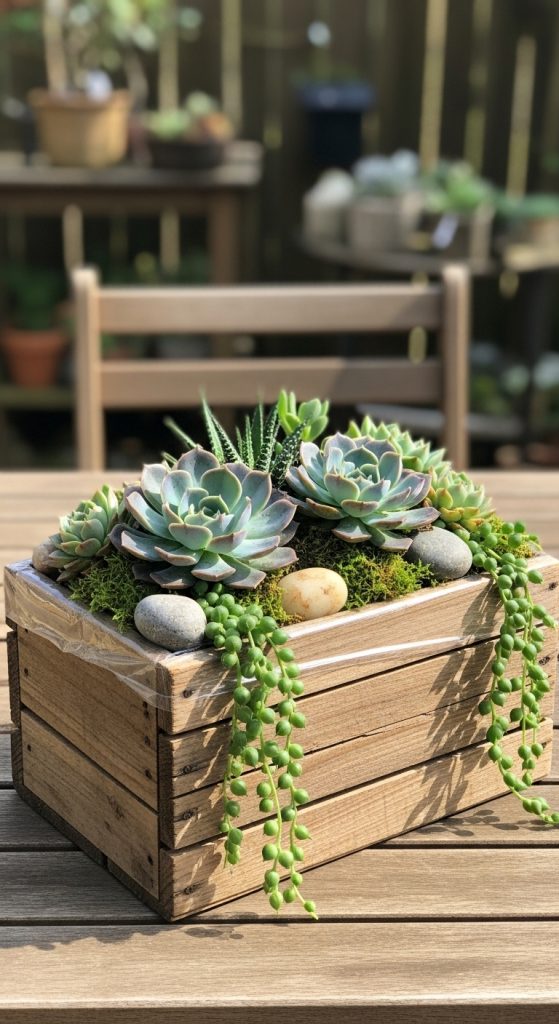
A rustic wooden box or crate makes an excellent base for a mini succulent garden with a natural charm. You will need a small wooden container, plastic liner, cactus mix soil, and an assortment of succulents.

Start by lining the inside of the wooden box with plastic or a waterproof sheet to protect the wood from moisture damage. Fill the container with a layer of cactus soil, then arrange your succulents in clusters. Combine rosette-style plants like Sempervivum with trailing ones such as String of Pearls for texture contrast. Add pebbles or moss for decoration.
Wooden box succulent gardens work well as table centerpieces or balcony decor. They thrive in bright sunlight and require watering every two to three weeks. Over time, the plants will grow and fill the box, creating a lush, miniature landscape. You can also use old drawers or wooden wine crates for a vintage look.
4. Vertical Frame Succulent Garden
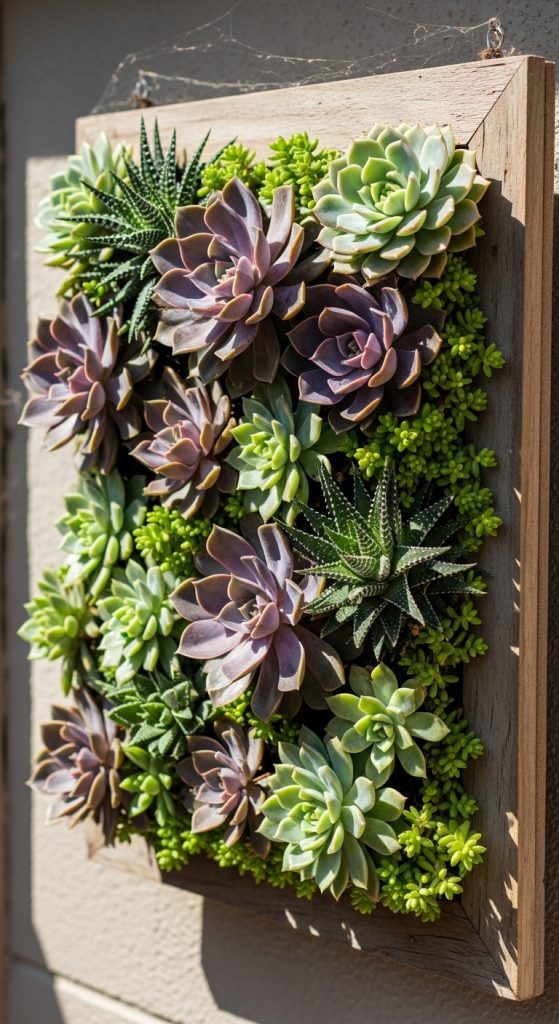
A vertical frame garden is an innovative way to display succulents, especially in small spaces. Materials include a shadow box or picture frame, chicken wire, sphagnum moss, and a selection of small succulents.
Begin by removing the glass from the frame and attaching chicken wire across the front. Fill the back with sphagnum moss or a succulent soil mix. Insert the succulent cuttings through the wire grid into the moss. Once completed, let the arrangement lie flat for about two weeks to allow roots to develop before hanging it vertically.

Vertical gardens are perfect for patios, balconies, or indoor walls with good light exposure. They act as living art pieces that bring color and texture to blank spaces. Maintenance involves light misting and occasional trimming to prevent overgrowth. This type of garden offers a modern aesthetic while maximizing limited space.
5. Fairy-Themed Succulent Garden
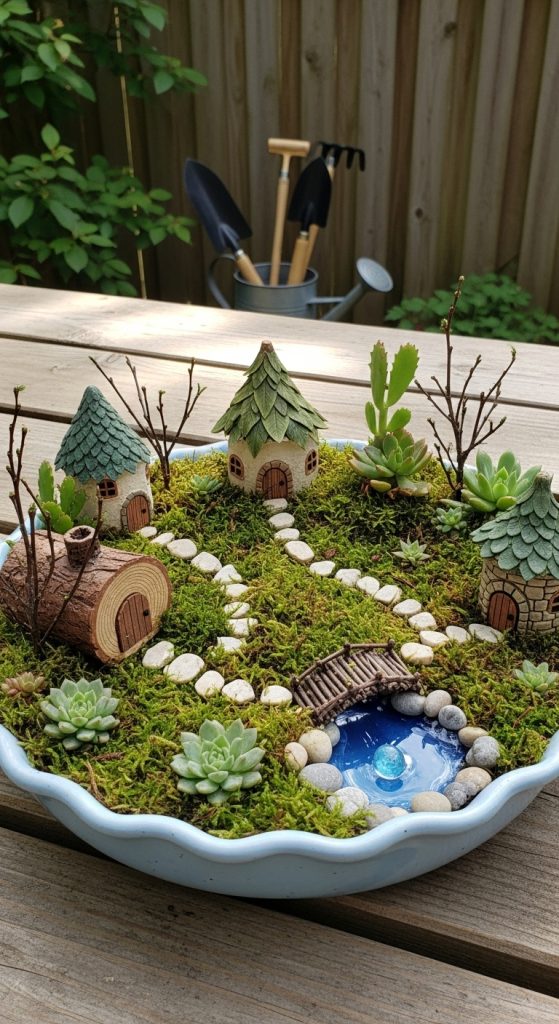
Combining succulents with miniature fairy garden decor creates a whimsical display that captures both creativity and nature. Materials needed include a shallow ceramic dish, cactus soil, various succulents, small pebbles, moss, and miniature fairy figurines or houses.
Start by filling your dish with soil and arranging the succulents. Choose smaller plants such as Haworthia or Lithops to maintain proportion with the miniature accessories. Create pathways using small stones and add fairy houses or benches to complete the theme.
These gardens are ideal for tabletops, windows, or outdoor patios. They require moderate sunlight and minimal watering. The fairy-themed garden allows creative expression and can be customized with seasonal decor, such as small pumpkins in fall or seashells in summer. It is an engaging project for children and adults alike, combining gardening with storytelling.

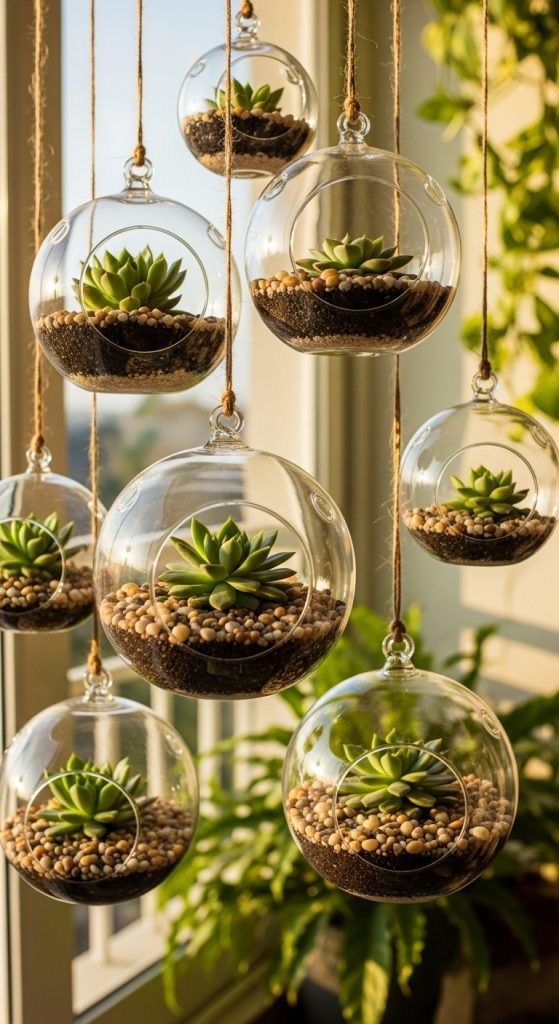
6. Hanging Succulent Globe
Hanging glass globes or orbs filled with succulents are stylish decor elements that add greenery to any indoor or outdoor space. For this project, you will need glass hanging globes, air plants or small succulents, cactus soil, pebbles, and jute string or wire for hanging.
Start by layering pebbles at the bottom of the globe, followed by a thin layer of soil. Carefully insert small succulents such as Tillandsia or Echeveria. Avoid overcrowding since airflow is important. Once planted, hang the globes near a window or patio area that receives indirect sunlight.
These hanging gardens are lightweight, space-saving, and easy to maintain. Water sparingly with a spray bottle, ensuring excess moisture drains out. Hanging succulent globes bring a modern, airy touch to interiors and make excellent gift options for plant enthusiasts. They also work well in clusters of varying heights for a dynamic visual effect.
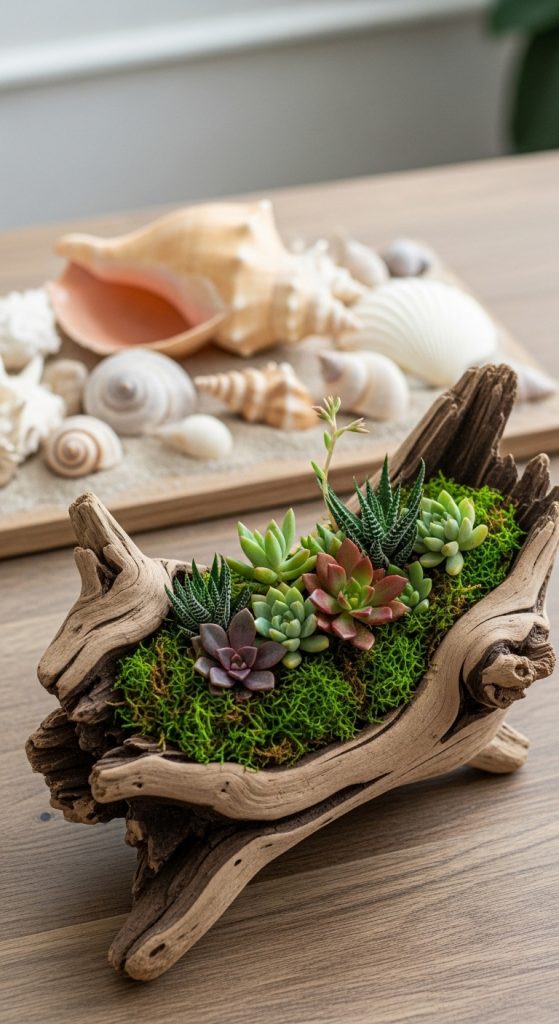
7. Driftwood Succulent Arrangement
A driftwood succulent arrangement combines organic textures with plant life, offering a natural, coastal-inspired look. You will need a piece of driftwood with natural crevices, moss, succulent soil, and small succulents.

First, clean and dry the driftwood thoroughly. Fill its cavities with moss and a small amount of soil. Insert tiny succulents such as Sedum or Crassula varieties into the pockets. Use glue or wire to secure the plants if needed.
This arrangement is best suited for outdoor patios or indoor spaces with bright light. It is low-maintenance, requiring minimal watering due to the limited soil. Driftwood gardens make unique centerpieces and can complement rustic or bohemian decor themes. Each piece of driftwood offers a distinct shape, ensuring that every arrangement is one-of-a-kind.
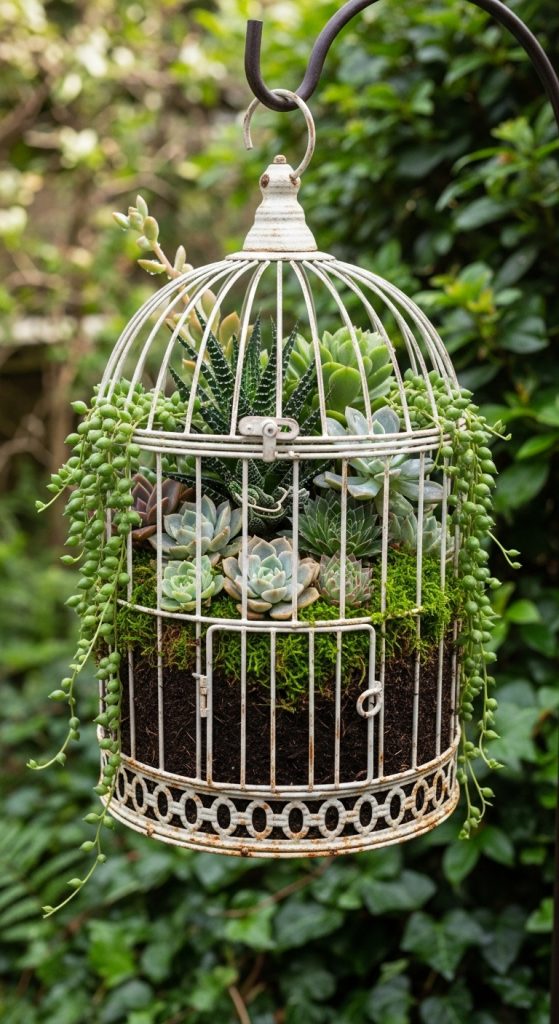
8. Succulent Garden in a Birdcage
Repurposing an old birdcage into a succulent planter brings vintage charm and creativity to your garden decor. Materials include a metal or wire birdcage, coconut liner, succulent soil, moss, and assorted succulents.
Start by lining the bottom of the birdcage with coconut fiber or moss to hold the soil. Add cactus mix and arrange your succulents in clusters. Trailing varieties like String of Pearls or Burro’s Tail will elegantly hang through the cage bars. Finish by adding small stones or ornaments for decoration.

This type of garden can be hung from ceilings, porches, or garden hooks. It allows good air circulation and adds vertical interest to garden designs. Maintenance includes occasional watering and pruning to control growth. The birdcage succulent garden is both functional and decorative, blending nostalgia with modern plant styling.
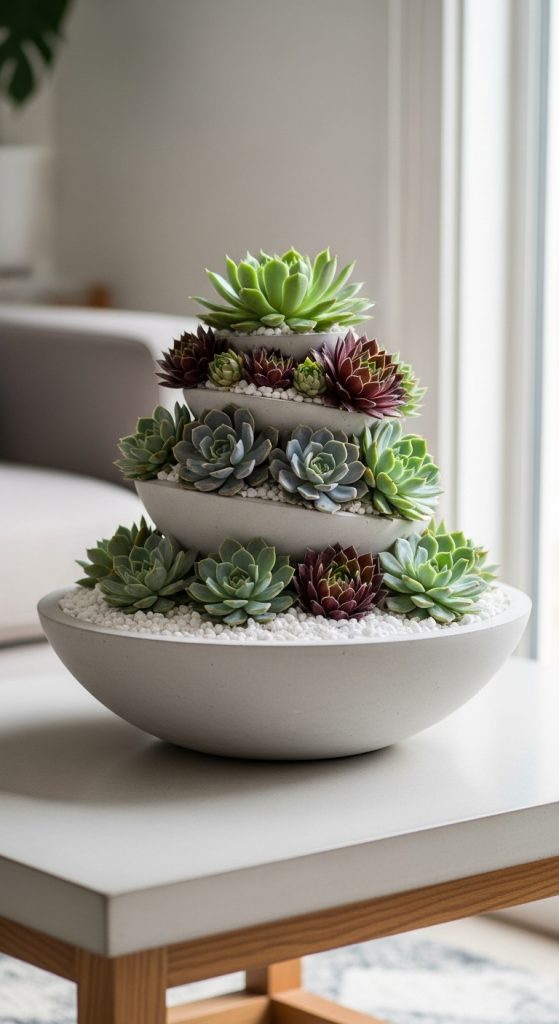
9. Concrete Bowl Succulent Garden
Concrete bowls provide a contemporary, minimalist base for mini succulent gardens. You will need a concrete or stone bowl, cactus soil mix, decorative gravel, and a variety of succulents.
Start by filling the bowl with cactus soil, then arrange succulents of varying heights and colors for depth. Surround the plants with gravel or sand for a clean finish. You can use gray concrete for a modern aesthetic or paint the bowl for a colorful touch.
Concrete bowl gardens are durable and perfect for both indoor and outdoor settings. They work well on patios, coffee tables, or office spaces. Water sparingly and ensure proper drainage to keep the roots healthy. The contrast between the soft textures of succulents and the roughness of concrete creates a visually appealing, modern look.

10. Tiered Succulent Garden
A tiered garden maximizes vertical space and creates a layered visual effect using multiple levels of containers. You can use stacked pots, tiered trays, or multi-level planters. Materials include containers of varying sizes, cactus soil, gravel, and a mix of succulents.
Begin by placing the largest pot as the base and stacking smaller ones on top, offset slightly for balance. Fill each layer with soil and arrange your succulents, combining different shapes and sizes. Add decorative stones or shells between levels for aesthetic appeal.
Tiered succulent gardens are ideal for patios, entryways, or balcony corners. They create a striking focal point while accommodating more plants in limited space. Ensure all containers have proper drainage to prevent root rot. The vertical structure enhances sunlight exposure for all plants and offers a visually balanced design suitable for any modern home.