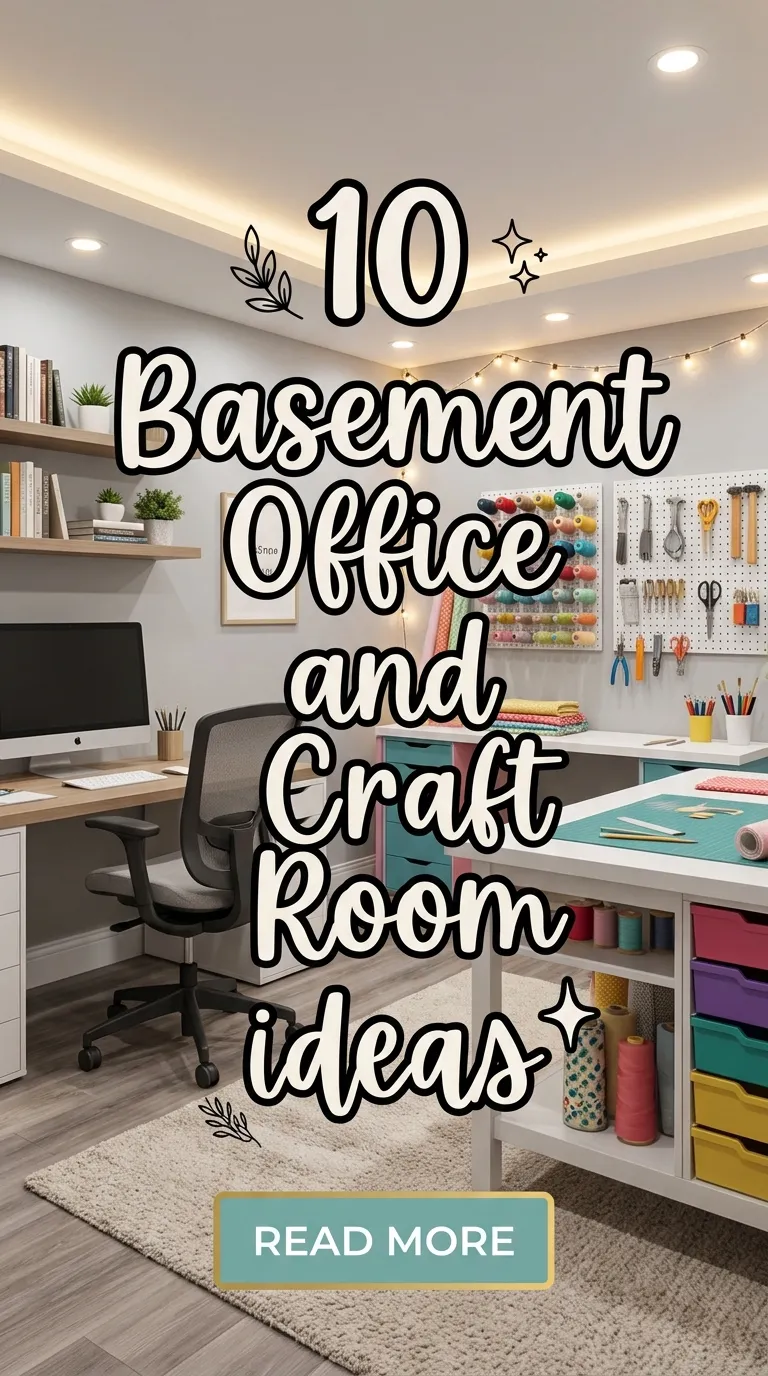
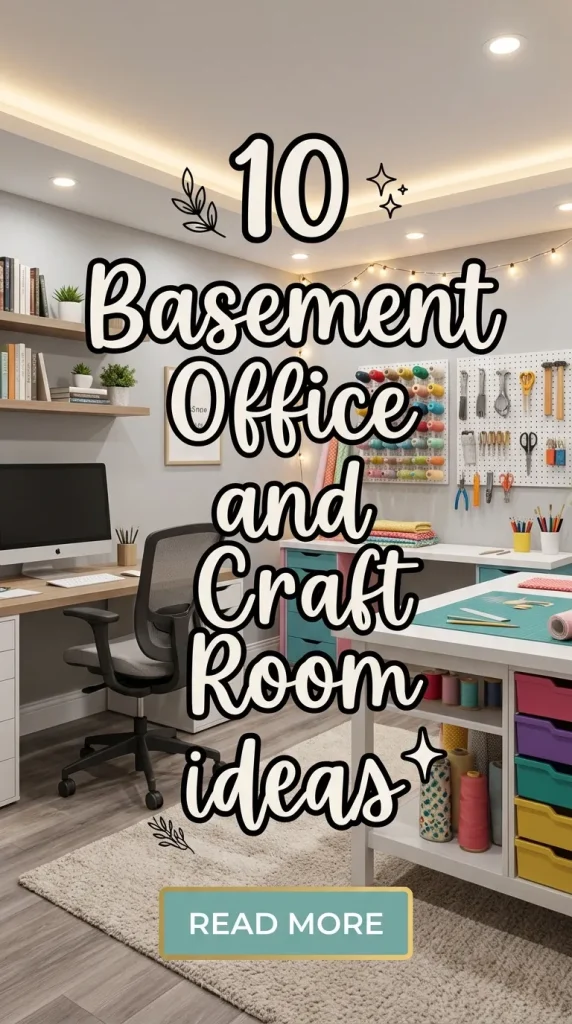
Basements are often underutilized spaces in a home, but with the right planning, they can become highly functional areas for work and creativity. A basement office and craft room can serve as a quiet workspace, a hub for artistic projects, or even a combination of both. Because basements tend to be more private and separated from the main living areas, they offer a distraction-free environment ideal for productivity and focus. Additionally, basements typically have more room than other parts of the home, allowing you to organize workspaces, storage, and crafting stations efficiently.
Before converting a basement into a combined office and craft room, it is important to consider lighting, ventilation, furniture, storage, and layout. Proper planning ensures that the space is not only functional but also comfortable and visually appealing. Investing in good materials and creative storage solutions can maximize the use of limited space while keeping it organized.
In this post, we explore ten inspiring basement office and craft room ideas. Each idea includes preparation tips, materials, and practical guidance to help homeowners create a productive, organized, and inviting basement environment. These ideas combine aesthetics with functionality, making it easy to enjoy both work and creative hobbies in the same space.
1. Multi-Zone Layout for Office and Crafting
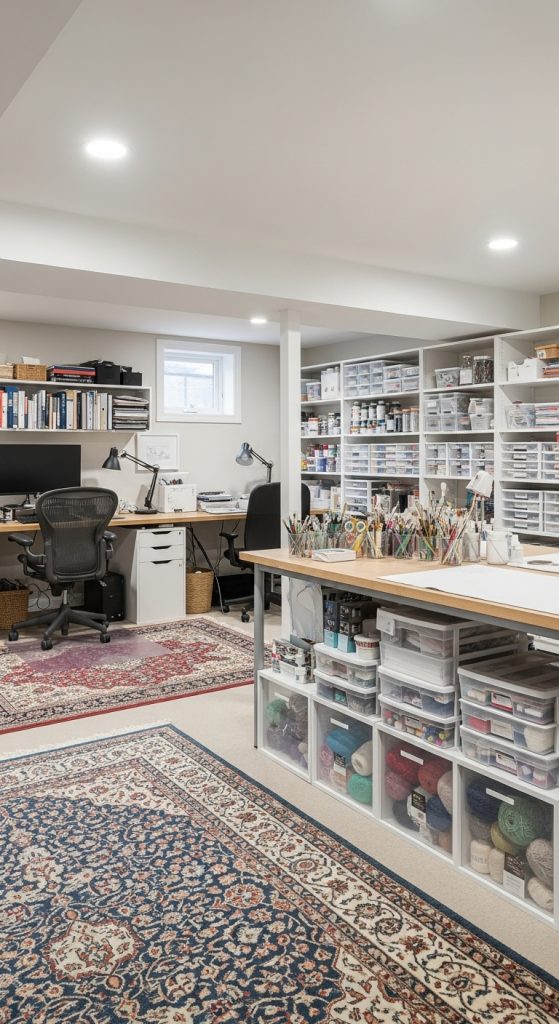
Creating separate zones in a basement for office work and crafting is an effective way to maintain organization. Start by measuring the available space and deciding where each zone will go. The office zone should include a desk, ergonomic chair, computer, and storage for documents and supplies. The crafting zone can have a large worktable, shelves, and bins for art materials, fabric, or tools.
Materials to consider include modular shelving units, rolling carts, pegboards, and desktop organizers. Partition screens or rugs can visually separate zones without building permanent walls. Adequate lighting is essential for both areas. Consider task lighting for your desk and overhead lighting or adjustable lamps for your crafting table.
A multi-zone layout allows you to shift between work and creativity without clutter. It also helps keep office materials away from messy craft supplies. Adding personal touches such as framed art or plants can enhance the overall ambiance and make the basement inviting.
2. Bright Lighting Solutions
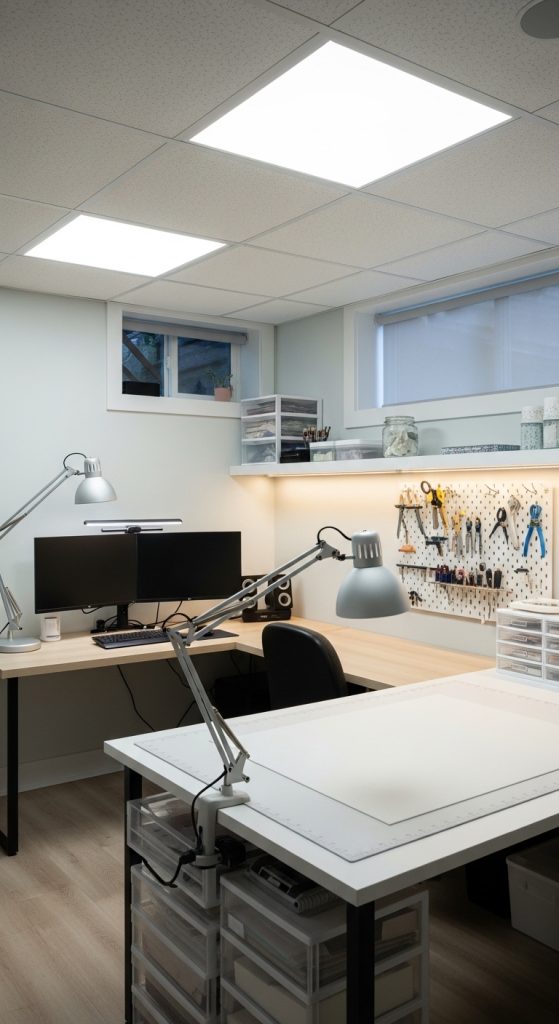
Basements often lack natural light, which can make them feel dark or cramped. Installing bright lighting is crucial for both office productivity and crafting accuracy. Start by layering your lighting: ambient overhead lights, task lighting at workstations, and accent lighting for decorative areas.
Materials include LED ceiling lights, adjustable desk lamps, under-shelf lights, and clip-on lamps for crafting tables. Consider daylight bulbs that mimic natural light to reduce eye strain. Light-colored walls, flooring, and furniture can help reflect light and brighten the space further.

In addition to overhead lighting, portable lamps or clamp lights can be positioned over your desk or craft table. Dimmer switches are useful to adjust brightness depending on your activity. Bright, well-distributed lighting creates a welcoming environment and ensures precision for crafting projects and office tasks alike.
3. Functional Storage Solutions
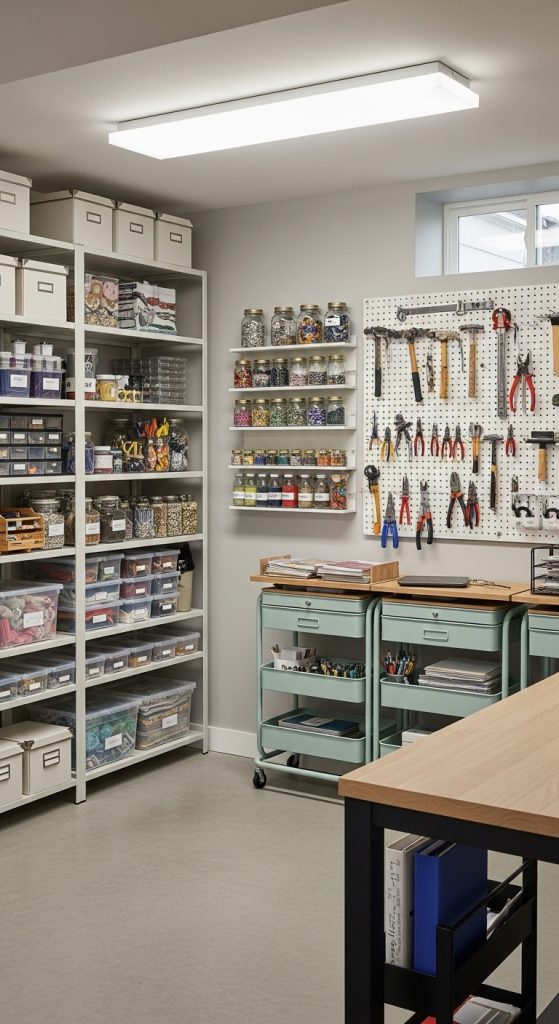
Organization is key in a basement office and craft room. Both areas require storage for supplies, documents, and equipment. Using a mix of closed cabinets, open shelving, and labeled bins keeps items accessible and tidy.
Materials include modular storage units, plastic bins with lids, mason jars for small items, rolling carts, and hanging pegboards. Clear containers allow you to see supplies at a glance, while baskets and boxes can hide clutter. Hooks and magnetic strips are ideal for tools and office accessories.
Vertical storage makes the most of wall space without crowding the floor. Drawers and pull-out organizers can separate crafting materials by type, and file organizers help maintain office documents. Efficient storage solutions create a clutter-free workspace that boosts both productivity and creativity.

4. Ergonomic Office Setup
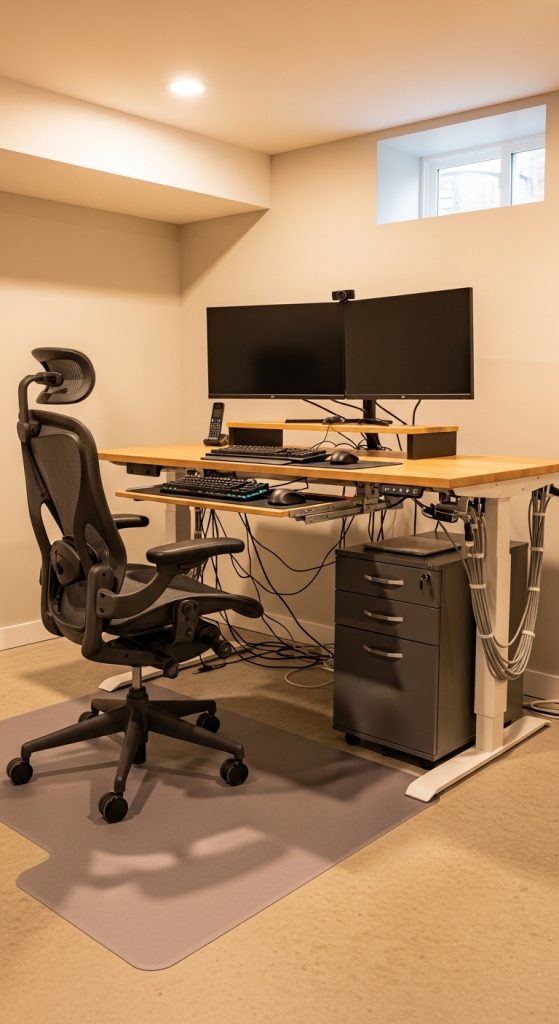
A basement office should prioritize comfort and ergonomics to prevent fatigue during long work hours. Invest in an ergonomic office chair with adjustable height and lumbar support. Pair it with a desk at the proper height for typing and writing.
Materials include a sturdy desk, ergonomic chair, monitor riser, keyboard tray, and anti-fatigue floor mat. Adding a footrest or adjustable laptop stand can further improve posture. Cable management tools help prevent tangled cords and maintain a clean workspace.
Consider adding a small filing cabinet or drawer unit under or beside the desk for easy access to office supplies. An ergonomic setup reduces strain and improves productivity, allowing you to focus on work tasks and complete projects efficiently in a comfortable environment.
5. Creative Crafting Stations
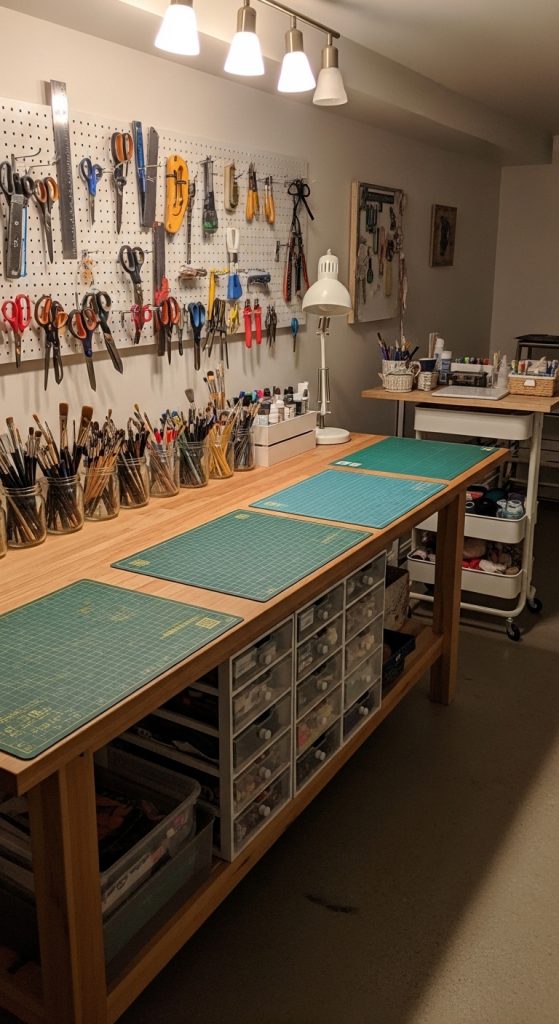
Designating a dedicated crafting station allows for mess-free creativity. Choose a durable table that can withstand glue, paint, cutting, and other craft activities. Add storage nearby for tools, papers, paints, and other materials.

Materials include a large wooden or laminate table, cutting mats, jars or cups for brushes and pens, drawer organizers, and pegboards for hanging tools. Consider a foldable table if the basement doubles as another space when not in use.
Use shelves or cubbies to store materials in an organized manner. A rolling cart can hold frequently used supplies and move around the room as needed. Well-planned crafting stations keep supplies within reach and provide a clear surface to work on, encouraging creativity without mess or distraction.
6. Comfortable Seating Area
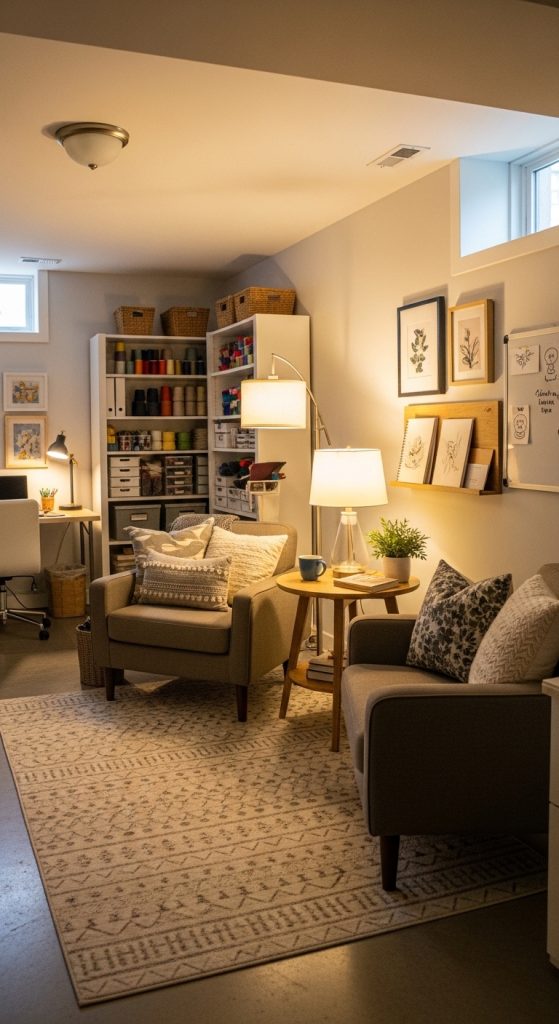
In addition to functional work and craft areas, adding a comfortable seating area can make the basement more inviting. A small sofa, armchairs, or beanbags provide a place to relax, brainstorm, or enjoy completed projects.
Materials include a loveseat or comfortable chair, cushions, area rug, side table, and soft lighting such as floor lamps or table lamps. Choose fabrics that are easy to clean, especially if the space doubles as a crafting area.

A seating area also serves as a meeting spot if you work from home with clients or collaborate on projects. Adding wall art, shelves, or indoor plants enhances the coziness of the space, making it a welcoming retreat from the main house.
7. Dual-Purpose Furniture
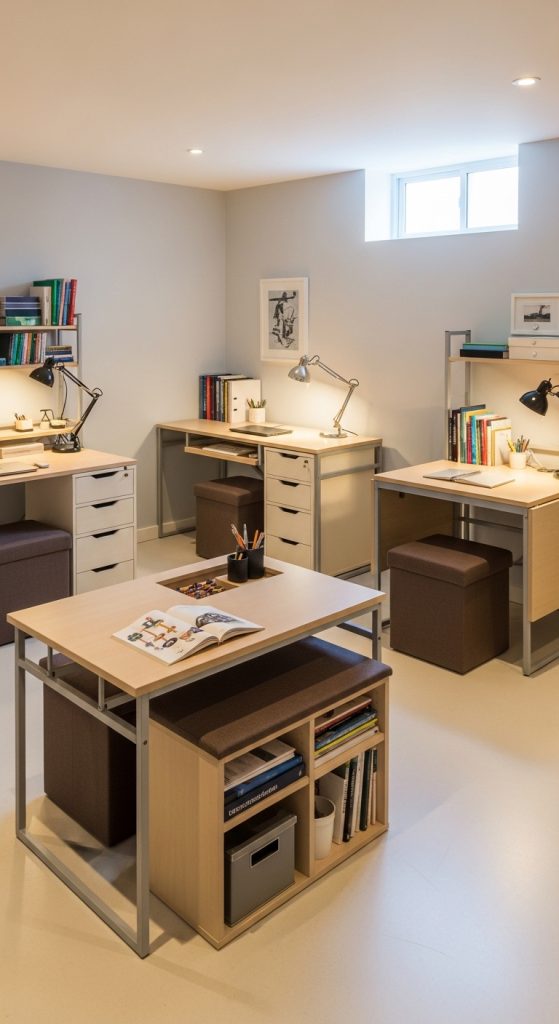
Basement offices and craft rooms benefit from furniture that serves multiple purposes. For example, desks with drawers, tables with storage underneath, or benches with compartments help maximize space while keeping supplies organized.
Materials include folding tables, storage ottomans, adjustable desks, shelving units, and multi-tiered racks. A Murphy desk or wall-mounted drop-leaf table can save floor space when not in use.
Dual-purpose furniture reduces clutter and allows the basement to function for different activities. A well-chosen piece can act as both a workspace and storage solution, giving you flexibility and efficiency in the room’s design.

8. Inspiring Decor and Personal Touches
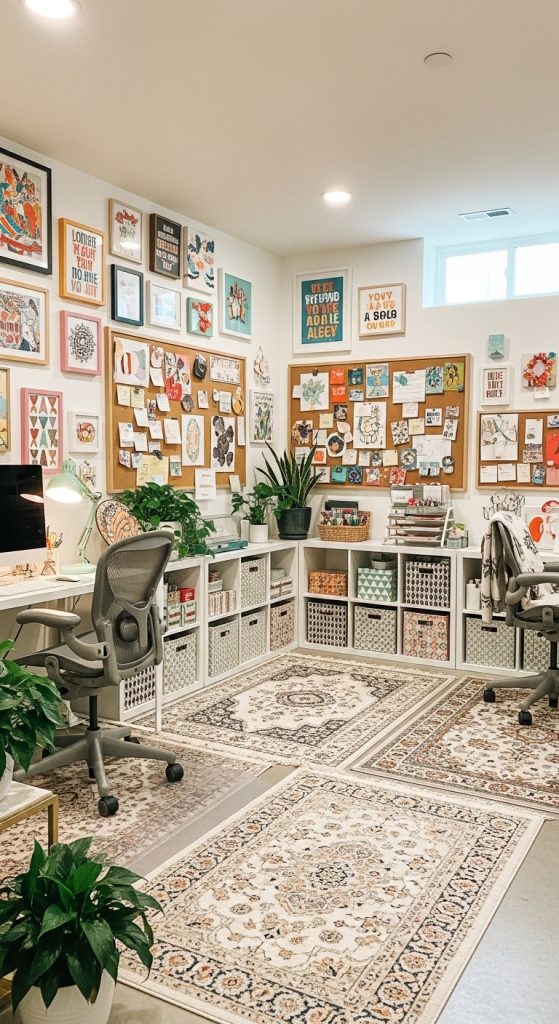
Decorating the basement office and craft room makes it an inspiring place to spend time. Choose colors, textures, and artwork that motivate creativity and concentration. Personal touches create a space that feels comfortable and encouraging.
Materials include framed artwork, motivational prints, corkboards or magnetic boards for inspiration, rugs, curtains, and decorative storage boxes. Plants and small decorative items bring warmth and life to the room.
Adding a bulletin board or pegboard allows you to display craft projects, ideas, or important office notes. Visual inspiration helps maintain focus, sparks creativity, and makes the basement a place where you enjoy working and crafting every day.
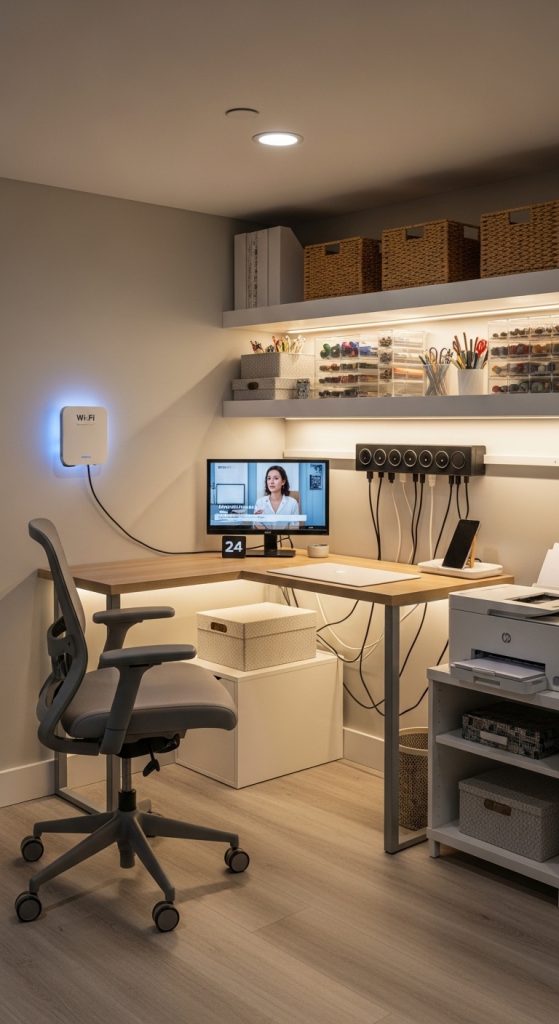
9. Technology Integration
Modern basements can benefit from smart technology to enhance productivity and convenience. Integrating technology ensures that both office tasks and crafting projects are supported by digital tools.

Materials include Wi-Fi extenders, power strips with USB ports, wireless printers, charging stations, smart lighting systems, and cable management tools. Consider adding a small TV or monitor for tutorials or video conferences.
Technology integration allows you to work efficiently, access digital resources, and manage tasks easily. Organized cables and charging stations keep electronics tidy, while smart lighting or speaker systems can create a pleasant working atmosphere.
10. Climate Control and Ventilation
Basements can be cool, damp, or stuffy without proper ventilation and climate control. Ensuring a comfortable environment is essential for both office work and crafting activities.
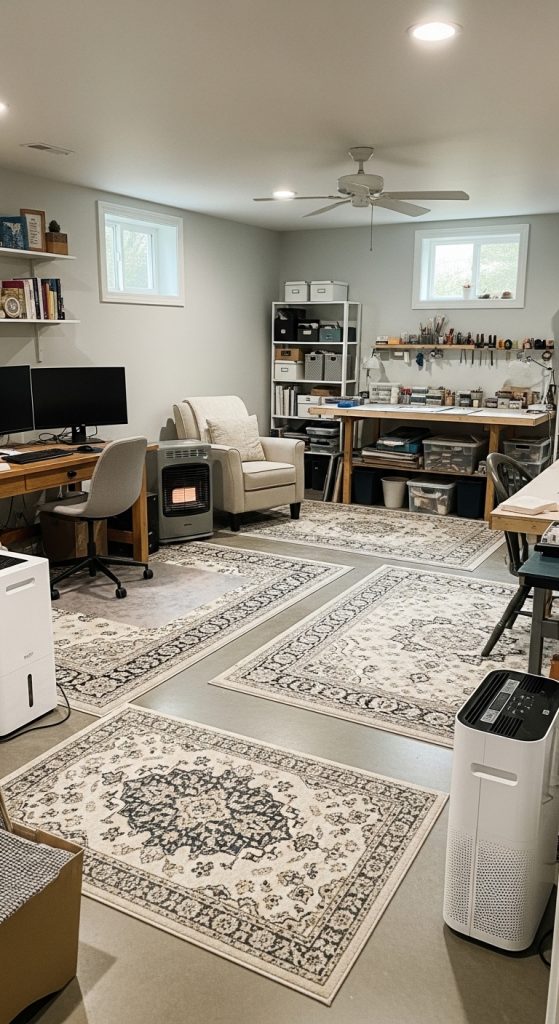
Materials include portable heaters, dehumidifiers, air purifiers, ceiling fans, and area rugs to maintain warmth and comfort. Installing weatherproof insulation or sealing windows can improve temperature regulation.

Good ventilation prevents musty odors and protects materials such as paper, fabric, and electronics from moisture damage. A well-ventilated, climate-controlled basement encourages longer, more comfortable work and craft sessions while preserving the condition of the room and supplies.