Wall styling plays a very important role in office interiors. Office walls are not just boundaries; they influence mood, productivity, creativity, and even brand identity. A well-designed office wall can make a workspace feel organized, professional, and inspiring. On the other hand, plain or poorly styled walls can make an office feel dull and uninviting. Whether it is a home office, corporate office, or co-working space, thoughtful wall styling helps create a balanced environment where people feel comfortable and focused.
Before starting any wall styling project, it is important to understand the purpose of the office, the amount of natural light available, the size of the room, and the overall interior theme. Preparation includes measuring wall space, selecting suitable materials, choosing colors that reduce eye strain, and planning layouts that do not distract from work. Materials such as paint, wood panels, wall frames, shelves, boards, and lighting fixtures should be chosen for durability and ease of maintenance.
In this blog post, you will find ten practical wall styling office ideas. Each idea explains preparation steps, materials required, usage tips, and design benefits. These ideas work for small offices, large corporate spaces, and home offices. By applying these wall styling concepts thoughtfully, you can create an office environment that supports productivity, professionalism, and visual appeal.
1. Minimal Color-Blocked Walls
Color-blocked walls are a simple yet effective way to add character to an office without overwhelming the space. This style involves using two or three complementary colors on a single wall in clean, defined sections. Preparation begins with choosing calming colors such as soft grey, beige, muted blue, or sage green. These shades help reduce stress and improve concentration.
Materials required include wall putty, primer, high-quality interior paint, measuring tape, and painter’s tape. The wall surface should be cleaned and smoothed before applying primer. Painter’s tape is used to create sharp lines between color sections. Once painted, allow proper drying time before removing the tape.
Color-blocked walls are best used behind workstations or meeting areas. They visually divide the space without adding physical barriers. This wall style is easy to maintain and can be updated by repainting sections when needed. It works especially well in modern offices that prefer clean lines and a professional appearance.
2. Wooden Panel Accent Wall
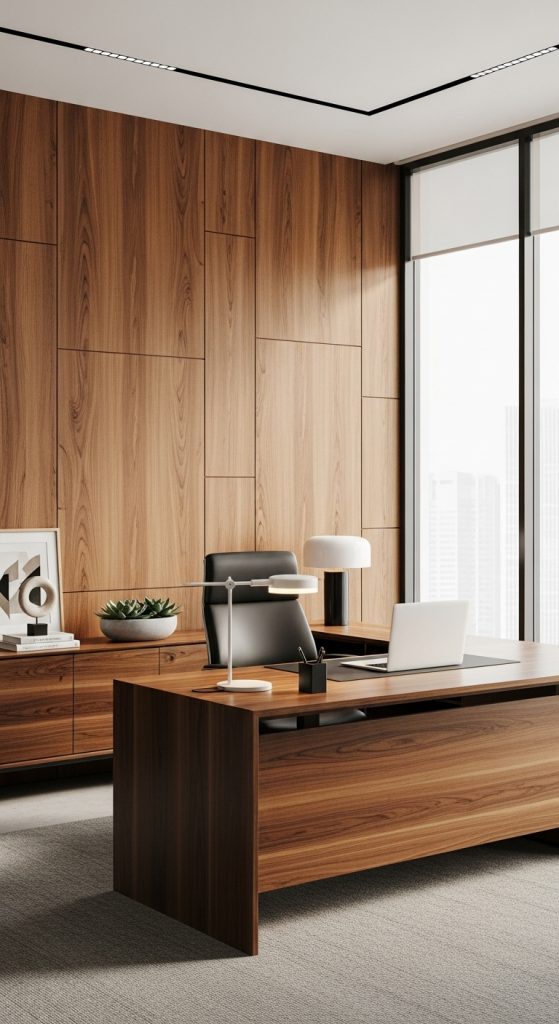
A wooden panel accent wall adds warmth and sophistication to an office. It creates a balanced contrast between modern office furniture and natural textures. Preparation includes checking wall strength and selecting the right type of wood such as engineered wood, MDF panels, or natural veneer.
Materials needed include wooden panels, adhesive or screws, a spirit level, and protective wood polish. Panels should be installed evenly to avoid gaps or uneven surfaces. Finishing with a matte or satin polish helps protect the wood and enhances durability.

This wall style works well behind executive desks, conference room walls, or reception areas. Wooden panel walls improve sound absorption and create a calm atmosphere. They also give the office a premium look without being distracting. Regular dusting and occasional polishing are enough to maintain this wall style.
3. Motivational Quote Wall
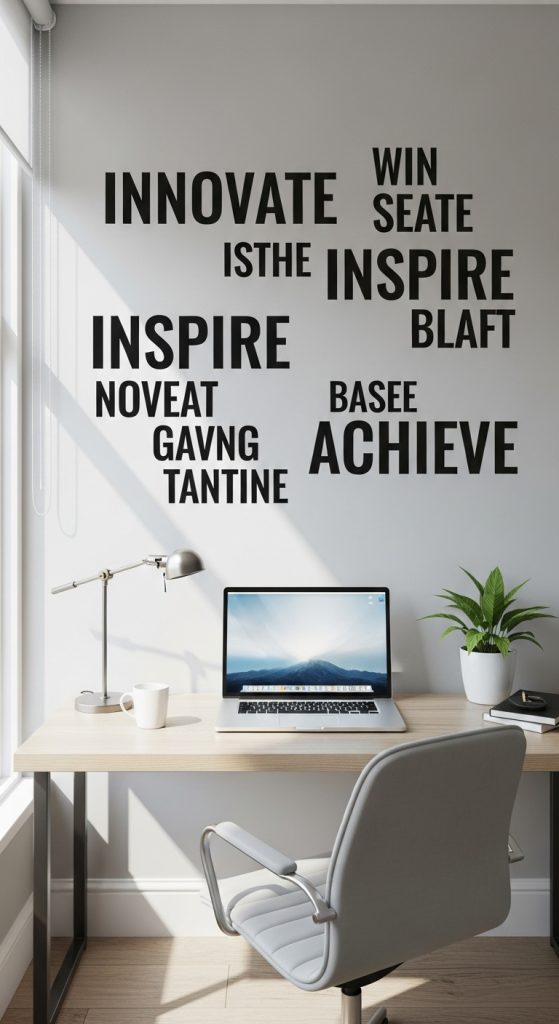
A motivational quote wall helps build a positive work environment. This wall usually features carefully selected words or phrases related to growth, teamwork, and focus. Preparation involves choosing quotes that align with company values and selecting fonts that are easy to read.
Materials include vinyl wall decals, stencils, paint, or framed typography prints. The wall should be painted in a neutral color so the text stands out clearly. Vinyl decals are easy to install and remove, making them ideal for rented spaces.
This type of wall is best placed in common areas such as near workstations, corridors, or break rooms. It subtly encourages employees without being overpowering. Keeping the design simple ensures the wall supports productivity rather than becoming a distraction.
4. Functional Pinboard and Whiteboard Wall
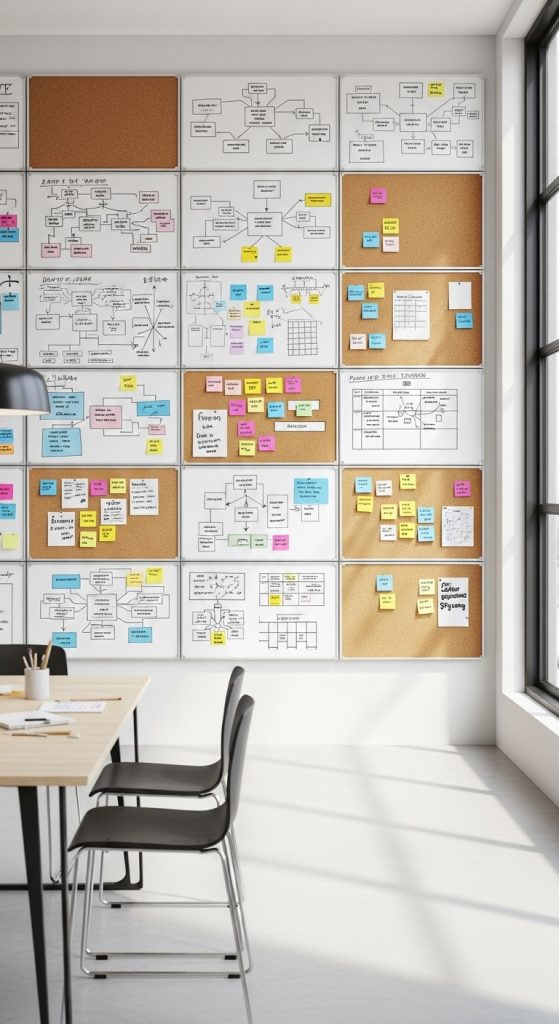
A functional pinboard and whiteboard wall combines style with practicality. This idea is perfect for planning, brainstorming, and organizing tasks. Preparation includes deciding the size of the board area and ensuring the wall can support the fixtures.
Materials required include cork boards, whiteboards, mounting screws, and markers. Boards can be arranged in a grid pattern for a clean look. Frames in neutral colors help maintain a professional appearance.
This wall style is ideal for creative teams, project managers, and home offices. It keeps important notes visible and reduces desk clutter. Regular cleaning of the whiteboard and organized pin placement help maintain a neat and efficient workspace.
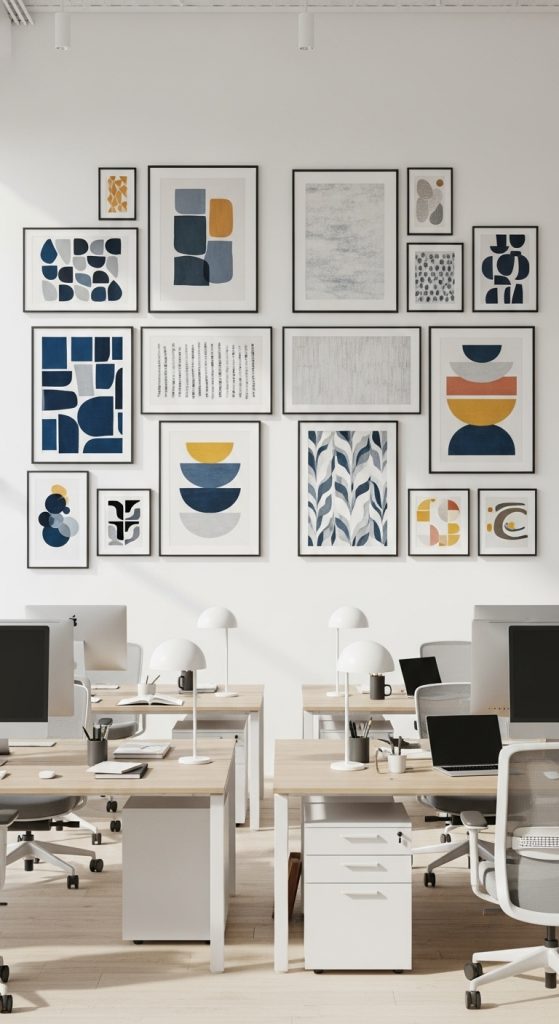
5. Gallery Wall with Professional Artwork
A gallery wall adds personality and visual interest to an office. Unlike personal photo walls, office gallery walls should feature professional artwork, abstract prints, or industry-related visuals. Preparation involves selecting a theme and planning the layout before hanging frames.

Materials include frames, wall hooks, measuring tools, and printed artwork. Frames should be uniform in color to maintain consistency. Neutral or monochrome art works best for offices.
This wall style suits reception areas, meeting rooms, and long corridors. It enhances the office atmosphere without distracting employees. Proper spacing and alignment are important to keep the gallery wall balanced and professional.
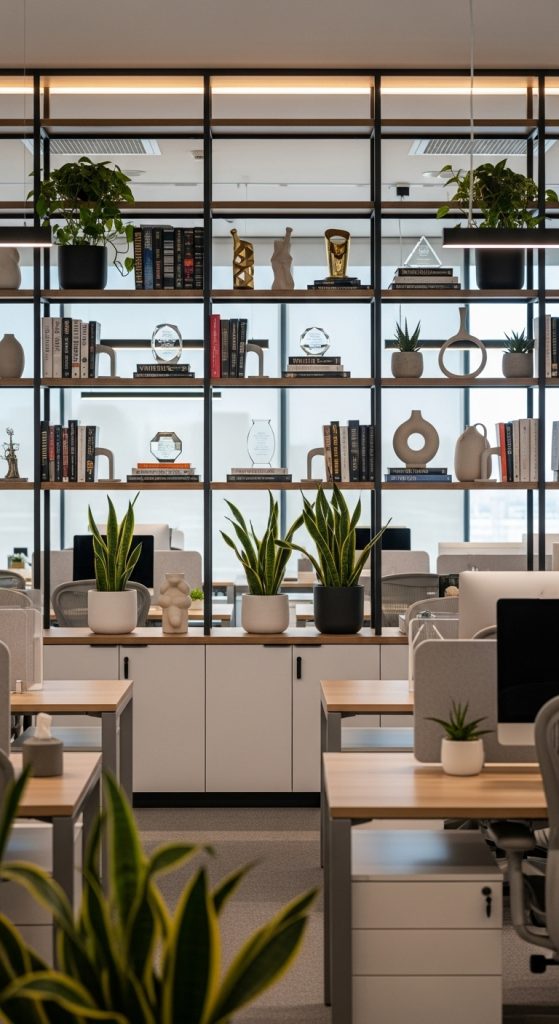
6. Open Shelving Display Wall
Open shelving walls combine storage and decoration. They are ideal for displaying books, awards, plants, and office decor. Preparation includes measuring shelf placement and ensuring weight capacity.
Materials required include wall-mounted shelves, anchors, screws, and decorative items. Shelves made from wood or metal provide durability. Items placed on shelves should be minimal to avoid clutter.

This wall style works well in private offices and home offices. It keeps essential items accessible while adding depth to the wall. Regular organization ensures the wall remains functional and visually appealing.
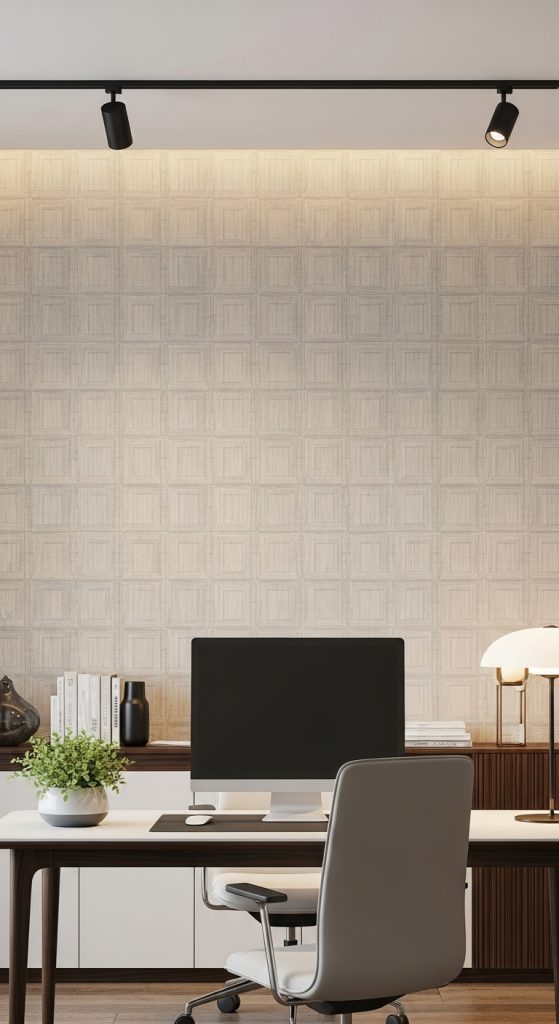
7. Textured Wallpaper Feature Wall
Textured wallpaper adds depth without using bold colors. Preparation includes selecting wallpaper with subtle textures like linen, geometric patterns, or soft metallic finishes.
Materials include wallpaper rolls, adhesive, smoothing tools, and cutters. The wall surface must be smooth and dry before application.
This style works best on a single feature wall to avoid visual overload. It is ideal for offices that want elegance without strong color contrasts. Textured wallpaper is easy to clean and offers long-term durability.

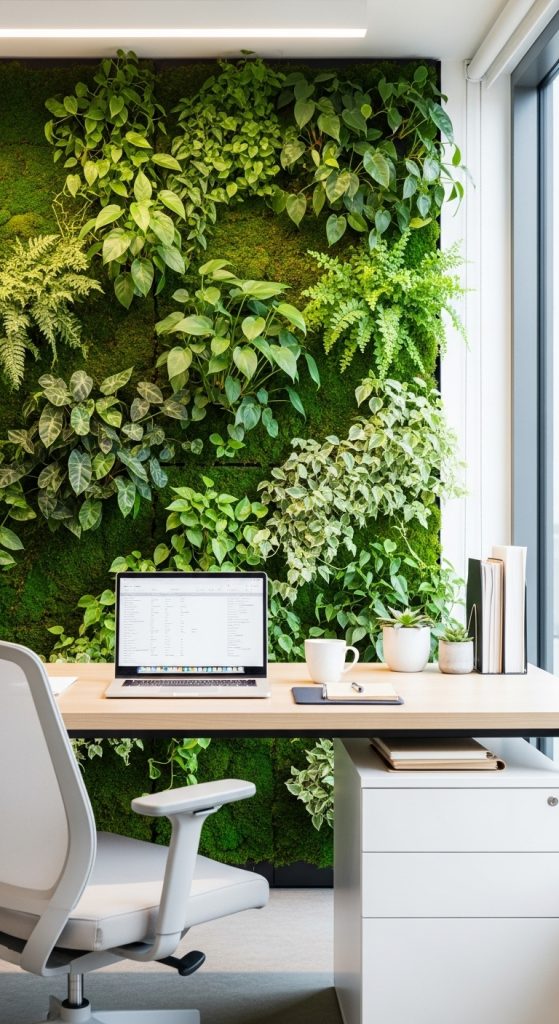
8. Green Wall with Indoor Plants
A green wall introduces nature into the office, improving air quality and reducing stress. Preparation includes deciding between real plants or artificial green panels.
Materials include plant panels, planters, mounting systems, and irrigation solutions if using real plants. Adequate lighting is necessary for natural greenery.
Green walls work well near windows or reception areas. They create a calming effect and improve overall office aesthetics. Regular maintenance is required for live plants, while artificial options offer low upkeep.
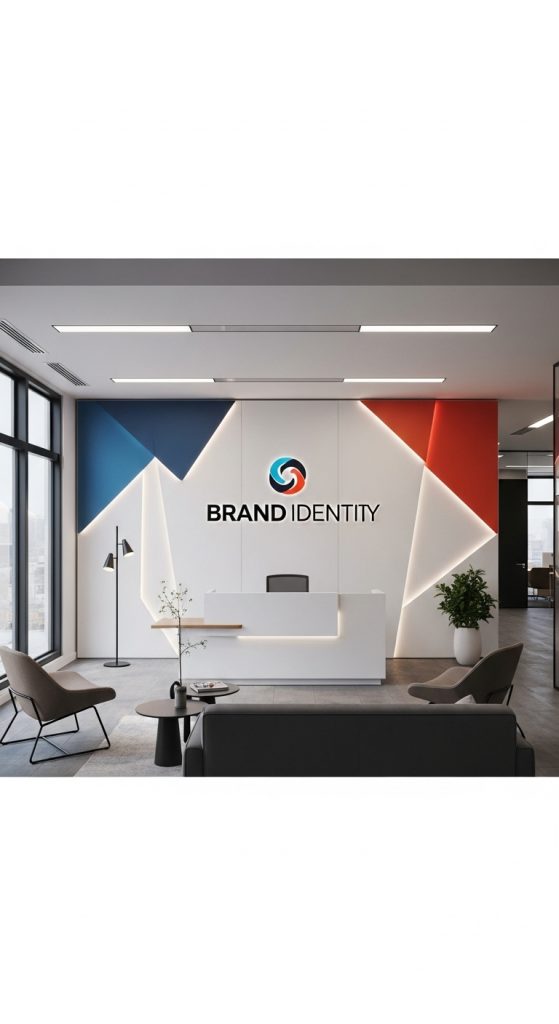
9. Brand Identity Wall
A brand identity wall showcases company logos, colors, and mission statements. Preparation involves understanding brand guidelines and selecting appropriate placement.

Materials include acrylic logo signs, wall paint, lighting fixtures, and vinyl graphics. Proper lighting highlights the design and adds impact.
This wall is ideal for reception areas and conference rooms. It reinforces brand values and creates a strong first impression. Clean design and subtle lighting keep the wall professional.
10. Acoustic Panel Design Wall
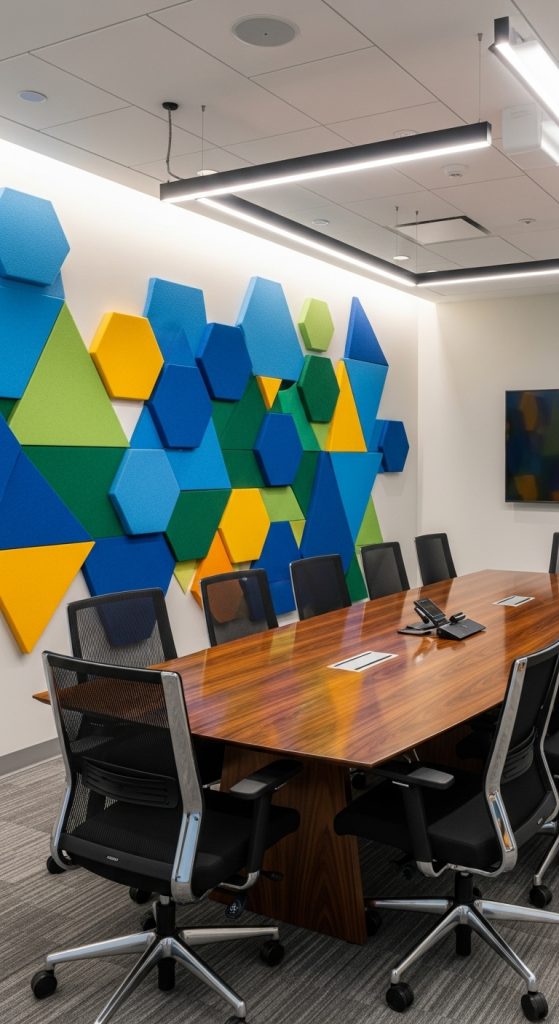
Acoustic panel walls improve sound quality while adding visual interest. Preparation includes identifying noise-prone areas.
Materials include fabric-wrapped acoustic panels, mounting hardware, and layout templates. Panels come in various shapes and colors.
This wall style is perfect for meeting rooms and open offices. It reduces noise distractions and enhances comfort. Panels are durable and easy to maintain, making them a practical long-term solution.