Kitchen wall styling plays a very important role in defining the overall look, comfort, and functionality of a kitchen. While cabinets, countertops, and appliances get most of the attention, walls often remain plain or underutilized. A well-styled kitchen wall can improve storage, add personality, and make everyday cooking more enjoyable. It also helps create balance between beauty and practicality, which is essential in a space that is used daily.
Wall styling is not only about decoration. It also includes smart use of materials, easy-to-clean surfaces, proper placement, and long-lasting finishes. From tiles and shelves to paint, lighting, and art, each choice should support hygiene, durability, and visual appeal. Good preparation is essential before starting any wall styling project. This includes measuring the space, understanding moisture levels, selecting heat-resistant materials, and planning the layout carefully.
In this blog post, you will explore ten practical and stylish kitchen wall ideas. Each idea explains the preparation process, materials required, how it is used, and why it works well in modern kitchens. These ideas suit both small and large kitchens and can be adapted to different budgets and design preferences.
1. Open Shelving Wall Design
Open shelving is one of the most popular kitchen wall styling ideas because it combines storage and decoration. Before installation, the wall must be checked for strength, especially if heavy items like dishes or jars will be stored. Wall studs should be located, and measurements must be accurate to ensure balance and alignment.

Common materials include solid wood, plywood with laminate, metal brackets, or floating shelf systems. Wood shelves give a warm and natural feel, while metal shelves create an industrial look. The shelves should be sealed or coated to resist moisture and grease.
Open shelves are useful for storing daily items such as plates, cups, spice jars, and bowls. They also allow you to display decorative items like small plants or ceramic pieces. To maintain cleanliness, shelves should be wiped regularly, as they are exposed.
This wall style works best in kitchens where clutter is controlled. It makes the space feel open and airy and allows easy access to frequently used items.
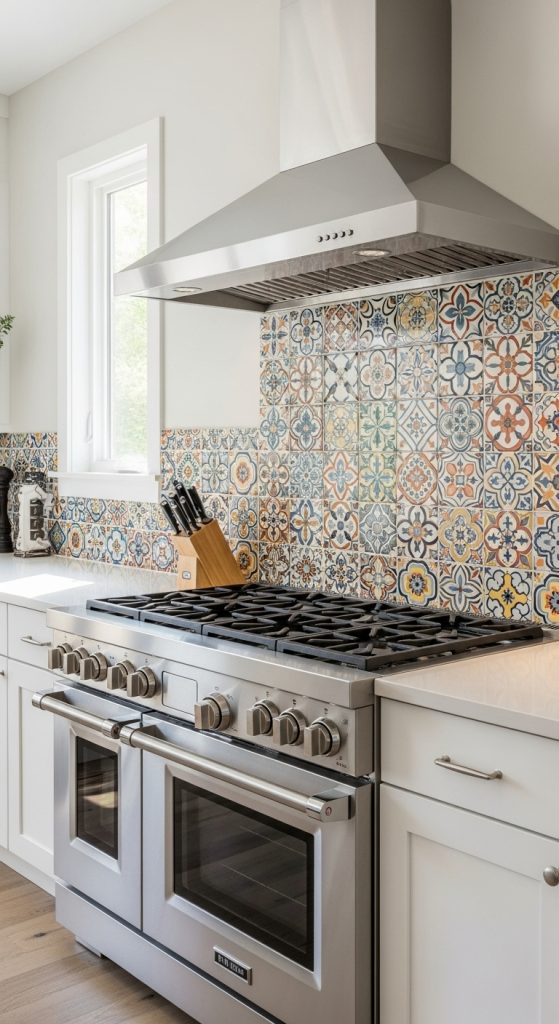
2. Ceramic Tile Accent Wall
A ceramic tile accent wall adds durability and style to a kitchen. Preparation starts with cleaning the wall surface and ensuring it is flat and dry. Waterproofing may be required, especially near sinks or cooking areas.

Ceramic tiles are available in many colors, patterns, and finishes. Materials needed include tiles, tile adhesive, spacers, grout, and sealing solution. Tiles should be heat-resistant and easy to clean. Glossy tiles reflect light, while matte tiles give a softer look.
Tile walls are highly functional in areas exposed to oil and water. They protect the wall from stains and are easy to maintain. Regular cleaning with mild detergent keeps them looking new.
An accent tile wall can be installed behind the stove or sink to create a focal point. It enhances both safety and visual interest while increasing the kitchen’s lifespan.
3. Chalkboard Paint Wall
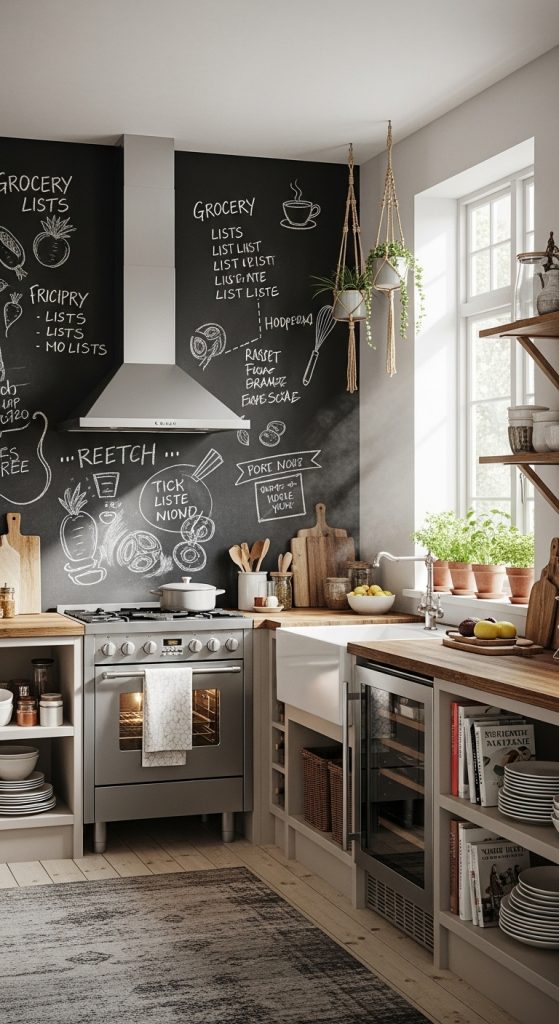
A chalkboard wall is both creative and functional. Preparation involves sanding the wall, cleaning it, and applying a primer before painting. This ensures smooth writing and long-lasting paint.
Chalkboard paint is available in black, green, and even neutral shades. Materials include primer, chalkboard paint, rollers, and chalk. After painting, the surface must cure fully before use.
This wall can be used for writing grocery lists, recipes, reminders, or messages. It is especially useful for family kitchens. The surface should be seasoned by rubbing chalk over it and wiping it off before first use.
The chalkboard wall adds a casual and friendly feel to the kitchen. It is easy to update and does not require expensive materials, making it a budget-friendly styling option.
4. Wooden Panel Kitchen Wall
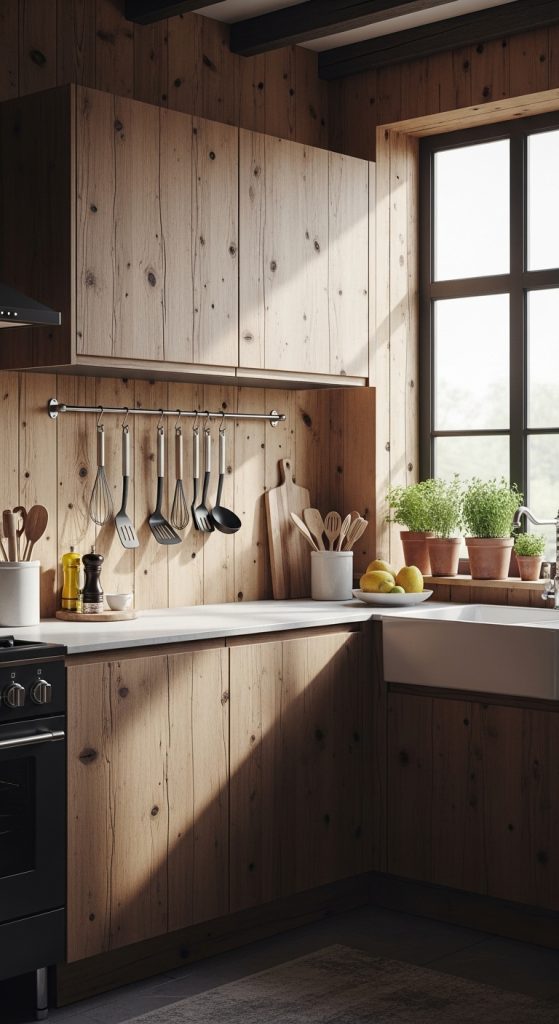
Wooden panel walls bring warmth and texture to the kitchen. Preparation includes checking moisture levels and treating the wall against dampness. Wood panels should be acclimated to the kitchen environment before installation.
Common materials include MDF panels, plywood, reclaimed wood, or tongue-and-groove boards. Panels must be sealed with protective coatings to resist heat and humidity. Installation can be done using adhesive or nails.
Wooden walls are often used in dining corners or feature walls away from direct heat. They add depth and a natural appearance to the space. Regular dusting and occasional polishing help maintain their look.
This style works well in rustic, farmhouse, or modern kitchens when paired with neutral cabinets and good lighting.
5. Wall-Mounted Storage Racks
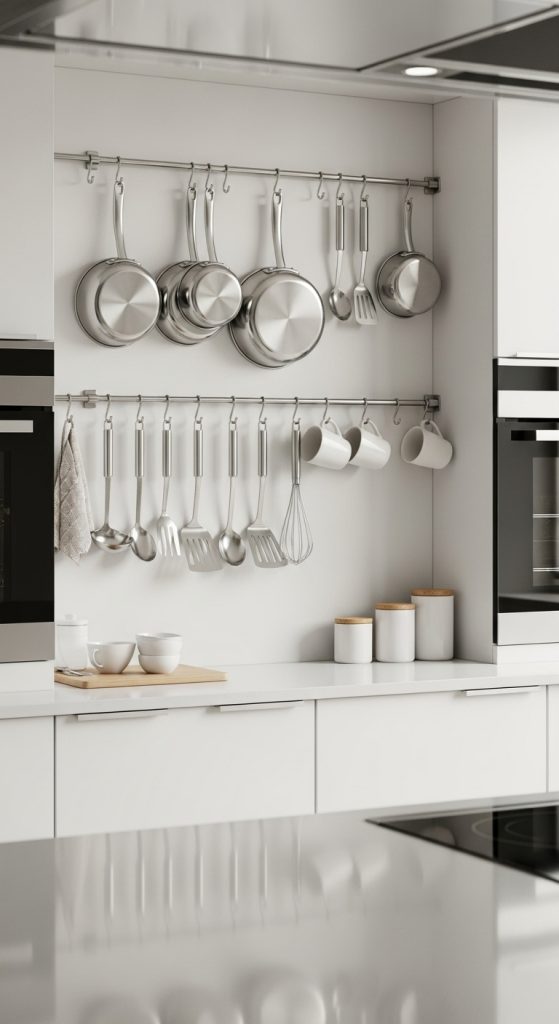
Wall-mounted racks are practical and stylish. Preparation involves measuring available wall space and planning the layout for easy access. Strong anchors are required for secure installation.
Materials include metal racks, hooks, rails, and screws. Stainless steel or coated metal is ideal due to resistance to rust and stains. Racks should be placed at a comfortable height.
These racks are used for hanging utensils, pans, ladles, or mugs. They free up drawer space and keep tools within reach. Cleaning is easy, as most racks can be wiped with a damp cloth.
This idea is perfect for small kitchens where storage is limited. It improves organization while adding a professional kitchen look.
6. Wallpaper Kitchen Wall Feature
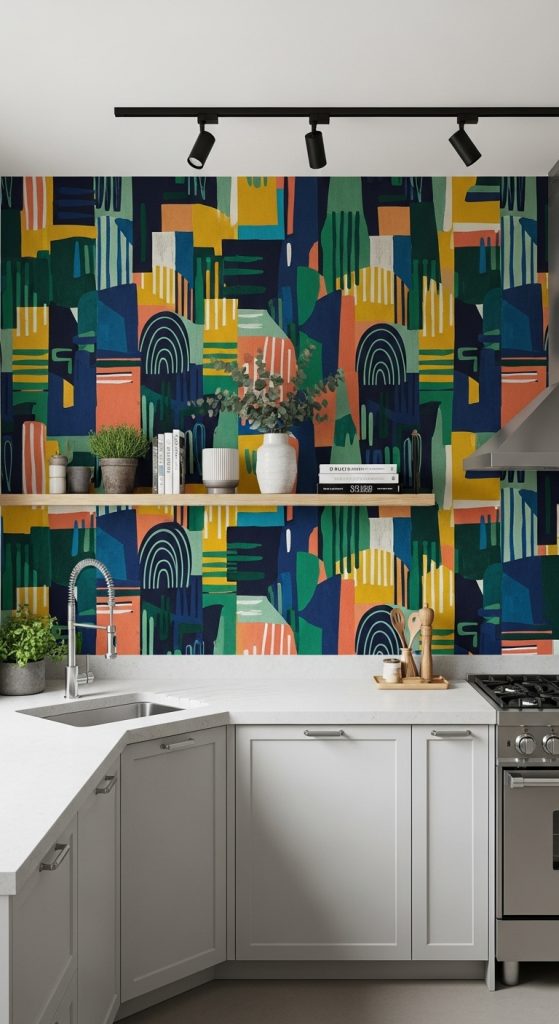
Wallpaper adds color and pattern to kitchen walls. Preparation includes cleaning the wall and ensuring it is smooth. Moisture-resistant wallpaper should always be selected for kitchen use.
Materials include vinyl or washable wallpaper, adhesive, smoothing tools, and cutting knives. Vinyl wallpaper is best as it resists stains and can be cleaned easily.
Wallpaper is mainly decorative and works well on walls away from cooking zones. It can be used to highlight breakfast areas or empty wall spaces.
This styling option allows easy updates without major renovation. It adds personality and can match various kitchen themes, from modern to classic.
7. Glass Panel Wall Design
Glass panels create a clean and modern look. Preparation requires accurate measurements and professional installation planning. The wall must be even and properly supported.
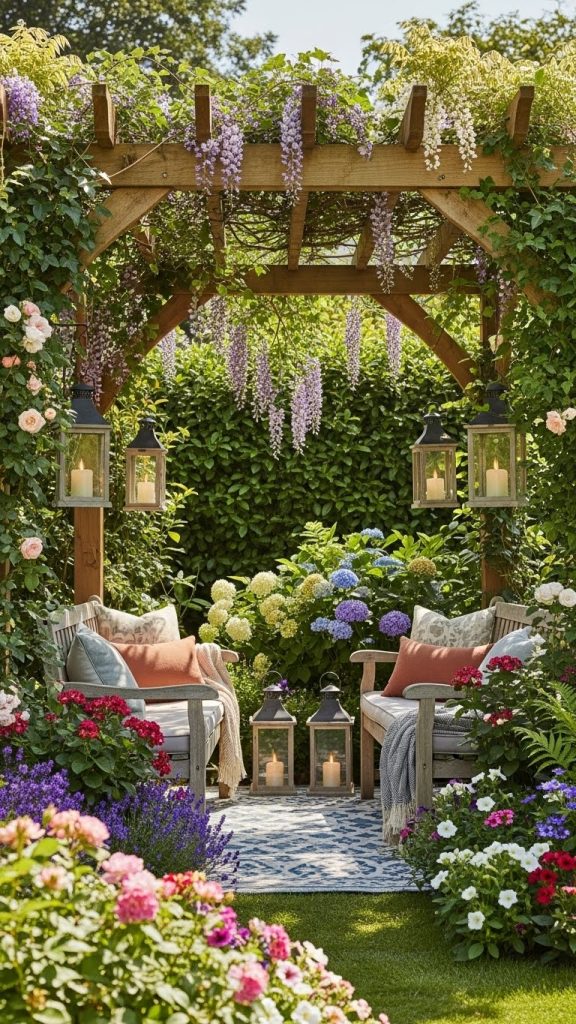
Materials include tempered glass panels, mounting hardware, and sealants. Glass can be clear, frosted, or colored. Tempered glass is heat-resistant and safe for kitchens.
Glass walls are used mainly as backsplashes or full wall covers behind cooking areas. They are very easy to clean and do not absorb stains or odors.
This design enhances brightness and makes small kitchens appear larger. It also provides long-term durability with minimal maintenance.
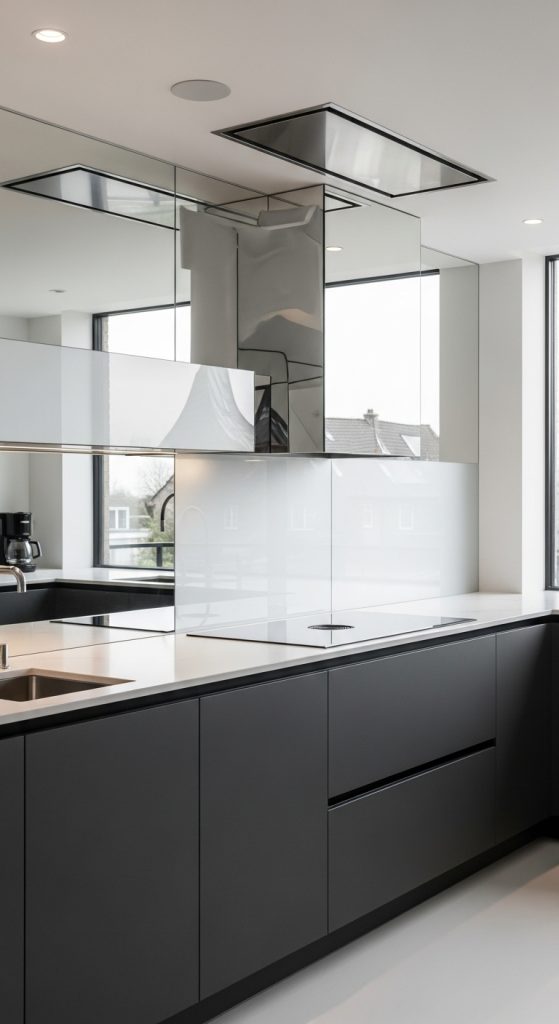
8. Decorative Plate Display Wall
A decorative plate wall adds character and tradition. Preparation includes planning the layout on the floor before mounting to achieve balance.

Materials include decorative plates, plate hangers, wall hooks, and anchors. Plates should be lightweight and securely attached.
This wall is decorative and usually placed in dining or breakfast areas. It reflects personal style and cultural elements. Cleaning requires gentle dusting to protect the plates.
This idea is ideal for homeowners who enjoy traditional or artistic kitchens and want a personalized touch.
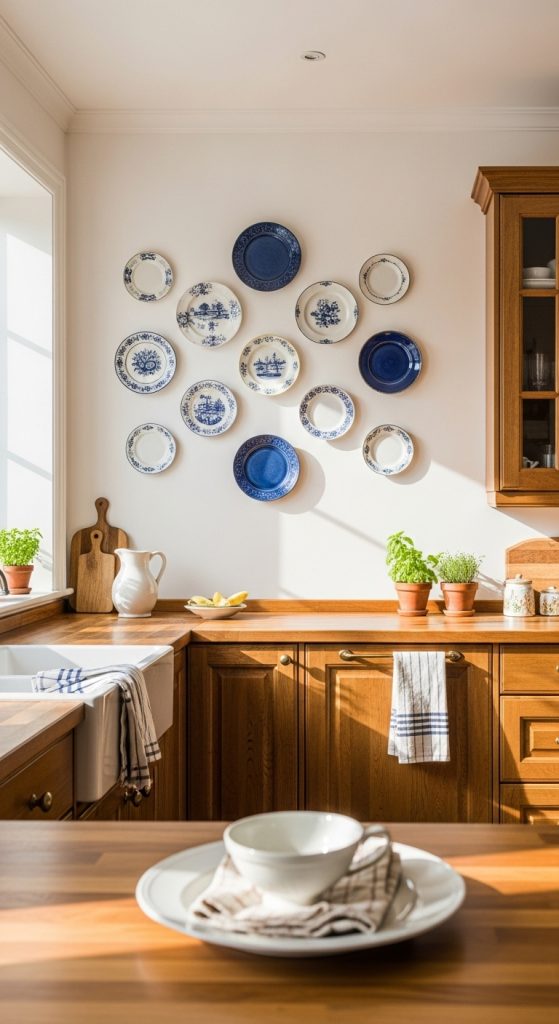
9. Floating Cabinet Wall Design
Floating cabinets offer storage without visual heaviness. Preparation involves ensuring the wall can support weight and marking installation points precisely.

Materials include wall-mounted cabinets, mounting brackets, screws, and leveling tools. Cabinets are often made from MDF or plywood with laminate finishes.
These cabinets store dry goods, dishes, or appliances. They keep the kitchen organized while maintaining a clean appearance. Regular cleaning of surfaces is sufficient.
Floating cabinets work best in modern kitchens and help maximize wall space efficiently.
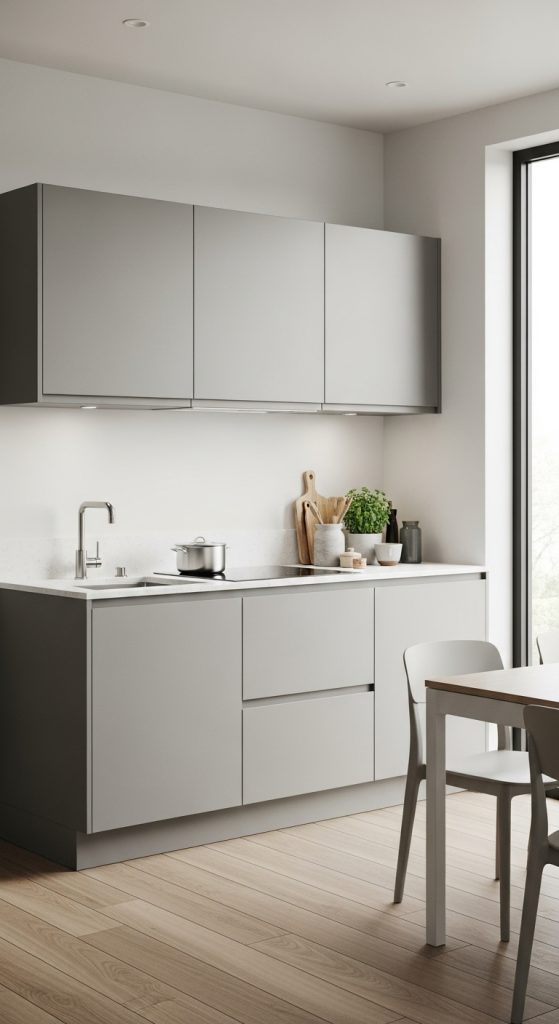
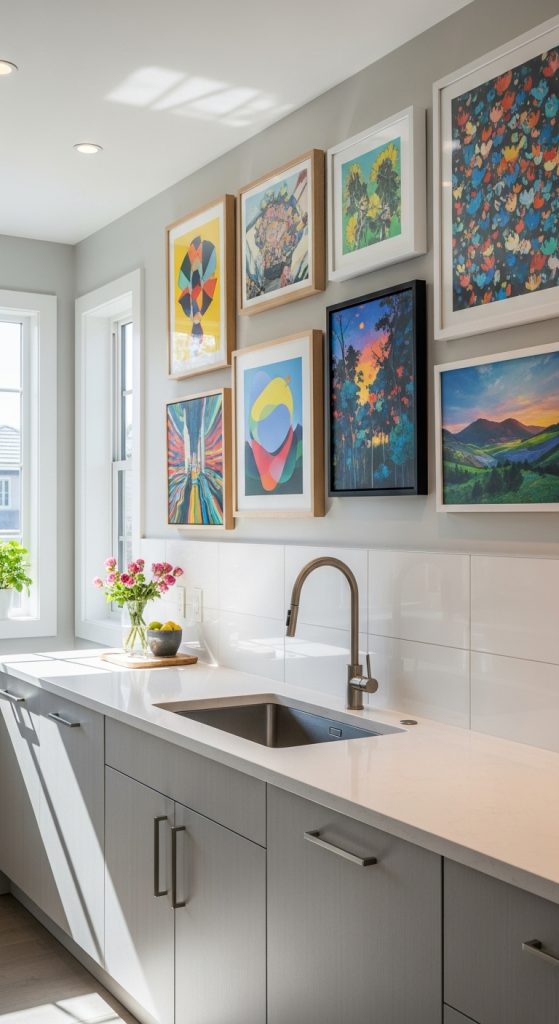
10. Kitchen Wall Art and Frames
Wall art adds personality to kitchen walls. Preparation includes selecting suitable artwork and planning arrangement.

Materials include framed prints, canvas art, wall hooks, and protective glass. Art should be moisture-resistant and easy to clean.
Wall art is decorative and placed away from cooking zones. It enhances mood and completes the kitchen design.
This idea allows easy updates and reflects personal taste without structural changes.