The pixie cut with shaved sides has become one of the most expressive short hairstyles in modern hair fashion. It combines sharp structure with soft texture, creating a balanced look that feels both bold and wearable. This hairstyle is defined by closely shaved or undercut sides paired with longer layers on top, allowing flexibility in styling while maintaining a clean silhouette. It is widely featured in Pinterest ideas and modern hair inspiration boards because it adapts to different face shapes, hair textures, and personal styles.
This article explores ten detailed pixie cut shaved sides ideas that focus on design variations, styling methods, and practical execution. Each idea explains how the look is created, what makes it visually effective, and how it can be adapted for everyday wear or special occasions. Whether you prefer a soft feminine finish, edgy geometric structure, or textured volume, these creative ideas provide structured guidance for achieving a personalized result. The goal is to help you understand the design logic behind each variation so you can make informed styling choices.
Why This Idea Is Trending or Useful
The pixie cut shaved sides style has gained strong popularity due to its versatility and low-maintenance structure. It aligns with modern Pinterest ideas that emphasize individuality, simplicity, and expressive personal style. Many people choose this haircut because it offers a balance between practicality and fashion-forward design. The shaved sides reduce daily styling effort while the longer top allows creative flexibility. This makes it ideal for both busy routines and experimental styling preferences.
Another reason for its popularity is its adaptability across different aesthetics such as minimalist style, edgy urban looks, and soft feminine interpretations. It works well for various hair textures, including straight, wavy, and slightly curly hair. This hairstyle also supports creative freedom, allowing users to incorporate fades, patterns, or asymmetrical cuts. As a result, it is often featured in trending ideas related to DIY styling inspiration, modern design, and easy transformation projects that require minimal maintenance but deliver strong visual impact.
Materials and Preparation
Before creating a pixie cut with shaved sides, proper preparation ensures clean results and balanced structure. The essential materials include professional hair clippers with adjustable guards, sharp styling scissors, sectioning clips, a fine-tooth comb, and a handheld mirror for precision. These tools help control the contrast between shaved sections and longer layers. A spray bottle with water is useful for keeping hair damp during cutting, which improves accuracy and reduces uneven results.
Preparation begins with analyzing face shape and deciding the level of contrast between the top and sides. This planning stage is important for achieving a balanced look that complements natural features. Hair should be clean, detangled, and divided into clear sections before cutting begins. The top section is usually clipped away first to protect length while the sides are shaped. Having a reference idea or Pinterest inspiration image can help guide proportions. Proper lighting and a stable workspace are also necessary for precision and safety during the styling process.
MAIN IDEAS SECTION
Idea 1: Soft Feminine Pixie with Subtle Shaved Sides
How to Create
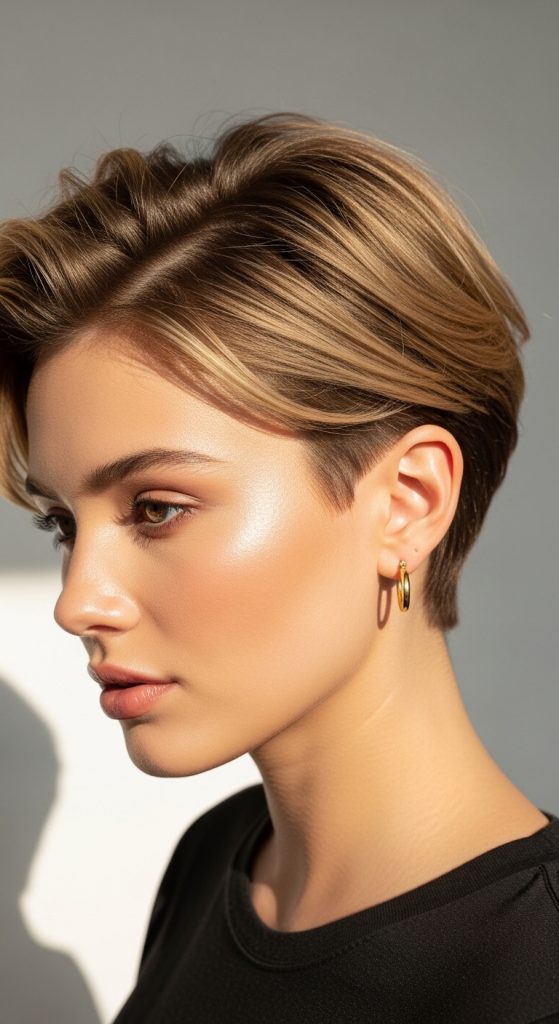
This variation focuses on a gentle transition between shaved sides and longer top layers, creating a soft and feminine silhouette. Unlike sharp undercuts, the shaved area is kept minimal and blended gradually into the upper hair. The top remains slightly longer, allowing natural movement and light volume. This style works well for those who want a pixie cut without a harsh or overly dramatic contrast. It fits well within Pinterest ideas that emphasize natural beauty and effortless styling. The softness of this design makes it suitable for everyday wear while still maintaining a modern edge.
To create this look, the sides are trimmed using a longer clipper guard to avoid complete skin exposure. Gradual blending techniques are used to ensure smooth transitions. The top section is cut with scissors to maintain softness and texture. Light layering is added to enhance movement without creating heaviness. Styling requires minimal effort, often using lightweight mousse or natural air drying. Regular maintenance every few weeks keeps the shape clean while preserving the soft aesthetic structure.
Step-by-Step Guide
The process begins by sectioning the hair into top and side areas. The sides are carefully trimmed using clippers with a medium guard to maintain subtle length. Blending is done slowly to avoid harsh lines. The stylist gradually reduces bulk near the ear area while keeping the fade natural. This ensures a smooth transition rather than a sharp disconnect. The back is shaped to match the softness of the sides.
The top is then trimmed using point-cutting techniques to maintain texture and softness. Layers are added lightly to prevent flatness. Styling involves finger-combing and using a small amount of lightweight cream to define shape. The final look should feel natural, soft, and slightly tousled. This variation is ideal for beginner friendly styling and works well for those exploring easy short haircut transformations.