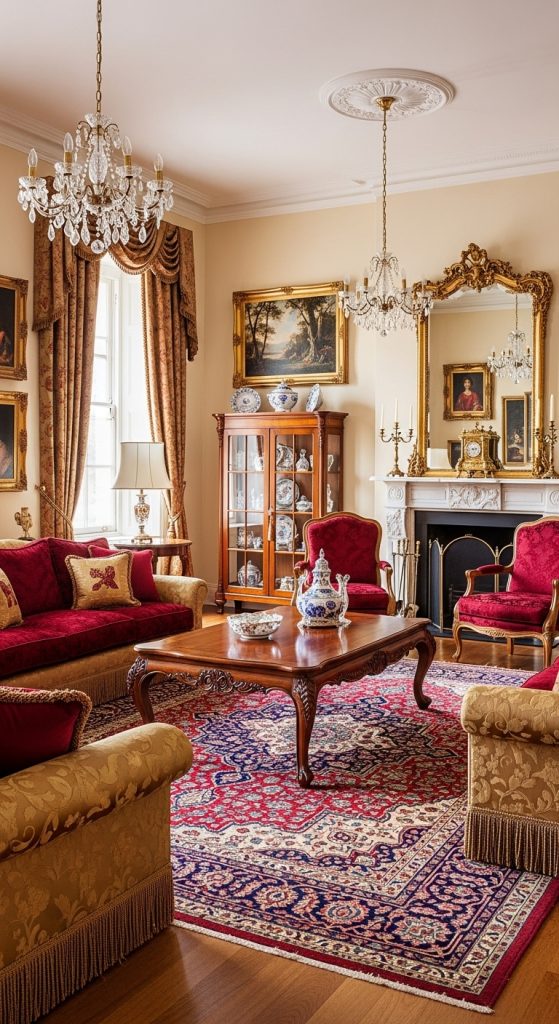
5. Traditional Style
Traditional interior design draws inspiration from classical European aesthetics, emphasizing elegance, symmetry, and rich detailing. This style often features ornate furniture, luxurious fabrics, and decorative moldings. Wood, marble, and fine textiles like silk and velvet are commonly used. Traditional spaces often use warm and neutral color palettes, including deep reds, greens, and golds. Furniture is typically heavy and well-crafted, with intricate carvings or polished finishes. Accessories such as chandeliers, framed artwork, and rugs complete the sophisticated look. To prepare for a traditional interior, focus on selecting timeless, quality furniture that complements the overall theme. Use symmetry in furniture placement to create a balanced and harmonious space. Layering rugs, drapes, and upholstery adds texture and richness. Incorporate classic patterns such as florals, damask, or paisley in fabrics and wallpapers. Lighting should be elegant, with chandeliers, sconces, and lamps that provide warm illumination. This style also encourages the use of antiques or heirlooms to enhance authenticity and history. Traditional interior design is suitable for those who prefer classic elegance, luxury, and a sense of grandeur. It creates a comfortable yet refined home environment with enduring appeal.