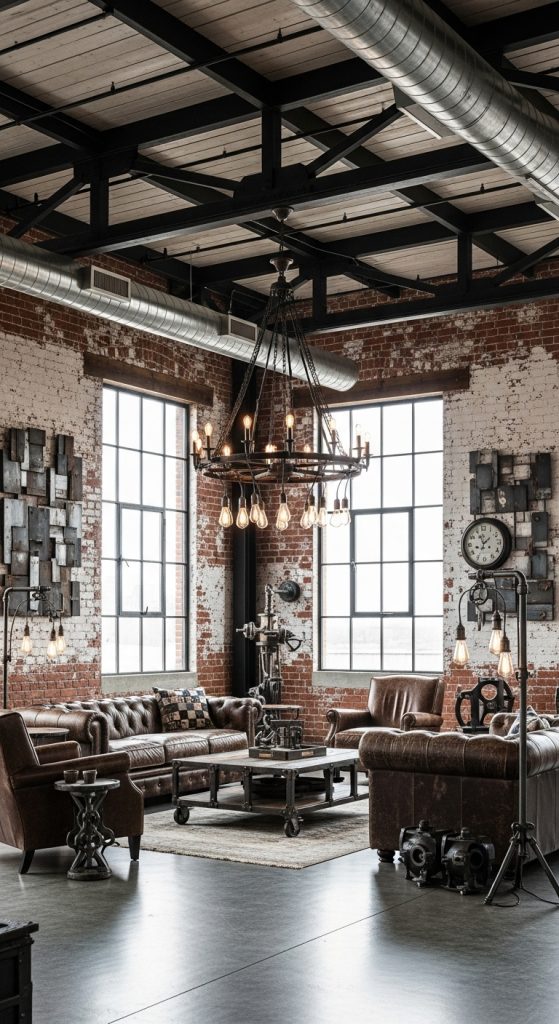
3. Industrial Style
Industrial interior design is inspired by old factories and warehouses. It embraces raw materials, exposed structures, and a utilitarian aesthetic. This style often features exposed brick walls, metal beams, concrete floors, and open ceilings. Furniture is usually made of metal, wood, or leather, with designs that are sturdy and functional. Neutral tones, especially greys, browns, and blacks, dominate the color palette, creating a raw yet stylish environment. Lighting fixtures such as hanging pendants and Edison bulbs add character and reflect the industrial vibe. To prepare a home for an industrial makeover, focus on structural features and open layouts. Remove unnecessary partitions to achieve a loft-like atmosphere. Embrace unfinished surfaces such as bare walls, raw wood, and metal finishes. Industrial design also encourages repurposing old furniture, vintage items, and factory-inspired décor. Storage solutions often combine metal and wood, complementing the rugged aesthetic. The industrial style works best in spaces with high ceilings and open floor plans but can be adapted to smaller areas with careful furniture placement. Accessories should be minimal, with an emphasis on functionality over decoration. This style is ideal for those who appreciate urban, edgy, and unconventional interiors, blending modern living with historical charm.