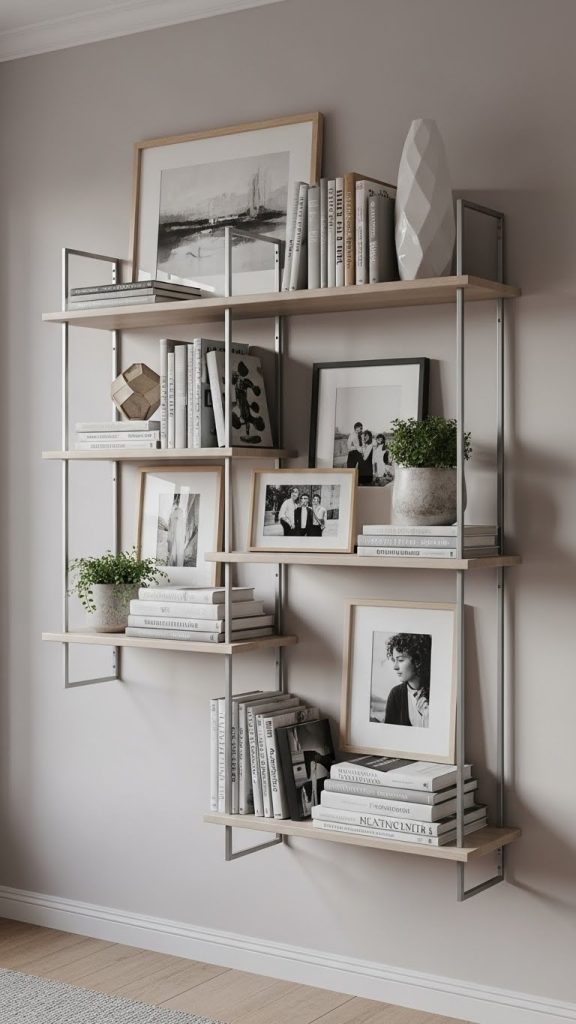
Wall bookshelves are more than just storage solutions. They shape the look of a room, help organize daily life, and allow you to display your personality through books, plants, and decor. Whether you live in a small apartment or a large house, wall-mounted bookshelves can help you use vertical space wisely and keep the floor area open. They are ideal for living rooms, bedrooms, home offices, study corners, and even hallways. With thoughtful planning, the right materials, and correct installation, wall bookshelves can last for many years and remain both useful and stylish.
Before starting any wall bookshelf project, it is important to understand your needs. Think about how many books you own, the wall strength, the room style, and how much weight the shelf must support. Preparation includes measuring wall space, choosing materials, selecting tools, and planning shelf placement. Safety is also important, especially when shelves are installed high on the wall or used in children’s rooms. In this blog post, you will find ten detailed wall bookshelf ideas. Each idea explains design inspiration, preparation steps, materials used, and practical tips. The language is kept simple so anyone can understand and apply these ideas easily in their own home.
1. Floating Wall Bookshelf
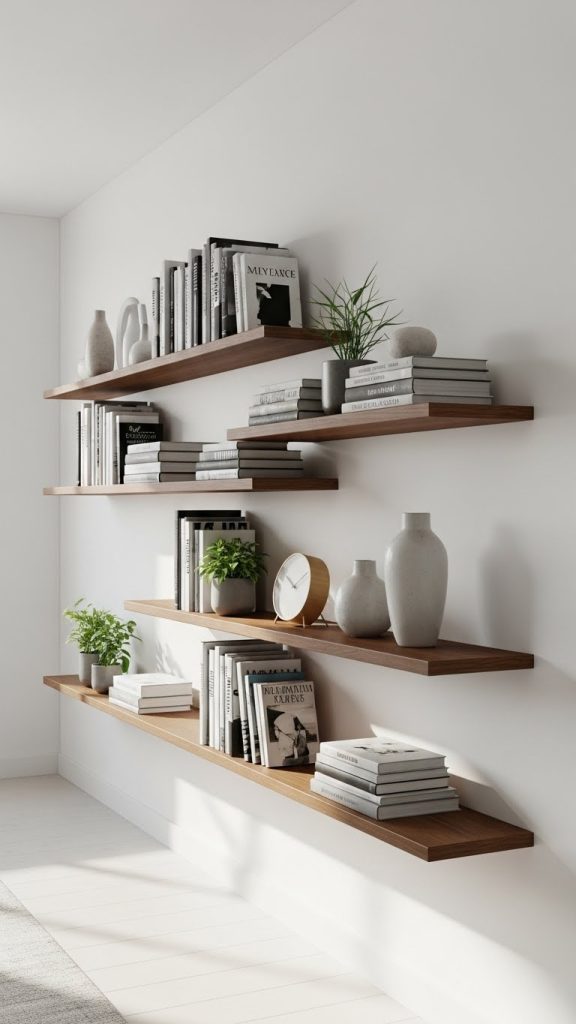
Floating wall bookshelves are one of the most popular and modern options. They appear to “float” because the brackets are hidden inside the shelf or behind it. This creates a clean and minimal look, making the room feel open and uncluttered. Floating shelves work well in living rooms, bedrooms, and offices where you want a simple and elegant design.
Preparation starts with checking the wall type. Solid brick or concrete walls provide the best support. If you have drywall, you will need strong wall anchors or must fix the shelf into studs. Measure the wall carefully and mark the shelf position using a level to ensure straight alignment. Planning the distance between shelves is also important so books fit comfortably.
Common materials include solid wood, engineered wood, or MDF. Solid wood is stronger and long-lasting, while MDF is budget-friendly and smooth for painting. You will need brackets, wall plugs, screws, a drill, a level, and a measuring tape. Floating shelves are best for medium-weight books and decorative items. Avoid overloading them. For safety, always follow weight limits and double-check that screws are tightened properly after installation.
2. Ladder Style Wall Bookshelf
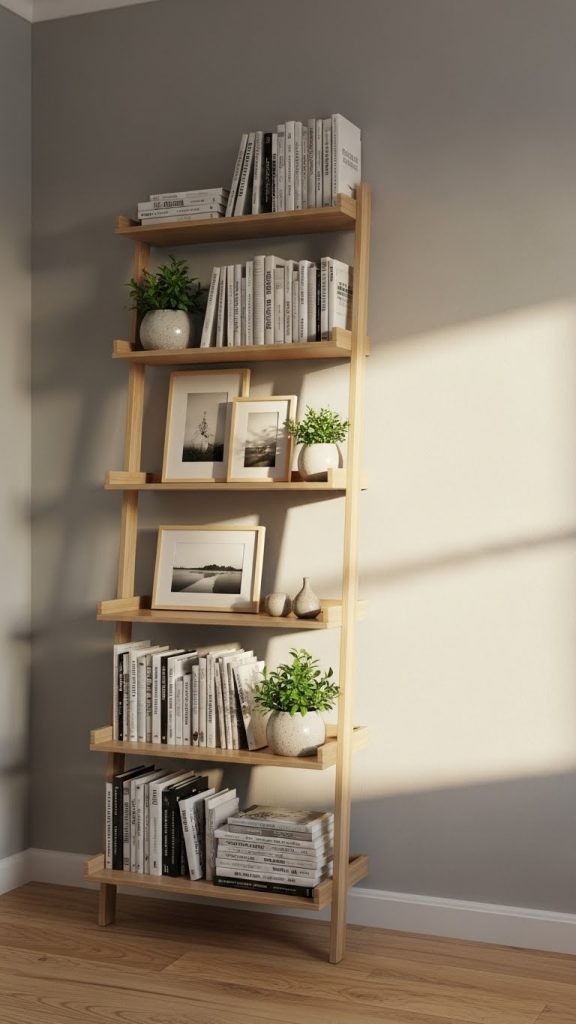
A ladder-style wall bookshelf leans slightly against the wall and is fixed at the top for stability. This design gives a relaxed and stylish look, often seen in modern and Scandinavian interiors. It is ideal for living rooms, bedrooms, or reading corners where you want a decorative yet functional shelf.
Before installation, choose the right wall where the ladder shelf can lean comfortably without blocking walkways. Measure the height and width of the shelf and ensure the ceiling height is suitable. Mark the fixing points clearly. Since the shelf touches the floor, weight distribution is better than fully wall-mounted shelves.
Materials usually include wood or metal frames with wooden shelves. Pine, oak, or plywood are common wood choices. Tools required include a drill, screws, wall anchors, and a level. Some ladder shelves come pre-assembled, which reduces work. Use the lower shelves for heavier books and the upper shelves for lighter items like plants or photo frames. Regularly check the wall fixings to ensure the shelf remains stable and safe.

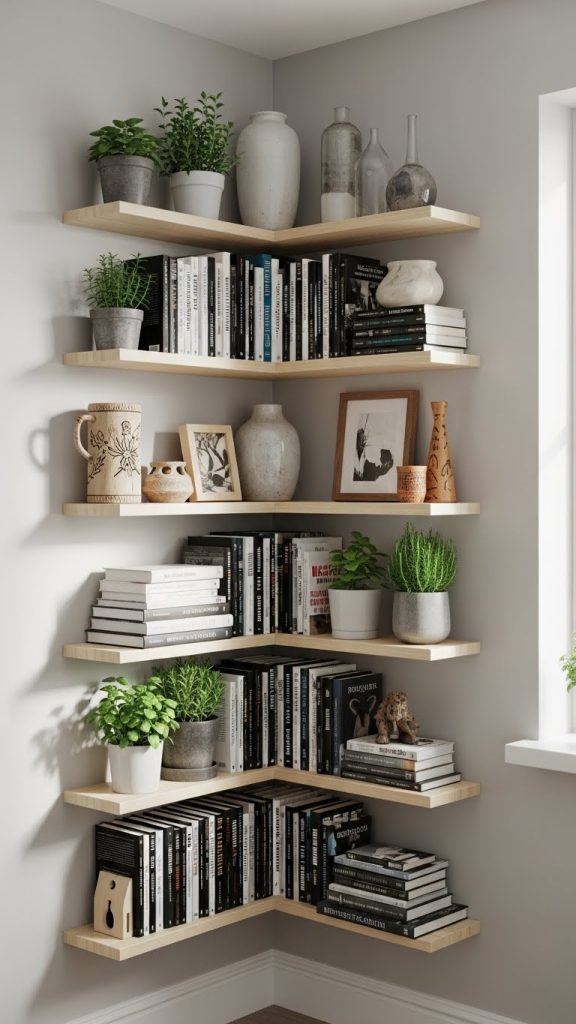
3. Corner Wall Bookshelf
Corner wall bookshelves are perfect for using unused spaces. Corners often remain empty, but with the right shelf design, they can become useful storage areas. Corner shelves work well in small rooms where space is limited.
Start by measuring the corner angle and wall height. Most corners are 90 degrees, but older homes may vary slightly. Accurate measurement is important to ensure a perfect fit. Decide how many shelves you want and how far apart they should be placed.
Materials include wood, glass, or metal. Wooden shelves give warmth, while glass shelves create a light and modern look. You will need corner brackets, screws, wall plugs, a drill, and a level. Installation requires careful alignment on both walls to keep shelves balanced. Corner shelves are suitable for books, small plants, and decorative objects. Avoid placing very heavy items unless the brackets are strong and fixed into solid wall material.
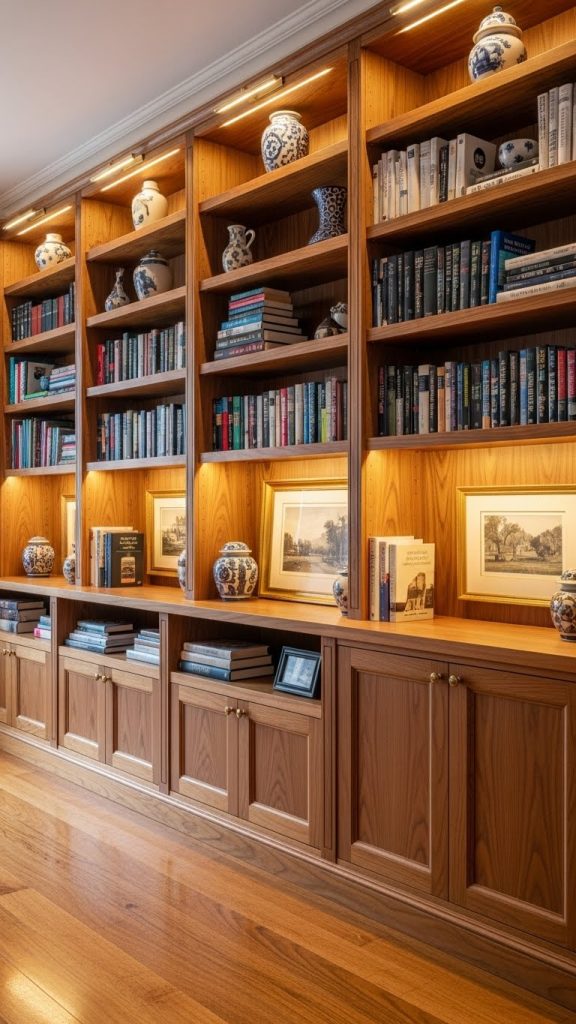
4. Built-In Wall Bookshelf
Built-in wall bookshelves are a permanent and highly functional option. They are usually custom-made and fitted into wall niches or across an entire wall. This style adds value to your home and creates a classic, organized look.
Preparation is detailed and requires careful planning. Measure the wall space accurately, including height, width, and depth. Consider electrical points, windows, and doors. Decide whether the shelves will reach the ceiling or stop at a certain height. Built-in shelves often require professional help.
Materials commonly used include plywood, MDF, and solid wood, finished with paint or veneer. Tools include saws, drills, screws, nails, wood glue, and measuring tools. Built-in shelves can hold a large number of books, so strong materials and secure fixing are essential. Plan shelf heights based on book sizes. Proper finishing, such as sanding and painting, improves durability and appearance.
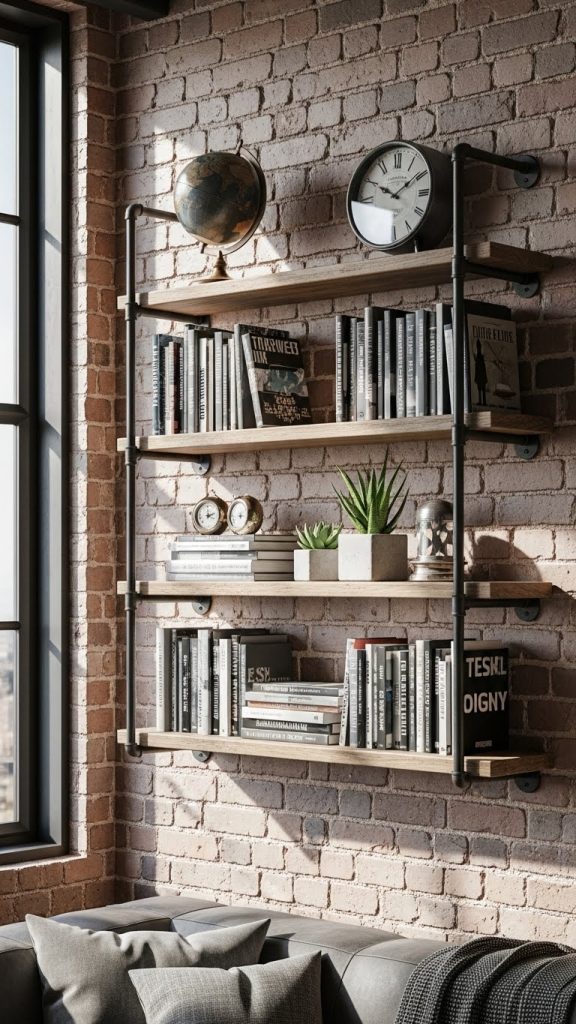
5. Industrial Style Wall Bookshelf
Industrial wall bookshelves combine metal and wood for a bold and strong look. They are inspired by factories and warehouses and suit modern, loft-style homes. This design works well in living rooms, home offices, and study areas.
Preparation includes checking wall strength, as industrial shelves can be heavy. Measure the space and plan shelf placement carefully. Decide how many shelves you need and their spacing.

Materials typically include metal pipes or frames and wooden planks. Reclaimed wood is often used for an authentic industrial feel. Tools needed include a drill, screws, wall anchors, a level, and sometimes a wrench. These shelves can support heavy books due to their strong frames. Ensure all metal parts are rust-free and securely fixed. Industrial shelves require occasional cleaning to maintain their appearance.
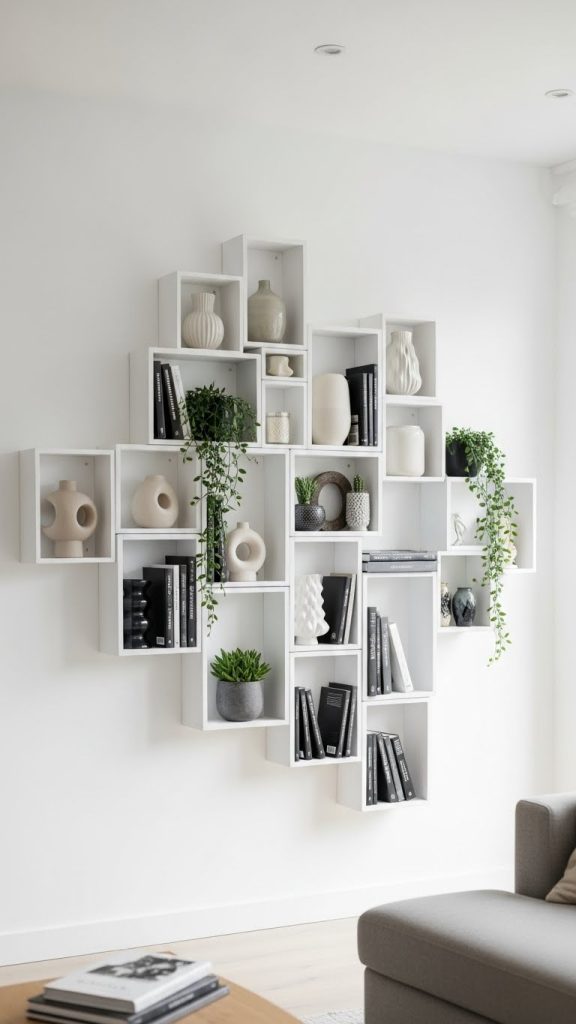
6. Box Style Wall Bookshelf
Box-style wall bookshelves consist of square or rectangular boxes mounted on the wall. They create a modern and creative display and can be arranged in different patterns. This design is ideal for living rooms and children’s rooms.
Start by planning the layout on paper or using masking tape on the wall. This helps visualize the final design. Measure each box carefully and ensure even spacing.
Materials include MDF, plywood, or solid wood. Pre-made box shelves are also available. Tools required include a drill, screws, wall plugs, and a level. Box shelves are best for lightweight books, toys, and decor items. Secure fixing is important to prevent movement. This style allows flexibility, as boxes can be rearranged or added later.

7. Minimal Rail Wall Bookshelf
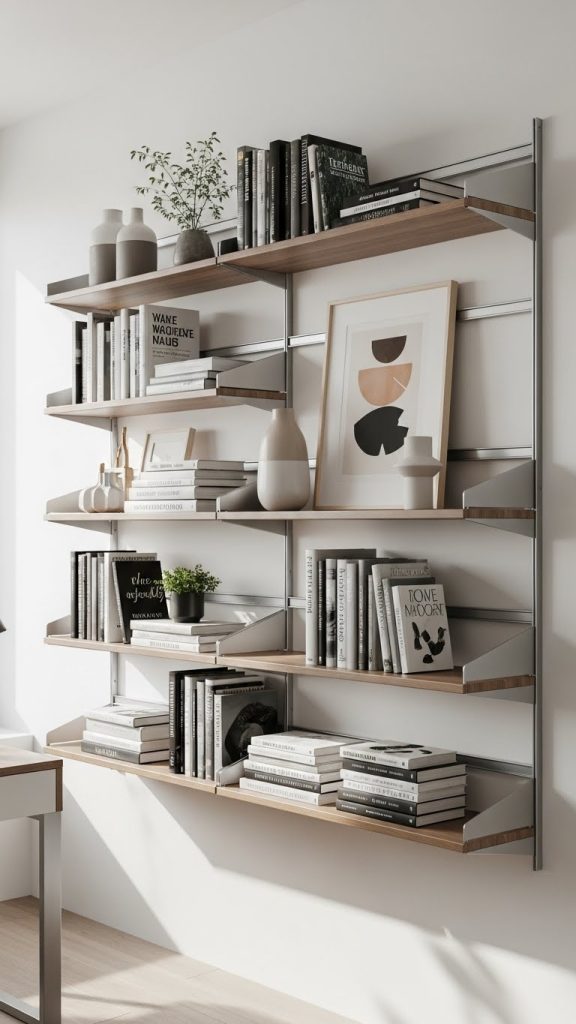
Rail wall bookshelves use horizontal metal rails fixed to the wall, with adjustable shelves attached. This system is flexible and practical, making it ideal for growing book collections.
Preparation involves measuring wall height and deciding rail placement. Rails must be fixed into strong wall points for safety. Mark drilling points carefully.
Materials include metal rails, brackets, and wooden or metal shelves. Tools needed are a drill, screws, wall anchors, and a level. The main advantage is adjustability. Shelves can be moved up or down easily. This system supports heavy loads when installed correctly. Regularly check screws and brackets to maintain safety.
8. Wall Bookshelf with Desk Combination
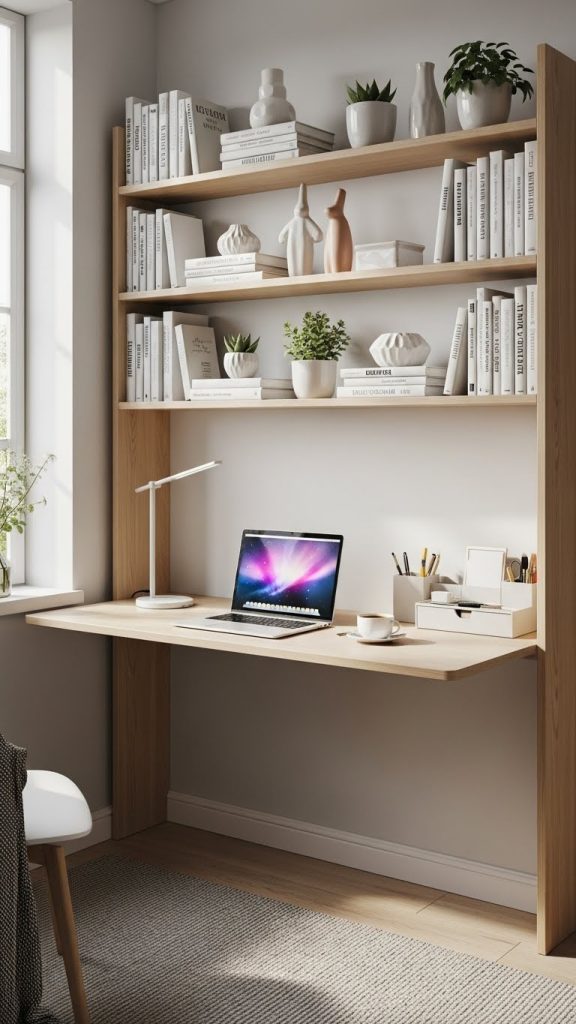
A wall bookshelf combined with a desk is perfect for home offices and study areas. It saves space and keeps everything within reach.

Start by measuring both wall width and available floor space. Decide desk height and shelf placement. Ensure enough legroom under the desk.
Materials include wood or engineered boards for shelves and desk surfaces, along with metal or wooden supports. Tools include a drill, screws, wall anchors, and measuring tools. This design requires strong wall fixing to support both books and work equipment. Keep heavier books on lower shelves. Proper planning ensures comfort and productivity.
9. Children’s Wall Bookshelf
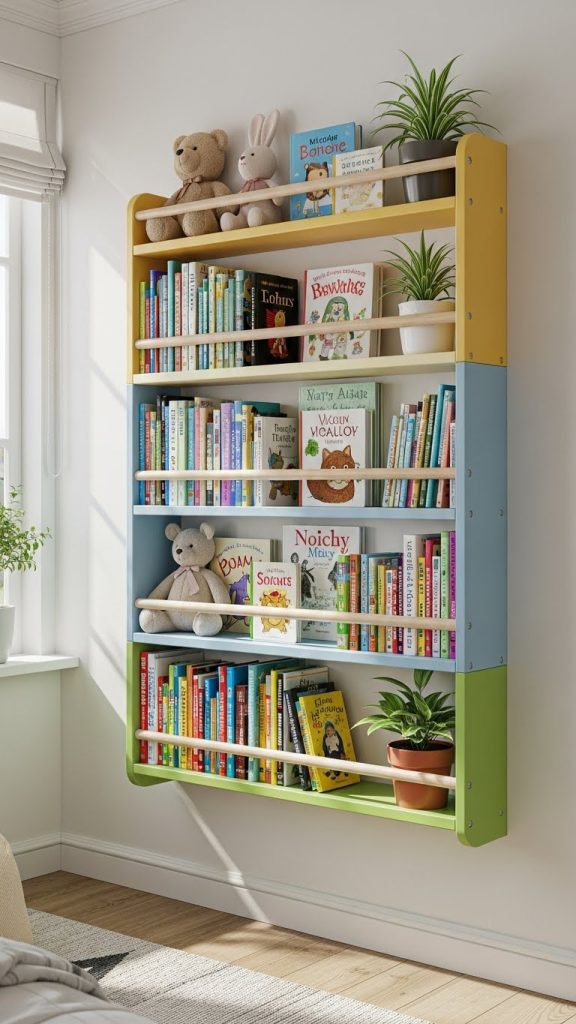
Children’s wall bookshelves are designed with safety and accessibility in mind. They encourage reading and help keep rooms organized.
Preparation includes choosing a safe wall area away from beds. Measure shelf height so children can reach books easily. Rounded edges are recommended.

Materials include lightweight wood or plastic. Tools required are basic drilling tools and child-safe wall anchors. Secure fixing is very important to prevent accidents. Use lower shelves for daily books and higher shelves for storage. Bright colors or simple designs make shelves attractive for children.
10. Decorative Display Wall Bookshelf
Decorative display wall bookshelves focus on visual appeal as much as storage. They combine books with art, plants, and personal items.
Planning includes deciding the style, symmetry, or asymmetry of the design. Measure wall space and sketch the layout.
Materials include wood, metal, or mixed materials. Tools include a drill, screws, anchors, and a level. These shelves usually hold lighter items, so weight is less of a concern. Balance is important to avoid clutter. Decorative shelves add character to living rooms and bedrooms when styled thoughtfully.