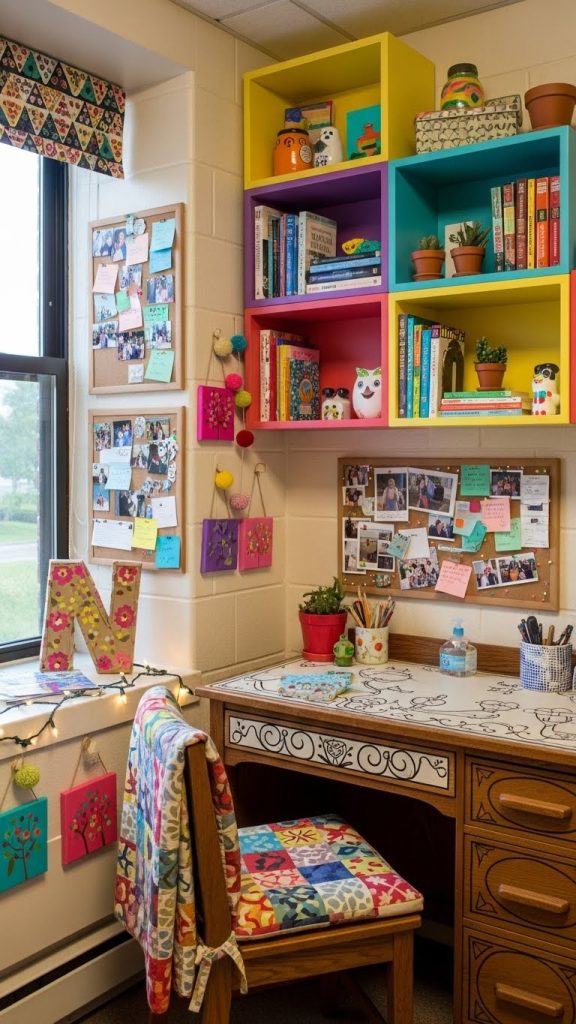
Decorating a college dorm room can be both exciting and challenging. Limited space, shared environments, and budget constraints require creative and practical solutions. The right setup can make your dorm feel more like home, improve productivity, and reflect your personal style. Here are ten detailed ideas to transform your college dorm into a comfortable, functional, and inspiring space.
1. Maximize Storage with Multi-Functional Furniture
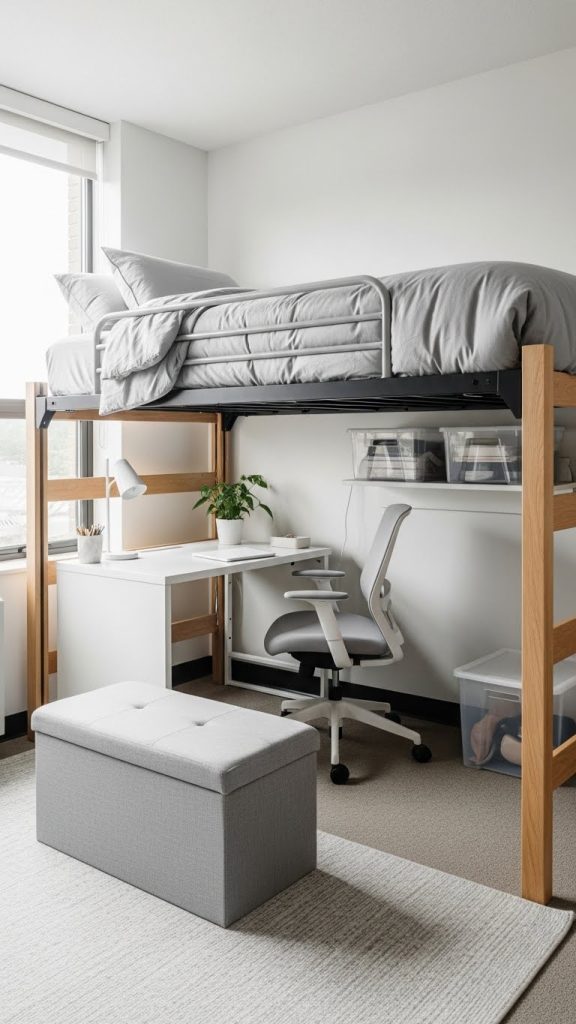
One of the biggest challenges in dorm rooms is limited space. Multi-functional furniture is a game-changer for creating both storage and comfort. For example, a lofted bed with a desk underneath uses vertical space efficiently, leaving more room for seating or storage. Storage ottomans or benches provide extra seating while doubling as a place to keep books, bedding, or seasonal clothing. Under-bed storage bins are inexpensive, stackable, and easy to move, making them ideal for storing shoes, supplies, or personal items.
Preparation and Materials: Before purchasing, measure your room carefully. Ensure furniture fits without obstructing walkways or fire exits. Materials such as lightweight wood, metal frames, and durable plastic bins are ideal for dorms because they are easy to move and maintain. Labels and organizers can help keep items sorted and accessible. Combining function with style is key; furniture in neutral colors with clean lines will coordinate with various décor themes and avoid visual clutter. Investing in multifunctional furniture saves money and creates a more organized and comfortable living environment.
2. Create a Cozy Study Nook
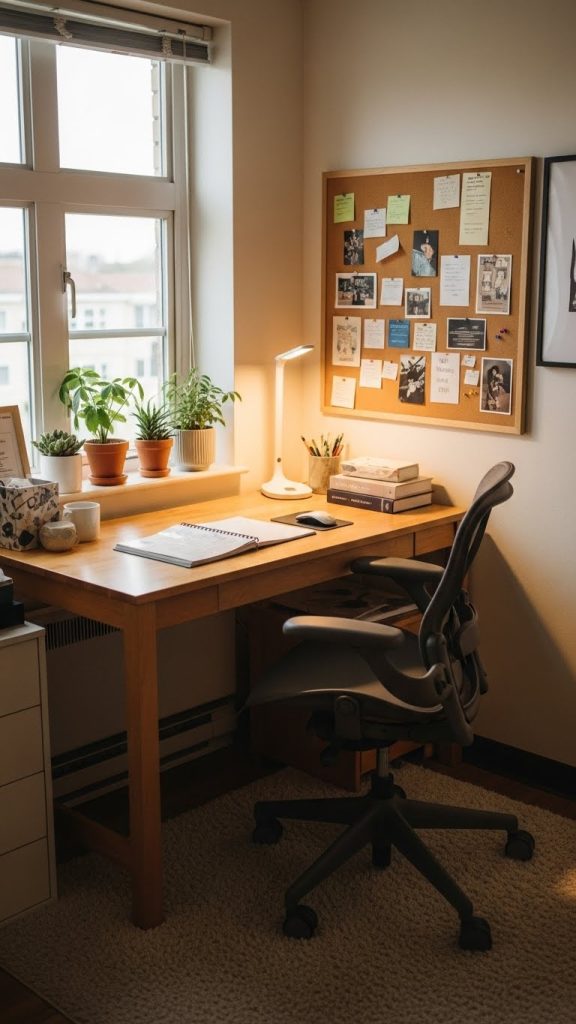
Studying effectively requires a designated area free from distractions. Many dorm rooms lack defined spaces, but you can create a cozy study nook even in a small area. Position a desk near a window for natural light, or use an adjustable LED desk lamp to provide focused lighting. A comfortable chair with lumbar support ensures you can study for hours without strain. Add corkboards, whiteboards, or magnetic boards to keep notes, schedules, and reminders organized.

Preparation and Materials: Essential items include a desk, chair, task lighting, and organizational tools. Consider storage caddies for stationery and small bins for papers. Noise-canceling headphones or a small portable speaker can enhance focus. Soft elements like a small rug, cushions, or a blanket make the nook inviting and comfortable. Choose furniture and accessories that do not overwhelm the space and allow flexibility. A study nook not only improves productivity but also provides a personal corner in a shared environment, helping students maintain focus and reduce stress during long study sessions.
3. Personalize with Wall Art and Posters
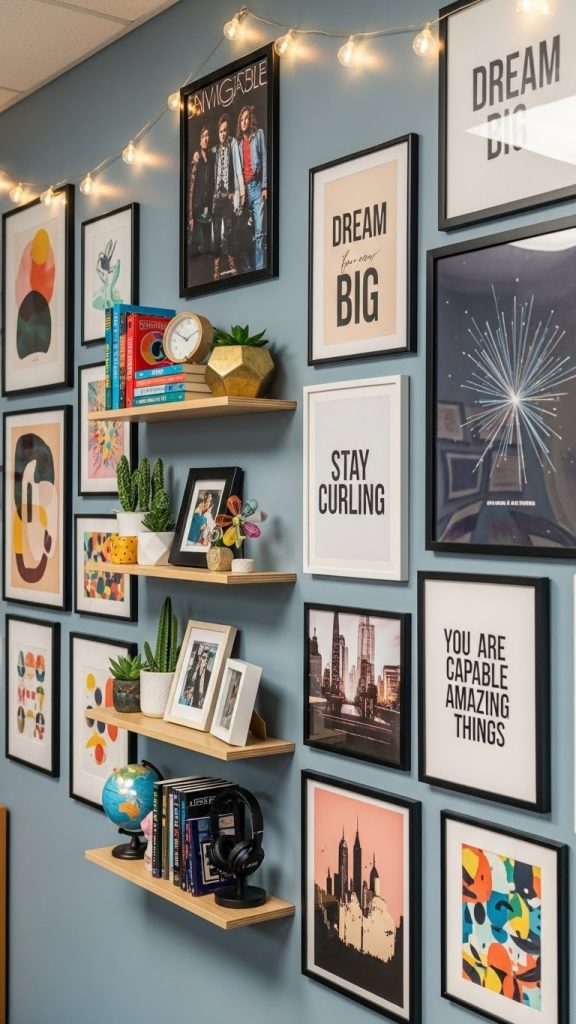
Bare dorm walls can feel sterile and impersonal. Decorating walls with posters, prints, or personal artwork allows students to express personality and interests. Consider a mix of motivational quotes, favorite bands, travel photos, or framed art pieces. Using removable adhesive hooks, command strips, or washi tape prevents damage to walls and makes rearranging simple. String lights or wall-mounted shelves can complement the décor and provide extra ambiance or storage.
Preparation and Materials: Start by selecting a theme or color palette to unify the wall décor. Lightweight frames, clips, and tapes are dorm-safe options. Craft stores offer inexpensive posters and prints, or you can create DIY art projects for a personal touch. Avoid overcrowding walls, as this can make the room feel cluttered. Incorporating decorative wall elements adds warmth and character, making the dorm feel more like home. Additionally, wall décor can serve functional purposes, such as pinning schedules, reminders, or inspirational messages, combining aesthetics with utility.
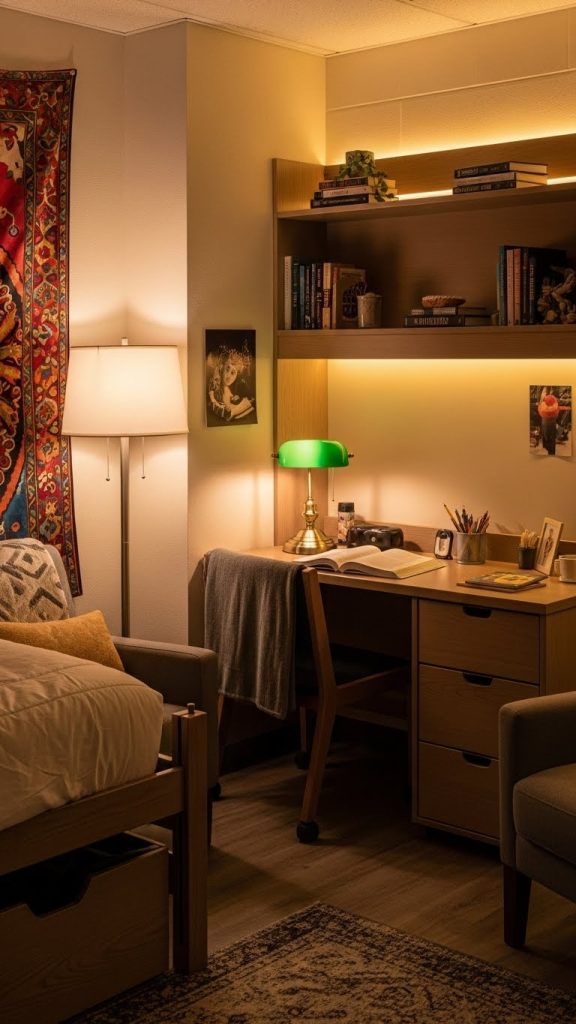
4. Optimize Lighting for Comfort and Style
Lighting can dramatically change the ambiance of a dorm room. Harsh fluorescent lights often dominate college rooms, but additional lighting options can make the space feel warmer and more inviting. Desk lamps, clip-on lights, LED strip lights, and floor lamps provide flexibility and control over brightness. Warm-toned bulbs create a relaxing atmosphere, while cooler tones are ideal for studying. Adjustable lamps with dimming functions allow customization for reading, working, or relaxing.

Preparation and Materials: Choose energy-efficient LED lights for long-term use and low electricity consumption. Ensure lamps are compact and safe for dorm use, avoiding exposed wires or bulbs that can overheat. String lights or fairy lights offer a decorative touch and can be used to highlight a specific area, such as a bed or wall art. Task lighting is essential for studying, whereas ambient lighting enhances the overall comfort of the room. A thoughtful combination of functional and decorative lighting improves mood, productivity, and visual appeal in a limited space.
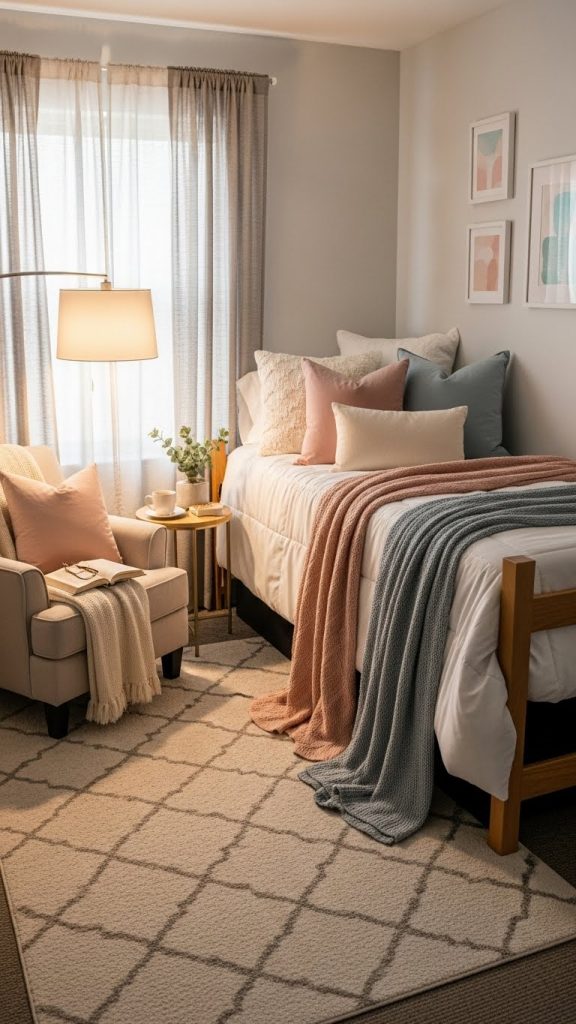
5. Add Soft Textiles for Warmth and Comfort
Soft textiles like rugs, throw blankets, and decorative pillows instantly make a dorm room cozier. A small area rug adds comfort underfoot and defines different spaces, such as a study corner or seating area. Throw blankets and pillows make beds and chairs more inviting while providing color and texture to a neutral room. Curtains or blackout shades can also soften harsh light and provide privacy in shared dorms.
Preparation and Materials: Opt for washable fabrics for easy maintenance. Materials like cotton, microfiber, or fleece are ideal for comfort and durability. Choose colors and patterns that coordinate with your wall décor and furniture to create a cohesive look. Layering textiles adds depth and warmth, making a small room feel welcoming. Even in compact spaces, carefully selected textiles enhance both aesthetics and comfort. Combining functionality with style, soft textiles make dorm life more pleasant and help create a homey environment that encourages relaxation and focus.
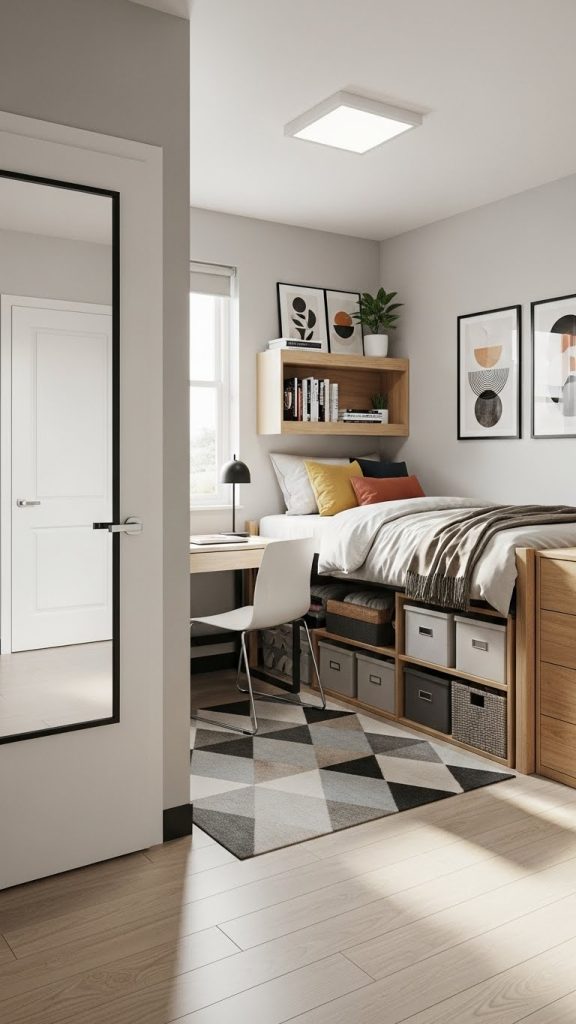
6. Use Mirrors to Enhance Space
Dorm rooms are often small and can feel cramped. Strategically placed mirrors create the illusion of a larger space by reflecting light and opening up the room visually. A full-length mirror on the back of a door or a large wall mirror can serve both functional and decorative purposes. Mirrors can also highlight areas of interest, such as a gallery wall, enhancing the overall aesthetic appeal.

Preparation and Materials: Choose lightweight, unbreakable mirrors for safety. Adhesive-backed mirrors or ones with wall hooks are ideal for dorm rooms to prevent damage to walls. Position mirrors to reflect natural light from windows or lamps for maximum effect. Mirrors not only serve a practical purpose for daily grooming but also improve the perception of space, making even small dorm rooms feel airy and spacious. Combining mirrors with creative décor elements enhances room depth and creates a polished, well-thought-out appearance.
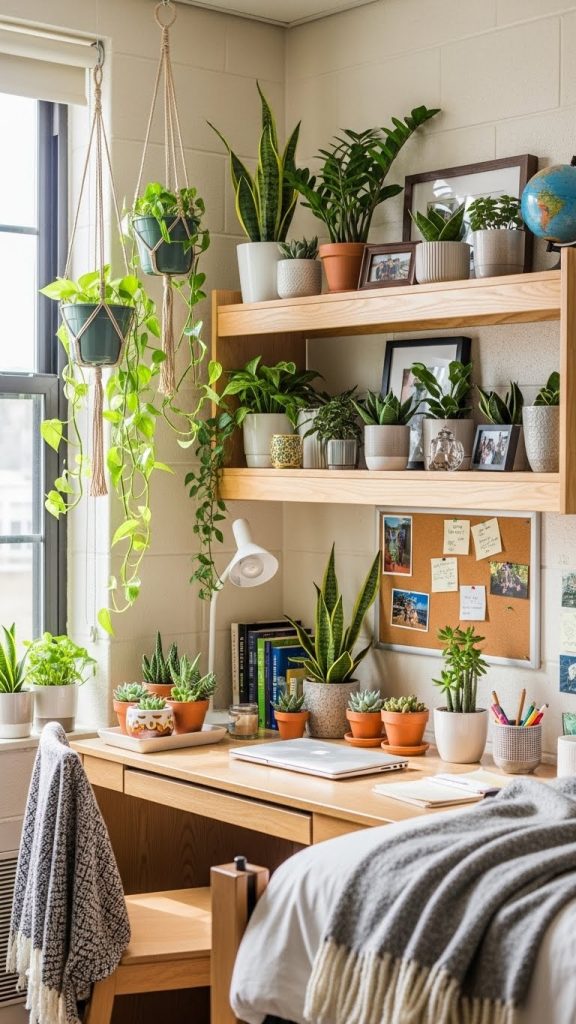
7. Incorporate Greenery with Indoor Plants
Adding greenery to a dorm room brings freshness, color, and improved air quality. Small potted plants, succulents, or hanging planters are perfect for limited spaces. Plants like snake plants, pothos, and succulents are low-maintenance and thrive indoors with minimal care. Even artificial plants can add visual interest if natural light is insufficient. Greenery enhances mood, reduces stress, and creates a connection to nature in a confined space.
Preparation and Materials: Consider pots with drainage trays to prevent water damage to furniture or floors. Lightweight ceramic, plastic, or fabric pots are easy to move and safe for dorms. Position plants near windows or under grow lights if natural light is scarce. Pairing plants with decorative elements, such as macrame hangers or plant stands, adds visual height and texture. Plants are more than decoration; they foster a calming, vibrant environment conducive to both relaxation and study. Regular care and thoughtful placement maximize their aesthetic and functional benefits in dorm life.
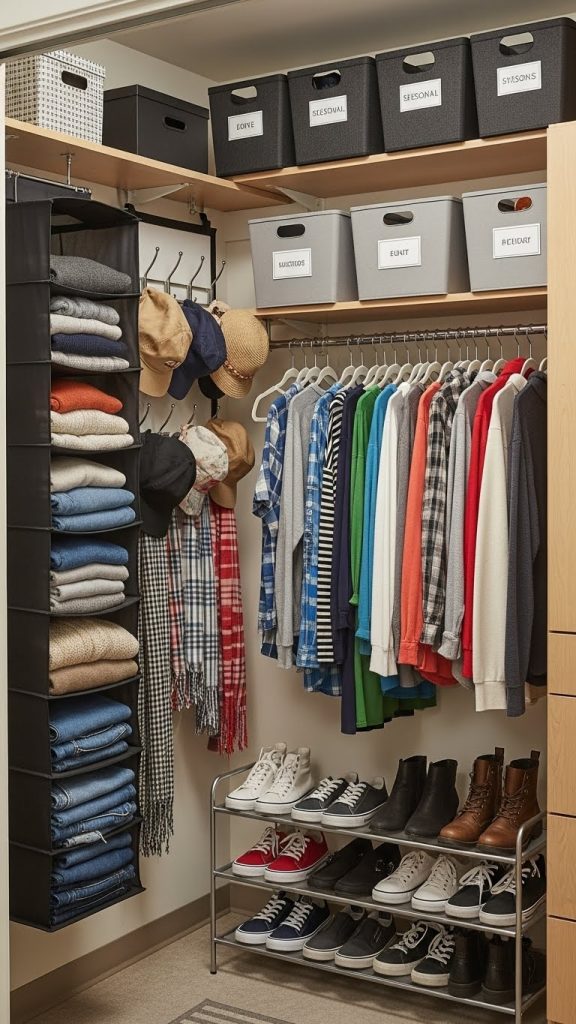
8. Establish a Functional Closet System
Dorm closets are often small, making organization a challenge. A functional closet system ensures easy access to clothing, shoes, and accessories while maximizing space. Hanging organizers, multi-tiered racks, and storage bins make the most of vertical space. Using uniform hangers and labeled storage bins creates a clean, streamlined look. Over-the-door hooks and shoe racks add additional storage without taking up floor space.

Preparation and Materials: Before organizing, declutter and decide which items are essential for daily use. Materials like fabric organizers, plastic bins, and lightweight shelving are ideal for dorm use. Consider seasonal rotation of clothing to keep only current items accessible. Color-coding and labeling enhance efficiency and reduce clutter. An organized closet saves time during busy mornings, keeps belongings protected, and contributes to a visually tidy room. Investing in an effective closet system transforms limited space into a functional, practical, and aesthetically pleasing storage solution.
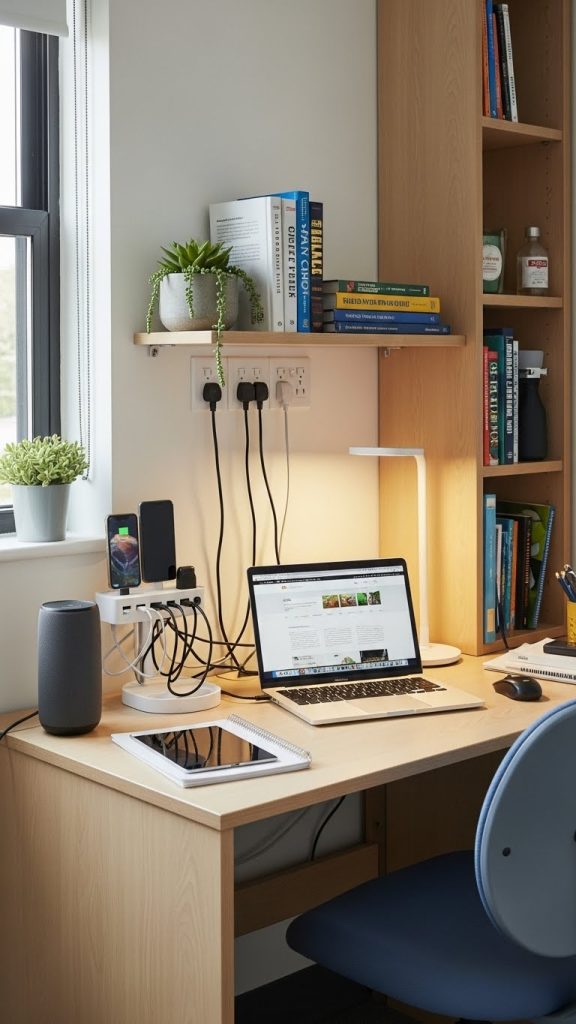
9. Integrate Technology Thoughtfully
Technology is essential in college life, but too many devices or tangled cords can create clutter. Integrating technology thoughtfully ensures convenience and efficiency. Multi-port charging stations, cable organizers, and under-desk mounts help manage cords. Wireless speakers, smart lamps, and compact desk fans add comfort and entertainment without occupying excessive space. Position devices to maximize accessibility and reduce distractions during study periods.
Preparation and Materials: Essential materials include surge protectors, cable clips, and compact storage solutions for devices. Plan the layout of your room to accommodate outlets and lighting needs. Choose devices that serve multiple functions, like a desk lamp with USB ports, to save space. Keeping technology organized reduces stress, improves workflow, and creates a clean, streamlined appearance. Thoughtful integration of tech ensures the dorm room supports both academic performance and leisure, making life easier and more enjoyable in a small living area.
10. Personalize with DIY Projects
DIY projects allow students to add personality and creativity to their dorm rooms while staying on budget. Handmade decorations, custom shelves, painted furniture, or personalized bulletin boards are fun ways to make a space unique. DIY projects can also provide functional solutions, such as customized storage bins or desk organizers. These personal touches reflect style, creativity, and individuality, making a dorm room feel truly like home.
Preparation and Materials: Simple materials include wood, paint, fabric, glue, and craft tools. Measure spaces carefully to ensure items fit appropriately. Consider safety and dorm regulations, avoiding permanent alterations or fire hazards. Online tutorials and craft kits provide step-by-step guidance. Incorporating DIY elements encourages creativity, reduces costs, and results in a dorm room that is both functional and uniquely yours. Personalized DIY projects give students a sense of ownership and pride in their living space, enhancing comfort, aesthetics, and overall satisfaction with dorm life.