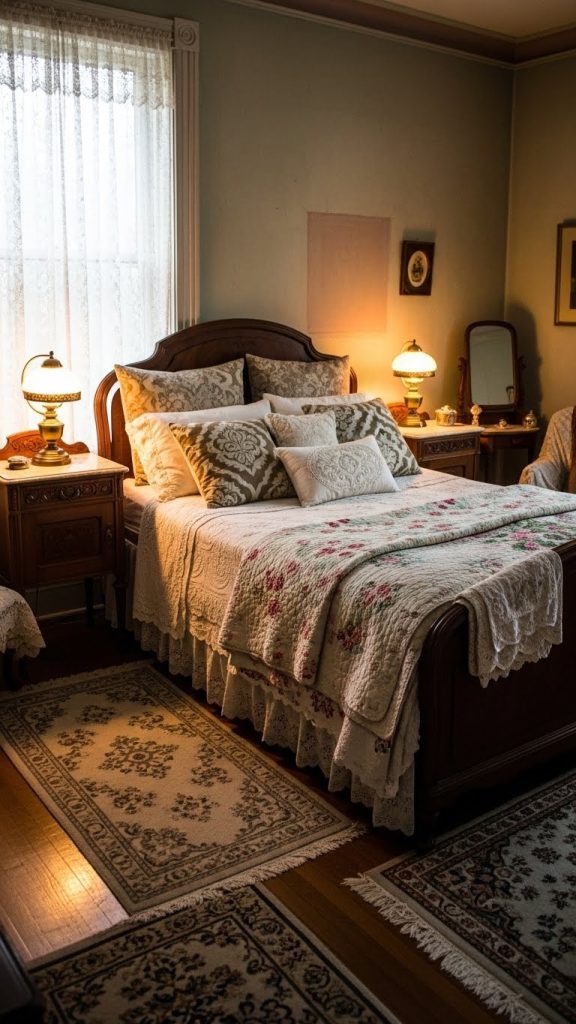
Creating a vintage bedroom is all about blending nostalgia, classic designs, and timeless elements with modern comfort. Vintage style can range from the elegant charm of the 1920s to the cozy warmth of the 1970s. In this blog, we will explore ten unique ideas for transforming your bedroom into a vintage haven, complete with preparation tips, materials, and design elements.
1. Antique Furniture Focus
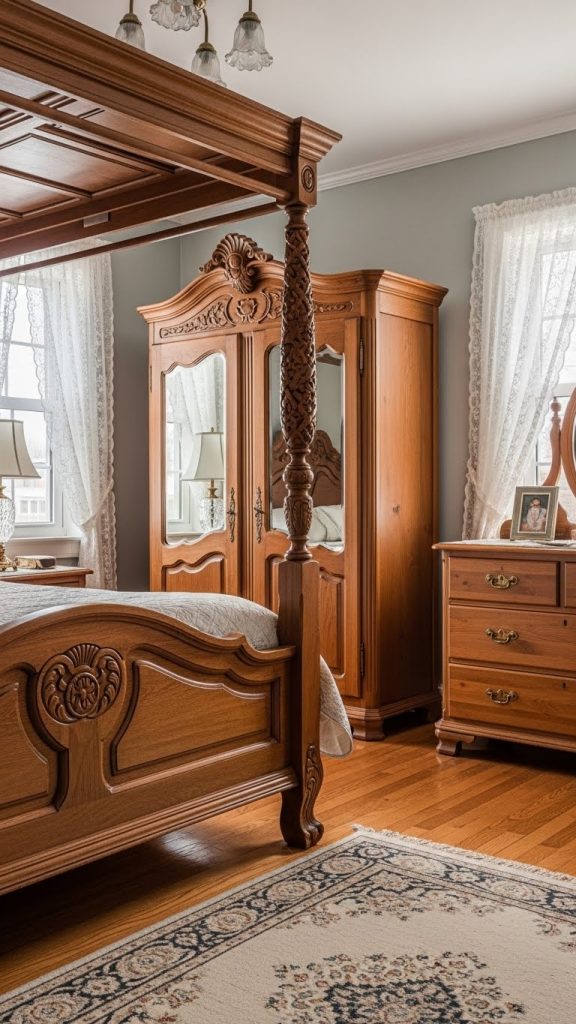
Antique furniture is the cornerstone of any vintage bedroom. Start by selecting a statement piece such as a four-poster bed, a carved wooden dresser, or a vintage armoire. Look for furniture with detailed craftsmanship, natural wood finishes, or subtle patina that speaks to its age. The key is to mix these pieces with modern elements subtly to avoid a museum-like feel.
Preparation: Measure your bedroom space carefully to ensure large furniture fits comfortably. Clean antique pieces gently using wood polish or a mild solution to preserve their original finish. Consider minor repairs like tightening joints or replacing old knobs.
Materials: Solid wood furniture, brass or iron hardware, natural polish, and linen or cotton for upholstery.
Tip: Combining multiple smaller antique items, such as bedside tables and a vanity, helps create a cohesive vintage atmosphere without overwhelming the space.
2. Floral Wallpaper and Patterns
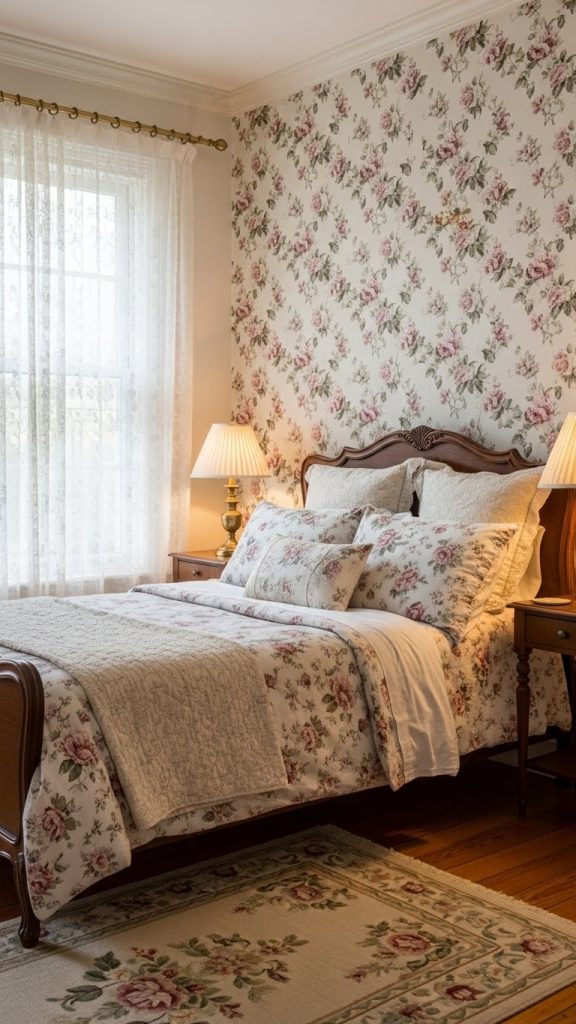
Vintage bedrooms often feature floral patterns that evoke a sense of nostalgia. Consider wallpaper with delicate roses, peonies, or subtle damask patterns for accent walls. Alternatively, floral bedspreads, curtains, or cushions can add the same charm without committing to permanent wallpaper.
Preparation: Choose a wall that naturally draws attention, like behind the bed, and ensure it is smooth and clean before applying wallpaper. For fabric accents, pick coordinating patterns and colors to avoid a chaotic look.
Materials: High-quality wallpaper, adhesive, brushes or rollers for smooth application, vintage-style bedding fabrics, and sewing tools if customizing curtains or cushions.

Tip: Stick to muted tones like dusty rose, sage green, or cream for an authentic vintage vibe. Layering patterns carefully creates depth while keeping the room elegant.
3. Vintage Lighting Fixtures
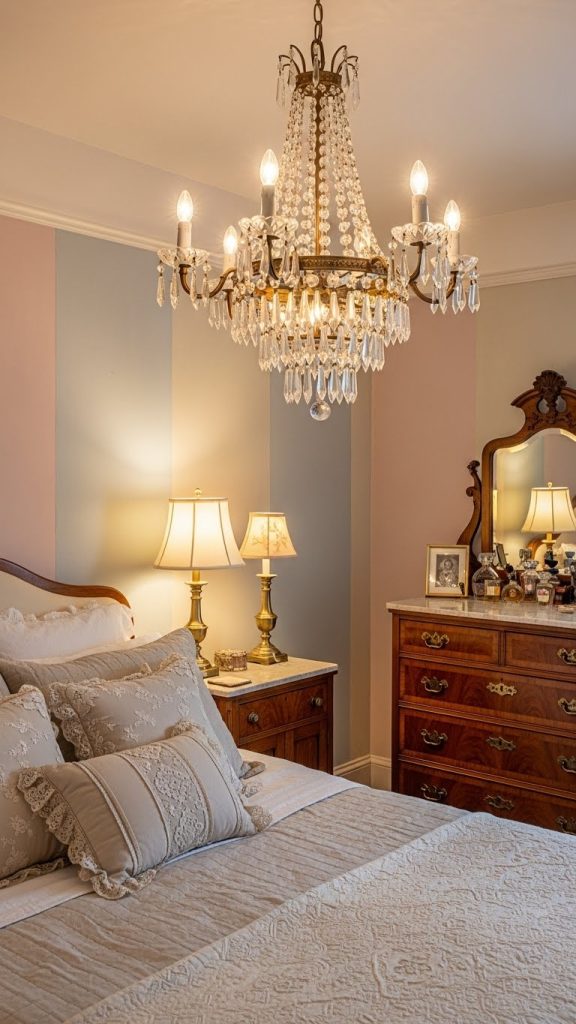
Lighting plays a crucial role in achieving a vintage aesthetic. Crystal chandeliers, brass table lamps, or antique sconces instantly elevate the room. Opt for soft, warm bulbs rather than harsh LED lights to maintain a cozy ambiance.
Preparation: Decide the focal points where lighting will be highlighted, such as above the bed or a reading nook. Ensure electrical wiring meets safety standards before installing fixtures.
Materials: Brass, bronze, or crystal light fixtures, dimmable warm bulbs, and vintage lampshades.

Tip: Mix ceiling lights with table lamps for layered lighting. Using dimmers allows you to adjust brightness to suit different moods, enhancing the vintage charm.
4. Classic Color Palettes
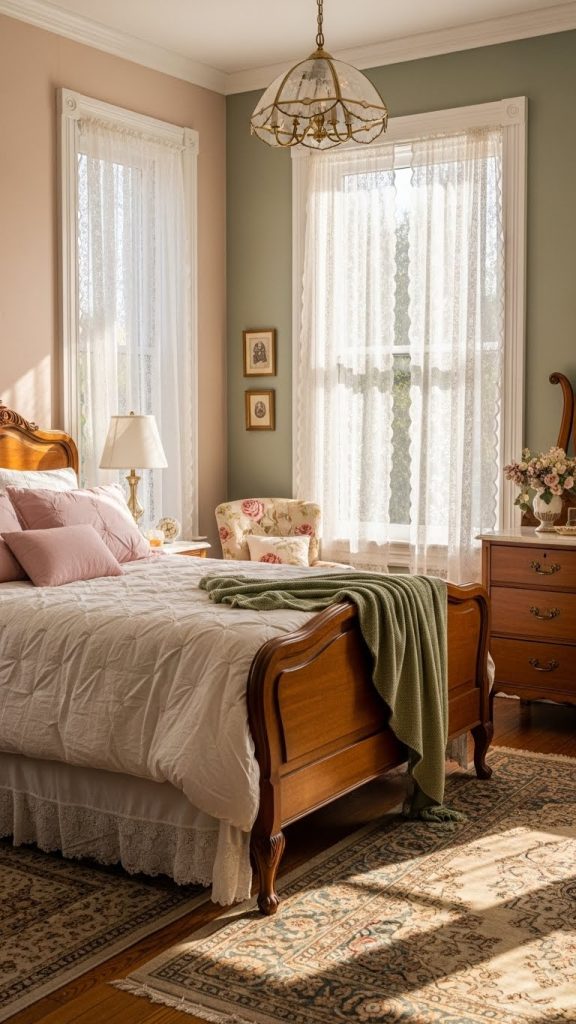
Color sets the tone for a vintage bedroom. Soft pastels, muted neutrals, or rich jewel tones can work depending on your era of choice. Popular vintage palettes include pale pink, soft blue, cream, sage green, mustard yellow, and burgundy.
Preparation: Paint sample swatches on the walls to see how colors interact with natural light. Choose one dominant color and two complementary shades for accents in furniture or textiles.
Materials: Low-VOC paint, primer, paintbrushes, rollers, painter’s tape, and swatches.

Tip: Use contrasting colors sparingly to highlight key furniture pieces or decor elements. Vintage color schemes often lean on subtlety rather than bold, modern contrasts.
5. Distressed and Shabby Chic Elements
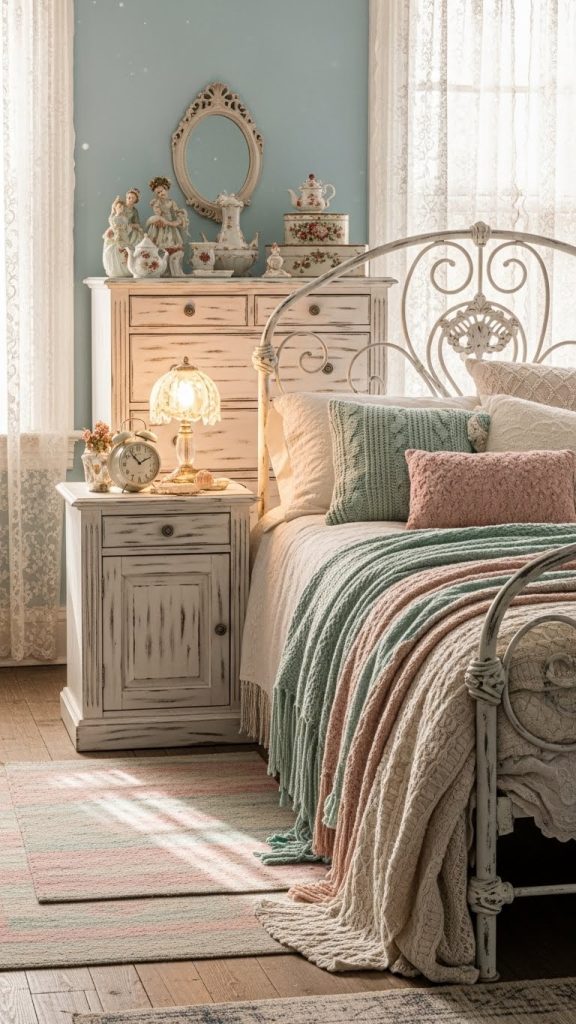
Distressed furniture and shabby chic accents give a room authentic vintage character. Paint a wooden dresser in a soft white or pastel and sand it lightly to reveal underlying layers. Combine these with lace curtains, worn rugs, and textured throws.
Preparation: Choose furniture pieces suitable for distressing. Test paint techniques on a hidden area first to ensure the desired effect. Plan the arrangement of textures to maintain a balanced look.
Materials: Chalk paint, sandpaper, wax or sealant, lace fabric, woven rugs, and decorative throws.

Tip: Avoid over-distressing. Focus on edges, corners, and areas that naturally receive wear. The goal is subtle charm, not a worn-out appearance.
6. Vintage Mirrors and Frames
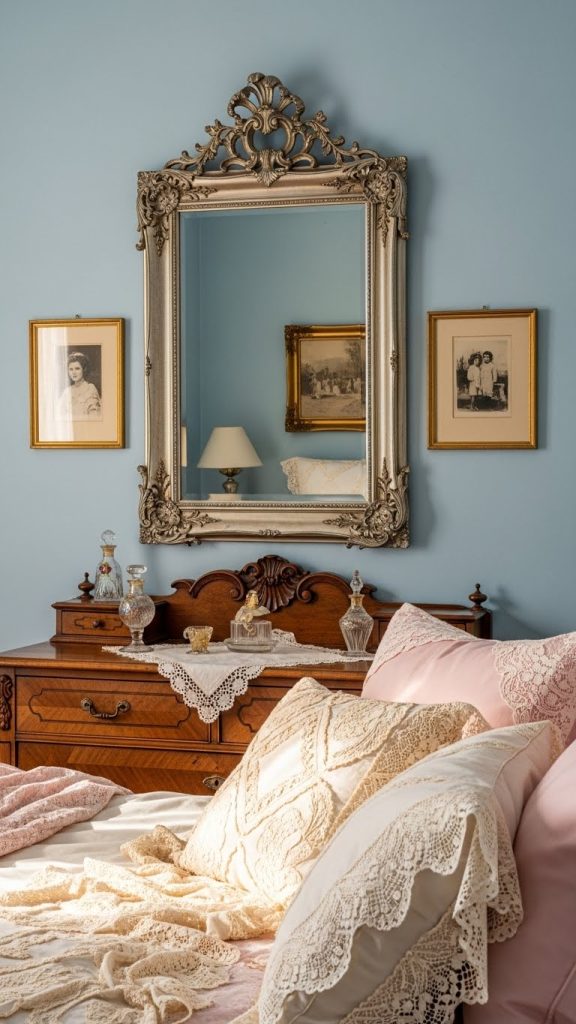
Mirrors and frames add elegance and depth to a vintage bedroom. Ornate gold or silver frames, beveled mirrors, and aged photographs in black and white or sepia tones complement the nostalgic theme.
Preparation: Clean surfaces thoroughly before hanging. Plan the layout on paper or use painter’s tape to visualize arrangement before committing to nails or hooks.
Materials: Antique mirrors, gilded frames, vintage photographs, and secure hanging hardware.
Tip: Group mirrors and frames in clusters for a gallery effect. Mix sizes and shapes to achieve visual interest while maintaining cohesion through consistent color or finish.
7. Vintage Rugs and Flooring
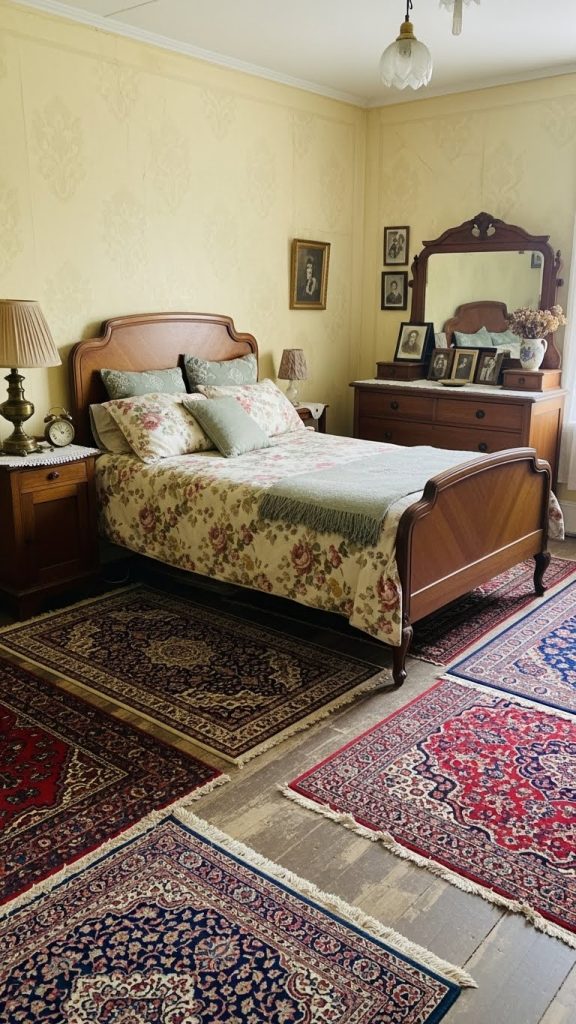
Flooring can enhance the room’s vintage charm significantly. Persian or Oriental rugs, braided mats, or distressed hardwood floors evoke warmth and history. Layering rugs adds texture and comfort.
Preparation: Measure the floor space for rug placement. If installing hardwood or distressed flooring, hire professionals to ensure quality and durability.
Materials: Wool or cotton rugs, hardwood planks, finishing oils, and underlay pads for rugs.

Tip: Choose rugs with muted tones or classic patterns to harmonize with other vintage elements. Layering a small rug on top of a larger one can add depth and coziness.
8. Vintage Accessories and Decor
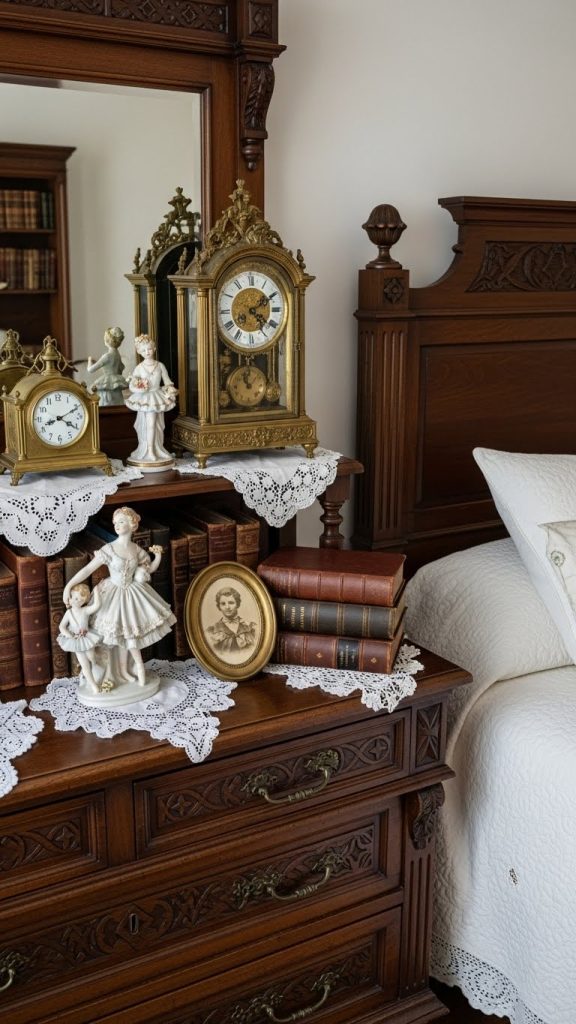
Accessories define a vintage bedroom. Consider antique clocks, old books, porcelain figurines, vintage suitcases, and retro trinkets. Even small elements like glass perfume bottles or lace doilies enhance authenticity.
Preparation: Select items that complement your chosen era and color palette. Clean antiques carefully without removing patina, as imperfections enhance character.
Materials: Porcelain, glass, wood, vintage books, lace, and small decorative boxes or trays.
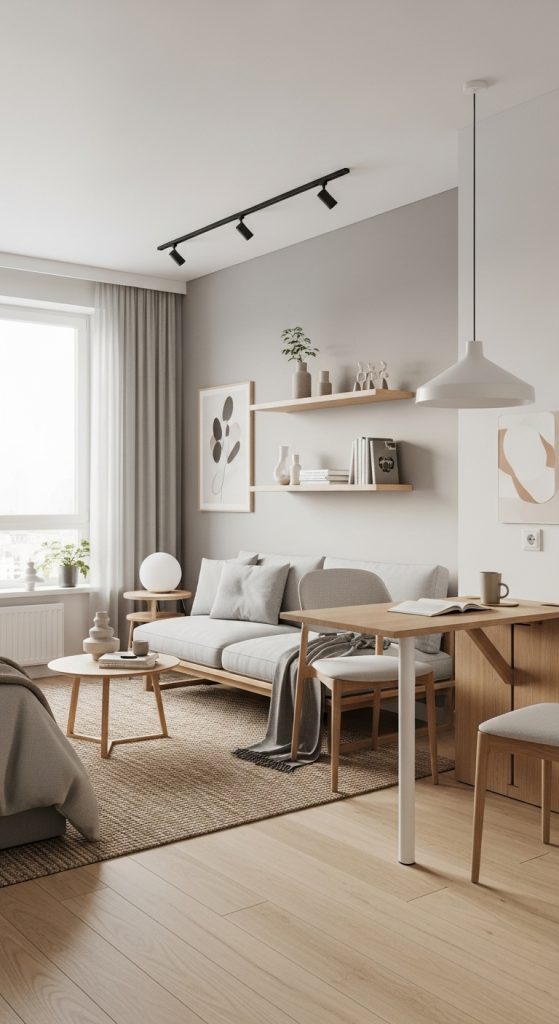
Tip: Display items strategically on dressers, shelves, or nightstands to avoid clutter. Grouping accessories in odd numbers creates a visually appealing arrangement.
9. Upholstered Vintage Seating
Adding a vintage chair or settee creates a cozy corner and accentuates the style. Velvet or linen upholstery with tufted backs, carved wooden frames, or floral fabrics adds elegance.
Preparation: Measure the available space to avoid overcrowding. Consider reupholstering old chairs or purchasing reproduction vintage pieces.
Materials: Upholstery fabric, padding, wooden frames, nails or staples, and upholstery tools if refurbishing.

Tip: Position seating near windows or a reading lamp. A small side table can complete the cozy, functional corner. Matching cushions with the bedroom color scheme ties the look together.
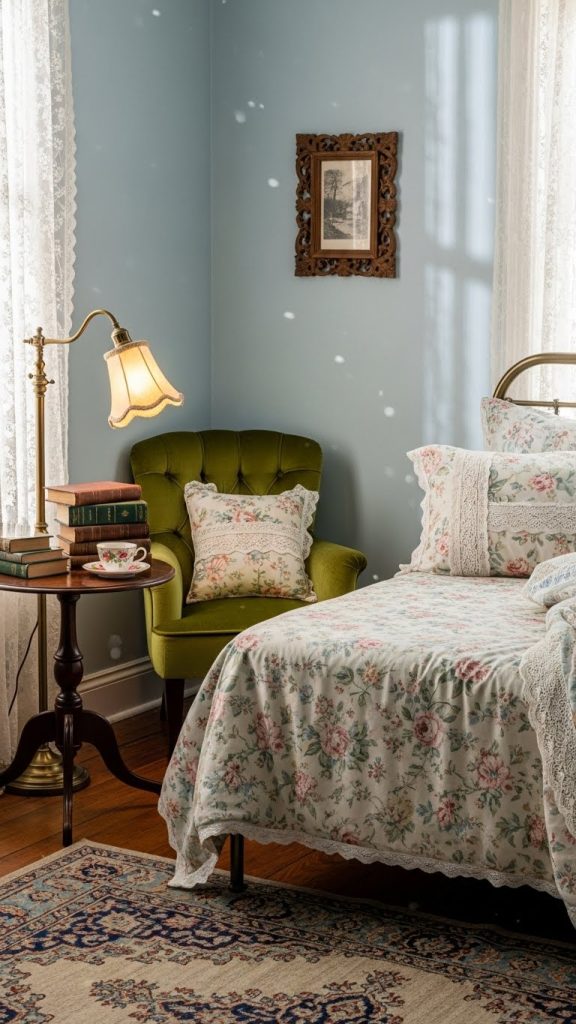
10. Layered Bedding and Textiles
Vintage bedrooms often feature layered bedding with quilts, embroidered covers, lace sheets, and decorative pillows. Mixing textures and patterns creates a lived-in, timeless feel.
Preparation: Choose a base bedding set and gradually layer with throws, blankets, and pillows. Wash and iron linens to maintain a fresh look. Coordinate colors with wallpaper and accessories.
Materials: Cotton, linen, lace, quilts, embroidered or crocheted blankets, and pillow inserts.
Tip: Balance patterns by pairing bold floral quilts with solid-colored sheets. Mix textures such as velvet, cotton, and lace to create visual and tactile interest.