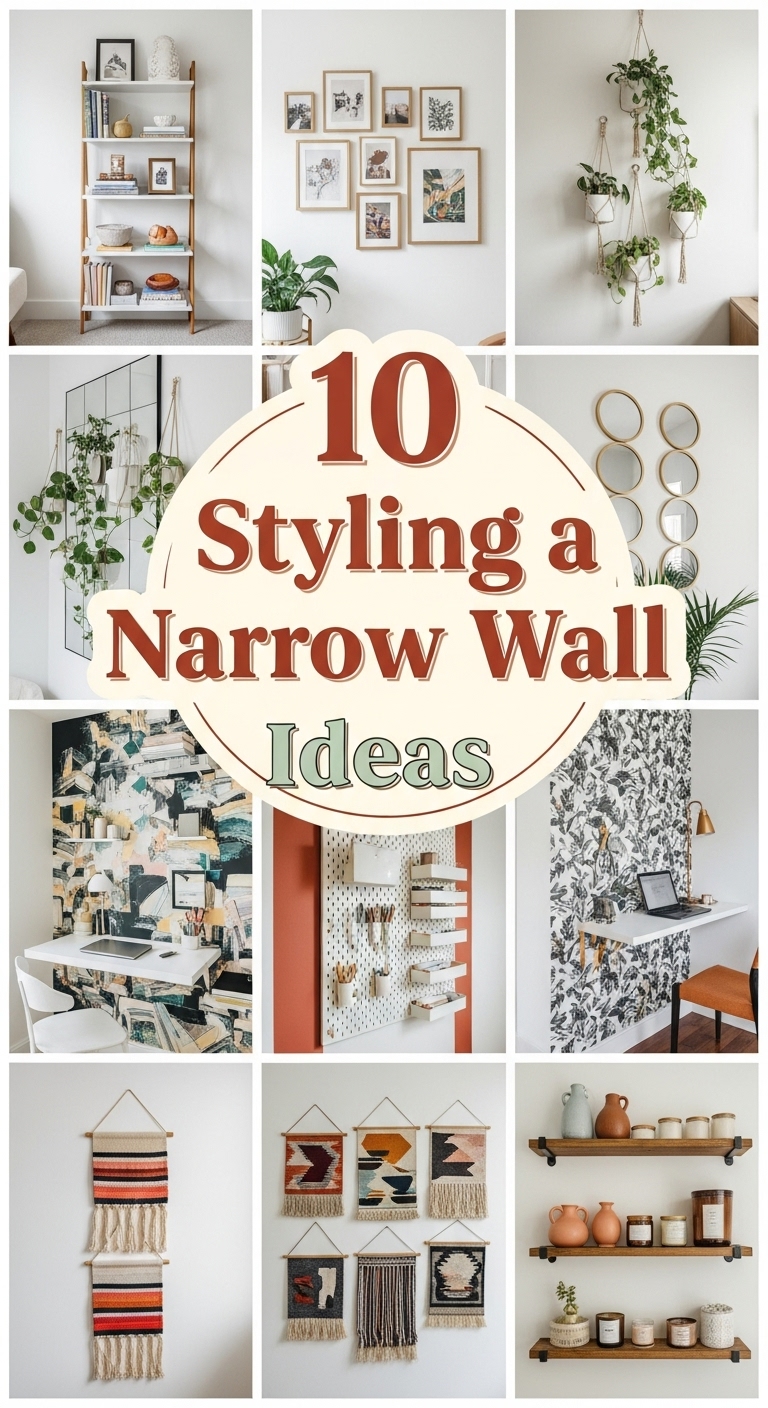
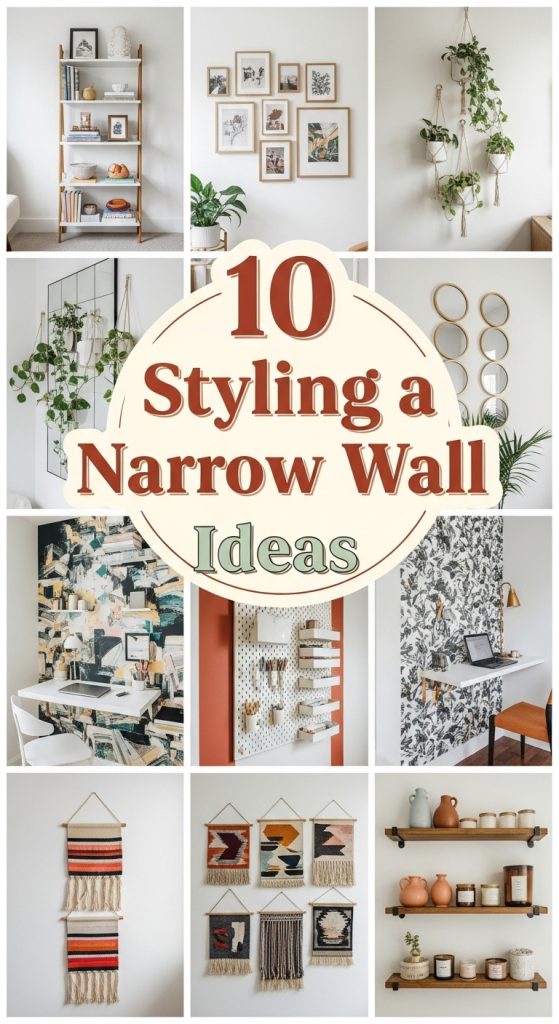
Narrow walls often pose a challenge in interior design because their limited width restricts the options for furniture and decorative items. Despite this, a narrow wall can become a striking feature of a room when styled thoughtfully. Styling a narrow wall requires creativity, careful material selection, and practical planning. The goal is to make the wall visually appealing without making the space feel cramped or cluttered. Whether you want to add personality, create a focal point, or enhance functionality, there are numerous ways to transform a narrow wall. From using floating shelves to incorporating mirrors, art, or compact furniture, every element can contribute to the overall aesthetic. Preparation is key, including measuring the wall, choosing suitable materials, and deciding on a theme or color palette. This blog post presents ten practical and stylish ideas for decorating narrow walls. Each idea includes detailed steps, material suggestions, and styling tips. By the end of this guide, you will have multiple strategies to turn even the smallest wall into an eye-catching part of your home.
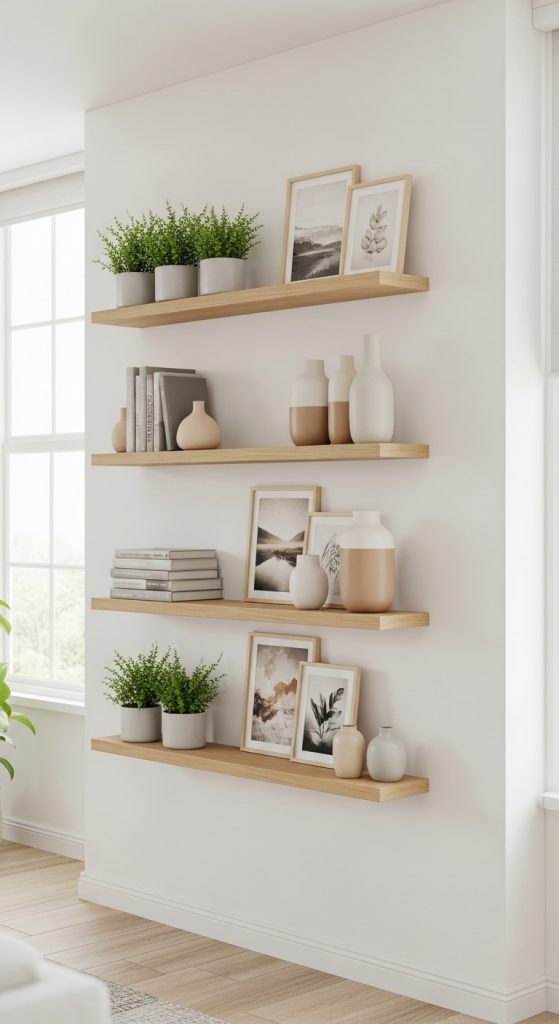
1. Floating Shelves Display
Floating shelves are a versatile solution for narrow walls. They offer storage and display options without taking up floor space, making the wall functional and attractive. Before installation, measure your wall carefully to determine the number and size of shelves that will fit proportionally. Choose materials like solid wood, MDF, or metal brackets depending on the style of your room. Light-colored wood works well for minimalistic decor, while darker tones can create a rich and elegant look. Start by deciding the spacing between shelves, generally 12–18 inches apart for a balanced appearance. Use a level to ensure shelves are straight and secure them with sturdy wall anchors to handle weight. Styling the shelves is equally important. Mix decorative items such as small plants, framed photos, books, or decorative vases. Avoid overcrowding to maintain a clean look. Floating shelves allow you to showcase personal items while keeping the narrow wall uncluttered, making it both practical and stylish.
2. Vertical Gallery Wall
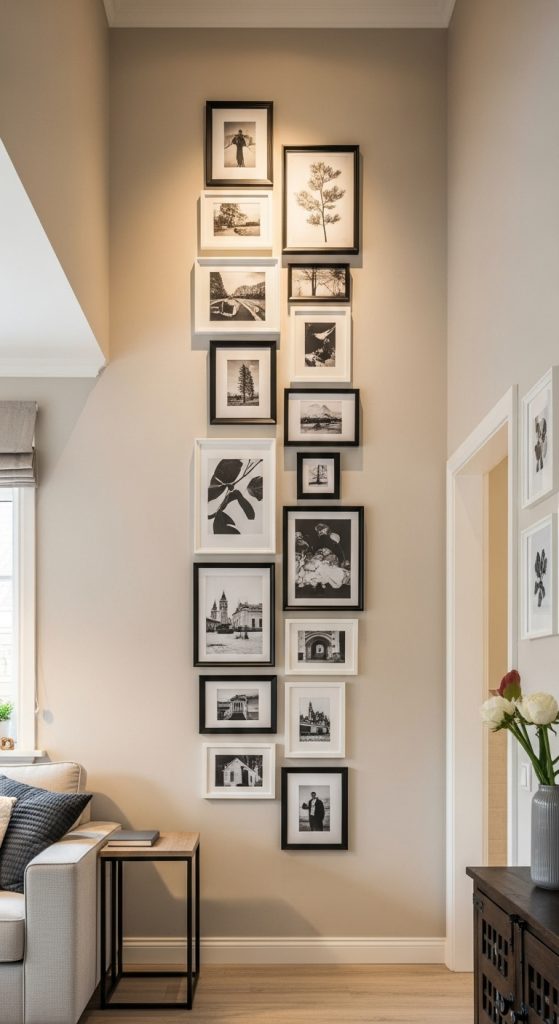
A vertical gallery wall is perfect for narrow spaces because it draws the eye upward, creating the illusion of height. Start by selecting artwork or photographs that reflect your personal style. Frames can be uniform for a clean look or mixed for an eclectic feel. Measure the wall height and plan the arrangement before hanging. Use painter’s tape to outline the layout on the wall, which helps visualize spacing and alignment. Materials needed include picture hooks, nails, or adhesive strips for lighter frames. Consider using vertical frames or elongated designs to enhance the narrowness of the wall. Maintain consistent spacing between frames, usually 2–4 inches apart. You can mix in small wall sculptures or shelves to add texture and depth. This approach not only makes the wall visually interesting but also creates a sense of sophistication. Changing artwork seasonally or occasionally refreshing the gallery keeps the wall dynamic and engaging.
3. Tall Mirrors
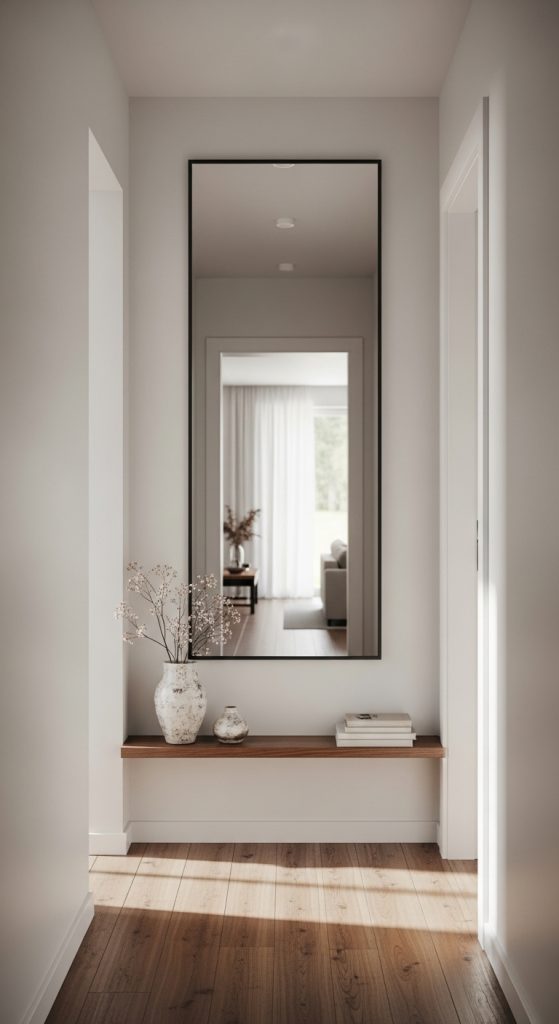
Tall mirrors are an excellent solution for narrow walls because they make small spaces feel larger and brighter. A full-length mirror or a series of vertically arranged mirrors can enhance natural light and give the illusion of width. Begin by measuring the wall to ensure the mirror fits proportionally. Mirrors with thin metal or wooden frames work best for narrow walls, as bulky frames may overpower the space. Wall mounting hardware should be sturdy, especially for larger mirrors, to prevent accidents. For styling, you can add a small console table or a narrow shelf beneath the mirror to create a functional vignette. Mirrors can also be used in entryways, hallways, or living rooms to reflect light from windows and brighten dark areas. To enhance the visual appeal, consider mirrors with unique shapes such as arched, oval, or geometric designs. Tall mirrors not only elevate the style but also add a practical element to any narrow wall.

4. Slim Console Table
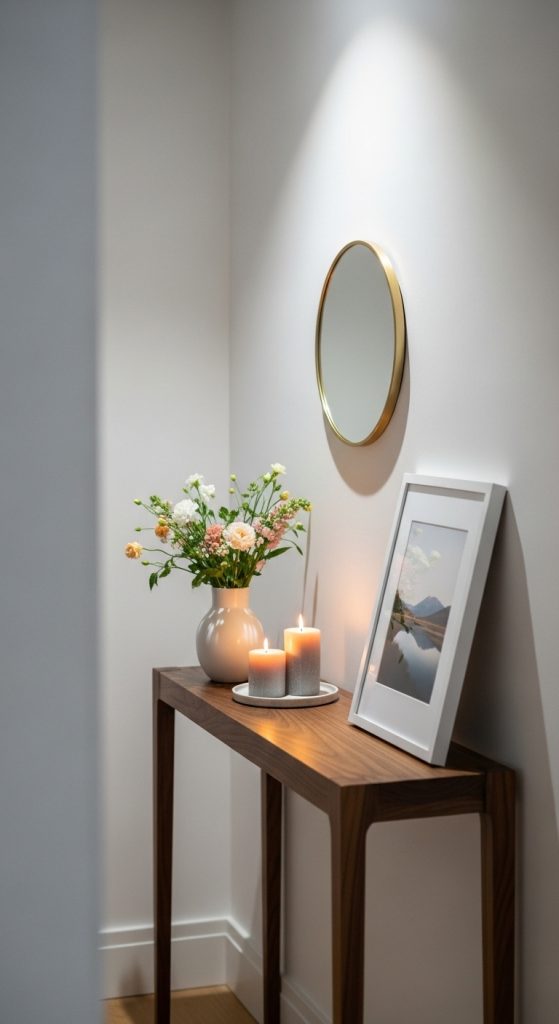
A slim console table provides both function and style on a narrow wall without overwhelming the space. Choose a table that is proportionate to the wall’s width and height. Materials like solid wood, metal, or a combination of both are popular for durability and style. Begin by measuring the wall to ensure the table fits comfortably while leaving space to walk. Slim tables can serve multiple purposes, such as holding decorative items, lamps, or small storage baskets. For styling, place a small tray, a vase of fresh flowers, or a few books on the surface. You can also hang a mirror or artwork above the table to create a cohesive design. If the table has shelves or drawers, use them to keep everyday items organized. Slim console tables work well in hallways, living rooms, or entryways, providing a practical yet stylish addition to narrow walls. They create a focal point while keeping the space open and airy.
5. Vertical Planter Wall
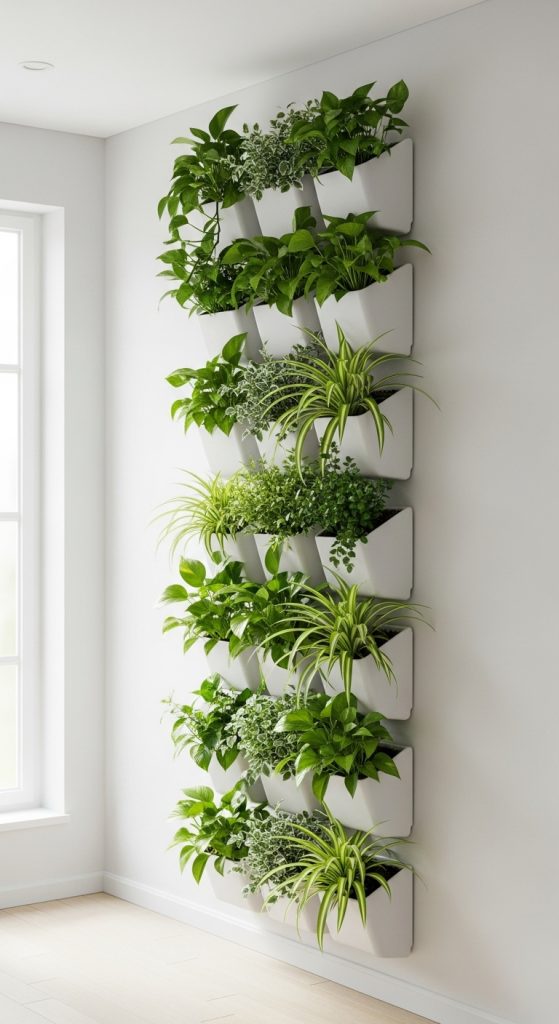
Adding greenery to a narrow wall can dramatically enhance a room’s atmosphere. A vertical planter wall allows you to display plants without occupying floor space. Materials needed include wall-mounted planters, hooks, or vertical garden systems. Choose plants that thrive indoors, such as pothos, ferns, or succulents. Start by mapping out the layout of your planters, ensuring even spacing for a balanced look. Mount the planters securely using screws and wall anchors. Vertical planter walls are particularly effective in living rooms, kitchens, or entryways, adding color and life to otherwise unused walls. Styling tips include mixing plants with different textures and heights to create visual interest. You can also use decorative pots to complement your room’s color palette. Regular care, such as watering and occasional trimming, ensures the greenery remains healthy and vibrant. A vertical planter wall transforms a narrow surface into a natural and refreshing design feature.
6. Wall-Mounted Bookshelves
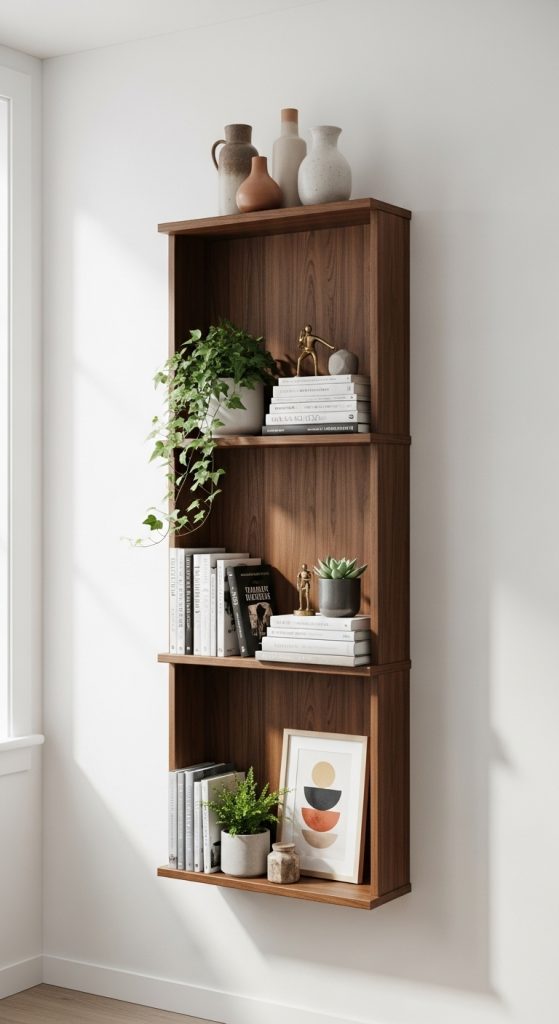
Wall-mounted bookshelves are ideal for narrow walls, turning them into functional storage and display areas. Unlike traditional floor-standing bookshelves, wall-mounted versions save floor space and can be tailored to fit the wall’s dimensions. Start by measuring the width and height of the wall to determine the number and size of shelves. Materials include solid wood, MDF, or metal brackets with wooden planks. Ensure shelves are securely mounted to hold the weight of books. For styling, organize books vertically and horizontally, mixing in decorative items like small plants, sculptures, or framed photos. Wall-mounted bookshelves can also be painted or stained to match your room’s color scheme. This approach creates a vertical focal point and encourages organization, making the narrow wall both practical and visually appealing. It is especially suitable for home offices, living rooms, or bedrooms where storage and decoration need to coexist.
7. Accent Wall Paint
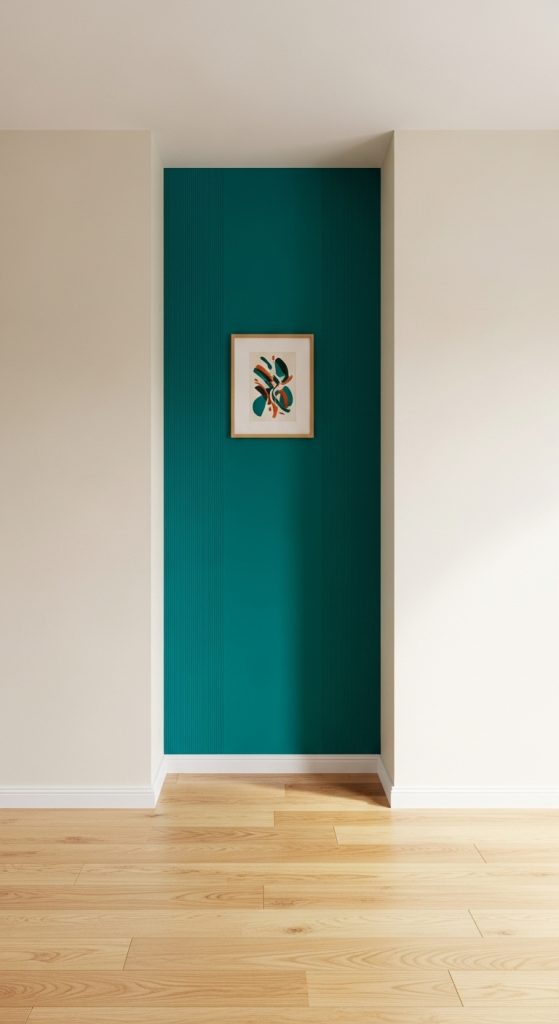
Transforming a narrow wall into an accent wall with paint is one of the simplest ways to create impact. Select a color that contrasts with the surrounding walls or complements your existing décor. Bold, dark colors can make the wall a strong focal point, while lighter shades can brighten a tight space. Preparation involves cleaning the wall, filling any holes, and applying a primer if needed. Use painter’s tape to protect adjacent walls and create clean edges. Painting in vertical stripes can emphasize height, while horizontal stripes can create a sense of width. This approach requires minimal materials: paint, brushes, rollers, and tape. Accent wall painting is cost-effective yet highly effective in transforming narrow walls. You can combine it with other elements like artwork or mirrors to enhance the overall design. Regular touch-ups keep the wall looking fresh and stylish.

8. Vertical Lighting Fixtures
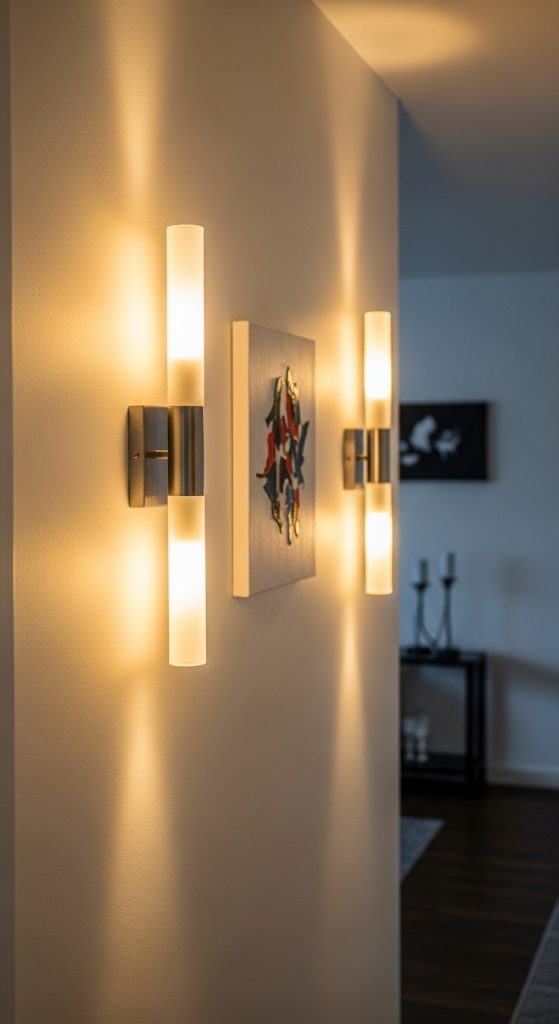
Lighting can dramatically enhance a narrow wall’s appearance. Vertical wall sconces or strip lighting create an elegant ambiance while drawing attention to the wall’s height. Begin by selecting lighting fixtures that complement the room’s style, such as modern metal sconces or classic lantern-style lights. Measure the wall height and position the fixtures at eye level for optimal effect. Ensure proper installation with suitable anchors and follow electrical safety guidelines. Vertical lighting works well in hallways, entryways, or living rooms, highlighting artwork or architectural features. For styling, combine lights with mirrors or artwork to create a cohesive look. LED strips can also be installed vertically to provide a soft glow and modern touch. Vertical lighting not only improves visibility but also adds depth and sophistication to narrow walls, enhancing the overall interior design.
9. Narrow Wall Cabinets
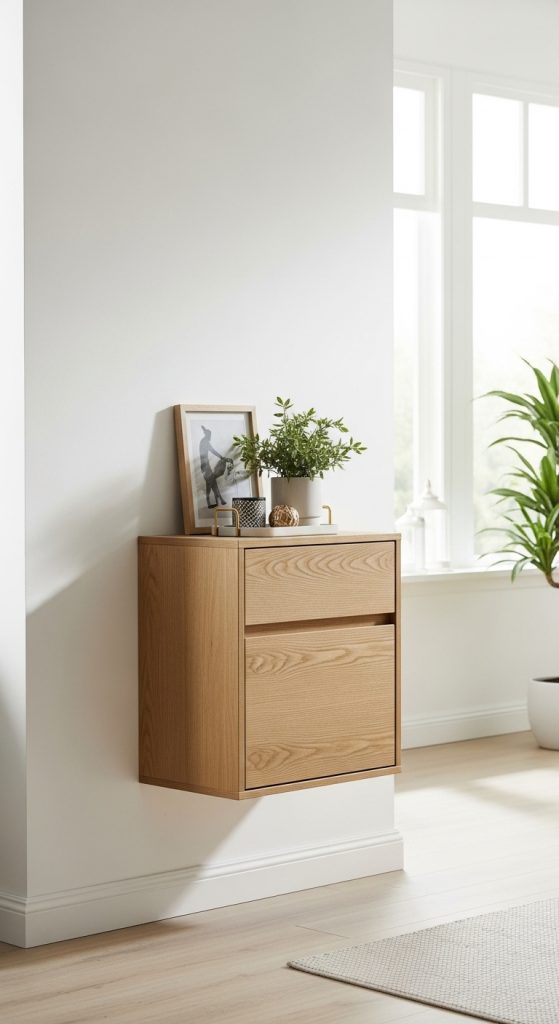
Narrow wall cabinets provide hidden storage while maintaining a sleek appearance. Ideal for hallways, kitchens, or bathrooms, these cabinets can store essentials without taking up floor space. Choose materials like wood, MDF, or laminate based on durability and style preferences. Start by measuring the wall to ensure the cabinet fits snugly. Cabinets can be wall-mounted or floor-supported depending on design. For styling, keep cabinet surfaces minimalistic with a small vase, decorative tray, or framed artwork. Inside, use organizers or baskets to maintain order. Painted or stained cabinets can also enhance the room’s color scheme. Narrow wall cabinets combine functionality and aesthetics, providing storage solutions while keeping the wall visually appealing. Regular maintenance ensures the cabinets remain clean, organized, and stylish over time.
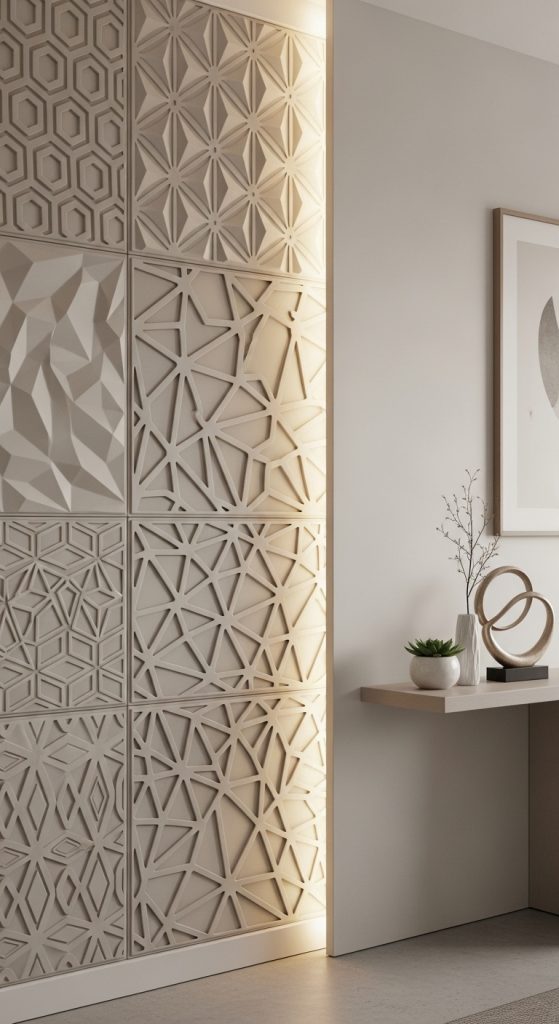
10. Wall Decals or Panels
Wall decals or decorative panels are an easy and effective way to style a narrow wall. Decals are available in various patterns, textures, and colors, allowing for creative expression without permanent changes. Panels, such as wood, MDF, or PVC, add dimension and texture. Begin by cleaning the wall and planning the placement of decals or panels. Measure and mark guidelines for precise alignment. Peel-and-stick decals are ideal for temporary solutions, while panels may require screws or adhesive for installation. Styling tips include combining panels with artwork or lighting to create depth. This method is budget-friendly, versatile, and allows for seasonal or thematic updates. Wall decals or panels turn narrow walls into statement features, adding personality and style without overcrowding the space.