

Tin ceilings have been a design staple since the late 19th century, admired for their intricate patterns, durability, and timeless charm. Originally popular as an affordable alternative to European plaster ceilings, tin panels have found renewed appreciation in modern homes for their versatility and vintage appeal. Whether you prefer a classic Victorian touch or a sleek contemporary look, tin ceilings can transform a space with elegance and texture.
This blog explores ten creative ways to use tin ceilings in your home, along with preparation tips, materials, and design insights to help you incorporate this timeless element into your decor.

1. Classic Kitchen Ceiling Accent
A tin ceiling in the kitchen instantly adds personality and charm. The reflective metal surface brightens the room by bouncing light around, making the kitchen feel more spacious and lively. Tin panels are available in many patterns such as floral, geometric, or lattice designs, allowing you to match the look to your overall kitchen theme.
Preparation and Materials:
Before installation, measure the kitchen ceiling area accurately. Choose tin tiles that are either nail-up or drop-in, depending on your ceiling structure. Ensure the surface is clean and even before applying adhesive or nails. Consider finishing the tiles with a clear sealant or colored paint to prevent tarnish. For a traditional look, keep the tin in its natural silver tone; for a modern kitchen, paint it white or matte black. The durability of tin makes it resistant to heat and moisture, ideal for a cooking space.


2. Elegant Dining Room Statement Ceiling
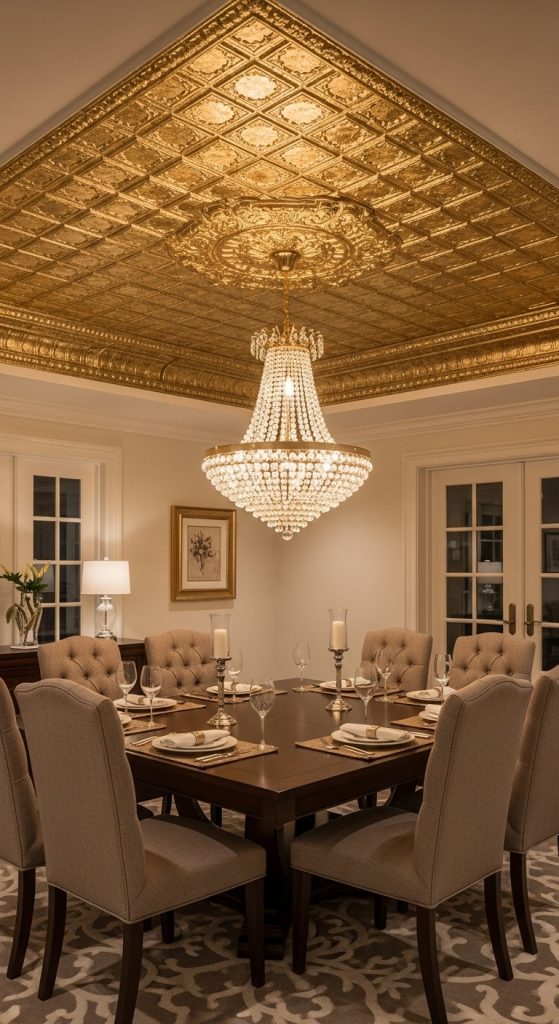
Transform your dining area into a sophisticated space by installing a tin ceiling that draws the eye upward. A patterned tin ceiling can serve as a statement feature that complements chandeliers, pendant lights, or wall art. This combination adds drama and elegance, turning an ordinary dining room into a refined setting for family gatherings or dinner parties.
Preparation and Materials:
Start with a detailed ceiling plan to ensure symmetry in the tile layout. Choose panels with ornate designs like Victorian scrolls or Art Deco motifs for a touch of grandeur. Tin tiles can be left metallic or painted to coordinate with the dining room’s color palette. Install crown molding around the edges for a finished look. Proper lighting placement is essential; position a chandelier or multiple pendant lights to highlight the reflective ceiling. This idea not only enhances the aesthetic but also adds texture and dimension to the dining space.
3. Tin Ceiling in the Living Room
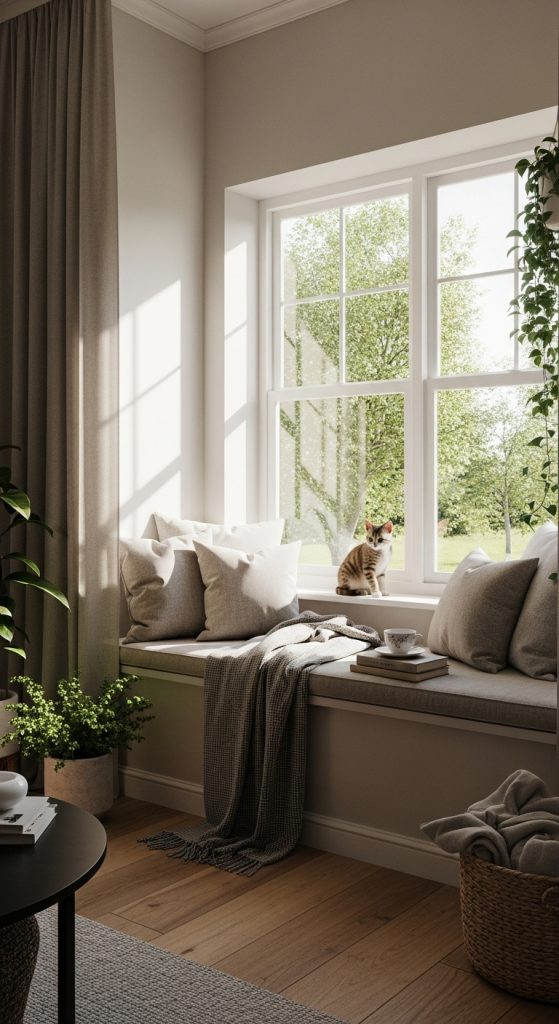
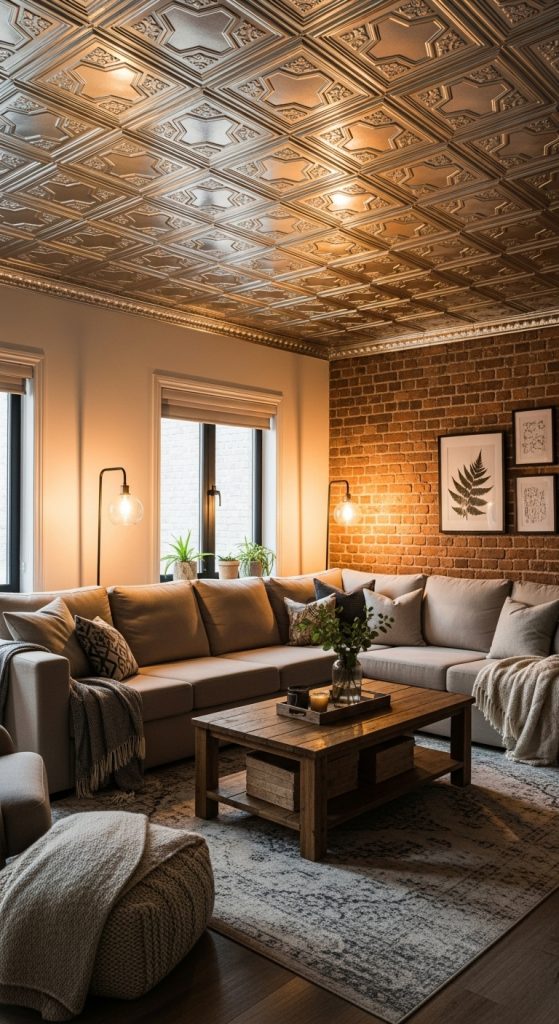
Adding tin panels to your living room ceiling can introduce depth and texture without overwhelming the space. Whether you have a traditional or modern design scheme, tin ceilings bring visual interest and vintage charm. They pair beautifully with wood, brick, or stone accents.
Preparation and Materials:
Choose a tin ceiling design that complements your furniture and wall color. For classic interiors, embossed patterns in silver or bronze work well. For a minimalist or industrial style, matte black or pewter finishes provide a sleek look. Use adhesive-backed tiles for easy installation on smooth surfaces, or nail-up panels for traditional application. Combine the tin ceiling with recessed lighting or ceiling fans to complete the look. Regular dusting and occasional polishing will maintain its sheen and ensure longevity.
4. Bedroom Ceiling for a Romantic Touch
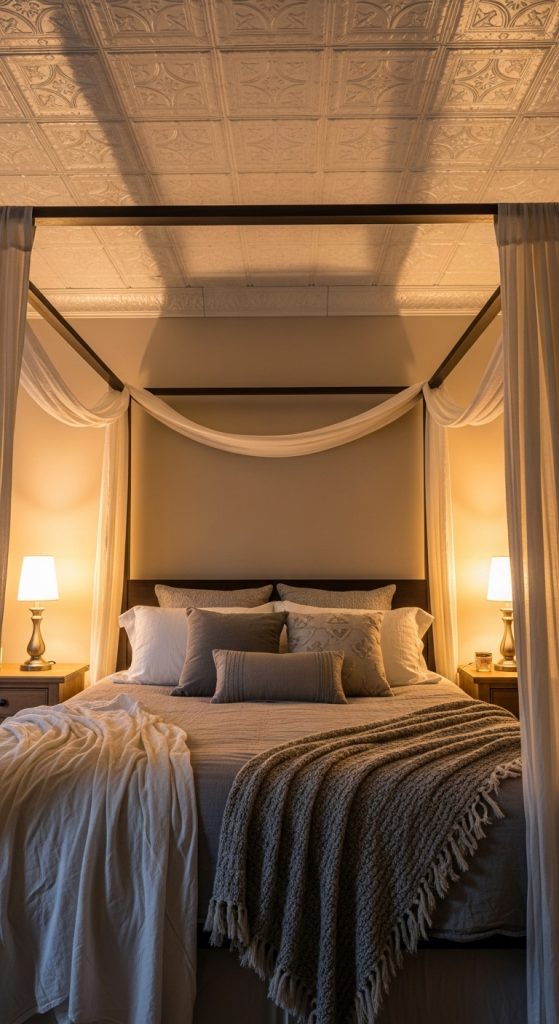
Tin ceilings in the bedroom create a cozy and elegant atmosphere. The reflective quality of tin softens the room’s lighting, while intricate patterns add a sense of luxury. This design feature can make even a small bedroom feel more intimate and stylish.
Preparation and Materials:
Select a delicate pattern with a soft metallic tone, such as antique white, brushed gold, or silver leaf. Begin by prepping the surface to ensure even application. A primer can help improve tile adhesion. Tin panels can also be installed on a feature portion of the ceiling, like above the bed, instead of covering the entire space. Pair the ceiling with layered fabrics, soft lighting, and neutral tones to enhance the romantic ambiance. Tin ceilings in bedrooms are both durable and low-maintenance, requiring only occasional cleaning.
5. Bathroom Ceiling for Moisture Resistance
Bathrooms benefit greatly from tin ceilings because the material is naturally resistant to moisture and mildew. The reflective surface also helps brighten the room, especially in small or windowless bathrooms. Tin tiles offer a blend of practicality and aesthetics, turning an everyday space into a charming retreat.
Preparation and Materials:
Before installation, ensure the ceiling is dry and free from existing mold or damage. Opt for pre-finished or powder-coated tin tiles that resist humidity. Use waterproof adhesive or screws for secure placement. For color coordination, paint the tin panels in light shades such as white or cream to create a clean, spa-like feel. Pair with classic elements like marble countertops or vintage mirrors for balance. Regular wiping with a damp cloth will maintain the tin’s luster without corrosion.


6. Tin Ceiling Backsplash or Accent Wall
Tin panels are not limited to ceilings. They make striking backsplashes or accent walls in kitchens, bathrooms, or hallways. The embossed texture adds character and reflects light, offering a dynamic alternative to traditional tile or wallpaper.
Preparation and Materials:
Choose smaller tin panels for easy customization. Measure and cut them to fit the desired wall area, using tin snips or a cutting tool. Apply construction adhesive and secure with nails if needed. Seal with a clear coat for protection against splashes or stains. Silver, bronze, or copper finishes work beautifully depending on your home’s color palette. For a vintage effect, distress the metal slightly using a light sanding technique. This design idea gives a space both visual appeal and durability.

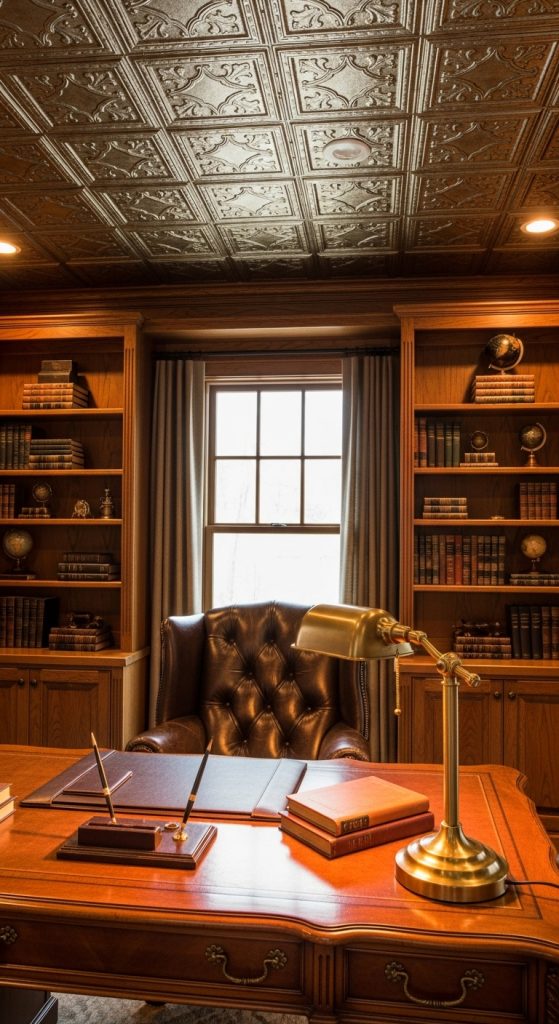
7. Home Office or Study Ceiling
A tin ceiling can add sophistication to a home office or study. The metallic texture provides visual stimulation and depth, while the structured design helps define the workspace. It brings a professional yet comfortable tone to the environment.
Preparation and Materials:
Select tin tiles with clean geometric patterns or subtle embossed lines for a refined look. Choose finishes like antique gold or brushed nickel to enhance lighting reflection. Before installing, plan the lighting layout carefully; recessed or pendant lights can highlight the ceiling without glare. Use high-quality adhesive or secure the panels to furring strips for even support. Combine the tin ceiling with wood furniture and leather chairs for a balanced and timeless design. This setup fosters focus and creativity while maintaining elegance.

8. Entryway or Hallway Ceiling
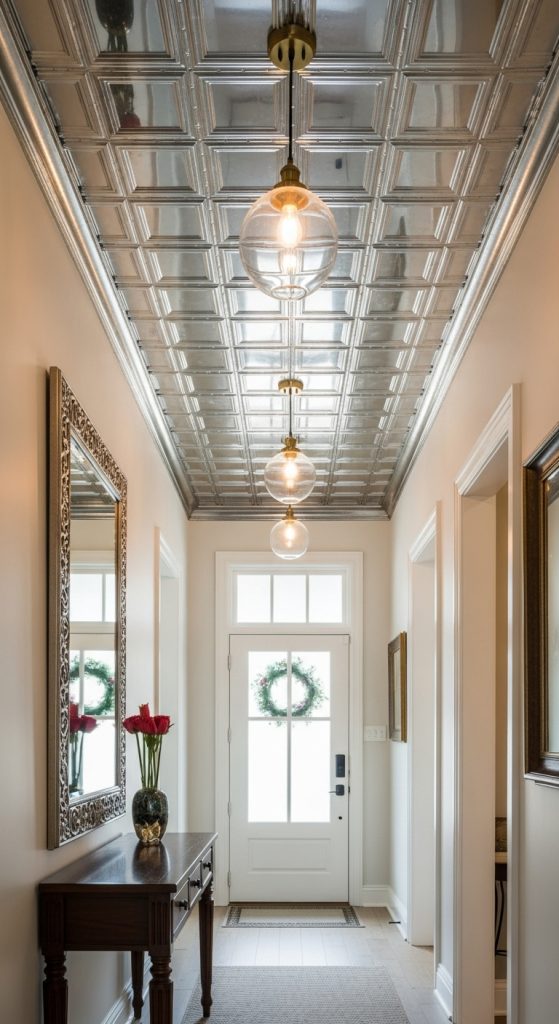
Entryways and hallways often lack natural light, making them ideal candidates for tin ceilings. The reflective surface of tin panels helps bounce light and make narrow spaces feel more open. It also creates a memorable first impression for visitors.
Preparation and Materials:
Measure the hallway or entry ceiling and choose small-scale tin tiles for easier installation in tight areas. Consider bright finishes like polished silver or painted white to enhance brightness. Complement the ceiling with wall sconces or pendant lights that highlight the metallic texture. Decorative moldings along the ceiling edges can add definition and a finished look. Ensure the panels are sealed properly to prevent rust, especially in entryways exposed to outdoor humidity. Tin ceilings here elevate the look from simple to sophisticated with minimal effort.
9. Tin Ceiling for Basement Transformation
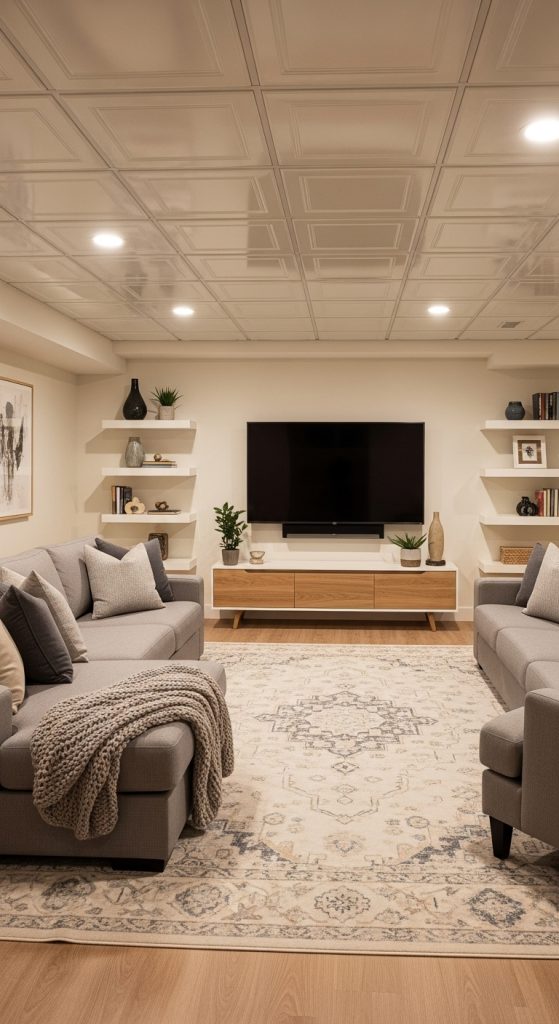
Basements can often feel dark and unfinished, but adding a tin ceiling can completely transform the space. The reflective quality of tin helps distribute light evenly, while its durable structure conceals imperfections and pipes on the ceiling.
Preparation and Materials:
Start by cleaning and leveling the existing basement ceiling. Drop-in tin tiles are perfect for suspended grid systems commonly found in basements. Choose light-colored finishes such as white, silver, or pewter to brighten the room. Pair with recessed LED lighting to enhance the reflective effect. Tin ceilings are moisture-resistant, making them ideal for below-ground spaces prone to humidity. Combine with soft furnishings, area rugs, and warm-toned decor to make the basement feel inviting and functional for entertainment or relaxation.

10. Creative Mix of Tin and Wood Ceilings
Combining tin with wood elements creates a balanced aesthetic that feels both rustic and elegant. Tin panels framed with wooden beams or moldings add architectural interest and a cozy ambiance. This approach suits farmhouse, vintage, or industrial-style homes.
Preparation and Materials:
Plan your ceiling design by mixing wood planks or beams with tin inserts. Use wood in natural finishes like oak or walnut for contrast against metallic tones such as antique bronze or silver. Secure tin panels within framed wooden grids for a polished appearance. Apply wood sealant to prevent warping and metal sealant to protect the tin from oxidation. Lighting fixtures like lanterns or recessed lights can highlight the mixed materials beautifully. This blend of textures enhances warmth and sophistication, making the ceiling the focal point of the room.
