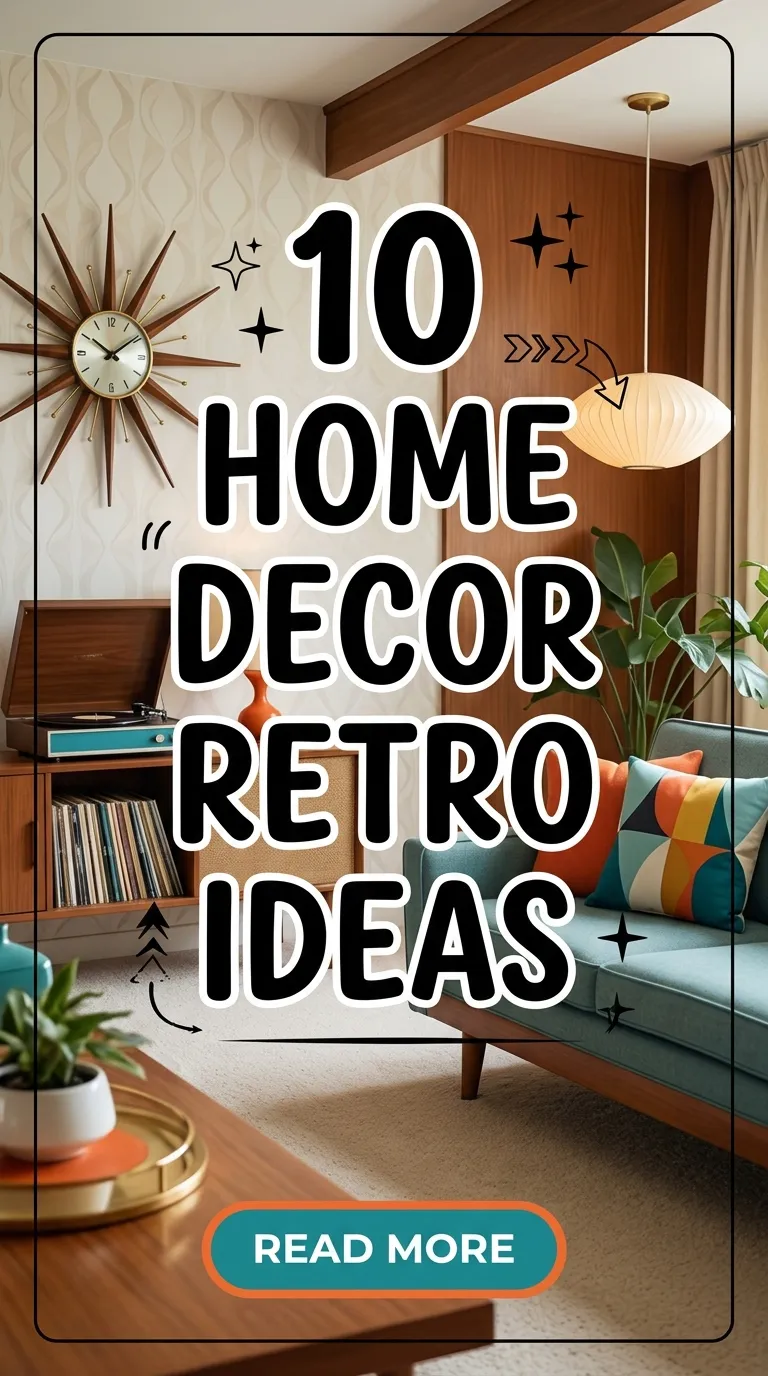
Retro home decor is about bringing back the charm, color, and personality of past decades into modern living spaces. From the bold patterns of the 1970s to the sleek lines of the 1950s and the playful tones of the 1960s, retro design celebrates nostalgia while still feeling fresh and creative. Many people love retro style because it adds warmth and character to a home. It is not about copying the past exactly, but about mixing vintage inspiration with today’s comfort and practicality.

Creating a retro-inspired home does not require a complete renovation. With the right preparation, materials, and planning, you can transform any room step by step. Retro decor often includes statement furniture, patterned textiles, warm wood tones, colorful walls, and unique decorative pieces. The key is balance. Too many strong elements can make a space feel crowded, while a few carefully chosen items can create a beautiful retro atmosphere.
In this blog post, you will find 10 detailed retro home decor ideas. Each idea includes preparation tips, materials to use, and practical advice. The language is simple and easy to follow so that anyone can try these ideas at home.
- Mid-Century Modern Furniture Style
Mid-century modern furniture is one of the most popular retro styles. It comes from the 1950s and 1960s and focuses on clean lines, simple shapes, and natural materials. To prepare for this style, first study your room size and layout. Measure the space so that the furniture fits comfortably without overcrowding the area.
The main materials used in mid-century furniture are solid wood, especially teak, walnut, and oak. Look for furniture with slim legs, often angled outward. Sofas and chairs usually have low backs and smooth shapes. Leather and textured fabric in neutral or earthy tones work well.
Before buying new furniture, check local vintage stores or online marketplaces for original pieces. If you choose new items, make sure they have the same design features. Add a wooden coffee table with tapered legs and a simple bookshelf.
Keep the walls light in color, such as white, beige, or soft gray. This allows the furniture to stand out. Finish the look with a simple floor lamp with a curved metal stand. The result is a clean, warm, and timeless retro space.

- Bold Retro Wallpaper Patterns
Wallpaper is a powerful way to bring retro energy into a room. Many retro designs use bold patterns like geometric shapes, floral prints, or abstract swirls. These patterns were very popular in the 1960s and 1970s.
Before applying wallpaper, prepare the walls carefully. Clean the surface and fill any cracks or holes. Sand rough areas to make the wall smooth. Measure the wall accurately so you know how many rolls of wallpaper you need.
Choose wallpaper with colors like mustard yellow, burnt orange, olive green, or deep brown. These shades are common in retro design. You can cover one accent wall to avoid making the room too busy.
Use proper wallpaper adhesive and tools such as a smoothing brush and level. Apply the wallpaper slowly and carefully to avoid air bubbles. If you are unsure, consider hiring a professional.
To balance bold wallpaper, keep furniture and decor simple. A plain sofa or wooden cabinet will complement the strong pattern. This idea instantly changes the mood of the room and gives it a strong retro personality.

- Vintage Lighting Fixtures
Lighting plays an important role in retro home decor. Vintage lighting fixtures such as globe lamps, arc floor lamps, and brass chandeliers add character and warmth.
Start by checking your room’s lighting needs. Decide where you need task lighting, such as near a reading chair, and where you want ambient lighting. Choose warm light bulbs instead of bright white ones, as they create a cozy atmosphere.
Materials for retro lighting often include brass, chrome, colored glass, and metal. Look for round or dome-shaped designs. A hanging pendant lamp with a colored shade can become the focal point of a dining area.
Before installing any new fixture, make sure the electrical wiring is safe. Turn off the power before working with wires. If you are not experienced, ask an electrician for help.
Place a statement lamp in the living room corner or above a dining table. Combine different light sources, such as table lamps and wall lights, for a layered effect. Vintage lighting can completely change the feeling of a room and highlight other retro elements.

- Retro Color Palette Design
Color is one of the strongest features of retro decor. Different decades had different popular colors. The 1950s often used pastel shades like mint green and soft pink. The 1970s preferred bold colors like orange, brown, and yellow.
Start by selecting one main color and two supporting colors. Use a color palette to guide your choices for walls, furniture, and accessories. Test paint samples on your wall before committing to a full paint job.
Prepare the walls by cleaning and priming them. Use high-quality paint for a smooth finish. If you want a dramatic effect, paint one wall in a bold shade and keep the others neutral.
You can also add retro colors through cushions, rugs, curtains, and artwork. Materials such as cotton, velvet, and woven fabrics work well. Combine colors carefully so that they complement each other.
A well-chosen retro color palette can make your home feel lively and welcoming. It brings personality without requiring major structural changes.

- Shag Rugs and Textured Carpets
Shag rugs were very popular in the 1970s. They are thick, soft, and comfortable underfoot. Adding a shag rug is an easy way to create a retro vibe.
Before buying a rug, measure the floor area. Decide whether you want the rug to cover the entire room or just a part of it, such as under the coffee table. Choose colors that match your overall decor.
Common materials for shag rugs include wool, synthetic fibers, and cotton blends. Wool is durable and natural, while synthetic options are often more affordable and easier to clean.
Place the rug in a central position. Make sure it is flat and secure to prevent slipping. Use a rug pad underneath for safety.
To maintain the rug, vacuum it regularly and clean spills immediately. A shag rug adds warmth and texture to the room. It pairs well with low furniture and bold wall colors.

- Retro Kitchen Appliances and Accessories
A retro-style kitchen can be both functional and stylish. Many brands now produce modern appliances with a vintage look. These include refrigerators, toasters, and mixers in pastel or bright colors.
Start by choosing a main color theme for the kitchen. Prepare cabinets by cleaning and repainting them if needed. Consider installing checkered black and white floor tiles for a classic retro feel.
Materials such as enamel, chrome, and stainless steel are common in retro kitchens. Add open shelves to display colorful dishes and glass jars.
You can also use vintage-style clocks, bar stools with chrome legs, and patterned curtains. Make sure all appliances are energy-efficient and safe.
A retro kitchen combines nostalgia with modern convenience. It becomes a cheerful and inviting space for cooking and gathering.

- Statement Retro Artwork and Posters
Artwork is a simple way to introduce retro style. Look for posters inspired by the 1960s and 1970s, including abstract designs and bold typography.
Before hanging artwork, plan the layout. Measure the wall and mark where each frame will go. Choose frames made of wood or metal to match your decor.
Materials include printed posters, canvas art, and framed photographs. You can find reproductions of vintage advertisements or music posters.
Arrange the artwork in a gallery wall style or use one large piece as a focal point. Keep the surrounding decor simple so the artwork stands out.
Properly hung artwork adds personality and color. It reflects your taste while enhancing the retro theme.

- Retro Inspired Bathroom Design
Bathrooms can also reflect retro charm. Think of pastel tiles, rounded mirrors, and classic fixtures.
Prepare by checking plumbing and wall condition. If you plan to change tiles, remove old ones carefully and clean the surface. Choose ceramic tiles in soft pink, mint, or light blue.
Materials such as porcelain sinks, chrome faucets, and patterned shower curtains are ideal. Add a round mirror with a simple frame.
Use vintage-style storage such as small cabinets or open shelves. Keep the space organized to avoid clutter.
A retro bathroom feels fresh and playful while still being practical for everyday use.

- Wood Paneling and Warm Textures
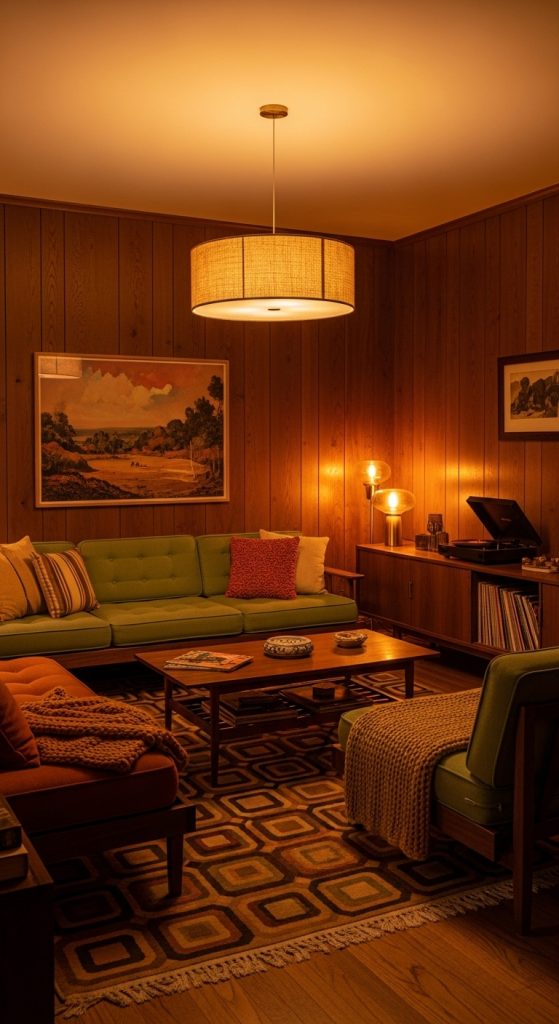
Wood paneling was very popular in the 1970s. It creates a warm and cozy atmosphere.
Before installing paneling, measure the wall area. Choose high-quality wood panels or modern alternatives that are easy to maintain. Prepare the wall by cleaning and ensuring it is dry.
Materials include natural wood, plywood, or laminate panels. Secure them properly with nails or adhesive. Finish with a protective coating.
Combine wood paneling with soft lighting and simple furniture. Add cushions and throws in warm tones.
This idea works well in living rooms or home offices. It creates a comfortable and inviting environment.
- Retro Decorative Accessories and Details
Small details can make a big difference. Retro accessories include rotary-style phones, vintage clocks, ceramic vases, and patterned cushions.
Start by choosing a theme so the accessories match your overall design. Avoid overcrowding the room. Select a few statement pieces instead of many small items.
Materials vary from ceramic and glass to metal and fabric. Place items on shelves, coffee tables, or sideboards.
Mix old and new pieces for a balanced look. Keep surfaces clean and organized.
Retro decorative accessories allow you to express creativity without large investments. They complete the look and tie all elements together, making your home feel stylish and full of character.






Leave a Reply