
A cozy bedroom is more than just a place to sleep. It is a personal sanctuary where comfort meets style, creating an environment that promotes relaxation, rest, and rejuvenation. Achieving the perfect cozy bedroom requires attention to textures, lighting, color schemes, and personal touches. In this guide, we will explore ten effective ways to transform your bedroom into a warm, inviting retreat. Each idea includes preparation materials, implementation details, and practical tips to enhance your space.

1. Layered Bedding for Ultimate Comfort
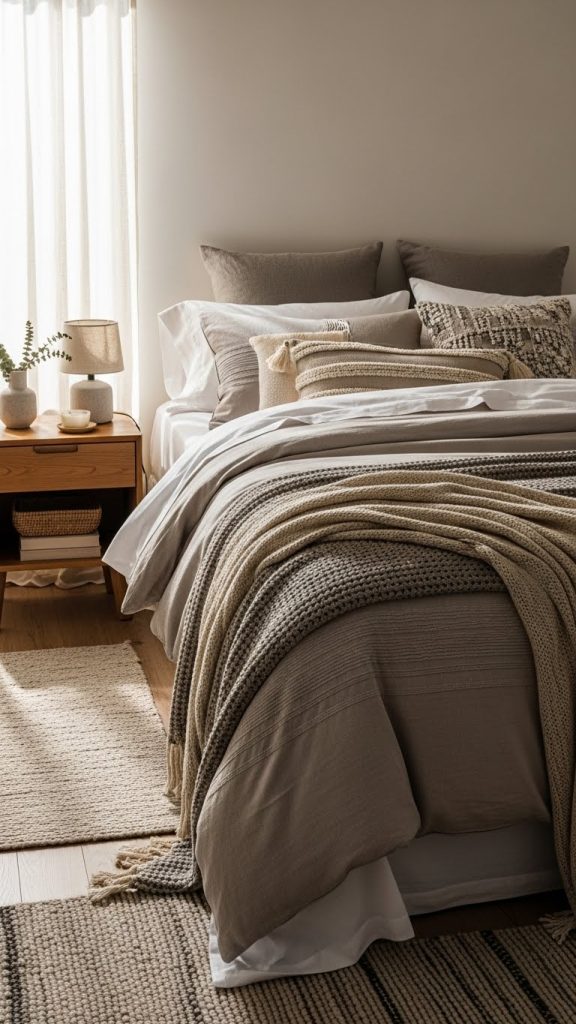
Layered bedding is one of the simplest ways to make a bedroom feel cozy and inviting. Start with a quality mattress protector to ensure comfort and durability. Add fitted sheets, soft flat sheets, and a high-quality duvet. Incorporate multiple throw blankets and a variety of pillows in different sizes and textures, such as cotton, linen, or velvet.
Preparation materials include mattress protector, high-thread-count sheets, comforter, throw blankets, and decorative pillows. The layering technique allows flexibility: lighter layers can be used in warmer months, while thicker blankets provide warmth in colder seasons. Using complementary colors and textures enhances the visual appeal while promoting a sense of comfort.
The key is to mix textures without overwhelming the space. Combining soft, plush fabrics with smoother cotton or linen creates a tactile experience that enhances coziness. Layered bedding not only provides physical warmth but also creates a visually inviting atmosphere that signals relaxation and rest, making your bedroom a true sanctuary.

2. Warm Lighting for a Relaxing Atmosphere
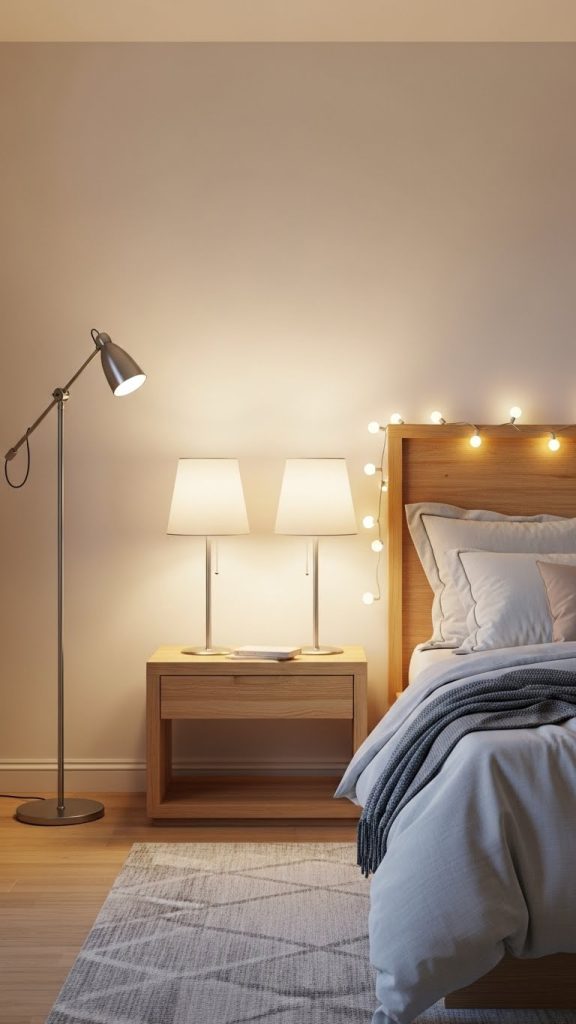
Lighting plays a crucial role in creating a cozy bedroom. Harsh overhead lights can make a space feel cold and uninviting, whereas warm, soft lighting fosters a sense of relaxation. Consider table lamps, floor lamps, wall sconces, and string lights with warm bulbs to achieve a gentle, ambient glow.
Preparation materials include lampshades, LED warm bulbs, dimmer switches, and decorative lighting fixtures. Layering different light sources allows you to adjust brightness according to mood and activity. Position reading lamps near the bed, accent lights for artwork or shelves, and consider fairy lights or lanterns for soft ambient illumination.
In addition to lighting fixtures, choosing the right bulb temperature is important. A warm white bulb around 2700K mimics natural sunset tones, creating a soothing environment. Thoughtful lighting can transform a plain bedroom into a welcoming retreat, highlighting textures and colors while reducing eye strain. Proper placement and layering of light sources are essential to achieving a balanced and cozy ambiance.
3. Soft Rugs for a Tactile Experience
Adding rugs to a bedroom enhances warmth, comfort, and style. A soft rug provides a plush surface underfoot, making the room feel inviting and grounded. Choose materials like wool, faux fur, or shag for a tactile, cozy experience. Rugs also help absorb sound, reducing noise and creating a more peaceful environment.

Preparation materials include area rugs, rug pads, and optional runners for high-traffic areas. Consider the size and placement of rugs to complement furniture arrangements. A large rug under the bed can anchor the space, while smaller accent rugs near seating areas or beside the bed enhance texture and warmth.
Mixing textures and patterns adds visual interest and coziness without clutter. Layering rugs, such as a smaller patterned rug over a larger neutral one, creates depth and style. Additionally, rugs help insulate the floor in colder climates, keeping your feet warm. The combination of aesthetic appeal and practical comfort makes rugs an essential element of a cozy bedroom design.

4. Neutral and Warm Color Palettes
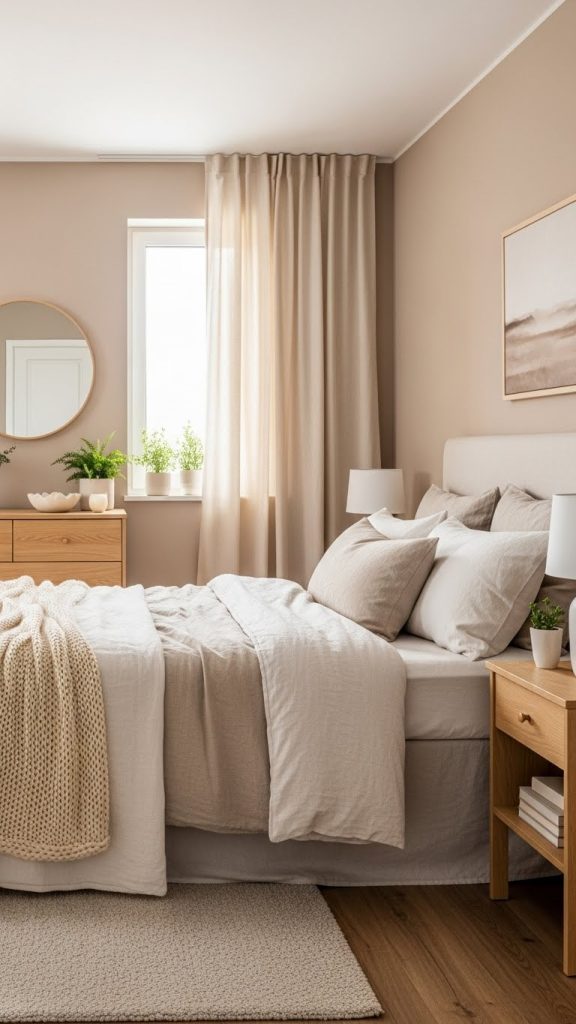
Color selection significantly influences the perceived coziness of a bedroom. Neutral and warm tones such as beige, taupe, soft browns, muted pinks, or warm grays evoke relaxation and comfort. These colors create a serene backdrop, allowing other textures and decorative elements to stand out.
Preparation materials include paint, wallpaper, decorative items, and textiles in complementary colors. For walls, opt for matte or eggshell finishes that reduce glare and soften the ambiance. Bedding, curtains, and rugs should align with the chosen palette to maintain harmony.

Accent pieces in complementary colors, such as a warm-toned throw or cushions, can break monotony and enhance depth. Avoid overly bright or cold tones, as they can create a clinical feel. A well-planned color palette enhances the sense of tranquility and warmth, making the bedroom feel like a personal sanctuary conducive to relaxation and sleep.
5. Plush Seating for Cozy Corners
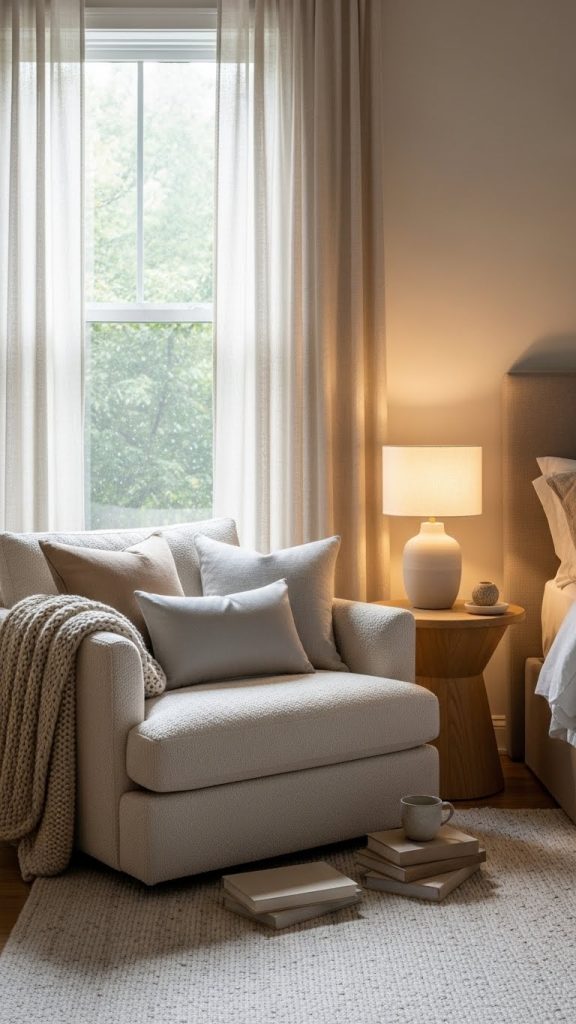
Adding a seating area in the bedroom encourages comfort and relaxation beyond the bed. Consider a small armchair, chaise lounge, or window seat with plush cushions. This creates a dedicated reading or meditation spot, enhancing the room’s functionality while adding a touch of luxury.
Preparation materials include seating furniture, cushions, throws, small side tables, and possibly a floor lamp. Position the seating near natural light sources, such as a window, to create a bright and inviting corner. Choose furniture that complements the room’s size and style, ensuring it does not overcrowd the space.
Incorporating seating encourages leisure activities and adds a human scale to the room, enhancing coziness. A soft throw and a few pillows make the corner even more inviting. By thoughtfully designing these cozy nooks, the bedroom becomes a versatile space for rest, reflection, and comfort beyond traditional sleep functions.

6. Personal Decor and Sentimental Items
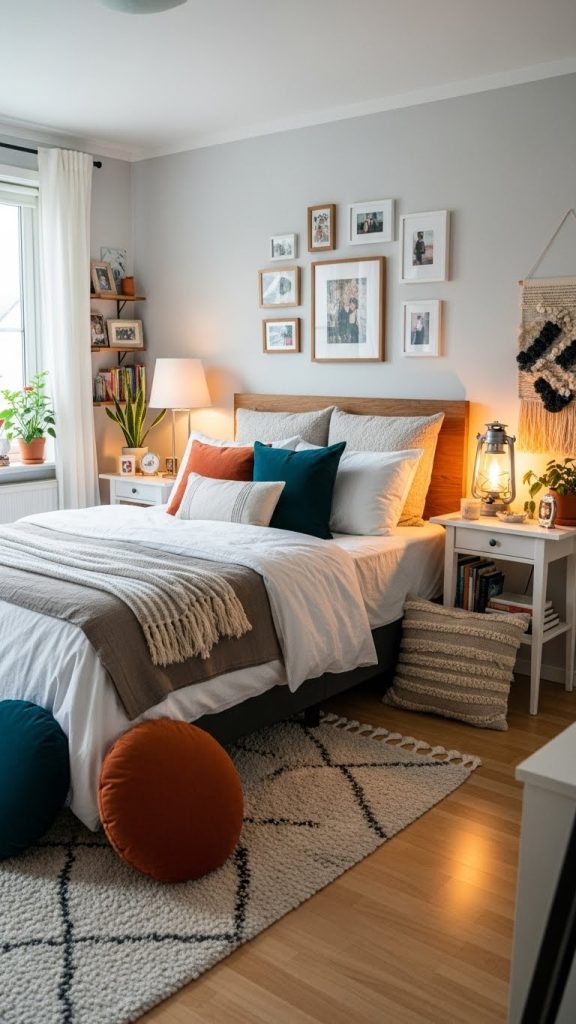
Personal touches add warmth and character to a bedroom. Incorporate framed photographs, artwork, or souvenirs that reflect your personality and memories. These items make the space feel lived-in and emotionally comforting.
Preparation materials include picture frames, shelves, small sculptures, decorative trays, and storage boxes for organization. Display sentimental items thoughtfully without cluttering the space. Rotating artwork or personal objects can refresh the room’s ambiance and prevent visual monotony.
The strategic placement of personal items creates visual focal points and enhances emotional attachment to the space. Incorporating these details alongside neutral or warm tones ensures balance. Personal decor is crucial for creating a cozy atmosphere because it transforms a generic room into a unique retreat that nurtures both comfort and emotional well-being.
7. Heavy Curtains for Privacy and Warmth
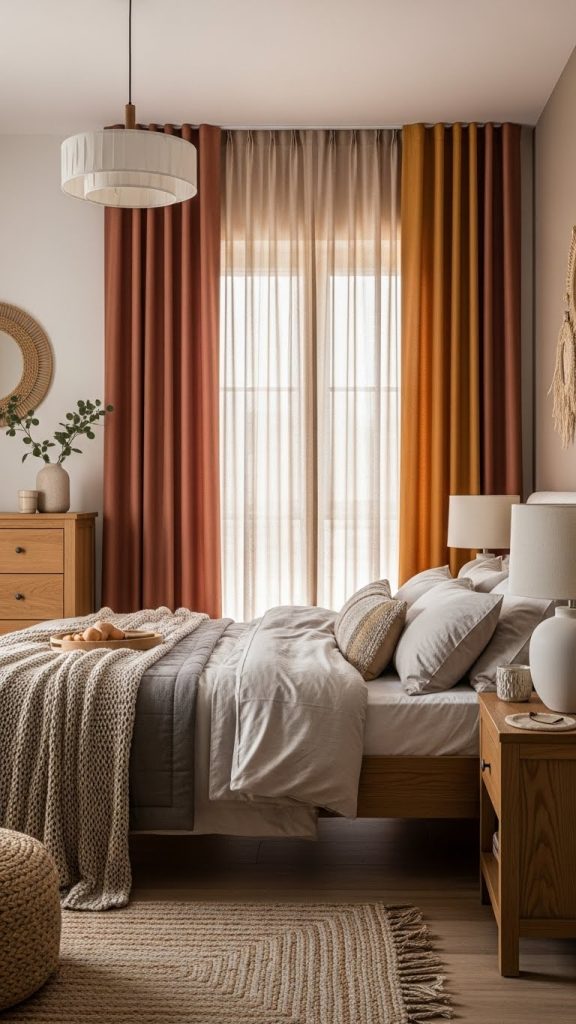
Curtains do more than block light—they add texture, warmth, and privacy. Heavy or layered curtains made from velvet, linen, or thermal fabrics enhance insulation and reduce outside noise. This improves sleep quality and creates a cocoon-like atmosphere.

Preparation materials include curtain rods, curtain panels, tiebacks, and optional sheer layers for flexible lighting control. Select curtain lengths that slightly touch the floor for elegance and completeness. Consider double layers, combining sheer inner panels with heavy outer drapes to balance light and privacy.
The right curtains contribute to both aesthetics and comfort, anchoring the room and adding softness to walls. Darker tones can create a restful ambiance, while lighter shades keep the room feeling airy. Well-chosen curtains combine function and style, playing a vital role in making a bedroom feel warm, private, and relaxing.
8. Natural Elements for Serenity
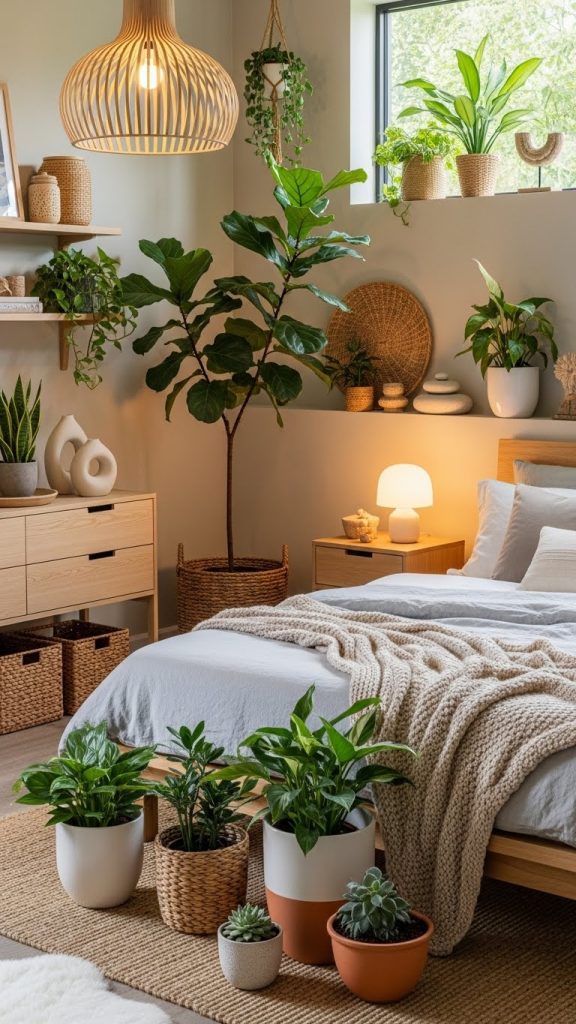
Bringing natural elements into a bedroom connects the space to the outdoors, creating a calming effect. Plants, flowers, wooden furniture, or stone decor can enhance coziness and air quality. Indoor plants like ferns, snake plants, or pothos thrive in low-light bedrooms while adding texture and life.
Preparation materials include pots, planters, wooden furniture, stone accents, and organic textiles. Position plants where they receive adequate light, and consider maintenance ease when choosing species. Natural elements can also include woven baskets, wooden trays, or natural fiber rugs to enhance organic textures.

The presence of greenery and natural textures reduces stress and promotes relaxation. Integrating organic elements softens harsh lines and adds depth to the decor, making the room feel more grounded and harmonious. Natural accents are essential in creating a balanced, cozy, and tranquil bedroom environment.
9. Ambient Scents for Relaxation
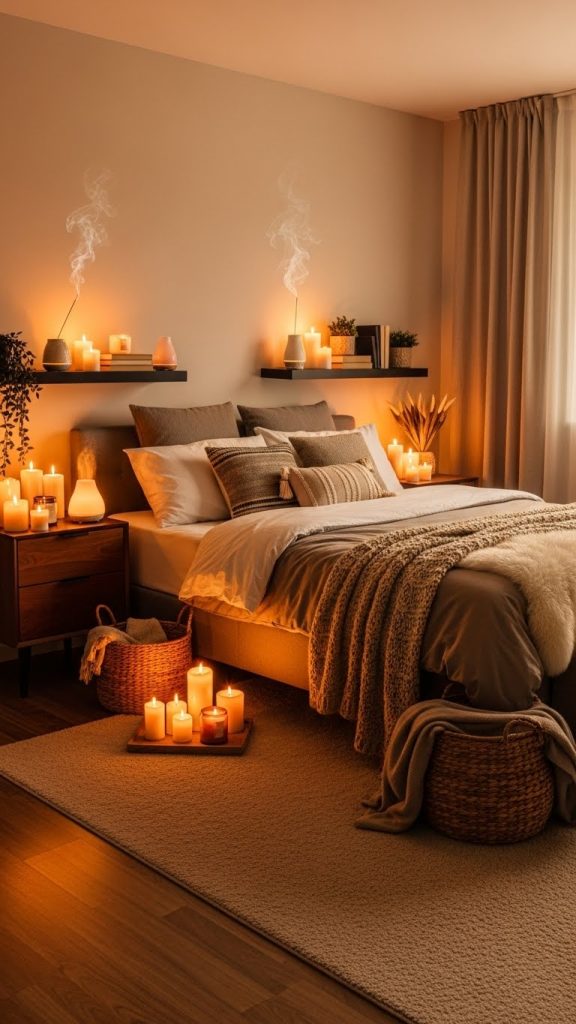
Scent has a powerful impact on mood and comfort. Using candles, essential oil diffusers, or incense can make a bedroom more inviting and relaxing. Scents like lavender, vanilla, sandalwood, or chamomile promote sleep and reduce stress.
Preparation materials include candle holders, essential oils, diffusers, incense, and matches or a lighter. Ensure proper ventilation and safety measures when using open flames. Strategically place scented items near seating areas or nightstands to subtly diffuse aroma throughout the room.
Combining scent with visual and tactile elements strengthens the overall cozy atmosphere. A carefully selected fragrance can enhance relaxation routines such as reading, meditation, or pre-sleep rituals. Ambient scents elevate comfort levels and create a welcoming environment that engages multiple senses.

10. Decluttered and Organized Space
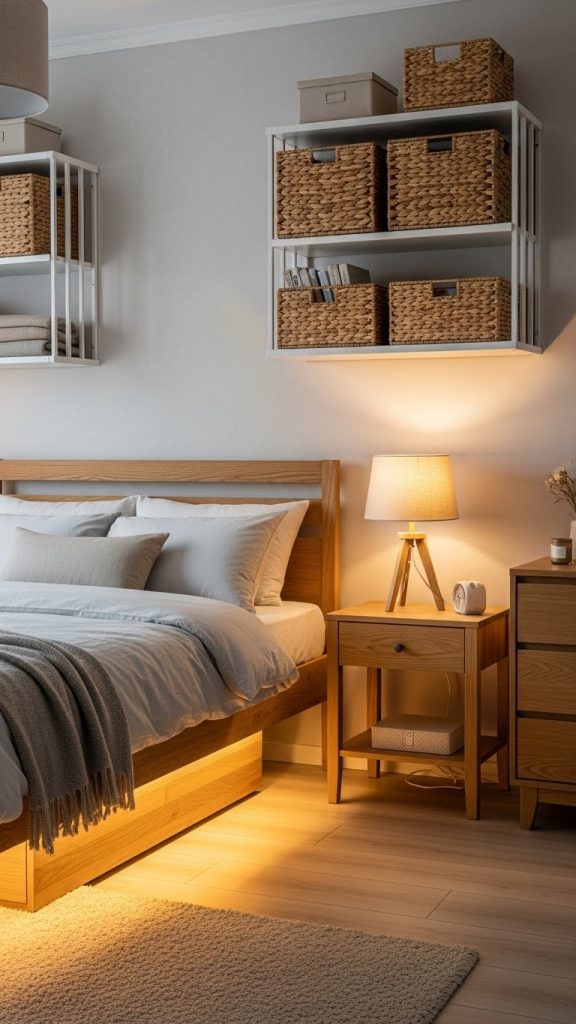
A cluttered bedroom can feel chaotic and stressful. Keeping the space organized enhances comfort and makes it easier to relax. Use storage solutions like baskets, under-bed storage boxes, and shelving to maintain a tidy environment.
Preparation materials include storage furniture, boxes, organizers, closet systems, and decorative trays. Assign specific spaces for items to prevent clutter from accumulating. Maintain a regular cleaning schedule to ensure the room remains visually and physically calming.
An organized bedroom maximizes usable space and allows decorative and cozy elements to shine. Minimal visual distractions promote mental relaxation and improve sleep quality. By combining storage solutions with aesthetic considerations, you can create a harmonious, cozy bedroom that feels spacious, restful, and inviting.