The entryway is the first impression of a home, setting the tone for both visitors and residents. However, many homes have small or awkward entryway spaces, making organization and design challenging. The space behind doors is often overlooked but can be transformed into a highly functional and aesthetically pleasing area. From storage solutions to decorative features, these ten ideas show how to maximize this hidden space to keep your entryway organized, attractive, and efficient.
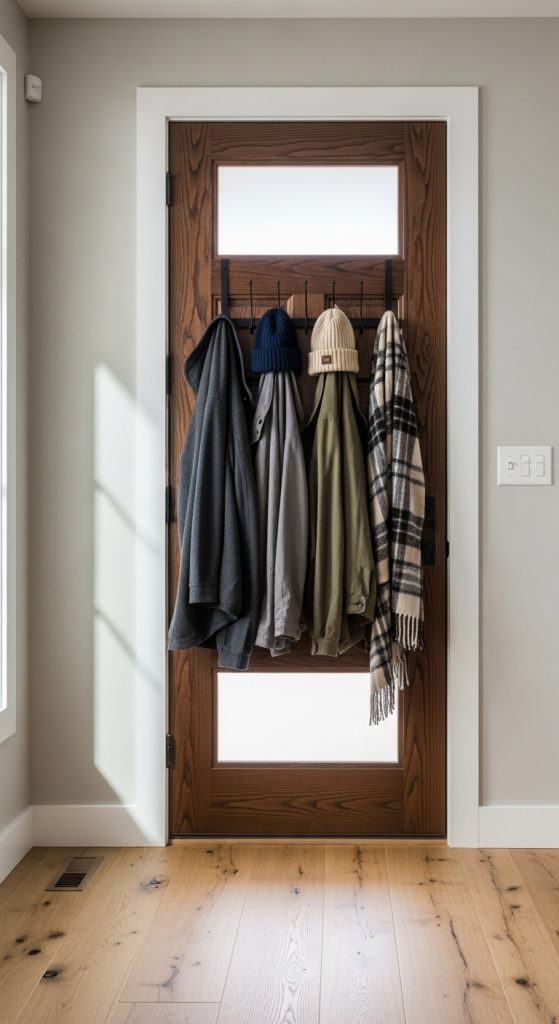
1. Hanging Coat Rack Behind the Door
A hanging coat rack behind the door is a simple yet highly effective solution for keeping jackets, scarves, hats, and bags organized. This setup works well in homes with limited entryway space or apartments without a separate coat closet. By using either an over-the-door rack or hooks installed directly on the door, homeowners can maintain a clutter-free entryway while keeping essentials within easy reach.
Preparation and Materials: Measure the door height and width to ensure the rack fits without interfering with door movement. Choose between over-the-door racks, adhesive hooks, or drill-mounted hooks. Materials may include metal, wood, or plastic, depending on durability and aesthetic preferences.
Implementation: Clear the space behind the door and ensure unobstructed door swings. For drilled hooks, mark the positions evenly to balance weight. Hang everyday jackets at mid-height for accessibility and lighter accessories like hats on top. Over-the-door racks should fit snugly without damaging the door. The result is a functional, space-saving storage solution that immediately enhances organization.
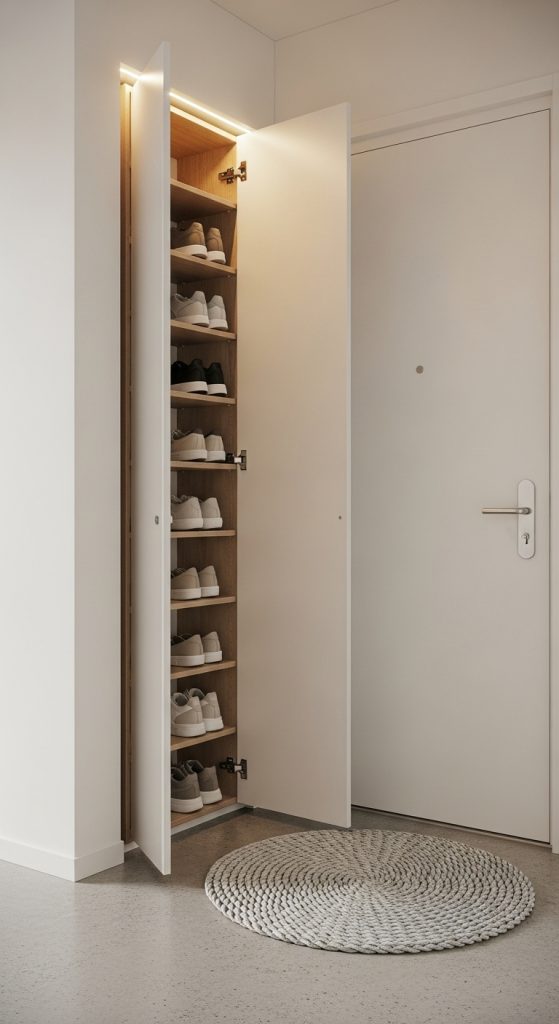
2. Slim Shelving Unit for Shoes
Shoes are one of the primary sources of entryway clutter. Installing a slim shelving unit behind the door keeps footwear organized and accessible without taking up much space. This is especially useful in narrow entryways where full cabinets would be impractical.
Preparation and Materials: Measure the available width and height to select a slim, vertical shelving unit. Choose pre-fabricated wooden or metal units, or create a custom unit using plywood and brackets. Add non-slip liners to prevent shoes from sliding.
Implementation: Anchor the shelving unit to the wall behind the door to avoid swinging damage. Place frequently worn shoes on lower shelves for easy access and seasonal or less-used shoes higher up. A small mat in front of the door protects floors and adds to the neat appearance. This design converts underutilized space into a practical storage area while maintaining a tidy entryway.
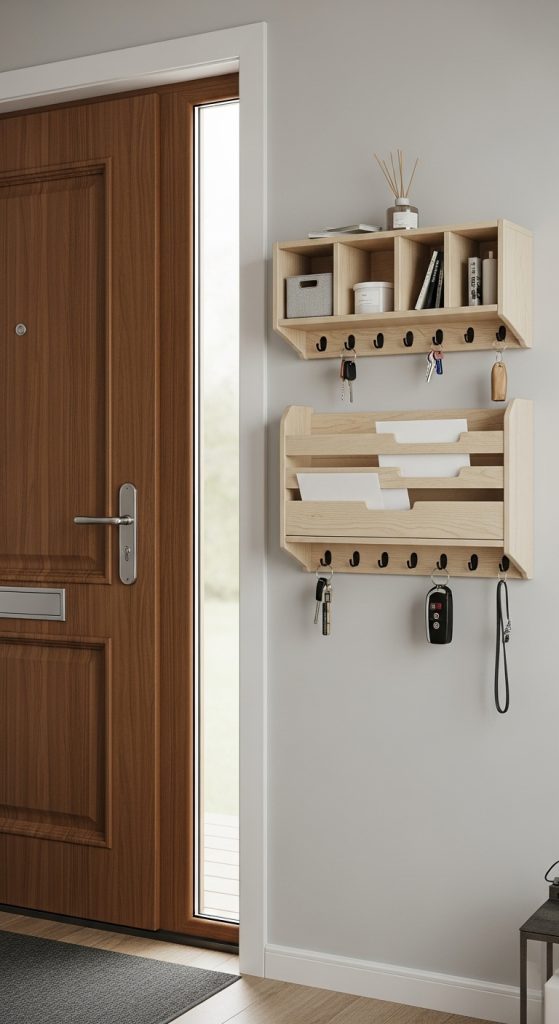
3. Hidden Key and Mail Organizer
A hidden organizer behind the door is ideal for storing keys, mail, and small everyday essentials. Using small cubbies, wall-mounted pockets, or magnetic boards allows homeowners to keep necessary items organized while remaining discreet.
Preparation and Materials: Decide on a material such as wood, metal, or fabric. Measure the door space to ensure the organizer will not obstruct its swing. Depending on the type, tools may include screws, adhesive strips, or mounting brackets.
Implementation: Mount the organizer at eye level for easy accessibility. Dedicate sections for keys, incoming mail, and small items such as sunglasses or wallets. Magnetic boards can display notes or reminders. Selecting neutral colors and finishes ensures the organizer blends seamlessly with the door and surrounding decor. This setup reduces clutter while keeping important items easily retrievable.
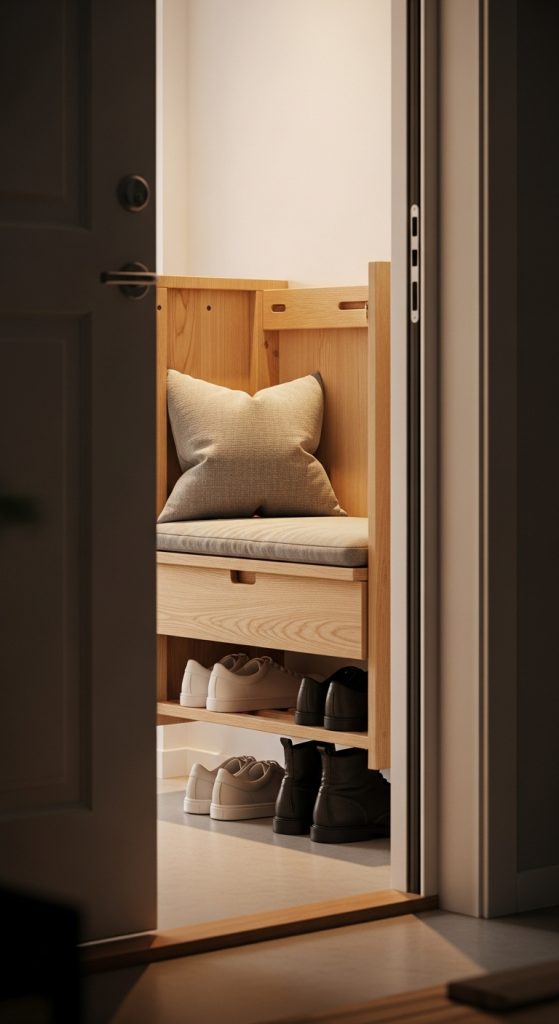
4. Fold-Down Bench for Sitting
A fold-down bench behind the door provides a convenient seating option for putting on shoes or organizing accessories. Ideal for small spaces, it combines functionality with minimal intrusion into the room.
Preparation and Materials: Choose a fold-down bench of wood or metal, considering weight capacity and door clearance. Ensure the door swing allows the bench to fold down without obstruction. Screws, wall anchors, and a cushion may be needed.
Implementation: Mount the bench securely on the wall or the door, following manufacturer instructions. When folded up, it remains out of the way, preserving space. Place a cushion for comfort and a small shoe mat underneath to protect the floor. This addition transforms hidden space into a practical seating area without compromising the entryway’s aesthetic.
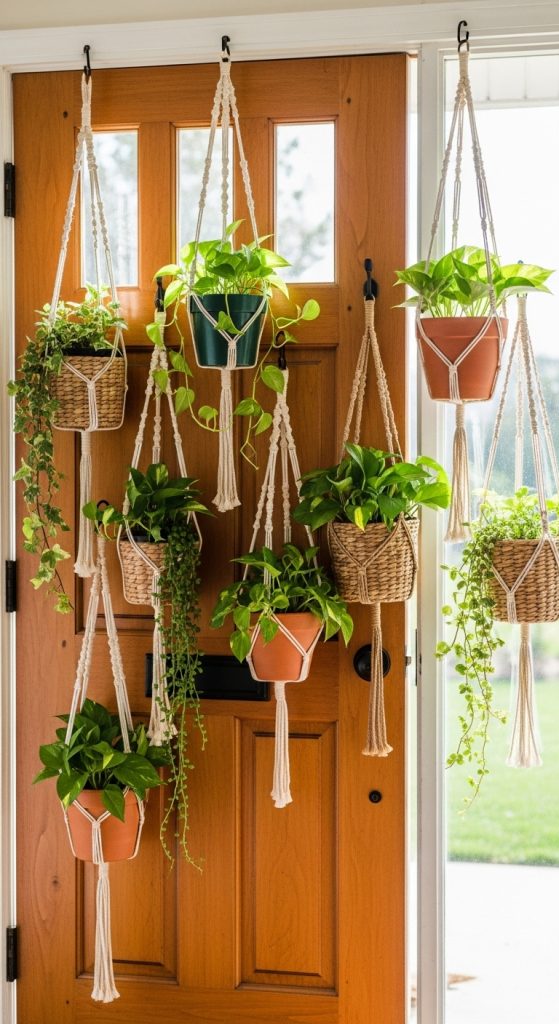
5. Hanging Planters Behind the Door
Hanging planters behind the door bring greenery into an otherwise unused area, enhancing the entryway’s visual appeal and creating a welcoming atmosphere. Small plants such as succulents or ferns work best for limited space.
Preparation and Materials: Select lightweight planters that can be hung using hooks or brackets. Measure the door height to ensure plants will not interfere with swinging. Materials include metal, ceramic, or plastic planters and sturdy rope or chains for suspension.
Implementation: Install hooks at even intervals behind the door, ensuring stability. Hang plants at varying heights for visual interest, and water them according to plant needs. Ensure sunlight access if necessary or choose low-light tolerant species. This approach transforms a neglected area into a lively, inviting space, making the entryway more attractive.
6. Over-the-Door Mirror
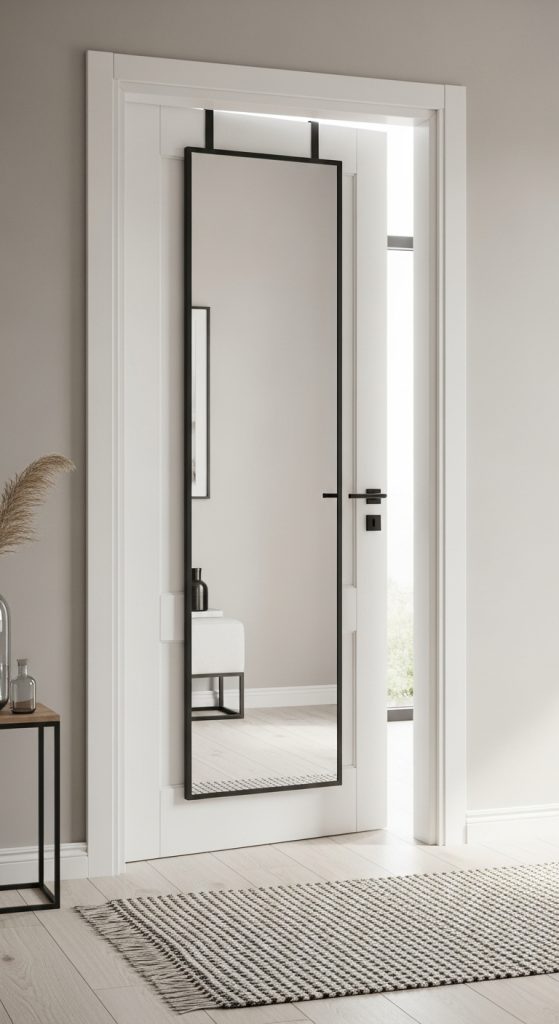
Installing a full-length mirror over the door is practical for checking appearance before leaving home and also visually expands the entryway. Mirrors are particularly effective in small or dark spaces.
Preparation and Materials: Measure the door to select a mirror that fits without obstructing the door’s movement. Materials include a framed mirror or an adhesive-backed panel mirror. Hardware may include screws or over-the-door hangers.
Implementation: Mount the mirror securely at eye level, ensuring it remains stable when the door opens or closes. Position a small rug or mat in front of the mirror to protect the floor. Mirrors can reflect light, creating the illusion of a larger space while serving a functional purpose. This addition combines convenience with aesthetic enhancement.
7. Pegboard Organizer for Accessories
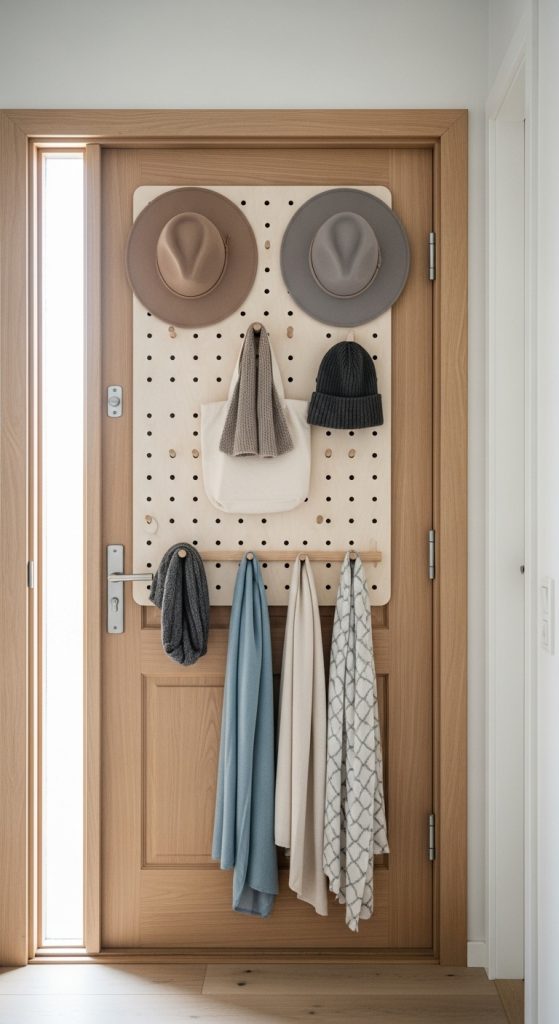
A pegboard behind the door is a flexible solution for storing hats, bags, scarves, and small accessories. Pegboards allow for adjustable hooks and shelves, making the space highly adaptable.
Preparation and Materials: Choose a pegboard of wood or metal. Measure the door height and width to ensure a good fit. Materials include hooks, shelves, screws, and wall anchors.
Implementation: Secure the pegboard to the wall behind the door. Arrange hooks and small shelves according to your storage needs. Hang hats at the top, bags in the middle, and scarves lower down. Pegboards allow easy repositioning as needs change. This method converts unused space into a customizable and visually appealing storage area.
8. Hidden Bulletin Board for Notes
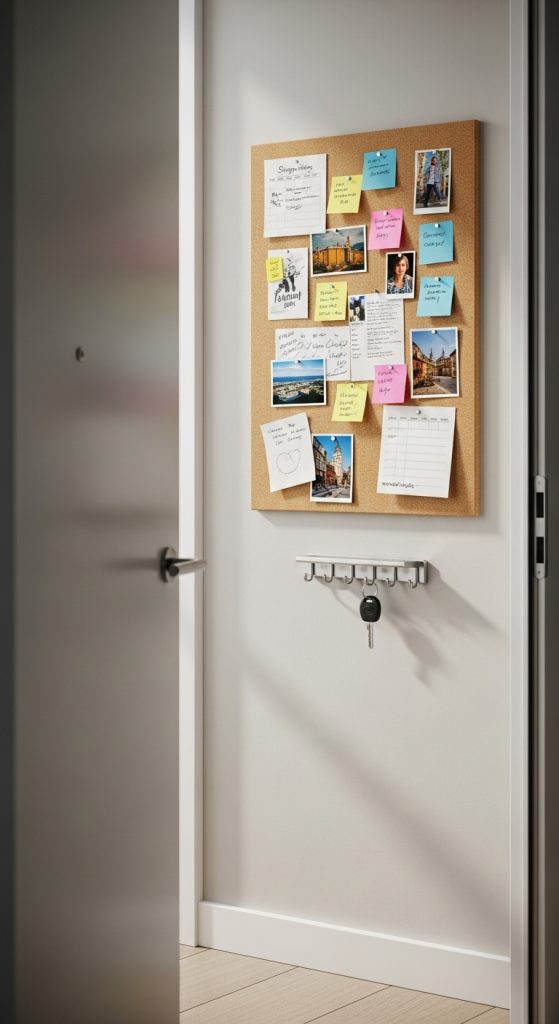
A bulletin board behind the door provides a discreet place for reminders, to-do lists, and photos. This keeps important information organized without cluttering visible surfaces.
Preparation and Materials: Select a cork or magnetic board that fits the door space. Materials include pins, magnets, screws, or adhesive strips for mounting.
Implementation: Mount the board at a convenient height behind the door. Organize notes and reminders by priority, and consider adding a small pocket for pens. Neutral tones and minimal design ensure the board does not overpower the entryway. This setup keeps essential information accessible yet out of sight, maintaining a clean and functional entryway.
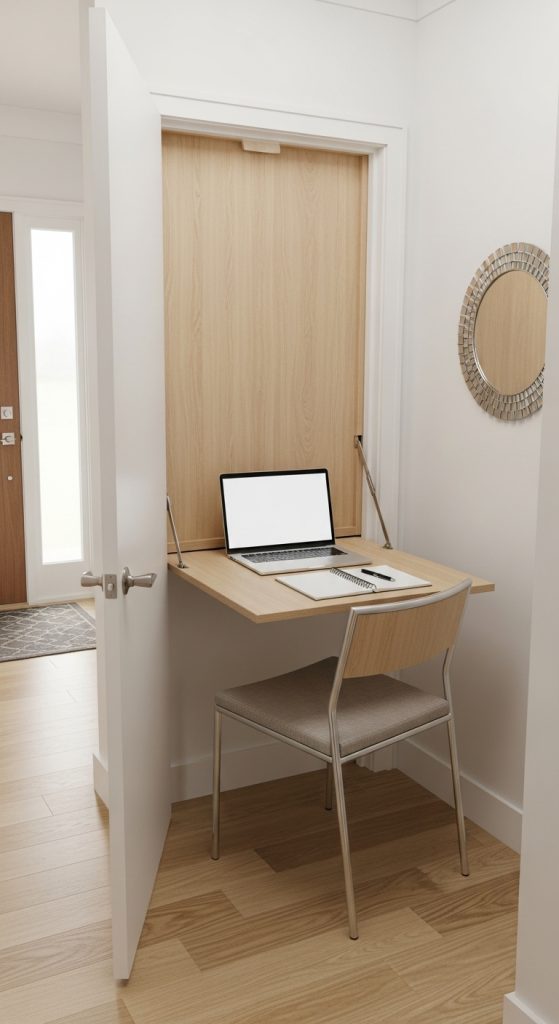
9. Compact Foldable Desk
A foldable desk behind the door offers a small workspace for organizing bills, writing notes, or using a laptop. This is ideal for homes with limited office space.
Preparation and Materials: Choose a wall-mounted foldable desk with a sturdy hinge. Materials include wood or composite board, brackets, and screws. Ensure door swing clearance.
Implementation: Mount the desk securely, following instructions to ensure stability. When not in use, fold the desk up to remain unobtrusive. Add a slim chair or stool that can be stored elsewhere. This hidden workspace adds functionality without sacrificing space or aesthetic appeal.
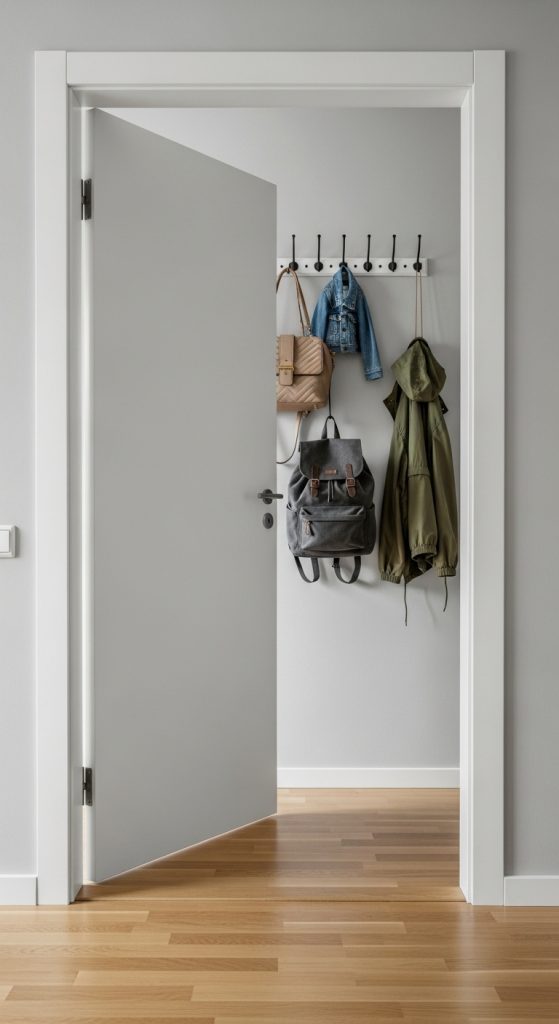
10. Wall-Mounted Hooks for Bags
Wall-mounted hooks behind the door provide dedicated storage for handbags, backpacks, and small jackets, keeping entryways tidy and organized.
Preparation and Materials: Select hooks or a hook rack suitable for the door’s width. Materials may include metal or wooden hooks with screws or adhesive strips.
Implementation: Install hooks evenly spaced behind the door. Hang bags, purses, or light jackets according to use frequency. Consider labeling or arranging by size to maintain order. This simple solution keeps everyday items accessible while utilizing otherwise wasted space.




Leave a Reply