Window benches are more than just a cozy spot to relax and enjoy sunlight—they are functional pieces of furniture that combine seating with clever storage solutions. Whether your home is small or spacious, incorporating a window bench with storage maximizes space while enhancing your interior design. This guide explores ten innovative window bench storage ideas, detailing preparation, materials, and practical tips for each concept.
1. Classic Lift-Top Window Bench
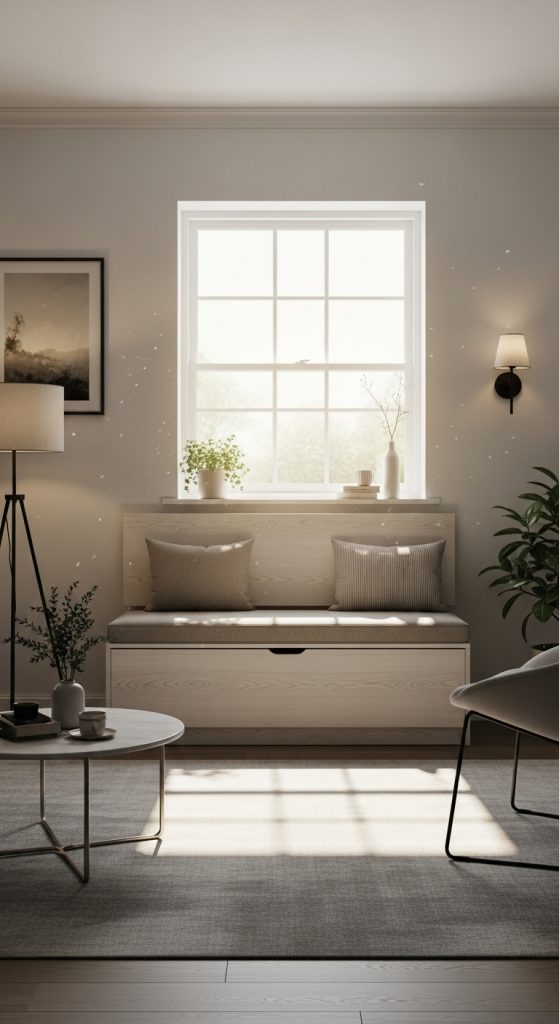
A classic lift-top window bench offers hidden storage beneath a cushioned seat. This design is ideal for stashing blankets, books, or seasonal items while maintaining a sleek appearance.
Preparation and Materials:
To create a lift-top bench, you will need durable plywood or MDF for the base, high-quality hinges capable of supporting the seat, cushioning foam, and upholstery fabric. Measure the window recess accurately to ensure the bench fits perfectly. Installing gas struts can make lifting the lid smooth and effortless.
Design Tips:
Choose neutral fabric for versatility or a bold color to add visual interest. Reinforce the base with internal supports to handle frequent use. This design works well in living rooms, bedrooms, or reading nooks. To maximize functionality, consider dividing the storage area with partitions to organize items efficiently.
Usage and Benefits:
The lift-top window bench combines comfort and practicality, making it perfect for homes where extra storage is always needed. Its concealed compartment keeps the space clutter-free while providing a cozy seating area.
2. Pull-Out Drawer Window Bench
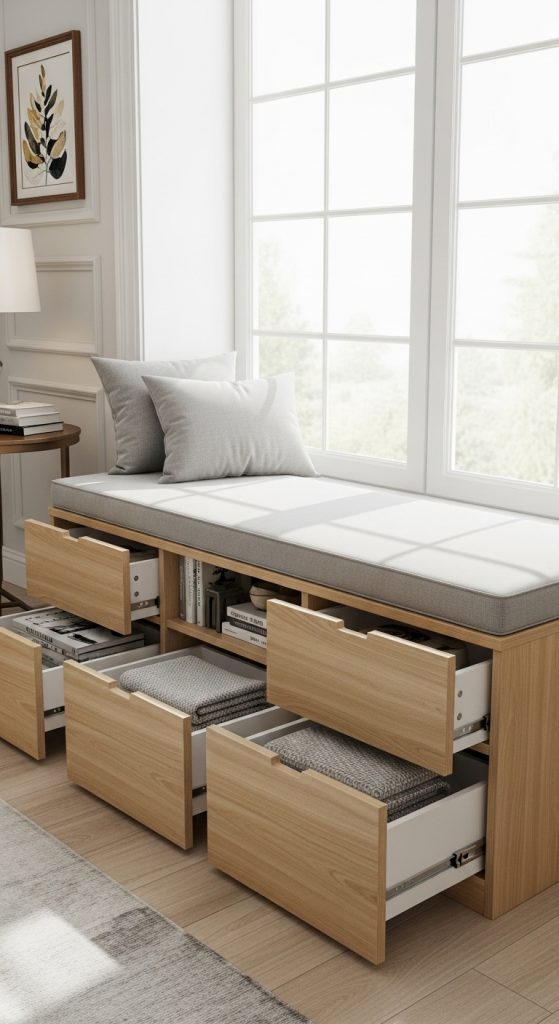
Pull-out drawers transform a window bench into a highly organized storage solution. Each drawer can store different items, making access easy and keeping clutter out of sight.
Preparation and Materials:
Construct the bench using solid wood or MDF, and install drawer slides rated for heavy loads. Soft-close slides are recommended for a smooth user experience. Decide on the number and size of drawers based on the available space and the items you intend to store.
Design Tips:
Decorative drawer fronts add style while offering versatility in design, from classic paneling to modern flat-front looks. Ensure proper ventilation in drawers storing fabrics to prevent mustiness. Adding small handles or recessed pulls can enhance usability without detracting from the bench’s aesthetic.
Usage and Benefits:
This approach is excellent for families, as each drawer can be designated for toys, magazines, or crafting supplies. The bench doubles as a seating area and storage hub, promoting organization in a stylish and accessible manner.
3. Open Shelf Window Bench
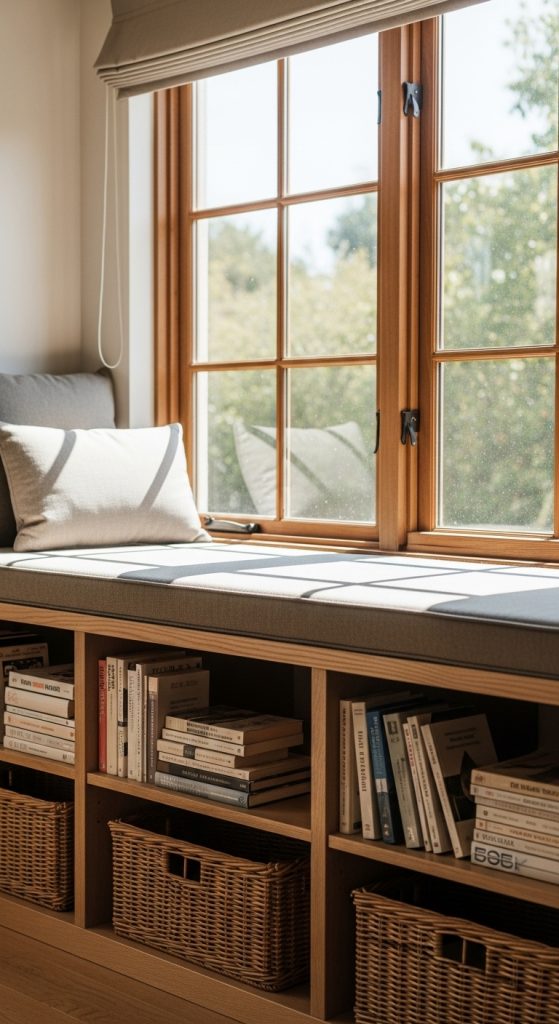
An open shelf design offers immediate access to items while maintaining a clean, minimalist look. This style is perfect for displaying books, decorative items, or baskets for smaller objects.
Preparation and Materials:
Build the bench frame with hardwood or plywood and divide the storage space into shelves. Add baskets or containers to keep items tidy. Finish with paint or varnish to match your interior.
Design Tips:
Consider adjustable shelving for versatility. Using wicker or fabric baskets helps conceal smaller items while adding texture and warmth. Ensure the bench height aligns comfortably with the window for optimal seating.
Usage and Benefits:
Open shelves are highly functional for frequently used items like books or shoes. They encourage neatness while making the storage visible and easily accessible. This style works exceptionally well in casual living areas or sunrooms.
4. Corner Window Bench with Storage
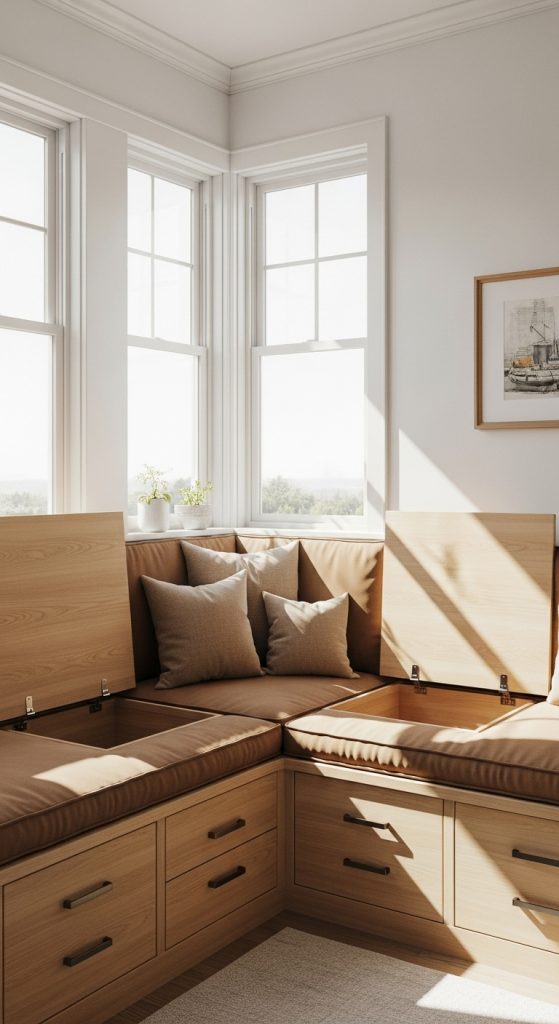
Utilizing corner space efficiently, a corner window bench maximizes seating and storage without wasting valuable room. This design is especially beneficial in compact homes.
Preparation and Materials:
Measure both walls and the window recess accurately. Use sturdy wood or MDF for the frame, and incorporate lift-up seats or drawers. Reinforce corners for structural integrity.
Design Tips:
A wrap-around bench can include a mix of open shelving and closed compartments. Cushions should be custom-fitted to cover all seating areas. Using light colors can visually expand the corner area and make it feel airy.
Usage and Benefits:
Corner benches provide generous seating for multiple people while offering a combination of hidden and open storage. This layout is ideal for breakfast nooks, reading corners, or small apartment living areas, optimizing every inch of space.
5. Storage Bench with Cushion and Bookshelves
Combining a cushioned window bench with integrated bookshelves underneath creates a functional reading nook. This merges comfort with easy access to reading materials.
Preparation and Materials:
Use hardwood or engineered wood for durability, and include foam padding with durable upholstery for seating. Build shelves beneath the bench to accommodate books or magazines.
Design Tips:
Arrange bookshelves in varying heights to store different-sized books. Incorporate vertical dividers for organization. Consider adding small LED lights under the seat overhang to illuminate bookshelves for nighttime reading.
Usage and Benefits:
This bench design encourages reading while maximizing storage. It is perfect for living rooms or bedrooms, providing a cozy retreat and a place to store your literary collection efficiently.
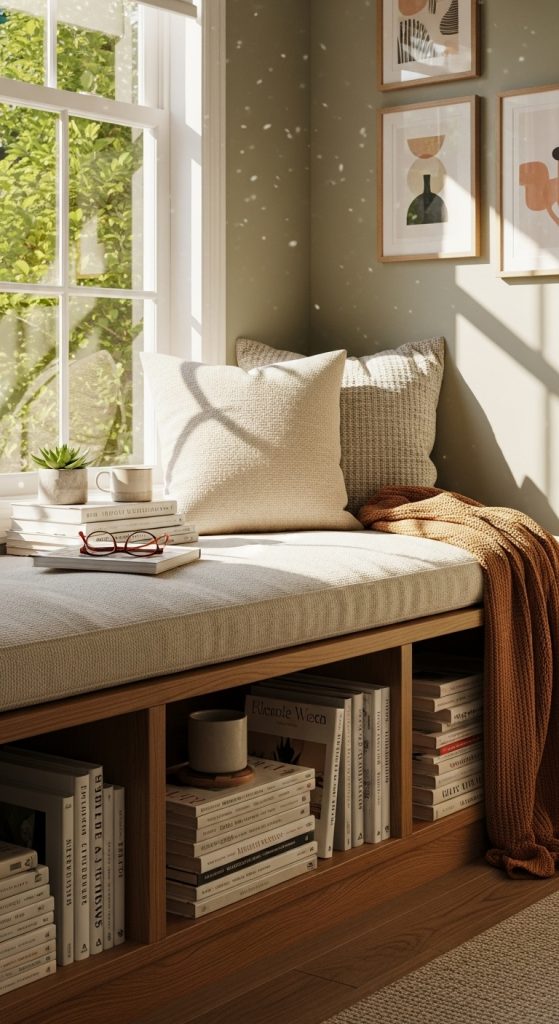
6. Lift-Up Bench with Compartmentalized Storage
A lift-up bench with compartments provides organized storage for smaller items like board games, office supplies, or children’s toys. Compartmentalization prevents clutter and simplifies access.
Preparation and Materials:
Construct the base using sturdy plywood and partition the storage area into multiple sections. Add lift-top hinges and foam padding for comfort. Choose durable fabric for the cushion to withstand frequent use.
Design Tips:
Label compartments discreetly for easy identification. Consider adjustable dividers to adapt the space as needed. Neutral upholstery ensures the bench blends with any interior style, while bold colors can make it a focal point.
Usage and Benefits:
This design keeps items neatly organized and out of sight while maintaining a comfortable seating option. Ideal for family rooms, home offices, or playrooms, it combines practicality with aesthetic appeal.
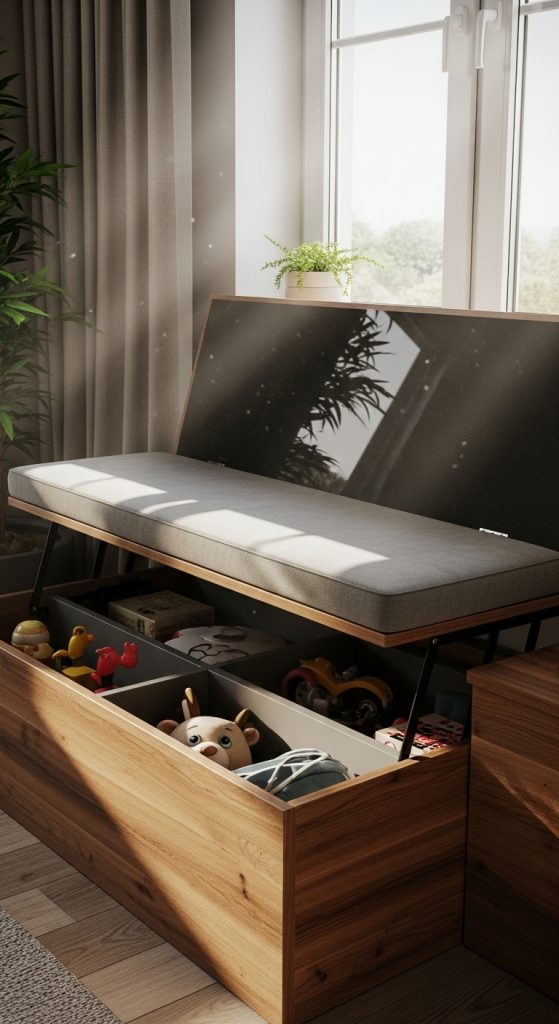
7. Window Bench with Basket Storage
Incorporating baskets beneath a window bench allows for flexible and movable storage. This design combines rustic charm with functional simplicity.
Preparation and Materials:
Use solid wood or plywood for the bench frame and leave open spaces beneath for baskets. Choose sturdy baskets made of wicker, fabric, or metal to hold a variety of items.
Design Tips:
Uniform baskets create a tidy and cohesive look. You can switch baskets seasonally or as your storage needs change. Labeling baskets adds organization without cluttering the visual aesthetic.
Usage and Benefits:
Basket storage is versatile and user-friendly. It’s perfect for laundry, toys, or seasonal decorations, offering a mix of concealed and accessible storage while keeping your space cozy and stylish.
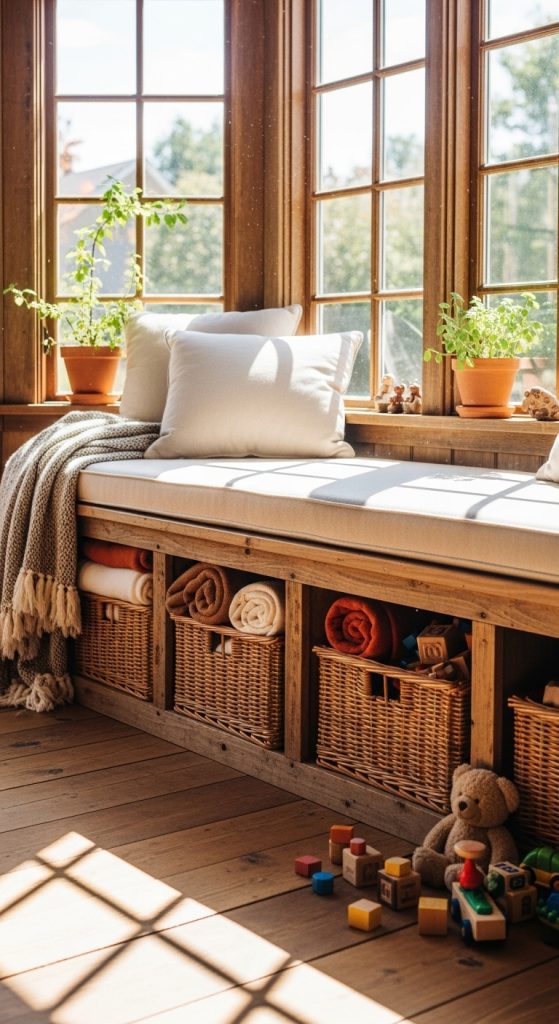
8. Hidden Storage with Pull-Out Trays
Pull-out trays under a window bench provide semi-hidden storage for items you need to access frequently. This is a practical alternative to deeper drawers or lift-up compartments.
Preparation and Materials:
Build the bench frame with hardwood or plywood and install shallow tray-style drawers on smooth slides. Ensure the trays have handles or cut-out grips for easy access.
Design Tips:
Use trays to store office supplies, shoes, or kitchen linens if the bench is in a dining area. Shallow trays prevent items from being buried at the back, making retrieval simple. Painting or staining the bench can enhance visual appeal.
Usage and Benefits:
Pull-out trays are efficient for small items and help maintain organization. They provide a streamlined look while keeping essentials within reach, perfect for multi-purpose living spaces.
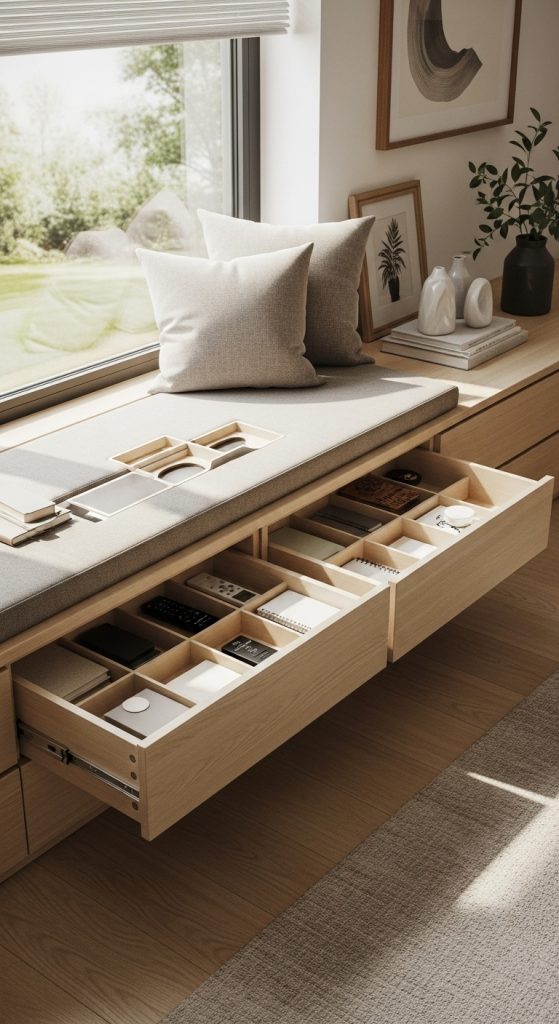
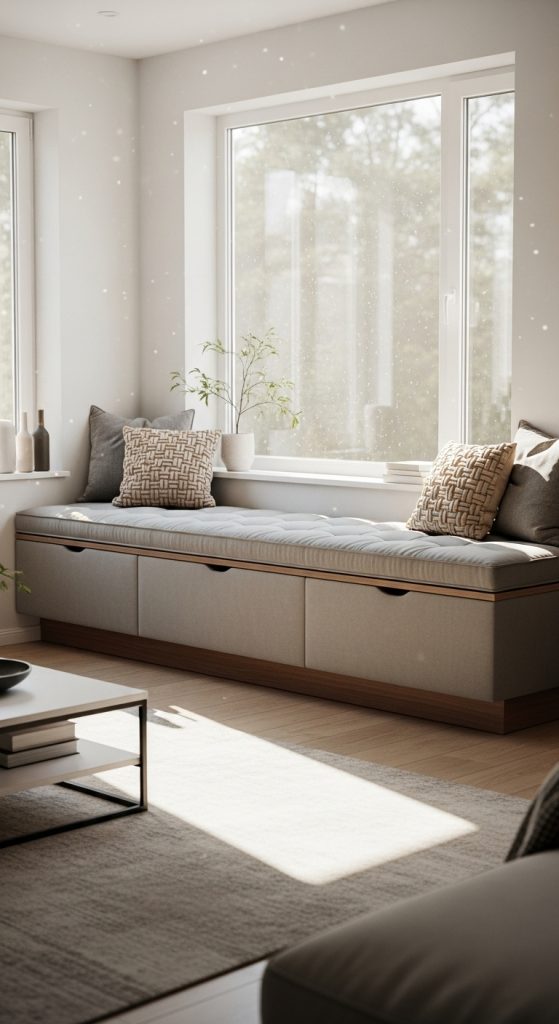
9. Upholstered Storage Bench with Hidden Compartments
An entirely upholstered window bench with hidden compartments creates a luxurious, seamless look. The storage is concealed while the bench appears as a singular furniture piece.
Preparation and Materials:
Construct the base from solid wood or plywood, add lift-up sections for hidden storage, and cover the bench with high-density foam and durable upholstery. Use quality fabric that can withstand wear and tear.
Design Tips:
Choose tufted or smooth upholstery depending on your style preference. Reinforce corners and edges to maintain shape over time. Neutral shades work well in most interiors, while patterned fabrics add character.
Usage and Benefits:
This design integrates storage and seating without interrupting the room’s aesthetic. Ideal for living rooms, bedrooms, or hallways, it combines elegance with functionality.
10. Modular Window Bench with Adjustable Storage
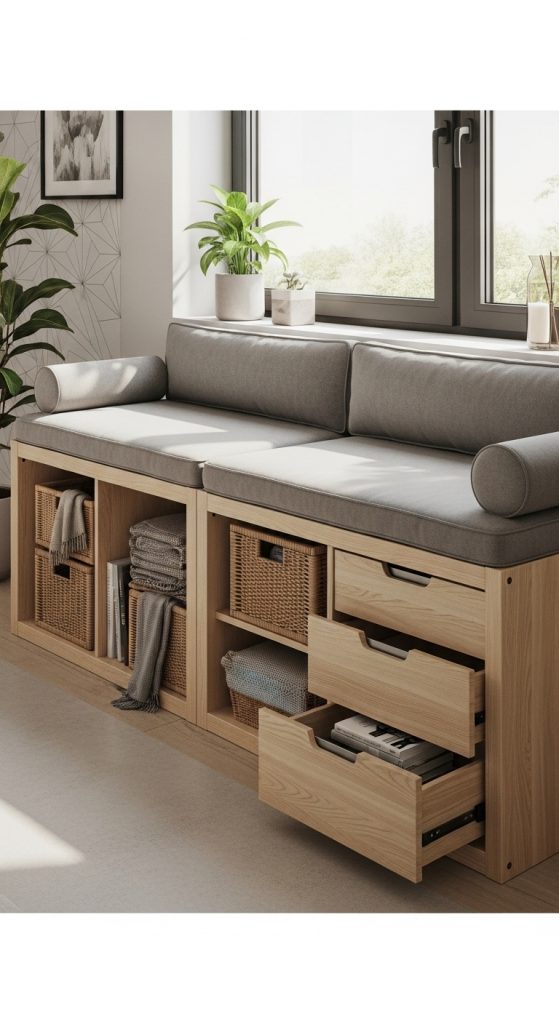
Modular window benches allow for customized storage solutions. Components like cubes, drawers, or baskets can be rearranged to suit changing needs.
Preparation and Materials:
Use modular storage units or build custom cube sections. Ensure the bench frame is sturdy and level to support the modular elements. Add cushions on top for comfortable seating.
Design Tips:
Mix open and closed storage for a balanced aesthetic. Modular designs are perfect for seasonal rearrangements or evolving storage requirements. Consider lightweight materials for easier adjustments.
Usage and Benefits:
A modular window bench offers maximum flexibility, adapting to your storage needs over time. It is ideal for homes that require versatile furniture solutions while maintaining style and comfort.





Leave a Reply