Preparation Material and Planning Essentials
Before diving into the specific bedroom setup ideas, effective preparation ensures a smoother design process. Start by measuring your bedroom dimensions accurately. Note the length, width, and height of the room, including alcoves and awkward corners. This helps you select furniture that fits proportionally without crowding the space. Next, assess the natural lighting. Identify the hours when sunlight enters the room and which direction the windows face. This information will guide your choices in curtains, color schemes, and lighting fixtures.
Gather materials such as a measuring tape, paint samples, fabric swatches, wall anchors, a level tool, and design sketches. Consider creating a mood board using magazine clippings or online inspiration to clarify your preferred style. Choose a color palette that conveys warmth and comfort, such as soft neutrals, earthy shades, creamy whites, or muted pastels. Identify the items you need to replace or upgrade, such as bedding, lighting fixtures, or storage units.
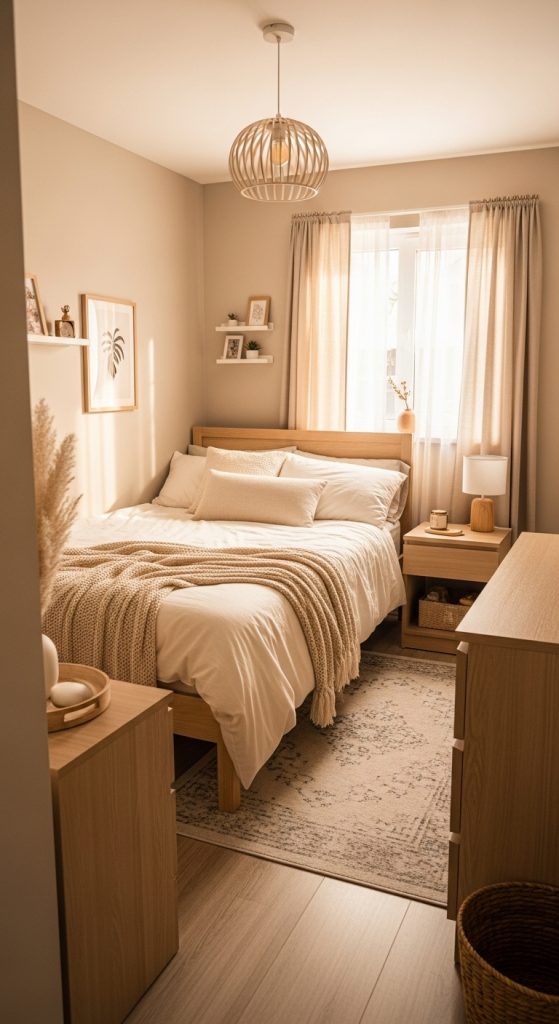
Finally, decide on a budget and timeline. Small bedroom makeovers can be affordable if you prioritize essential additions like comfortable bedding, multipurpose furniture, and space saving organizers. With a clear vision in place, you are ready to begin designing your small cozy bedroom.
1. Soft Neutral Color Palette Setup
A soft neutral color palette is one of the most effective ways to create a cozy atmosphere in a small bedroom. Neutrals visually expand compact spaces by reflecting natural light and creating a clean, airy effect. Shades such as beige, ivory, warm gray, taupe, and cream provide a calming foundation that helps the room feel both inviting and uncluttered. When preparing for this setup, gather paint samples to test how different tones interact with your room’s lighting throughout the day. Natural light may elevate warm tones during the day, while artificial lighting influences evening ambiance.
To apply this idea effectively, paint the walls in a light neutral tone and choose bedding in soft monochromatic layers. Use textures rather than bold patterns to add depth. For instance, a chunky knit throw blanket, a woven rug, or linen pillowcases introduce warmth without overwhelming the room. Avoid high contrast elements as they break visual continuity. Incorporate natural materials like light wood furniture for a more organic feel. The overall effect of a neutral palette is tranquility and visual spaciousness, making the small bedroom look brighter and more harmonious while maintaining a cozy and intimate atmosphere.